NASA’s Curiosity Rover Drill Just Broke New Ground on Mars by Freeing a Rock with Unprecedented Precision
NASA’s Curiosity Rover has accomplished a significant breakthrough on Mars by employing unparalleled accuracy to dislodge a resistant rock during its drilling operation.
NASA’s Curiosity Rover Embarks on a Historic Journey of Resilience and Discovery
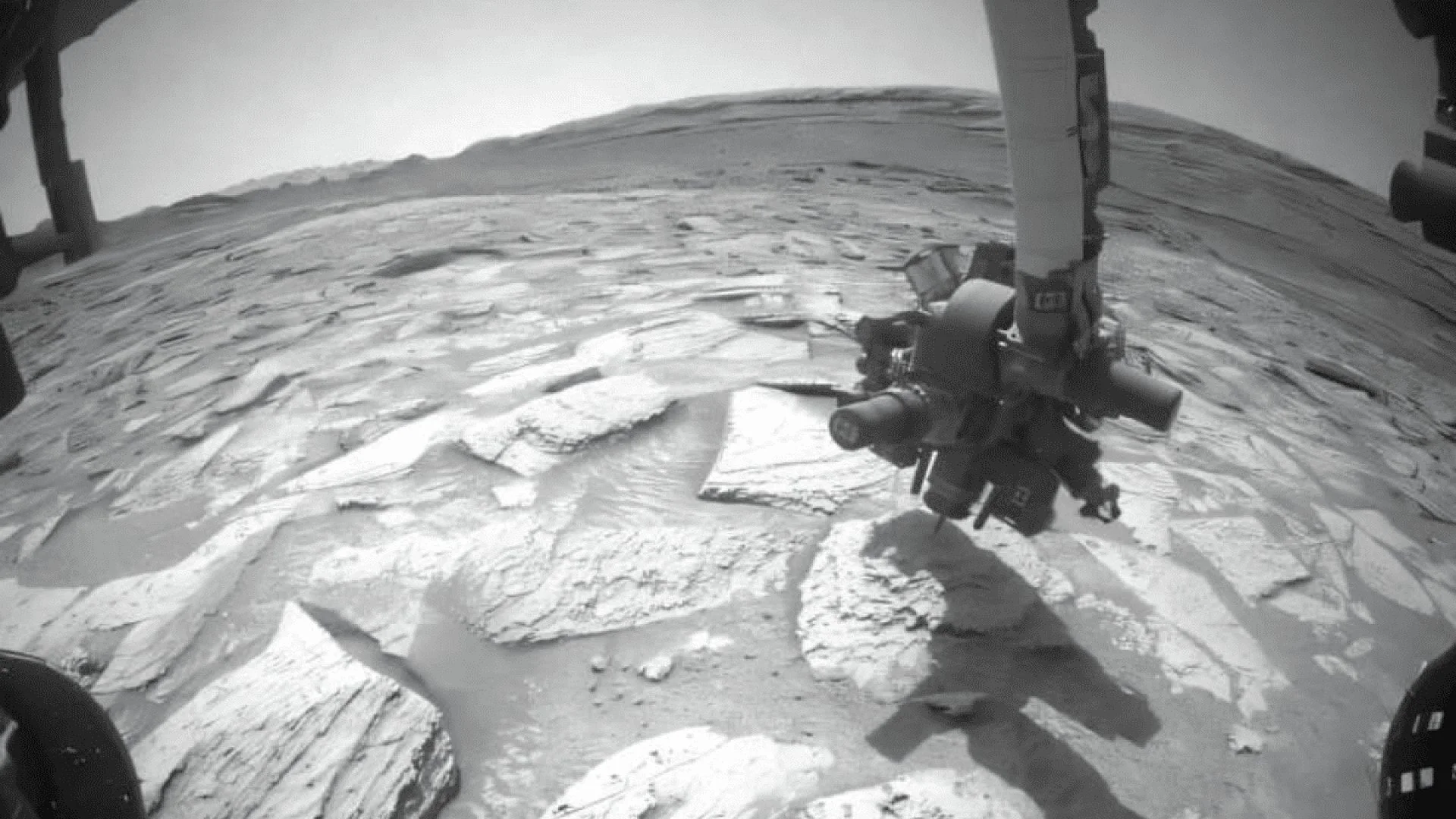
The Curiosity Rover, a marvel of engineering and exploration, has made a groundbreaking discovery on Mars that showcases its unwavering adaptability and perseverance in the face of unprecedented challenges. After drilling into a peculiar rock named Atacama, the rover encountered an unexpected obstacle when the entire rock became stuck to the drill, leaving the team at NASA with a daunting task to free it. Through a series of innovative problem-solving strategies and relentless determination, the team successfully freed the rock, providing invaluable insights into the complex interaction between Curiosity’s drill and Martian geology.
The Enigmatic Atacama: Unveiling a Rock Like No Other
On April 25, 2026, the Curiosity Rover stumbled upon a rock unlike any it had encountered before. Named Atacama, the rock measured approximately 1.5 feet in diameter, six inches thick, and weighed around 28.6 pounds (13 kilograms). Located on the surface of Mars, within the Gale Crater, a site steeped in ancient history and potential clues to the planet’s past environment, Atacama posed a unique challenge for the rover.
Curiosity had successfully drilled into the rock to collect samples, as it has done countless times before. However, as the rover began retracting its robotic arm, it encountered an unexpected issue: the rock remained attached to the drill bit. This unusual occurrence left the engineering team baffled, as they had never seen a rock stay fixed to the drill in such a way.
Unraveling the Mystery of NASA’s Creative Problem-Solving Process
As the rock remained firmly in place, NASA’s team sprang into action, exploring innovative ways to free it. Initially, they attempted to shake off the rock by vibrating the drill, but despite running it at various speeds and frequencies, there was no noticeable change. Undeterred, the team shifted their strategy, reorienting Curiosity’s robotic arm to a new angle and trying vibrating the drill again. This time, images from the rover’s hazard and navigation cameras showed sand falling from Atacama, but the rock still clung to the drill.
The situation became even more puzzling, as the rock had become more firmly lodged. However, NASA engineers remained resolute in their determination to succeed. They planned multiple iterations of various techniques to remove the rock, including rotating and vibrating the drill bit. Their persistence paid off on May 1, 2026, when, on the first attempt of the new strategy, the rock finally came free.
The Moment of Triumph: Breaking the Rock Free
The team’s latest efforts involved tilting the drill more, rotating it carefully, and applying precise vibrations to the drill. This combination of movements succeeded in loosening the rock, which fractured upon hitting the Martian surface. Although it was not the outcome NASA had initially expected, the event provided valuable lessons for the rover’s ongoing operations. The team celebrated the success, knowing that it would contribute to future missions and enhance the rover’s overall ability to perform in unpredictable conditions.
This breakthrough showcases how NASA’s approach to problem-solving continues to evolve. Even in the face of obstacles, Curiosity’s team remains dedicated to achieving scientific goals, demonstrating resilience, and ensuring the rover continues to provide invaluable data on Mars’ past and present.
The Impact of Atacama on Mars Exploration and Future Missions
While the situation with Atacama may seem minor, it has significant implications for future Mars exploration. Curiosity’s success in freeing the rock showcases the rover’s robustness and the careful planning required to execute complex tasks on the Martian surface. The incident also emphasizes the importance of flexibility in long-term space missions, where unexpected challenges can arise at any moment.
NASA’s ability to overcome obstacles like these provides a model for the future of robotic exploration, not just on Mars but across the solar system. Curiosity’s continued success has paved the way for future missions that will dig even deeper into Mars’ history and its potential for hosting life. With each new challenge overcome, Curiosity and its team take another step toward solving the mysteries of the Red Planet.
This article has been fact checked for accuracy, with information verified against reputable sources. Learn more about us and our editorial process.
Last reviewed on .
Article history
- Latest version
Cite this page:
- Posted by Vikram Desai