Archaeologists Excavated a 1,000-Year-Old House in Alaska and Found a Bronze Object That Shouldn’t Have Been There
Unexplained Alaskan prehistoric house reveals clues to ancient human migration
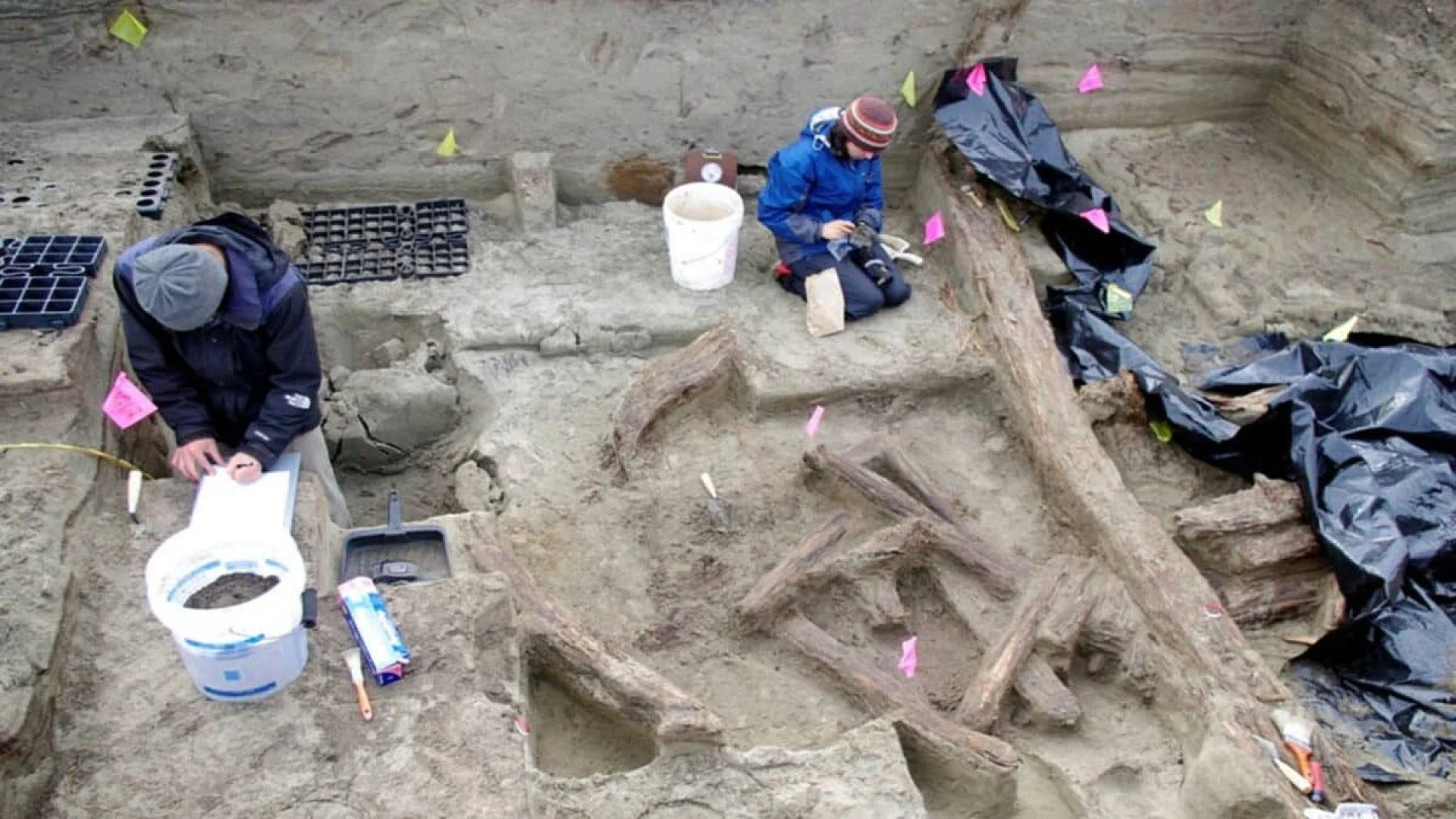
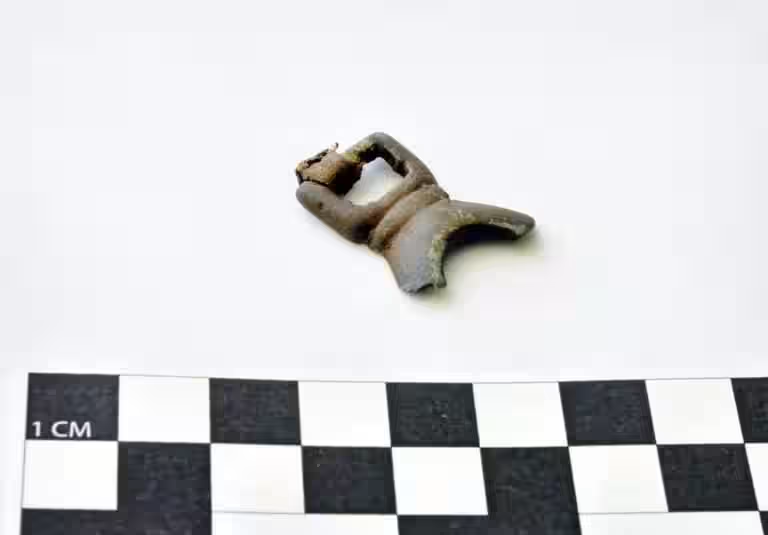
Archaeologists excavating a 1,000‑year‑old house on Alaska’s Seward Peninsula have uncovered a tiny bronze piece that may have originated in East Asia, offering a rare glimpse of long‑distance connections across the Arctic in prehistoric times. The cast object, measuring roughly two inches by one inch and less than an inch thick, appears to be the first bronze artifact of its kind identified in the region.
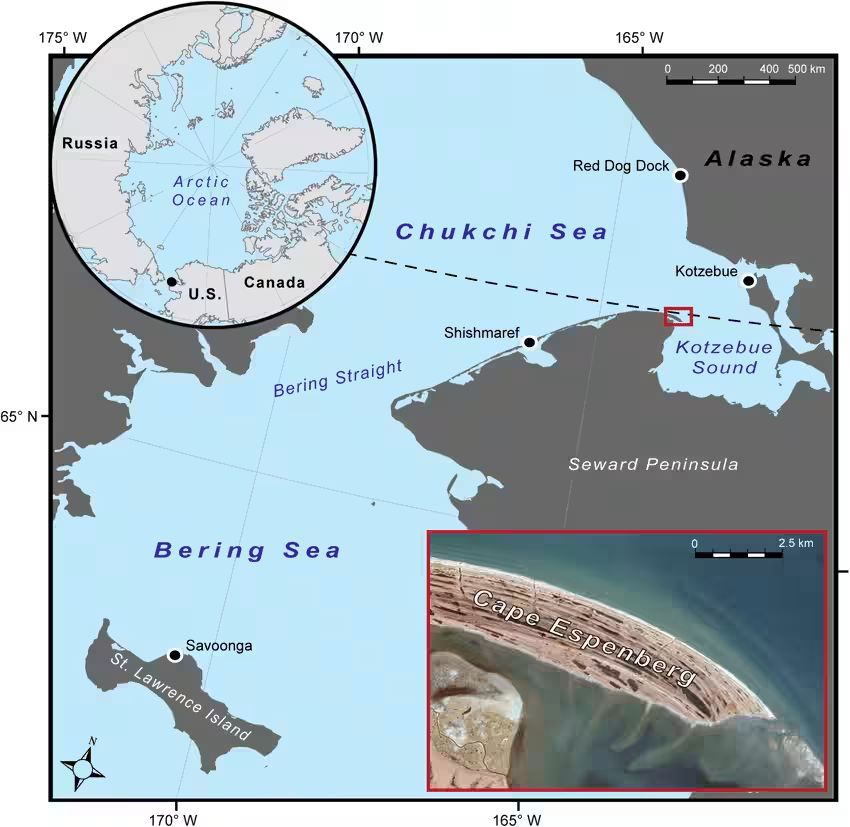
The discovery emerged from digs at Cape Espenberg, a site within the Bering Land Bridge National Preserve where early Inupiat Eskimos built a dwelling into a beach ridge. The bronze fragment was recovered from three feet of sediment near the entrance of the house by doctoral candidate Jeremy Foin of the University of California, Davis.
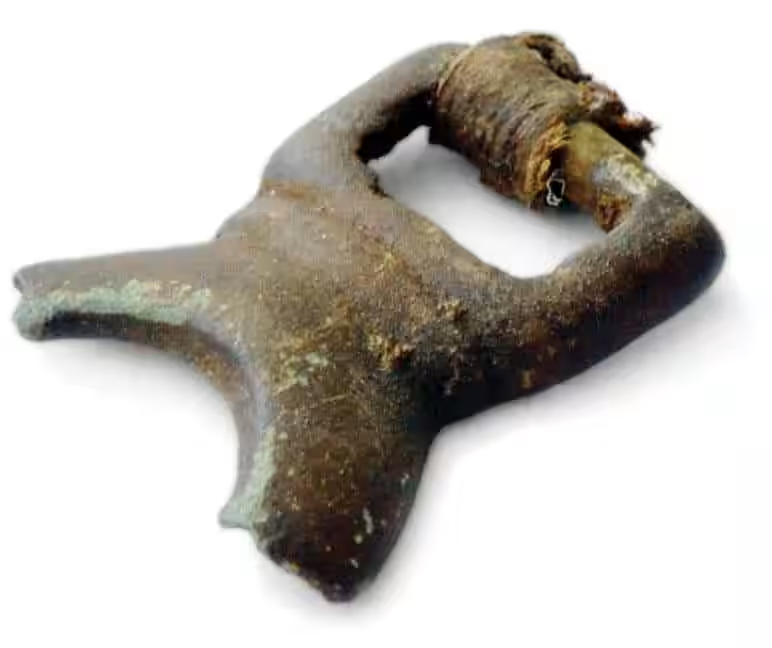
According to a University of Colorado press release, the item consists of a rectangular bar joined to a broken circular ring. One side is beveled while the opposite side shows a shallow hollow, indicating it was produced in a mold. The find immediately raised questions about its age and provenance.
“The shape of the object immediately caught my eye. After I saw that it clearly had been cast in a mold, my first thought was disbelief, quickly followed by the realization that I had found something of potentially great significance,” he said.
Radiocarbon Clues Suggest an Earlier Origin
A small leather fragment wrapped around the bronze’s rectangular portion was also recovered. Radiocarbon analysis dates the leather to around A.D. 600, a timeline that predates the construction of the house itself. John Hoffecker of the University of Colorado’s Institute of Arctic and Alpine Research cautioned that the leather’s age does not necessarily reflect when the bronze was cast.
“I was totally astonished,” Hoffecker said. “The object appears to be older than the house we were excavating by at least a few hundred years.”
The research team has not yet pinpointed the artifact’s function. Hoffecker and colleague Owen Mason note that its shape resembles a belt buckle, suggesting it may have once been part of a harness, a horse ornament, or later repurposed as a clothing fastener or ceremonial adornment.
Tracing a Possible Trans‑Bering Journey
Because there is no evidence of prehistoric bronze production in Alaska, the scholars argue the piece likely originated in East Asia—potentially Korea, China, Manchuria, or southern Siberia. Hoffecker highlighted the early bronze‑casting traditions of southern Siberian steppe cultures as a plausible source.
Two scenarios have been proposed. The artifact may have traveled along extensive trade networks that stretched across the Bering Strait, or it could have accompanied the first Inupiat migrants who entered northwest Alaska from Siberia roughly 1,500 years ago. Mason offered a straightforward explanation: the object’s value may have encouraged generations of caretakers to retain and pass it down within families.
“It was possibly valuable enough so that people hung onto it for generations, passing it down through families.”
While the bronze piece does not provide a definitive answer about its route or purpose, its modest size underscores a remarkable episode in the archaeological record—one that hints at far‑reaching interactions long before European contact.
This article has been fact checked for accuracy, with information verified against reputable sources. Learn more about us and our editorial process.
Last reviewed on .
Article history
- Latest version
Cite this page:
- Posted by Vikram Desai