Scientists Discovered a Hidden Magma Surge That Nearly Erupted 32,000 Olympic Pools Beneath an Island
Подземный магматический бум в Атлантике остался незамеченным
In March 2022 a swarm of tremors rattled São Jorge Island in the Azores, hinting at an unusual process deep beneath the surface. Researchers from University College London later quantified the event as a massive injection of magma—enough to fill roughly 32 000 Olympic‑size swimming pools—raising concerns that the island was on the brink of an eruption.
The molten material ascended rapidly from depths exceeding 20 kilometres, yet most of its ascent was virtually silent, generating only faint seismic signals. Only when the magma approached shallower crustal layers did the frequency of earthquakes increase, prompting scientists to question how close the island came to an actual eruption.
Volcanologists emphasize that these concealed magma pulses are key to decoding the evolution of volcanic islands. While not every subsurface intrusion culminates in an eruption, such events continually remodel landforms. The investigation, published in Nature Communications, merged seismometer recordings, satellite observations, and GPS data to trace the magma’s pathway with unprecedented clarity.
Rapid Magma Intrusion Detected Beneath São Jorge
Dr. Stephen Hicks of UCL Earth Sciences described the ascent as occurring within a matter of days. “Much of its journey was silent,” he noted, underscoring the difficulty of forecasting such hidden events. Satellite measurements showed the island’s surface bulged by about six centimetres, confirming that magma had breached the shallow crust before stalling roughly 1.6 kilometres beneath the ground, creating what scientists term a “failed eruption.”
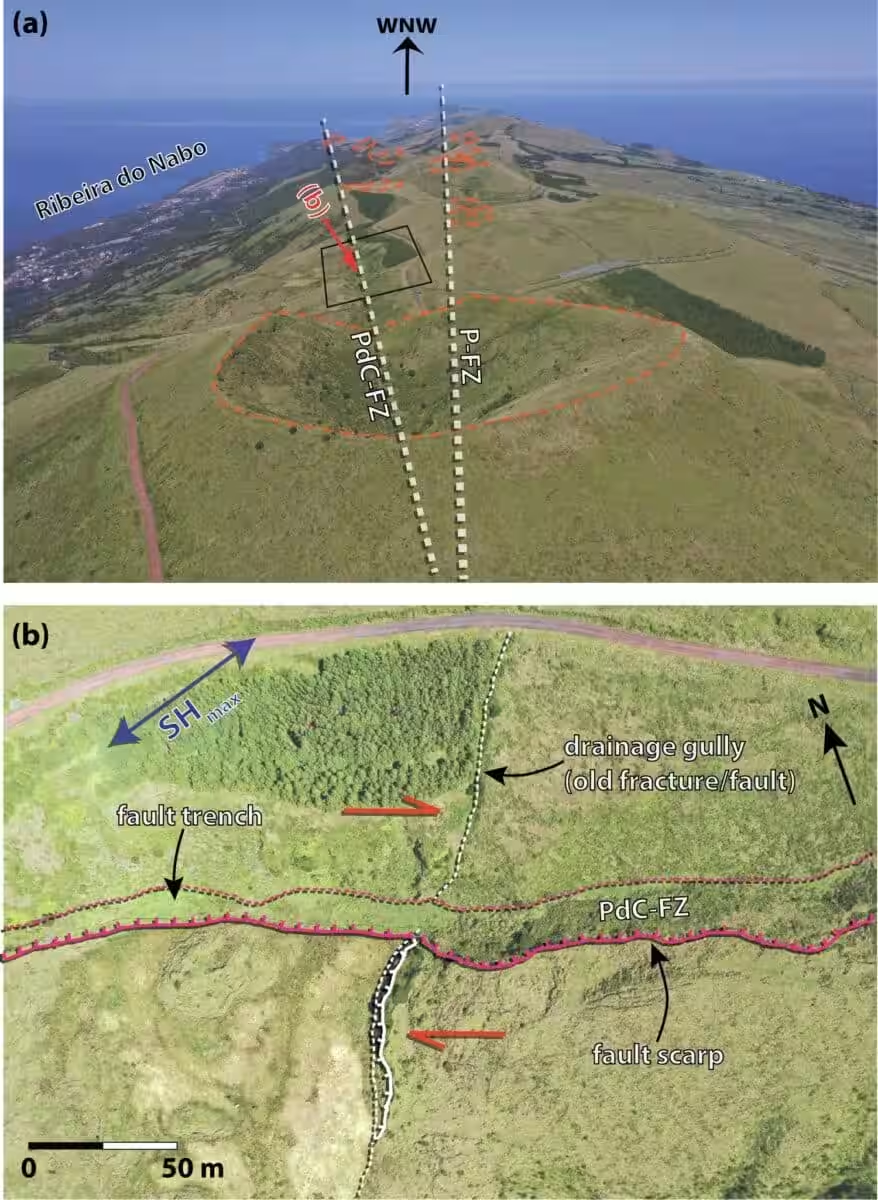
Fault Network Channelled the Melt
The study identified the Pico do Carvão Fault Zone as the principal conduit for the rising magma. Rather than a single, large‑magnitude quake, the intrusion sparked thousands of modest tremors along the fault line. Dr. Pablo J. González of the Spanish National Research Council explained:
“The fault acted like both a highway and a leak. It helped magma rise, but may also have prevented an eruption.”
This dual behaviour likely relieved pressure within the magma chamber, curbing the ascent of molten rock and averting a surface eruption.
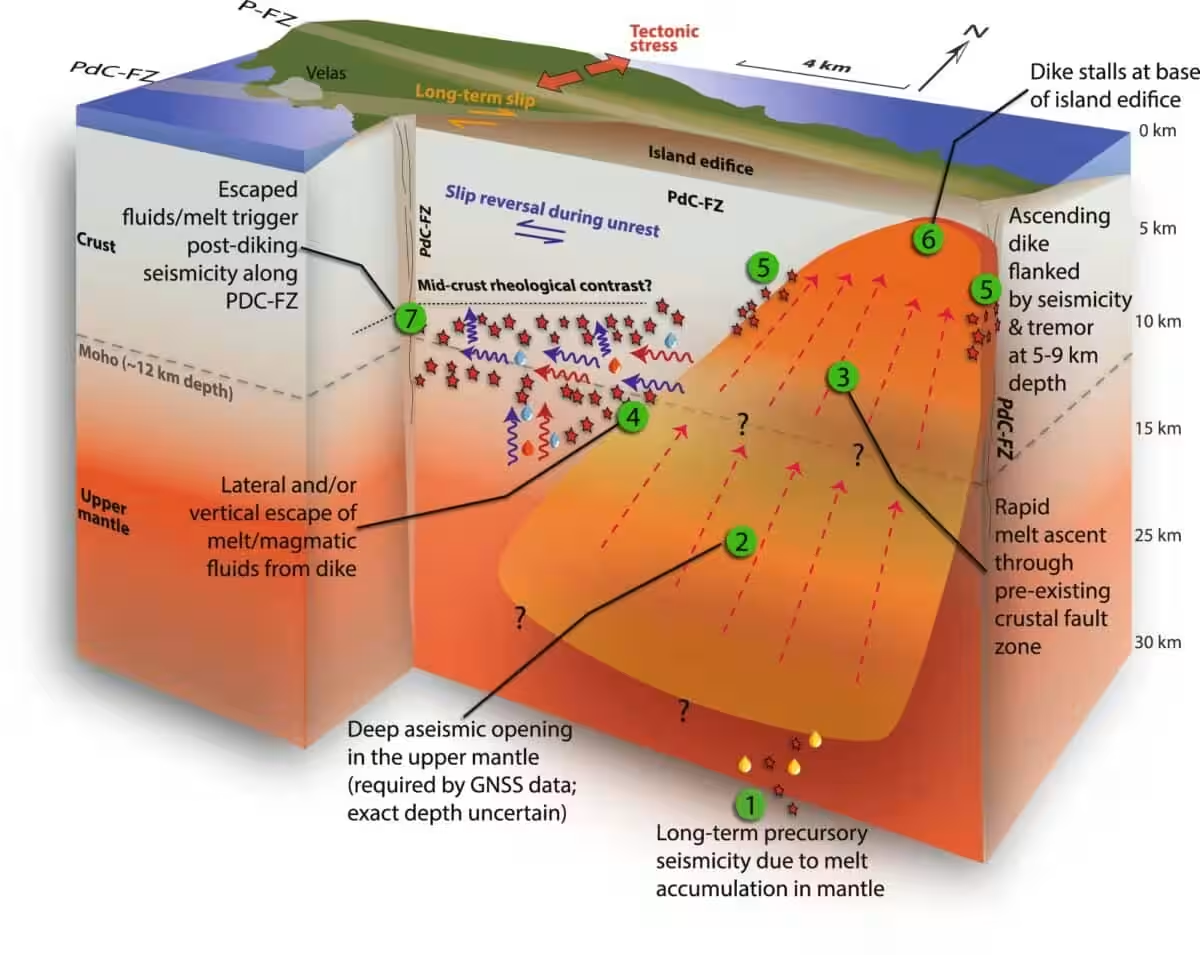
The observations illustrate how fault structures can both guide magma and serve as pressure‑release channels for volcanic fluids and gases.
Integrated Geophysical Survey Maps the Subsurface Flow
To reconstruct the intrusion, the team deployed seismometers on the island and across the Atlantic seafloor, complemented by GPS and satellite data. Dr. Ricardo Ramalho of Cardiff University highlighted the practical impact: “This study supported local authorities in assessing a potential volcanic threat, highlighting the value of combining onshore and offshore geophysical data for accurate detection and localisation of seismic events and ground deformation.”
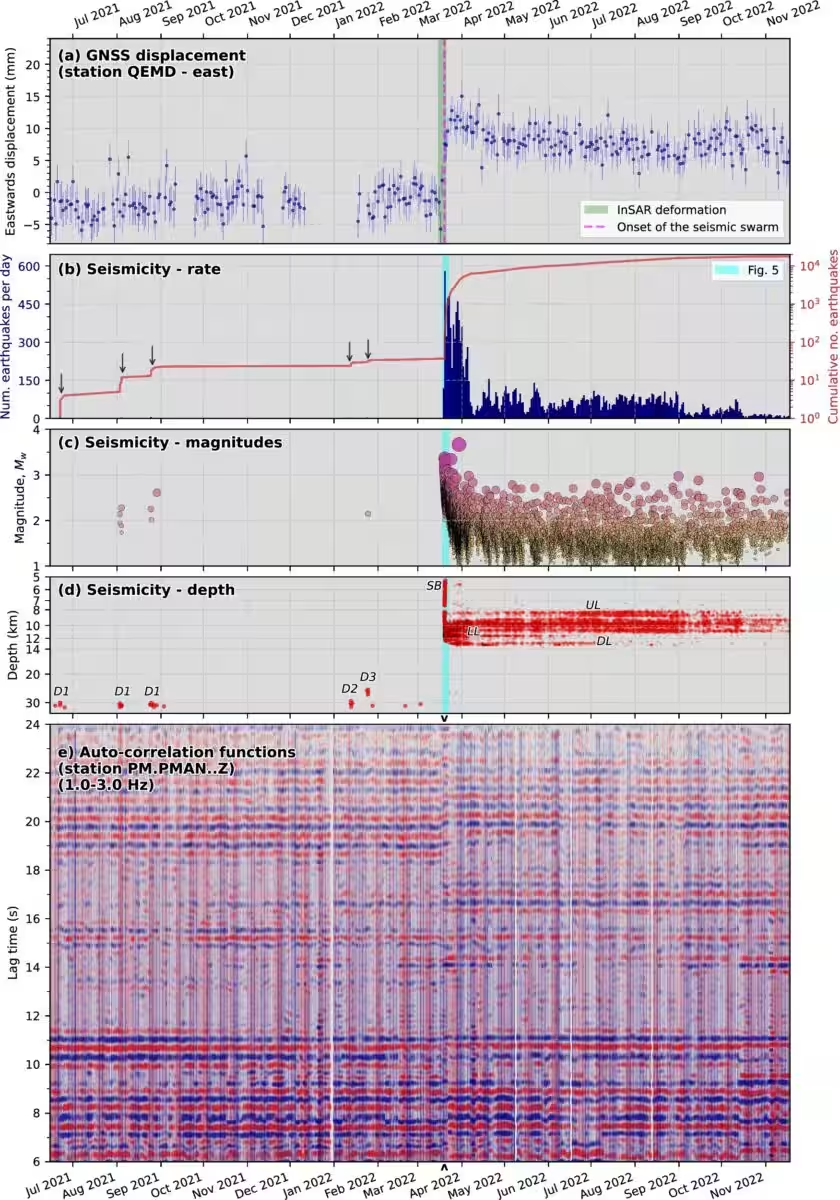
The resulting maps provide one of the clearest visualisations to date of magma migration beneath volcanic islands, detailing how molten rock interacts with fault systems and surrounding crustal material.
The São Jorge episode demonstrates how vast quantities of magma can shift rapidly beneath the Earth’s surface with minimal warning. Although an eruption never materialised, the thousands of quakes recorded during the episode offered a rare glimpse into the hidden dynamics that sculpt the island and supplied volcanologists worldwide with valuable data for future hazard assessments.
This article has been fact checked for accuracy, with information verified against reputable sources. Learn more about us and our editorial process.
Last reviewed on .
Article history
- Latest version
Reference(s)
- “Discovery.” <https://profiles.ucl.ac.uk/89579-stephen-hicks>.
- “Pablo J. González | Instituto de Productos Naturales y Agrobiología.” <https://www.ipna.csic.es/en/personnel/pablo-j-gonzalez>.
- <https://profiles.cardiff.ac.uk/staff/ramalhor>.
Cite this page:
- Posted by Vikram Desai