Scientists Found The Real Reason T. rex Had Tiny Arms May Have Nothing to Do With Its Size
The tiny forelimbs of T. rex have long baffled scientists, but fresh findings suggest an unexpected rationale behind their diminutive size.
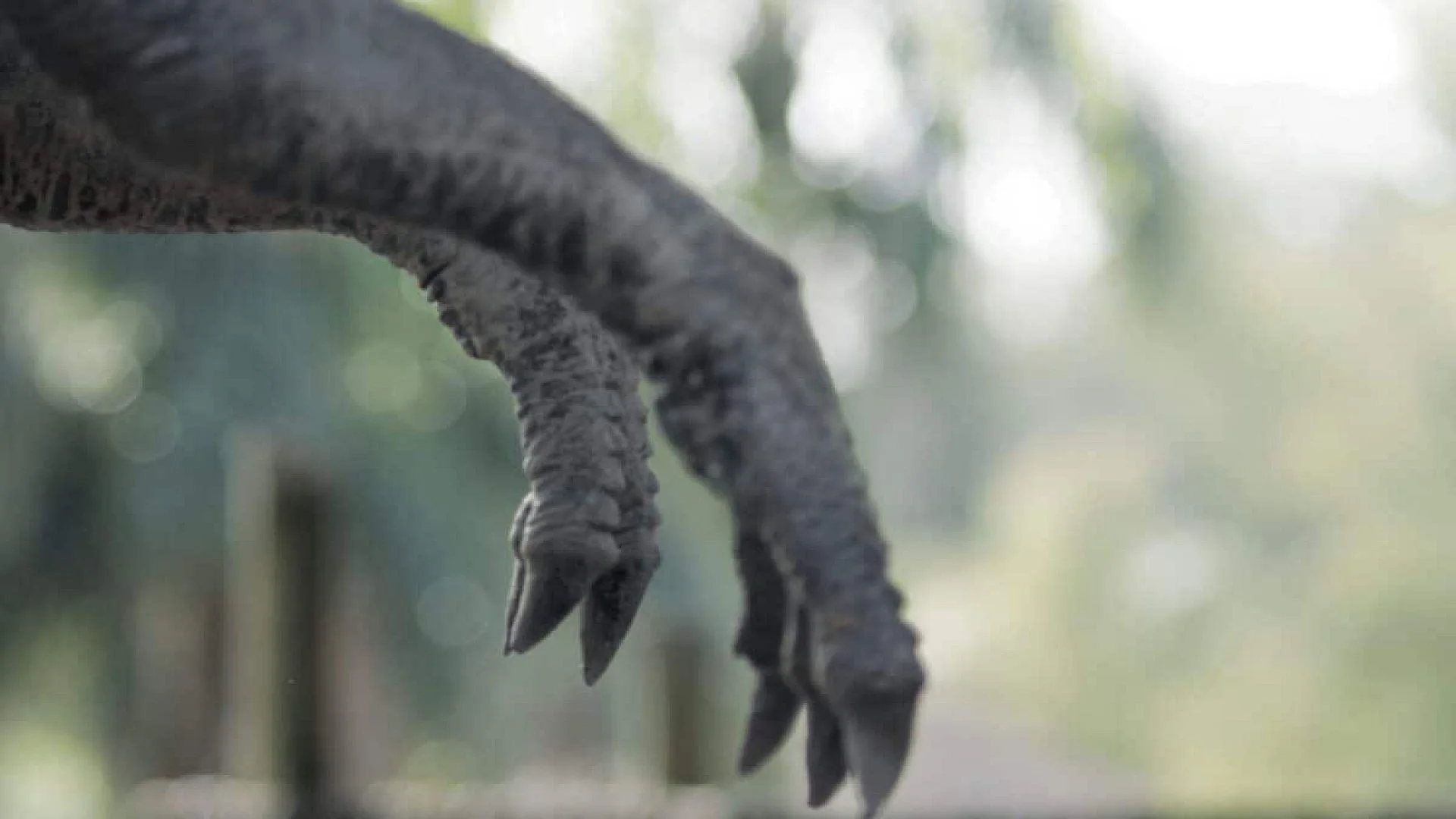
The diminutive forelimbs of Tyrannosaurus rex have long been a subject of fascination for scientists. A recent study now offers a plausible explanation: giant predatory dinosaurs may have relied so heavily on their formidable jaws that their forelimbs gradually became less essential.
Researchers from UCL and the University of Cambridge analyzed 82 species of theropods, the group of two-legged carnivorous dinosaurs that included T. rex. Their findings, published in Proceedings of the Royal Society B, reveal that several groups of predators evolved smaller arms alongside increasingly robust skulls and stronger bites.
Scientists have proposed numerous theories over the years to explain the famously short arms of T. rex. Some theories focused on feeding habits, while others suggested the limbs may have played a role in mating or balance. This new research took a broader approach by comparing multiple dinosaur groups to identify larger evolutionary patterns.
The Link Between Tiny Arms and Stronger Skulls
One pattern emerged clearly in the study: dinosaurs with reduced forelimbs consistently had more heavily built skulls. To investigate the connection, the researchers developed a method to measure skull robustness using several traits, including bite force, skull shape, and how tightly the skull bones were connected.
Using that system, T. rex came out on top as the most robust skull among all species analyzed. Another giant predator, Tyrannotitan from present-day Argentina, ranked close behind. Lead author Charlie Roger Scherer, a PhD student at UCL Earth Sciences, summed up the idea quite directly:
“”We sought to understand what was driving this change and found a strong relationship between short arms and large, powerfully built heads. The head took over from the arms as the method of attack. It’s a case of ‘use it or lose it’ — the arms are no longer useful and reduce in size over time.”
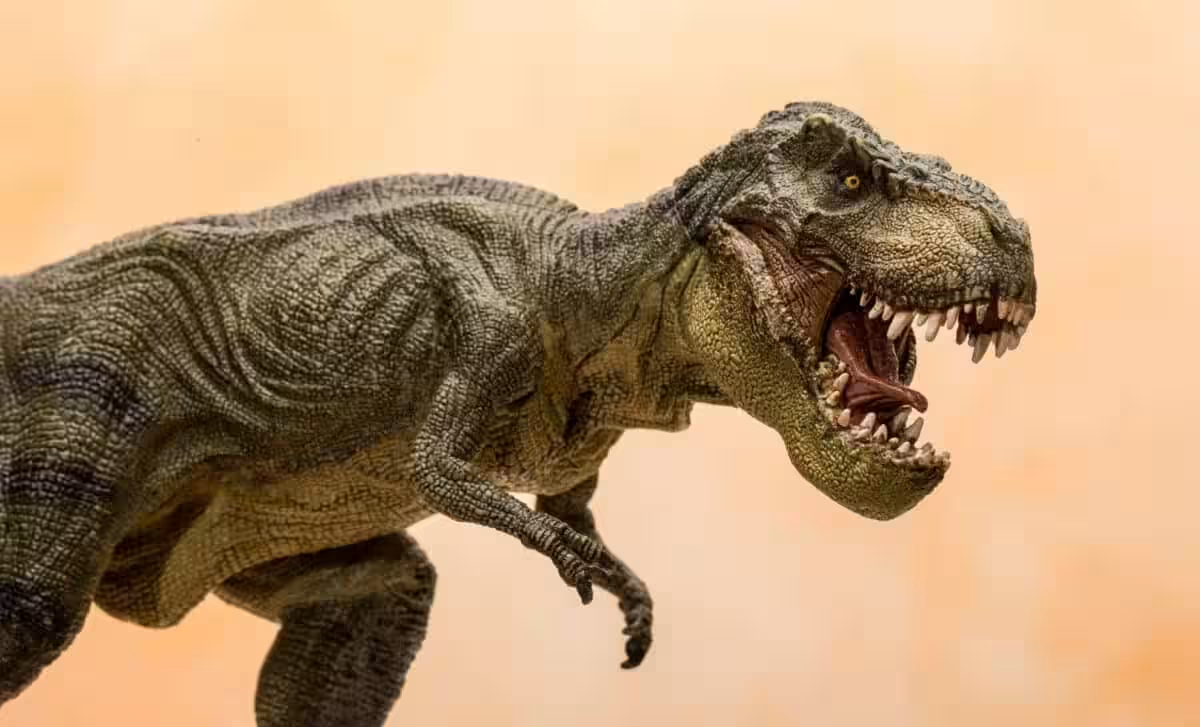
The researchers believe the rise of massive herbivores may have pushed predators to evolve stronger jaws capable of delivering crushing bites. Over time, forelimbs may simply have become less important during hunts.
T. rex Wasn’t the Only Dinosaur With Tiny Arms
The study also makes clear that T. rex was not alone in evolving reduced forelimbs. Tiny arms appeared independently in several groups of carnivorous dinosaurs. Among them were the tyrannosaurids, abelisaurids, carcharodontosaurids, megalosaurids, and ceratosaurids.
One of the best-known examples is Carnotaurus, the South American predator famous for having arms even smaller than those of T. rex. Another species examined in the study, Majungasaurus, lived in Madagascar around 70 million years ago. Althoughthey weighed only about 1.6 tons, much less than Tyrannosaurus rex, it still had extremely reduced forelimbs paired with a heavily built skull.
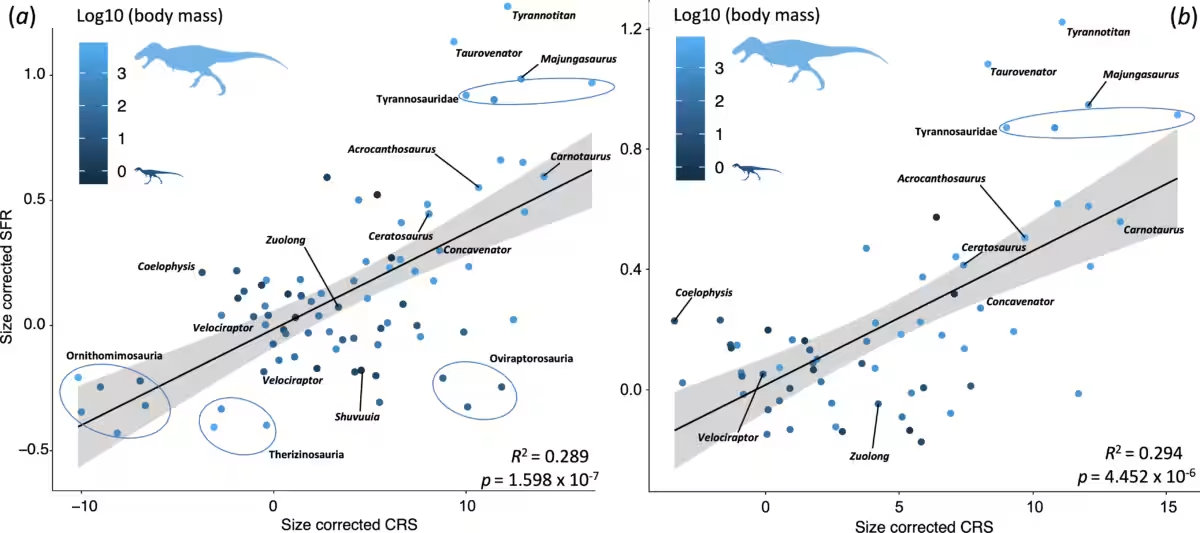
Researchers say that detail is important because it shows the trend was not limited to the very largest predators. The study also found that skull robustness had a much stronger connection to forelimb reduction than overall body size did.
Not All Dinosaurs Shrunk Their Arms the Same Way
Even though several theropod groups evolved tiny forelimbs, they did not all get there in exactly the same way. Among the abelisaurids, the biggest reductions happened in the hands and lower arm sections beyond the elbow. Species such as Majungasaurus eventually developed extremely tiny hands.
The tyrannosaurids followed a different evolutionary path. In their case, the reduction appeared more evenly across the entire forelimb. Researchers say this suggests separate dinosaur lineages reached similar results through different developmental pathways.
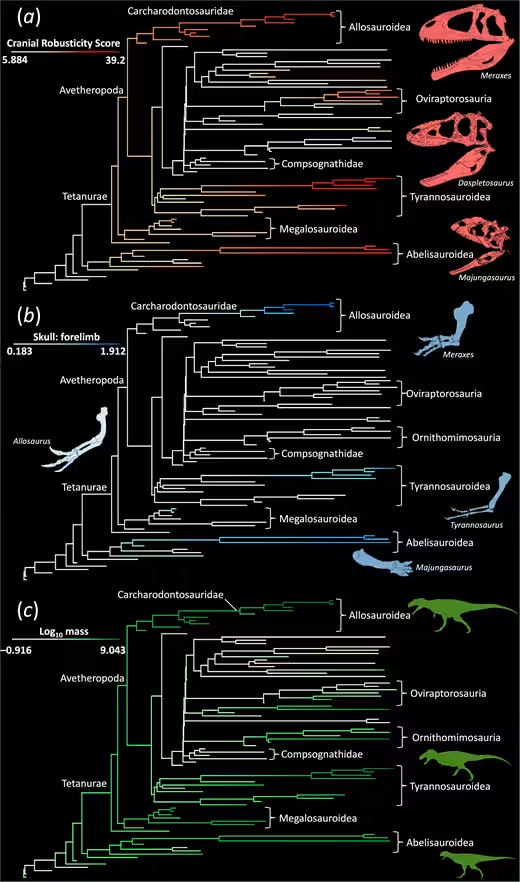
The study also indicates that skull strengthening probably happened before the arms started shrinking significantly. As Scherer pointed out, these predators would not likely give up an effective hunting tool unless another one was already capable of taking over.
This article has been fact checked for accuracy, with information verified against reputable sources. Learn more about us and our editorial process.
Last reviewed on .
Article history
- Latest version
Reference(s)
- “Charlie Scherer.” Faculty of Mathematical & Physical Sciences <https://www.ucl.ac.uk/mathematical-physical-sciences/earth-sciences/people/research-students/charlie-scherer>.
- <https://royalsocietypublishing.org/rspb/article/293/2071/20260528/481779/Drivers-and-mechanisms-of-convergent-forelimb>.
Cite this page:
- Posted by Vikram Desai