China Is Digging a Record-Breaking Tunnel More Than 100 Meters Beneath the Sea for High-Speed Trains
Engineers are currently excavating beneath the Pearl River Estuary, a vital and heavily trafficked waterway in southern China.
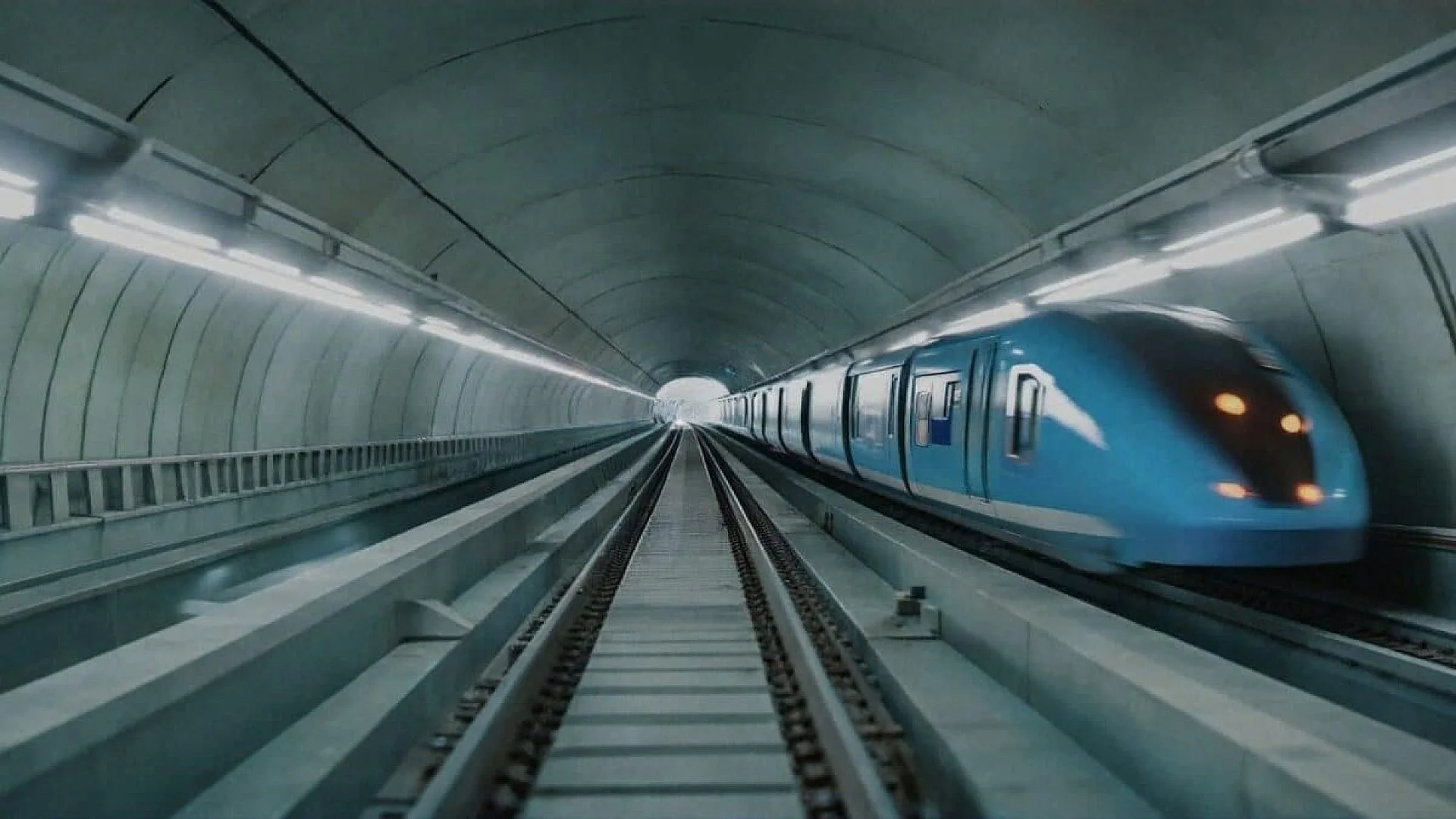
Deep beneath the waves of southern China’s seabed, a monumental feat of engineering is unfolding. The Chinese-built Shenjiang-1 tunnel boring machine is pushing the boundaries of what’s thought possible, constructing the world’s deepest undersea tunnel for a high-speed railway. After four years of non-stop work, the project has already surpassed the 4-kilometer mark, with a record depth of 113 meters below the seabed achieved in April 2026.
This ambitious project is part of the future Shenzhen-Jiangmen high-speed rail line, a 116-kilometer connection that will revolutionize travel between the two cities, reducing journey times to under an hour. According to CGTN, excavation reached a remarkable depth of 113 meters below the seabed in April 2026, setting a new world record for an undersea high-speed railway tunnel.
The undersea crossing stretches for 13.69 kilometers beneath waterways linked to the Pearl River system, situated between Dongguan and Guangzhou. CGTN reports that the tunnel reached a depth of 113 meters beneath the seabed earlier this year, establishing a world record for an undersea high-speed railway tunnel. Engineers expect the maximum excavation depth to reach 116 meters, where hydraulic pressure becomes one of the project’s main technical constraints.
The tunnel itself has a diameter exceeding 13 meters, making it one of the largest structures of its kind built under such conditions. The tunnel boring machine, designed and manufactured in China for deep undersea excavation, has progressed through highly unstable terrain beneath the estuary, relying on two slurry circulation systems to maintain stability underground.
Behind the tunnel boring machine, crews install prefabricated concrete segments that form the tunnel lining. Each segment measures roughly two meters wide, and nine pieces are assembled to complete a full ring inside the structure. This simultaneous process, excavation at the front and structural assembly behind, allows construction to continue without interruption despite the demanding underwater conditions.
The project relies on the Shenjiang-1 tunnel boring machine, designed and manufactured in China for deep undersea excavation. Over four years of uninterrupted work, the machine has progressed through highly unstable terrain beneath the estuary, crossing 13 geological strata, five categories of composite geology, and six separate fault zones. These conditions expose the excavation system to constant pressure variations and mechanical stress.
To maintain stability underground, the machine uses two slurry circulation systems. One delivers fluid directly to the cutting head to reduce friction during excavation. The second transports excavated material back to the surface, where it is processed before being reused in the operation.
The tunnel is part of a larger infrastructure program connected to the Guangdong-Hong Kong-Macao Greater Bay Area. Once operational, the Shenzhen-Jiangmen railway will join China’s coastal high-speed rail corridor. China currently operates more than 45,000 kilometers of high-speed rail lines, the largest such network in the world.
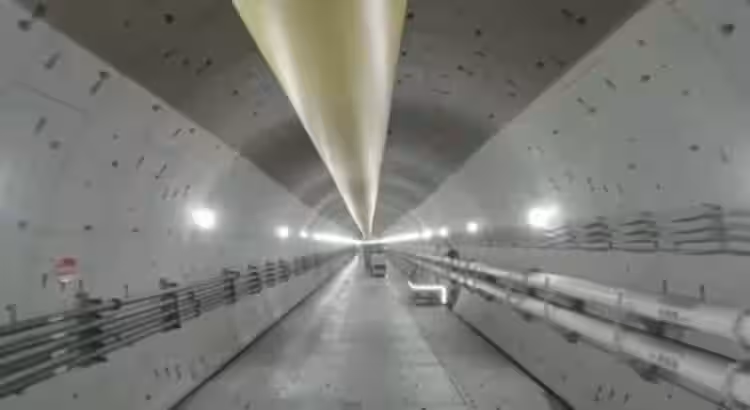
The broader railway corridor will extend across 116 kilometers once completed, directly linking Shenzhen and Jiangmen in southern China.
“We are now at a stage where transport integration is prioritised, so various means of transport need to take one another into account,” stated David Feng, an independent Chinese railway specialist.
The tunnel is part of a larger infrastructure program connected to the Guangdong-Hong Kong-Macao Greater Bay Area. Once operational, the Shenzhen-Jiangmen railway will join China’s coastal high-speed rail corridor. China currently operates more than 45,000 kilometers of high-speed rail lines, the largest such network in the world.
This article has been fact checked for accuracy, with information verified against reputable sources. Learn more about us and our editorial process.
Last reviewed on .
Article history
- Latest version
Cite this page:
- Posted by Vikram Desai