Scientists Discover Massive Underground Lava Tube On Venus
Radar observations have uncovered the first documented subterranean lava tube on Venus, exposing an expansive concealed volcanic landscape.
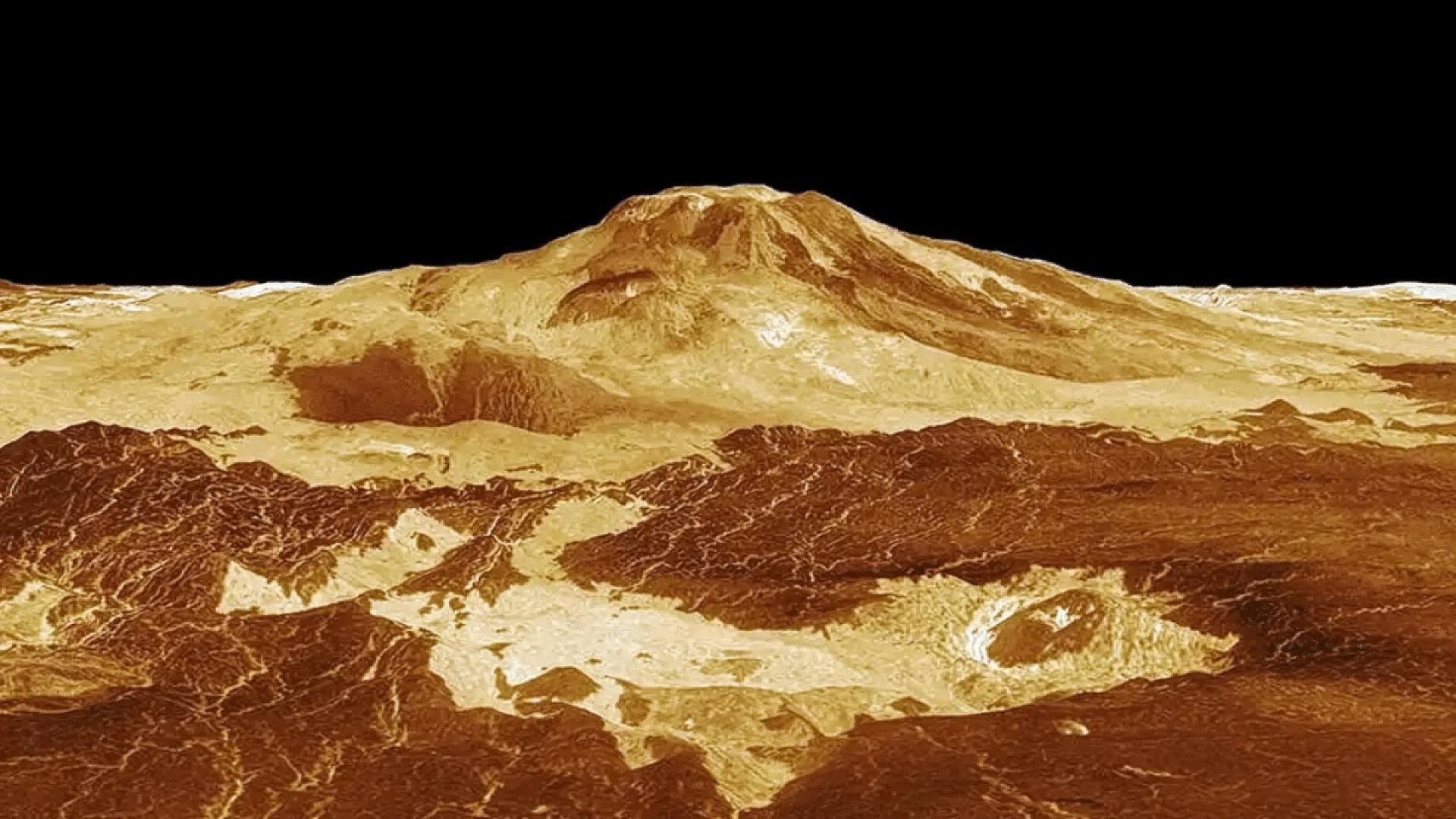
Groundbreaking Discovery Unveils Hidden World Beneath Venus
A team of planetary scientists has made a monumental breakthrough, confirming the existence of a colossal volcanic cave beneath the surface of Venus. This groundbreaking discovery, detailed in Nature Communications, marks a pivotal moment in geological research, providing the first direct evidence of intact underground lava tunnels on the planet.
Radar Unveils Hidden Subsurface Landscape
Venus’s dense, cloud-covered atmosphere has long posed a significant challenge to mapping its surface using visible-light imaging. Instead, researchers rely on radar technology, which can penetrate the thick clouds and reveal detailed surface features. By analyzing data from NASA’s Magellan spacecraft (1990–1992), a team led by Lorenzo Bruzzone at the University of Trento detected an unusual radar signature in a collapse pit near Nyx Mons, a volcanic rise on Venus.
The radar signal extended beyond the pit’s edge, indicating an interior hollow space beneath the crust. “The identification of a volcanic cavity is therefore of particular importance, as it allows us to validate theories that for many years have only hypothesized their existence,” said Bruzzone. The bright radar streak, paired with a shadowed region suggesting roof collapse, closely mirrors signals observed in lava tube skylights on Earth, supporting the interpretation of a subsurface conduit rather than a simple surface depression.
Unveiling the Size and Structure of the Venusian Lava Tube
Measurements indicate the opening spans approximately 0.6 miles across, significantly wider than most terrestrial lava tubes. The roof above the cavity appears at least 490 feet thick, while the empty chamber beneath rises over 1,230 feet, creating a vast internal space.
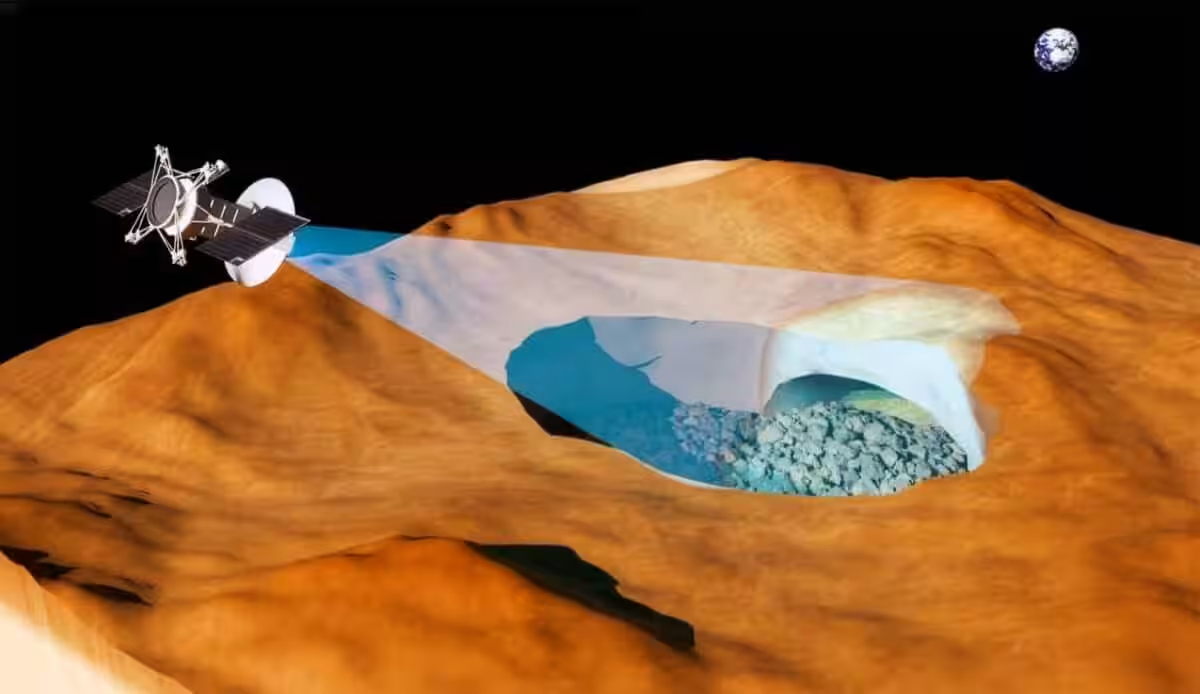
Credit: University of Trento.
These dimensions suggest that Venus’s lower gravity and dense atmosphere may allow lava crusts to form faster and thicker than on Earth, enabling unusually wide tunnels to remain structurally stable. Lava tubes form when flowing molten rock develops a hardened surface layer while molten lava continues to move beneath. Once the lava drains or diverts, the channel remains hollow. On Venus, this process appears capable of producing enormous underground passages, potentially linking multiple collapse pits along long chains that stretch for hundreds of miles across the planet.
Implications for Future Venus Exploration
This discovery, detailed in Nature Communications, marks a turning point for Venusian geological research. Until now, the existence of underground lava tubes had only been theoretical. The newly identified tunnel near Nyx Mons provides a tangible site for future observation, and its presence raises questions about the extent of subsurface volcanic networks.
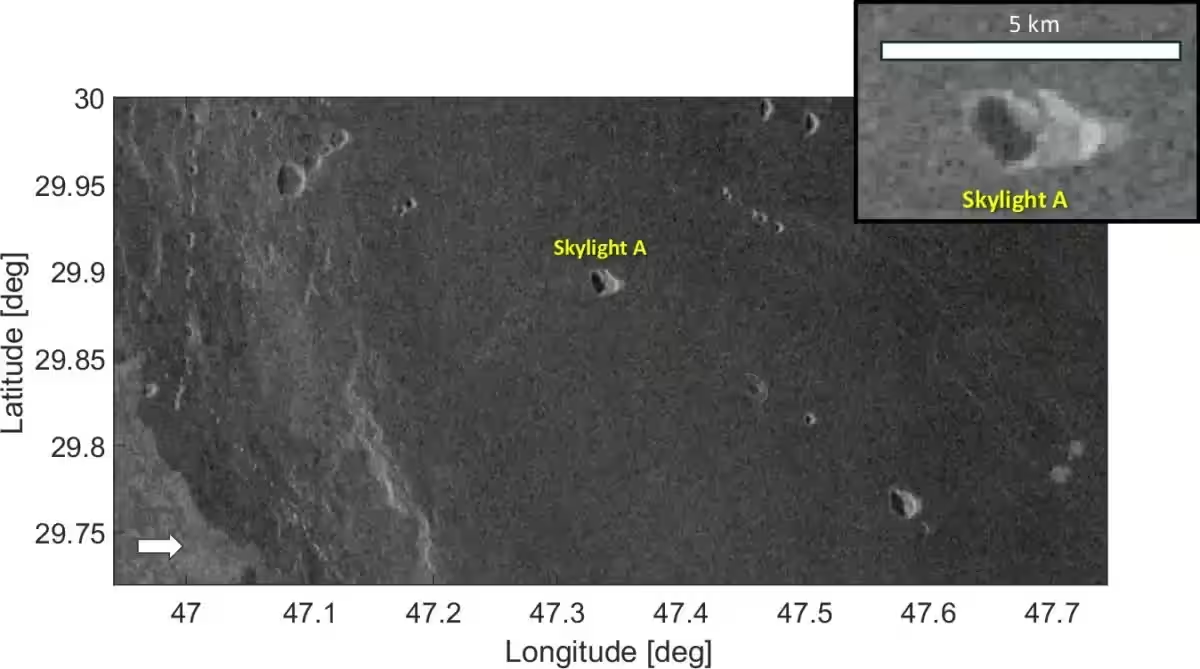
Magellan radar image of Venus (Magellan’s Radar System – Full Resolution Radar Left-Look Mosaic, framelet ID: fl29n047) displaying several pit chains and the identified skylight, marked as A, potentially providing access to the subsurface (i.e., empty void). The white arrow indicates the radar illumination direction.
Credit: Nature Communications
Upcoming missions, including ESA’s EnVision orbiter and NASA’s VERITAS mission, promise to expand our understanding of these structures. EnVision will deploy ground-penetrating radar capable of probing up to 3,300 feet below the surface, while VERITAS will offer sharper radar imaging and topography to map Venus with unprecedented resolution. These missions could reveal whether the Nyx Mons conduit is a rare anomaly or part of an extensive underground network hidden beneath Venusian plains.
Chains of Collapse Pits Suggest Extensive Networks
Long chains of collapse pits run across Venus’s surface, hinting at the possibility of interconnected underground tunnels. The Nyx Mons pit lies along one such chain, with terrain slopes and nearby pits suggesting that the tunnel could extend roughly 28 miles beyond the confirmed opening. While some pits may be blocked by debris, the distinctive radar signature of Nyx Mons provides a rare confirmation of open subsurface space.
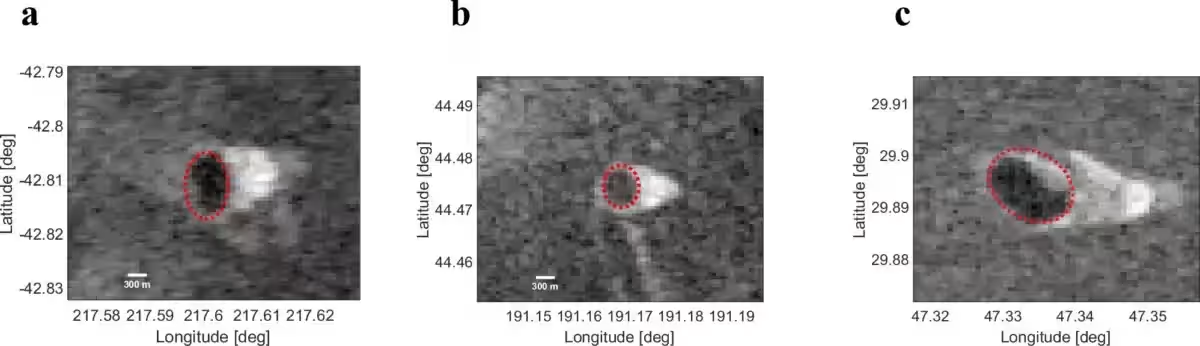
a A pit near Idunn Mons. b A pit in Ganiki Planitia and c the candidate skylight denoted A near Nyx Mons shown in Fig. 1.
Credit: Nature Communications
As Bruzzone noted, “The identification of a volcanic cavity is therefore of particular importance, as it allows us to validate theories that for many years have only hypothesized their existence.” Each new collapse pit with similar radar features may guide scientists to other intact lava tubes, offering fresh insights into Venus’s volcanic past and the evolution of its crust.
Transforming Theoretical Models into Observable Features
The discovery not only validates long-standing hypotheses about Venusian geology but also establishes specific targets for exploration. The tunnel’s dimensions, location, and radar signature provide a model for identifying other potential lava tubes and understanding the role of subsurface volcanism in shaping Venus’s landscape.
Future studies may answer fundamental questions about how volcanic activity and atmospheric conditions interact to create such vast underground cavities. By combining high-resolution radar mapping with advanced modeling, researchers hope to chart a previously invisible layer of Venusian geology, opening new possibilities for planetary science and comparative studies with Mars and the Moon.
This article has been fact checked for accuracy, with information verified against reputable sources. Learn more about us and our editorial process.
Last reviewed on .
Article history
- Latest version
Cite this page:
- Posted by Vikram Desai