During A Hike, Scientists Discovered That A Cliff In Alaska Revealed Thousands Of Well-Preserved Dinosaur Tracks At Sunset
After lying concealed for countless centuries, these enigmatic footprints in the Alaskan wilderness finally emerged under the ideal illumination.
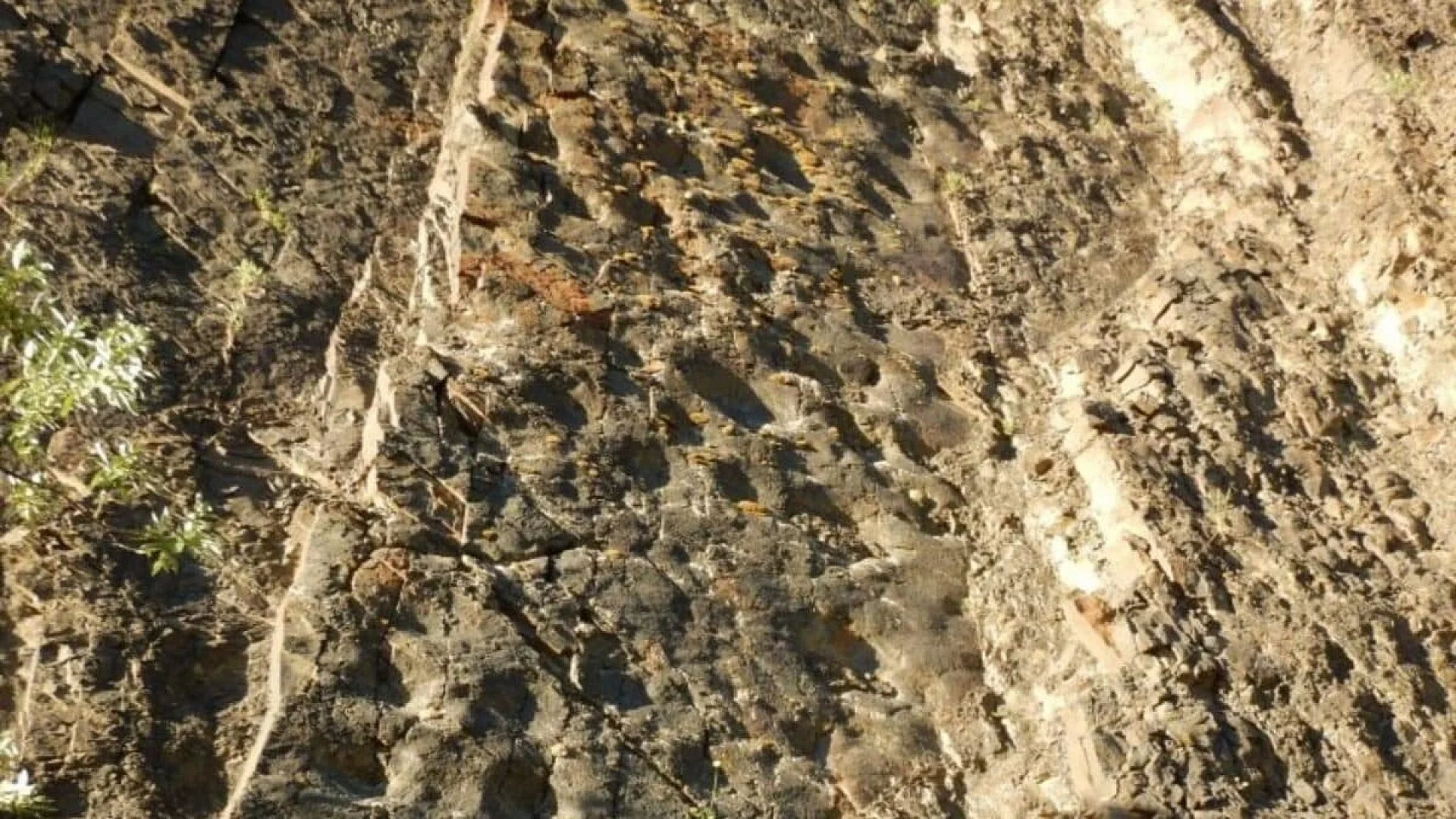
Scientists working in Denali National Park and Preserve have made a groundbreaking discovery, uncovering the largest known dinosaur tracks site ever found in Alaska. Dubbed “The Coliseum,” this massive site contains thousands of fossilized footprints left by dinosaurs that roamed the region 70 million years ago during the Late Cretaceous period.
According to researchers from the University of Alaska Fairbanks, the discovery offers a rare glimpse into an ancient ecosystem that once covered Interior Alaska. The findings were published in the journal Historical Biology.
Researchers reached the site after a long hike through the park, initially unimpressed by the rocky formations. However, as the evening sun hit the rock at the right angle, the true extent of the discovery became apparent.
The Tracks Only Became Visible At Sunset
The site spans an area similar to a small shopping center, with repeated layers of prehistoric footprints, making The Coliseum unlike smaller dinosaur track sites previously discovered in Denali National Park.
“It’s not just one level of rock with tracks on it,” lead author Dustin Stewart explained in comments released with the study. “It is a sequence through time. Up until now, Denali had other track sites that are known, but nothing of this magnitude.”
Initially, researchers did not realize the scale of the discovery. Pat Druckenmiller, director of the University of Alaska Museum of the North, explained that the team initially spotted only a few tracks near the base of the formation. As the evening light shifted across the rock surface, hundreds more footprints suddenly appeared.
“When the sun angles itself perfectly with those beds, they just blow up,” Stewart said. “Immediately all of us were just flabbergasted.”
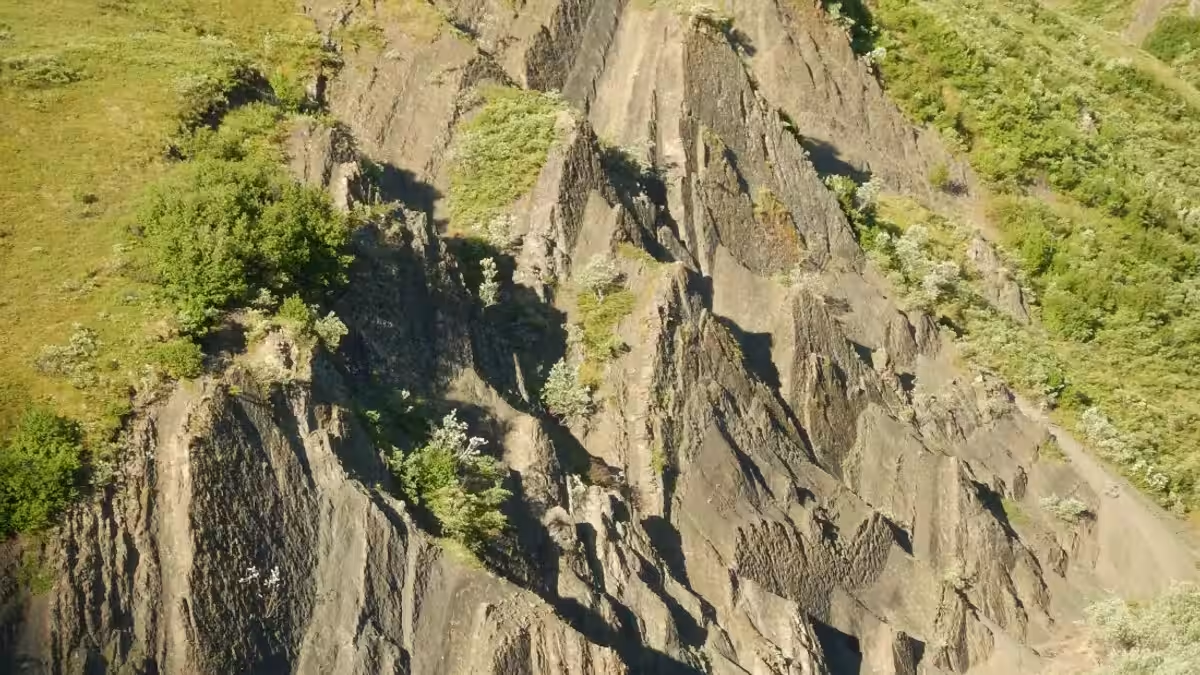
The rock walls, rising more than 20 stories high, were once part of a muddy floodplain crossed by rivers and ponds where dinosaurs repeatedly walked through soft sediment millions of years ago.
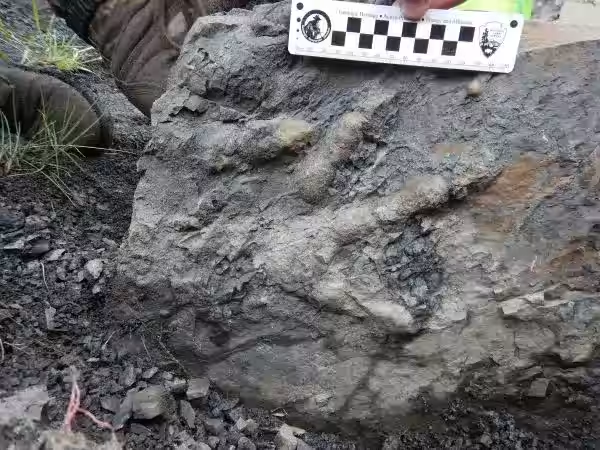
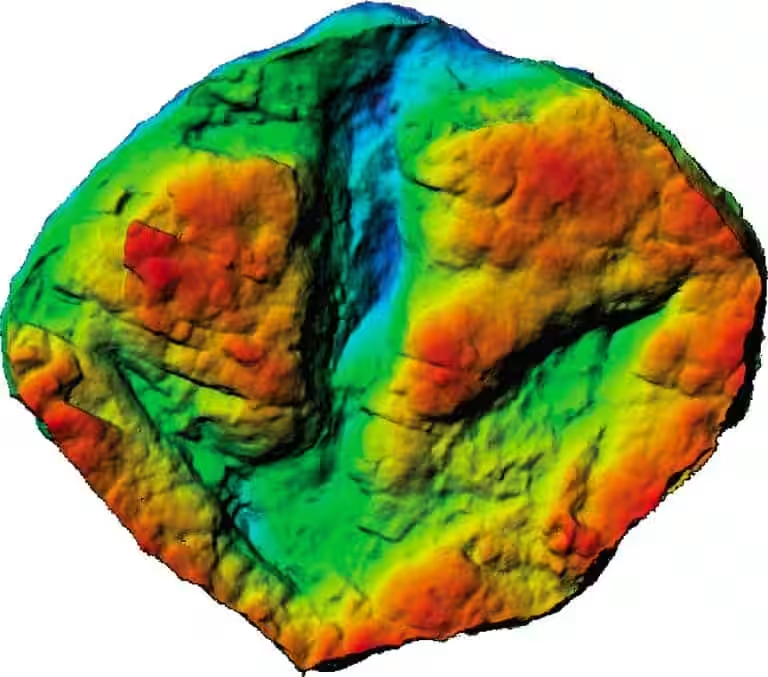
Researchers explained that tectonic activity linked to the formation of the Alaska Range later tilted those ancient sediment layers upward, exposing the fossil-rich surfaces visible today. Some tracks remain preserved as direct impressions in hardened mud, while others formed natural casts after sediment filled the footprints and solidified. Druckenmiller stated that several prints still preserve detailed toe shapes and even traces of skin texture.
Fossils Helped Recreate An Ancient Landscape
The dinosaur tracks were only part of what scientists found at the site. The team also uncovered fossilized plants, pollen grains, freshwater shellfish, and traces of small invertebrates.
As mentioned in the study published in Historical Biology, all of those remains helped researchers piece together what the environment looked like 70 million years ago. The area was part of a large river system surrounded by ponds and lakes.
Back then, the climate was warmer than modern Interior Alaska. Researchers compared the landscape to parts of today’s Pacific Northwest, with forests of coniferous and deciduous trees, along with thick ferns and horsetails growing below them.
“All these little clues put together what the environment looked like as a whole,” Stewart said.
The collection of fossils gave scientists a broader picture of how animals and plants lived together in prehistoric northern ecosystems.
Giant Plant-eaters Once Dominated The Region
Most of the tracks found at The Coliseum belonged to large plant-eating dinosaurs, especially duck-billed dinosaurs and horned dinosaurs. Scientists identified tracks from both juveniles and adults, suggesting the area was visited repeatedly over thousands of years.
The research team also documented footprints from predators, including raptors and tyrannosaurs, along with smaller tracks likely left by birds and flying reptiles.
As Druckenmiller noted, prehistoric Denali was filled with wildlife very different from the landscape visitors know today. He also added that:
“There was a tyrannosaur running around Denali that was many times the size of the biggest brown bear there today. There were raptors. There were flying reptiles. There were birds. It was an amazing ecosystem.”
The fossil site is now protected by the National Park Service, which plans to continue working with researchers as new track layers and fossils are studied.
This article has been fact checked for accuracy, with information verified against reputable sources. Learn more about us and our editorial process.
Last reviewed on .
Article history
- Latest version
Reference(s)
- “Denali National Park & Preserve (U.S. National Park Service).” <https://www.nps.gov/dena>.
- “Dustin Stewart - United States Department of State.” United States Department of State <https://www.state.gov/biographies/dustin-stewart>.
- “Dr. Pat Druckenmiller | Museum | Museum of the North.” <https://www.uaf.edu/museum/collections/earth/staff/curator/>.
- Claudia, “The Alaska Range: Mountains in their most extreme form.”, December 8, 2025 Top Summits of the World <https://www.topsummitsoftheworld.com/en/alaska-mountain-range-extreme-mountains/>.
- Dustin G. Stewart, , et al. “Vertebrate ichnology and palaeoenvironmental associations of Alaska’s largest known dinosaur tracksite in the Cretaceous Cantwell Formation (Maastrichtian) of Denali National Park and Preserve.” Historical Biology, vol. 36, no. 8, July 27, 2023, pp. 1540-1556. Informa UK Limited, doi: 10.1080/08912963.2023.2221267. <https://www.tandfonline.com/doi/full/10.1080/08912963.2023.2221267>.
Cite this page:
- Posted by Vikram Desai