Highway Construction Unearths Massive Iron Age Celtic Settlement Overflowing With Gold Treasure
A routine highway survey in the Czech Republic has uncovered a massive cache of ancient gold, revealing hidden treasures untouched for over 2,000 years.
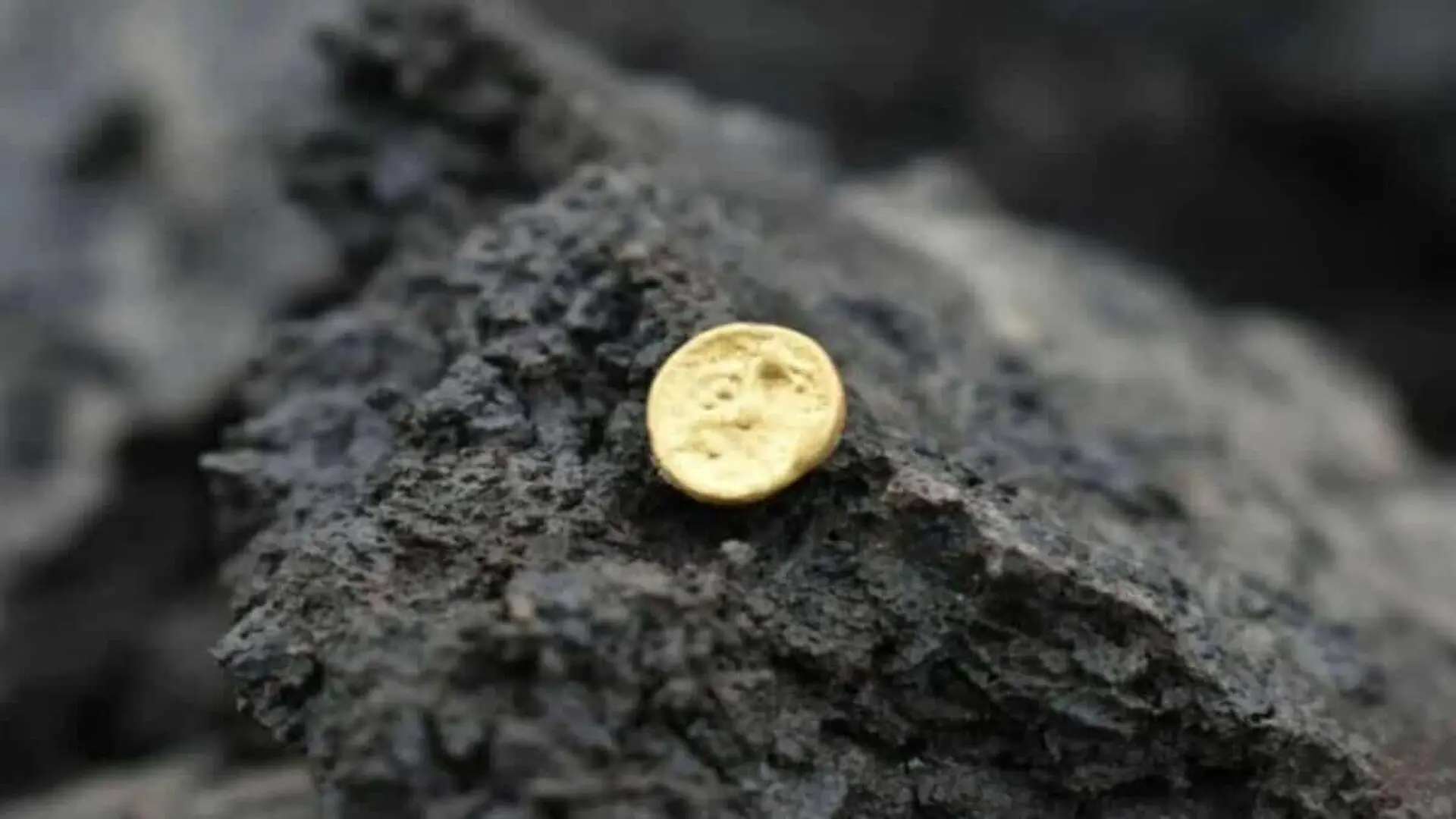
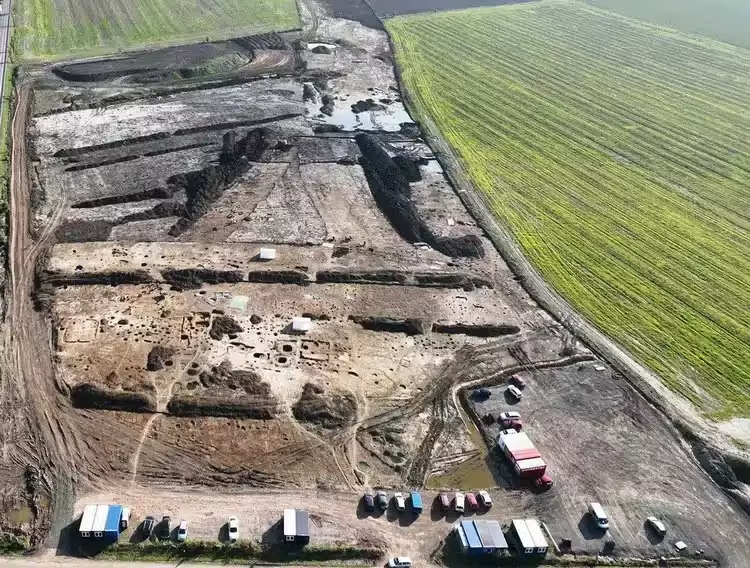
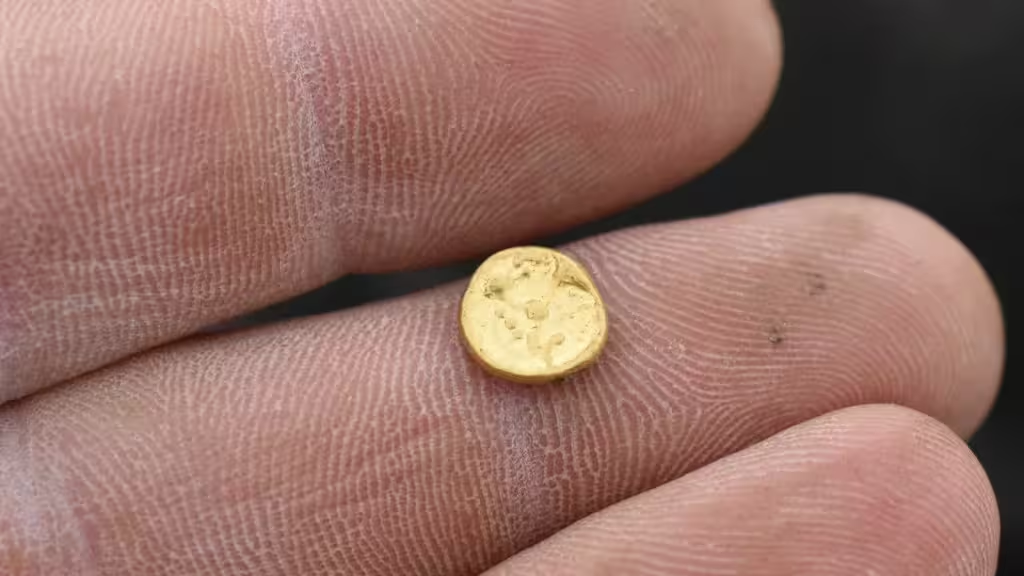
Archaeologists surveying a site for the planned D35 motorway in the Czech Republic have uncovered an extraordinary Iron Age settlement, transforming a standard pre-construction assessment into one of the most significant archaeological finds in Bohemian history. The excavation, spanning a 62-acre area, has revealed a treasure trove of artifacts dating back to the second century B.C., including hundreds of gold and silver coins, luxury ceramics, amber, and intricate jewelry.
The team, led by the Museum of East Bohemia in Hradec Králové, discovered that the site functioned as a sophisticated La Tène-period hub, housing workshops, residential foundations, and even a ritual sanctuary. The sheer volume of material recovered is immense, requiring the researchers to catalog approximately 22,000 bags of artifacts. Experts have described the site as one of the largest and most well-preserved collections ever unearthed in the region.
A Rare Window Into Ancient Commerce
Unlike many historical sites that have been disturbed over the centuries, this location offers an exceptionally clean archaeological record. According to the museum’s official assessment, the settlement served as a major supra-regional production and trade center. The presence of amber, refined ceramics, and the specialized tools used to mint currency suggests that this community was deeply integrated into long-distance economic networks.
“The settlement was a supra-regional trade and production center connected to long-distance trade routes, as evidenced by the finds of amber, gold and silver coins, and evidence of the production of luxury ceramics.”
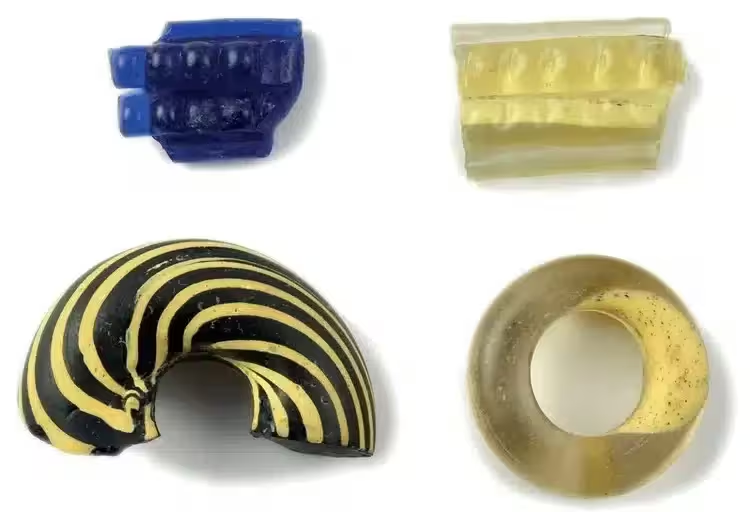
The site’s significance is further bolstered by the quality of the findings, which include bronze and iron brooches, decorative metal belt components, and glass beads. Tomas Mangel, a professor at the University of Hradec Králové and co-lead on the project, highlighted that the density of material preserved in the soil horizons is far beyond standard expectations for such an excavation, as noted in reports by Live Science.
Evidence of an Open Trading Hub
Archaeologists have noted a striking absence of fortifications, such as walls or moats, at the site. This suggests that the settlement predates the era of fortified hilltop sites, or oppida, that eventually became the standard in Celtic Europe. Instead, this location likely functioned as an open, trade-focused entity, strategically positioned along the Amber Road, an ancient route that facilitated the movement of goods between the Baltic Sea and the Mediterranean.
An Enduring Identity Mystery
Despite the sheer breadth of the artifacts recovered, the specific cultural identity of the inhabitants remains a subject of ongoing investigation. While the region is historically associated with the Boii, a Celtic tribe, researchers emphasize that evidence linking the site definitively to that specific group is currently lacking.
“Bohemia is traditionally really connected with the Boii,” Mangel stated. “But the research done recently shows that we can only say that the Boii were settled somewhere in Central Europe.”
The Museum of East Bohemia is currently curating a selection of these finds for public display, providing a glimpse into the daily life and economic vitality of this ancient society as the long-term cataloging process continues.
This article has been fact checked for accuracy, with information verified against reputable sources. Learn more about us and our editorial process.
Last reviewed on .
Article history
- Latest version
Reference(s)
- “Unikátní nález laténského sídliště - Muzeum východních Čech v Hradci Králové.” <https://www.muzeumhk.cz/novinky-archeologie/1840-unikatni-nalez-latenskeho-sidliste.html>.
- “Person - University of Hradec Králové.”, May 9, 2023 <https://www.uhk.cz/en/person/3984/tomas-mangel>.
- Jarus, Owen. “2,200-year-old Celtic settlement discovered in Czech Republic — and it's awash in gold and silver coins.”, July 18, 2025 Live Science <https://www.livescience.com/archaeology/2-200-year-old-celtic-settlement-discovered-in-czech-republic-and-its-awash-in-gold-and-silver-coins>.
Cite this page:
- Posted by Vikram Desai