Archaeologists Challenge Centuries Old Theory About Famous Ancient Burial Cave
Archaeologists may have discovered a lost royal tomb, uncovering monumental architecture and inscriptions that hint at a significant historical burial.
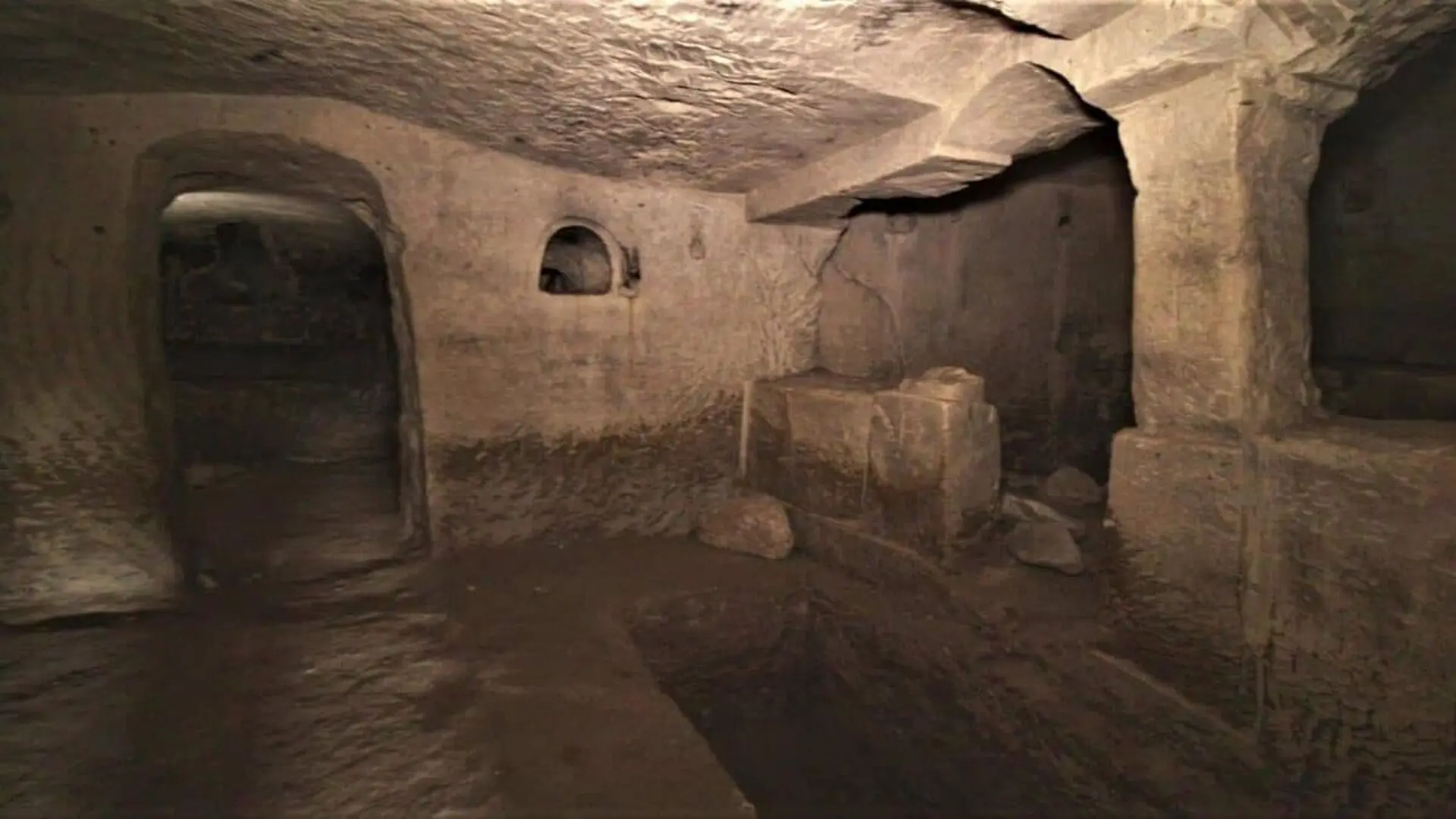
A prominent burial site in Judea, long venerated by Christian pilgrims as the final resting place of Salome—the midwife traditionally associated with the birth of Jesus—may have origins tied to the highest echelons of the Herodian dynasty. A new archaeological assessment challenges centuries of tradition, suggesting the monumental tomb was constructed for a member of the royal family during the first century B.C.
Architectural Clues to Elite Status
The site’s identification as the tomb of the biblical Salome largely stemmed from an ossuary inscribed with her name, a common moniker in antiquity. However, recent scrutiny of the tomb’s structural design by researchers from the Israel Antiquities Authority (IAA) indicates that the cave was built on a scale reserved for the aristocracy rather than a common local figure.
The complex features an expansive entrance courtyard and sophisticated architectural elements consistent with monumental burials from the period of Roman influence in Judaea. Archaeologists Vladik Lifshits and Nir-Shimshon Paran, who detailed their findings in the journal Atiqot, argue that these features point to an occupant of significant political power.
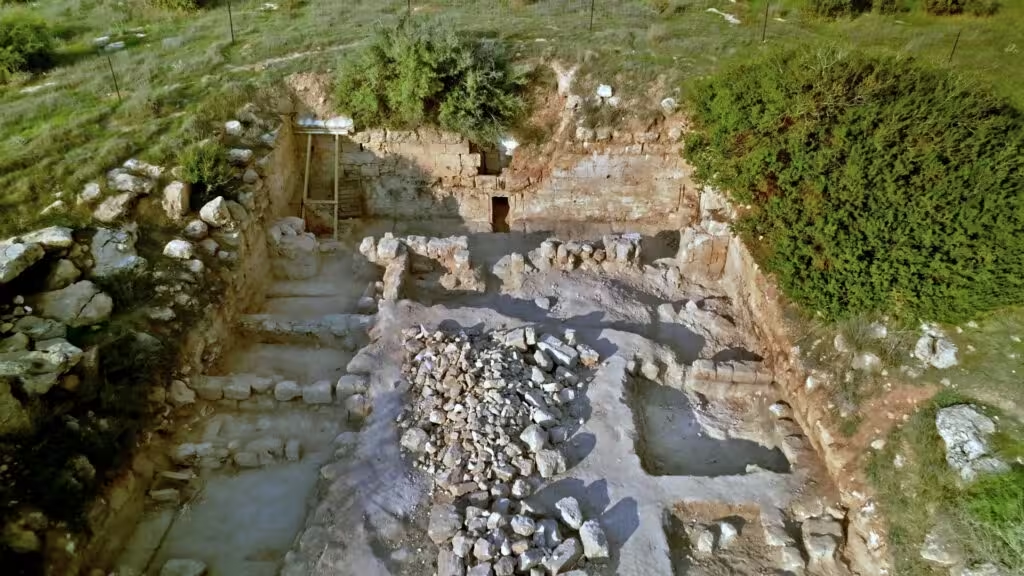
“It’s not that I think it must be the tomb of Salome, the sister of Herod,” Lifshits explained. “I’m suggesting that this is one of the possibilities.”
Royal Connections
The primary candidate proposed by the study is Salome, the sister of King Herod the Great, who governed Judaea from roughly 37 to 4 B.C. While the site is also historically linked to the younger Salome, known in New Testament accounts for her role in the death of John the Baptist, researchers favor the elder Salome due to the tomb’s construction chronology, which aligns more closely with her era.
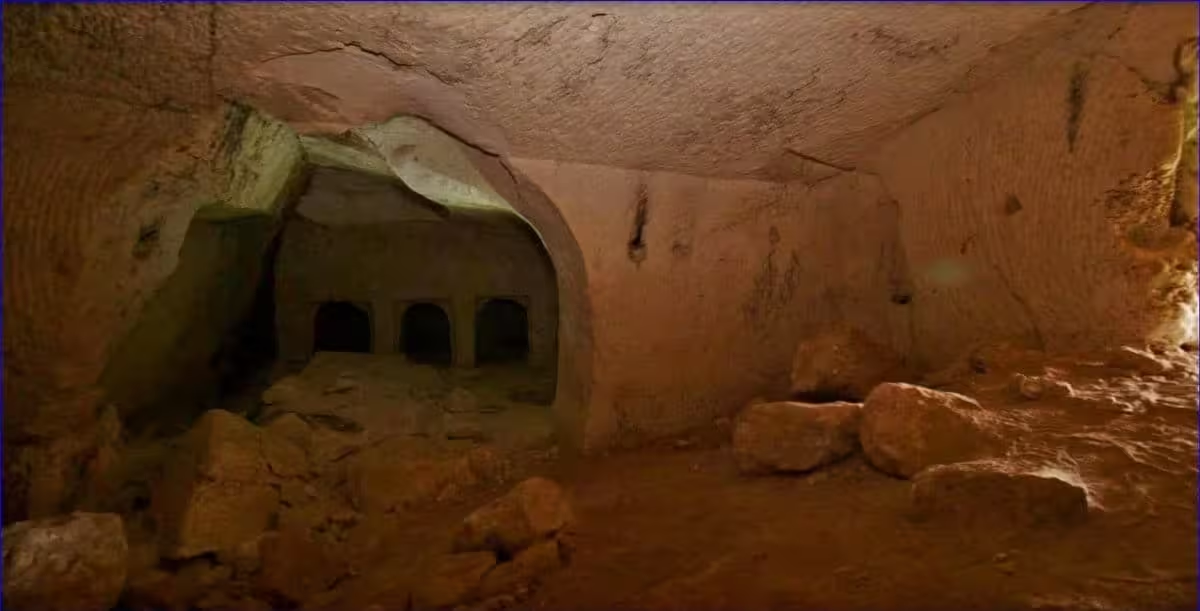
A Legacy of Pilgrimage
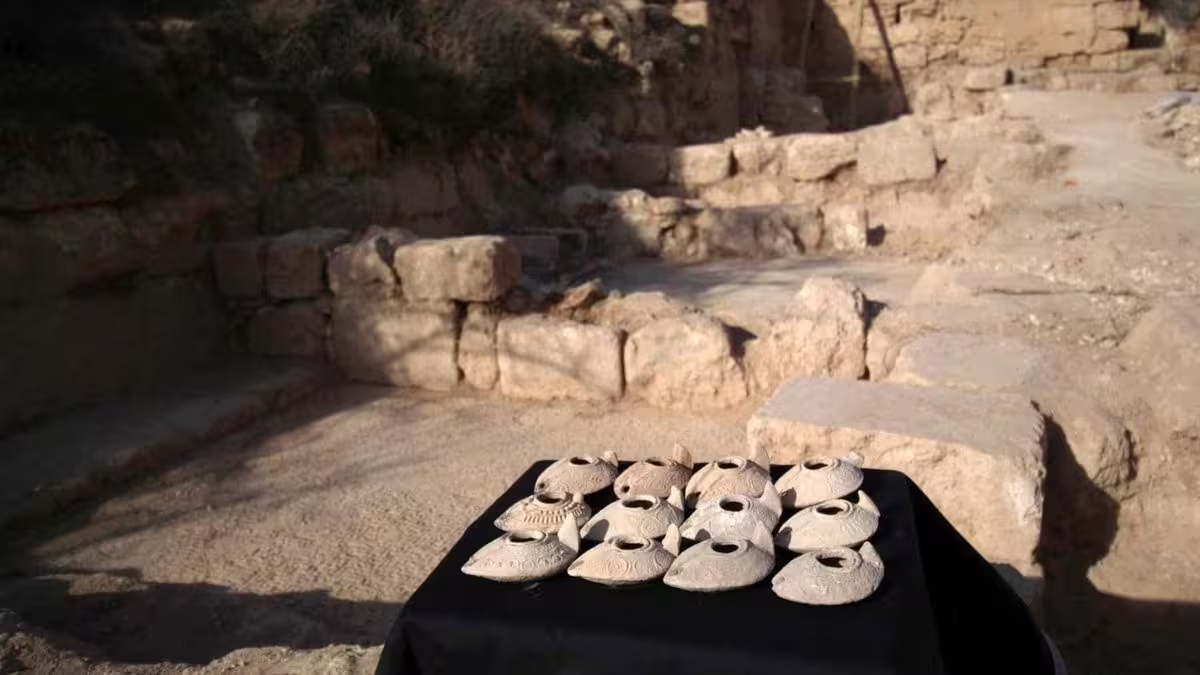
Despite its potential royal origins, the site gained its most enduring fame as a place of Christian devotion. Between the fourth and ninth centuries, the cave became a significant destination for pilgrims who believed it to be the resting place of the midwife of Bethlehem. Evidence of this fervor remains in the form of hundreds of clay oil lamps uncovered within the chamber, discarded by visitors centuries later.
The cave was brought back into the public eye following its discovery by looters roughly 40 years ago and subsequent formal excavation in 1984. Today, it stands as a focal point along the Judean Kings Trail.
While the architectural reassessment has been met with interest, some scholars caution that definitive proof remains elusive. Boaz Zissu of Bar-Ilan University, who was not involved in the study, noted in a report by Live Science that while the classification of the site as a monumental elite tomb is compelling, confirming its specific occupant will require further, more rigorous evidence.
This article has been fact checked for accuracy, with information verified against reputable sources. Learn more about us and our editorial process.
Last reviewed on .
Article history
- Latest version
Reference(s)
- “The Cave of Salome: A Second Temple Period Royal Burial Estate in the Judean Shephelah.” Israel Antiquities Authority Publications Portal <https://publications.iaa.org.il/atiqot/vol117/iss1/6/>.
- Metcalfe, Tom. “Ancient cave burial of 'Jesus' midwife' may actually hold a princess.”, May 30, 2025 Live Science <https://www.livescience.com/archaeology/ancient-cave-burial-of-jesus-midwife-may-actually-hold-a-princess>.
Cite this page:
- Posted by Vikram Desai