Construction Crew Uncovers Lost 500 Year Old Fortress Buried Beneath Modern Belgian City
Construction workers in a quiet Belgian city have unearthed a mysterious discovery buried for nearly 200 years while clearing land for a new project.
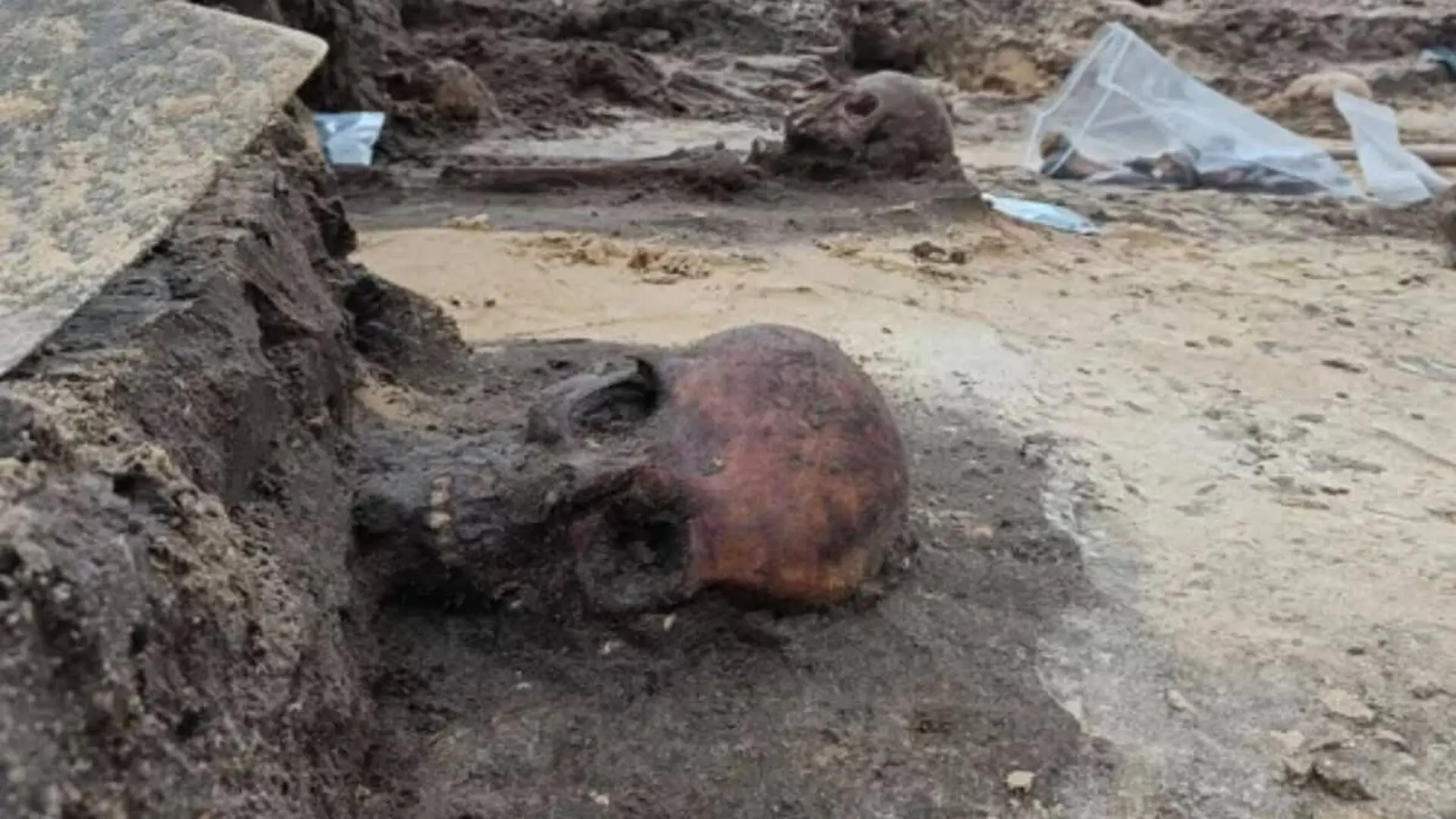
Construction workers preparing a site for a new residential development in Ghent, Belgium, have unearthed the substantial remains of a 16th-century fortress, a discovery that has peeled back centuries of urban history. The site, once commissioned by Emperor Charles V as an assertion of imperial dominance over the rebellious city, had been effectively erased from view by 19th-century urban expansion.
An Imperial Tool of Coercion
The fortress was not merely a military structure but a political statement. Following an uprising in Ghent against his tax policies, Charles V ordered the construction of the stronghold to loom over the city, serving as a permanent reminder of his authority. Over the ensuing centuries, the fortress gradually fell into ruin, eventually being buried under the foundations of a neighborhood built in the 1800s. Ironically, this layer of modern development acted as a protective shroud, insulating the site from further surface erosion.
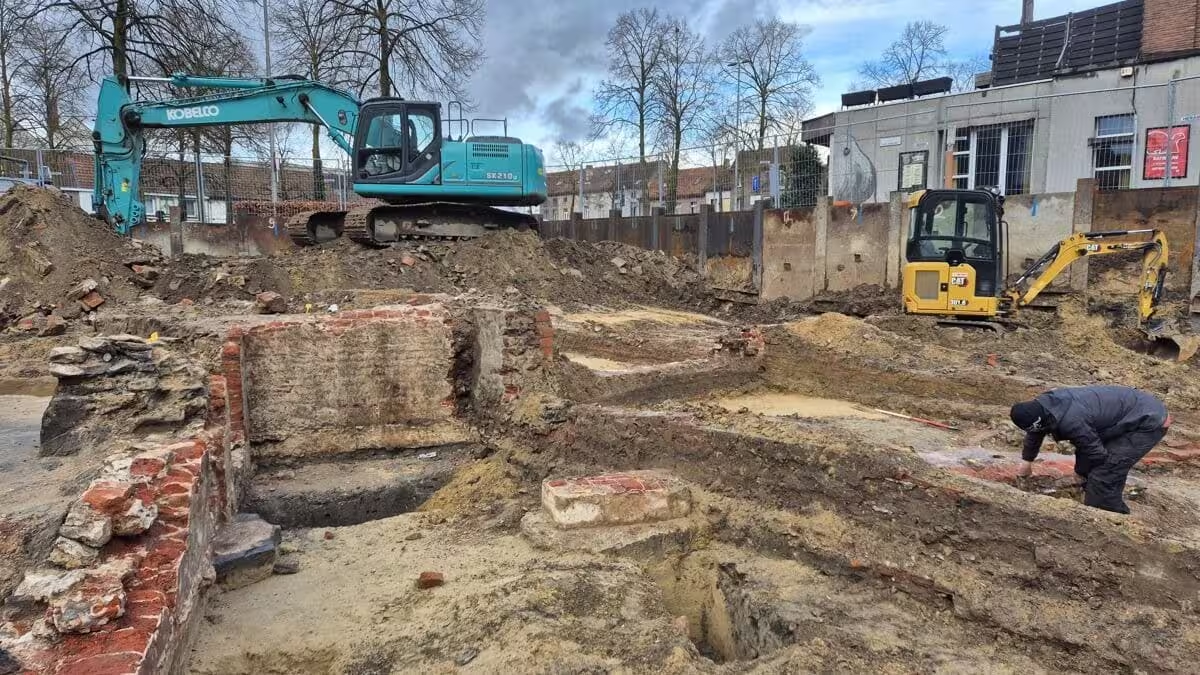
Archaeologist Robby Vervoort, who is directing the excavation, noted that initial test pits suggested the presence of the fortress, but the actual scale of the ruins has surpassed early projections. Researchers have been meticulously working through deep strata to document the remnants of the fortress, finding that the site offers an unexpected glimpse into the daily lives of the soldiers once stationed there.
Daily Life in a Garrison
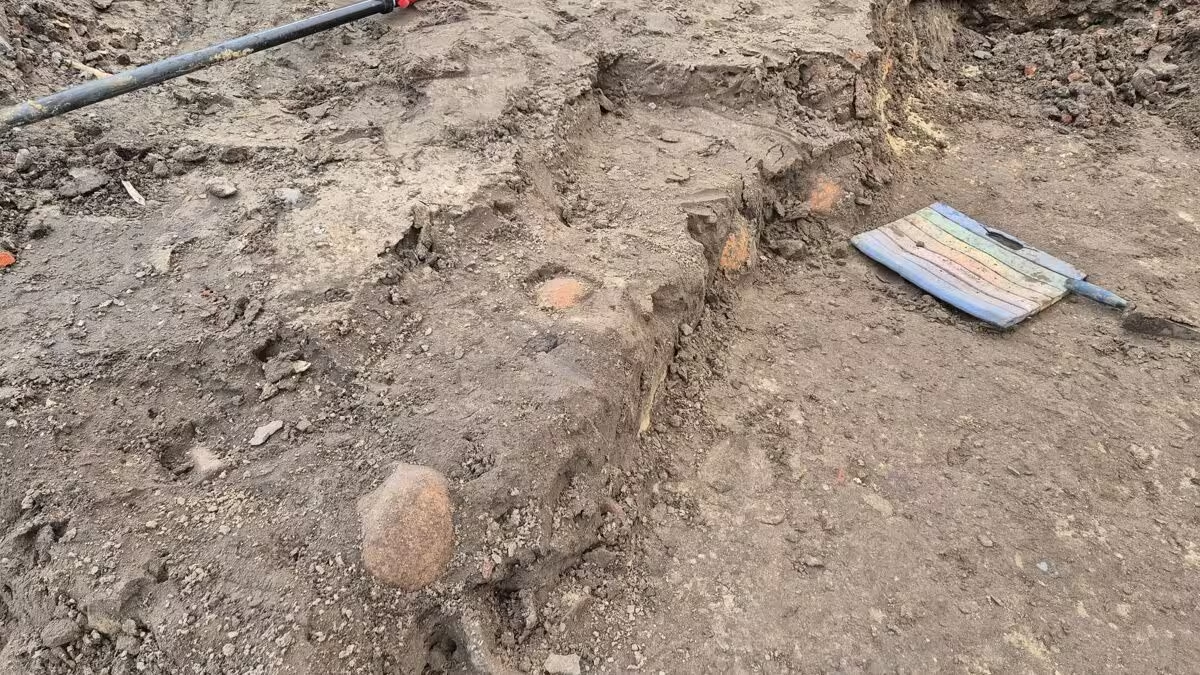
One of the most significant finds is a large waste pit, or “catch-all,” where the fortress’s occupants discarded items. Because the soil conditions helped preserve organic material, the pit has become a vital source of data. By analyzing plant pollen, seeds, and animal remains, the research team hopes to reconstruct the diet and subsistence patterns of the Spanish garrison, providing details that historical documents of the era simply do not capture.
A Deep History Beneath the Walls
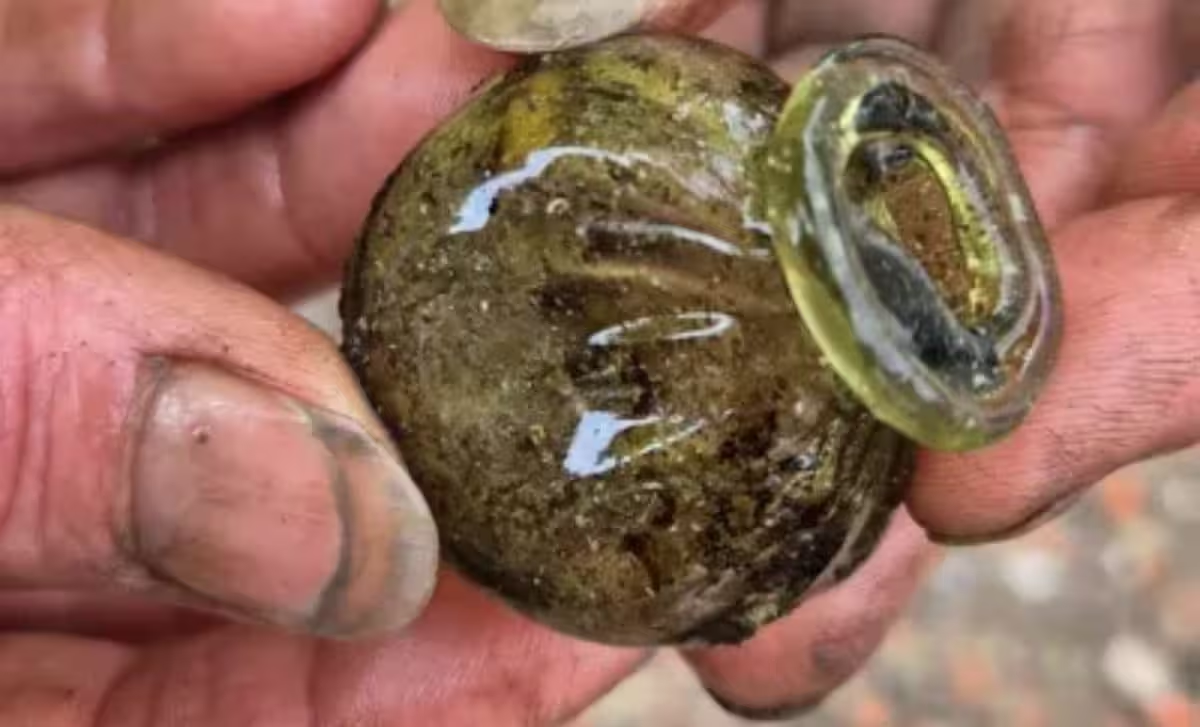
The fortress was not constructed on a blank slate. Beneath its foundations, archaeologists have identified remnants of St. Bavo’s Abbey, which dates back to the seventh century. The team has recovered a diverse collection of artifacts, including medieval skeletons from the 13th to 16th centuries, Roman-era construction materials, ceramic shards, and ancient flint tools. These findings indicate that the site has been a hub of human activity since prehistoric times.
While the apartment development is scheduled to continue, the builders have agreed to preserve parts of the site. By opting against building basements in key areas, the team is effectively leaving the archaeological record intact for future study, banking on the assumption that subsequent generations of scientists will have access to more sophisticated analytical tools.
This article has been fact checked for accuracy, with information verified against reputable sources. Learn more about us and our editorial process.
Last reviewed on .
Article history
- Latest version
Reference(s)
- “Robby Vervoort | Freelance Senior Archeoloog.” <http://www.freelance-archeoloog.be/>.
- Clapson, Colin. “Archaeological treasure trove uncovered at Ghent’s Spanish Castle | VRT NWS: news.”, February 19, 2026 VRT NWS <https://www.vrt.be/vrtnws/en/2026/02/19/archaeological-treasure-trove-uncovered-at-ghents-spanish-castle/>.
Cite this page:
- Posted by Vikram Desai