Scientists Finally Uncover Why a 1,400 Year Old Queen’s Lung Remained Perfectly Preserved
Scientists have uncovered why a 1,400-year-old queen’s lung survived almost perfectly intact while the rest of her remains decomposed.
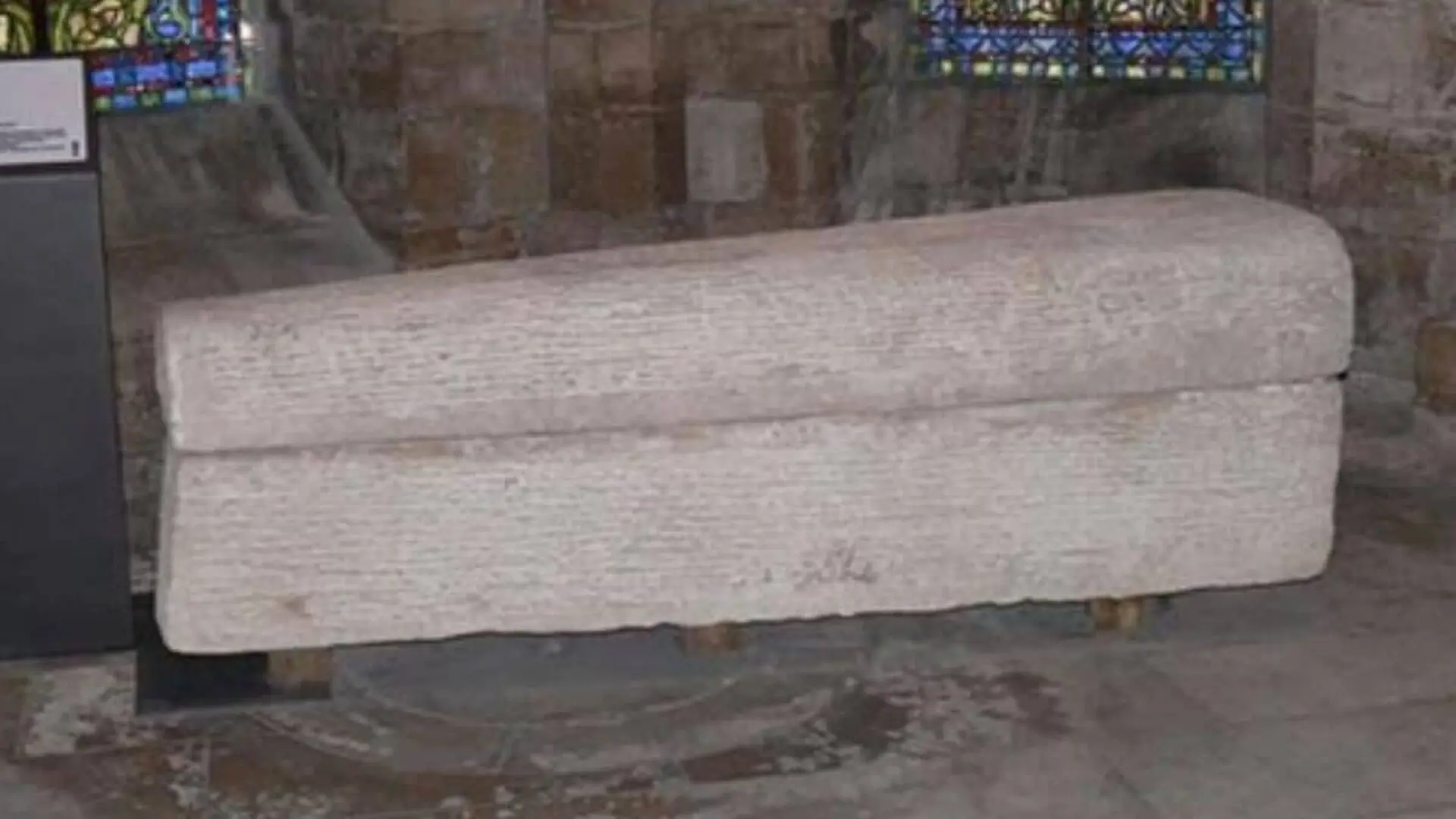
When archaeologists unearthed the tomb of Queen Arnegunde in 1959, they uncovered a biological rarity: a fragment of soft tissue that had defied the natural process of decay for roughly 1,400 years. Nestled within the stone sarcophagus at the Basilica of St. Denis in Paris, the remains of the Merovingian royal—who lived between the 6th and late 6th centuries—revealed that a single lung had survived largely intact, even as the rest of her body returned to dust.
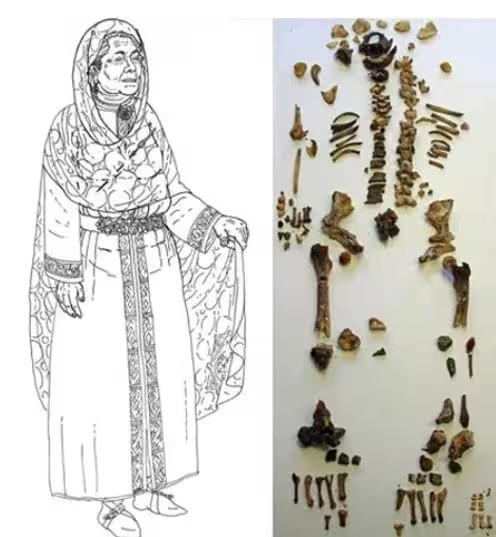
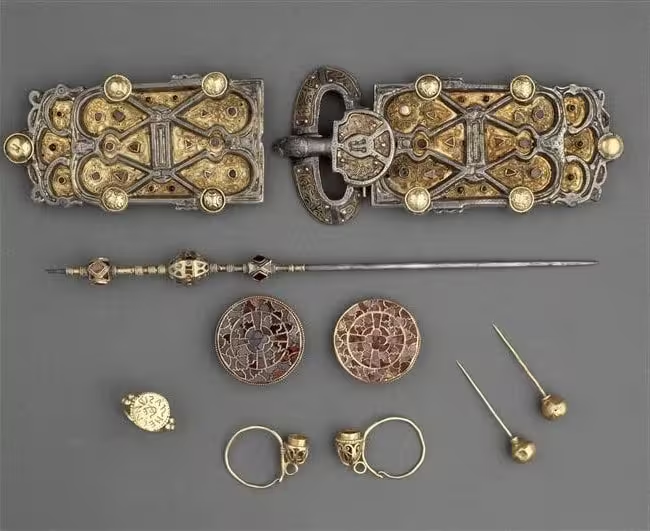
The grave of Queen Arnegunde, a consort of King Clotaire I and mother to King Chilperic I, was a treasure trove of status symbols. Beyond the skeletal remains, researchers discovered a gold and garnet veil, ornate silk garments, a sophisticated belt, and a signet ring engraved with the name Arnegundis. However, the most profound discovery was the lung, which challenged existing understanding of how biological remains behave over millennia.
The Chemistry Behind Ancient Preservation
Recent scientific inquiry, spearheaded by bioanthropologist Raffaella Bianucci of the University of Turin, has stripped away the mystery. Using scanning electron microscopy, researchers analyzed tissue samples in 2016 and identified distinct chemical markers indicative of an intentional, albeit localized, embalming process. As noted by the French Ministry of Culture, the Merovingians appear to have adopted funerary customs that blended Roman-influenced practices with techniques reminiscent of ancient Egyptian mummification.
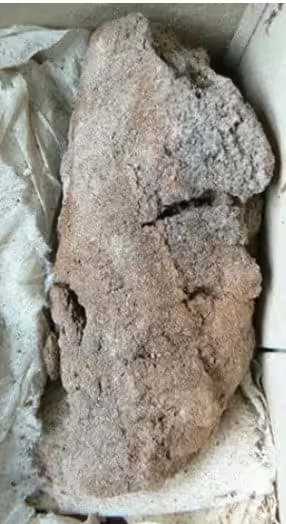
Unlike the complete evisceration common in Egypt, these Frankish elites were treated with aromatic plant-based substances and resins administered orally, coupled with oil-soaked wrappings. The presence of benzoic acid—a staple of ancient embalming—confirmed that the queen had undergone systematic preservation intended for high-ranking members of the dynasty.
An Accidental Interaction with Copper
While the embalming fluids provided a chemical baseline, the longevity of the lung was bolstered by a serendipitous interaction with the grave goods. The queen was interred wearing a copper alloy belt. Over time, the decomposition process caused embalming residues to pool near this metallic accessory. The resulting contact between the organic tissue and copper ions triggered a localized inhibition of microbial growth, effectively stalling the degradation of the lung.
Biological factors likely played a secondary role. Lung tissue is notably low in specific types of epithelial cells that house lysosomes—the cellular components responsible for post-mortem enzyme release that breaks down tissue. This structural composition, combined with the artificial chemical environment of the tomb, created a perfect, albeit singular, scenario for survival.
Arnegunde, who passed away around age 60, represents a fascinating intersection of history and science. Her preservation highlights the sophisticated, often unintended consequences of burial rites and the durability of human remains when environmental, chemical, and biological variables align in rare, fortuitous ways.
This article has been fact checked for accuracy, with information verified against reputable sources. Learn more about us and our editorial process.
Last reviewed on .
Article history
- Latest version
Reference(s)
- “Raffaella Bianucci.”, June 1, 2019 Warinner Group <https://christinawarinner.com/outreach/children/adventures-in-archaeological-science/meet-our-translators/raffaella-bianucci/>.
- 580/590), Queen. “Queen Arnegunde (510/520 - 580/590) | Saint-Denis, une ville au Moyen Âge.” <https://archeologie.culture.gouv.fr/saint-denis/en/queen-arnegunde-510520-580590>.
Cite this page:
- Posted by Vikram Desai