Archaeologists Discover Bizarre 11,000 Year Old Sculpture of a Human Riding a Leopard
A rare 10,000-year-old Neolithic sculpture is revealing fascinating new insights into the daily lives and rituals of the ancient people who crafted it.
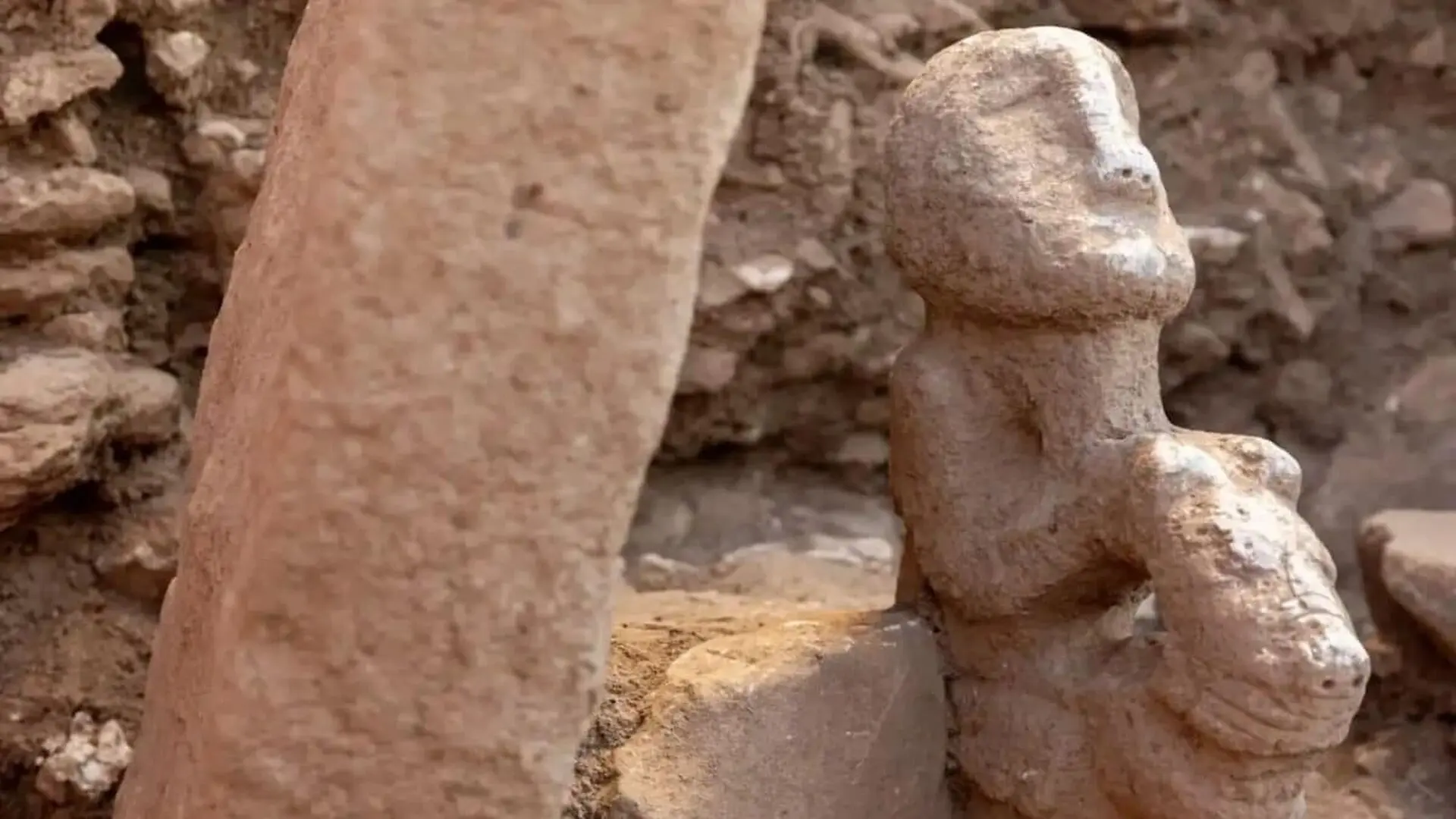
Archaeologists working in southeastern Türkiye have unearthed an extraordinary 11,000-year-old sculpture at the site of Karahantepe, providing a rare and provocative glimpse into the complex symbolic lives of our ancestors. The artifact depicts a human figure perched atop a leopard, an iconographic pairing that appears entirely unique within the known archaeological record of the region.
The discovery was made during the 2026 excavation season within a circular stone structure spanning roughly three meters in diameter. Standing approximately 70 centimeters tall, the statue was found resting in its original position on a built-in stone bench, known as a seki. This context is invaluable to researchers, as it suggests the piece was not merely a discarded object but a deliberate installation within a ritual or communal space.
Unprecedented Iconography in Neolithic Art
The sculpture challenges long-held assumptions regarding the intellectual and social landscape of the Pre-Pottery Neolithic period. While animals are a common motif in early artistic traditions, the deliberate placement of a human over a leopard—a powerful predator—hints at complex cultural themes, possibly involving status, spiritual guardianship, or mythological narratives that have since been lost to time.
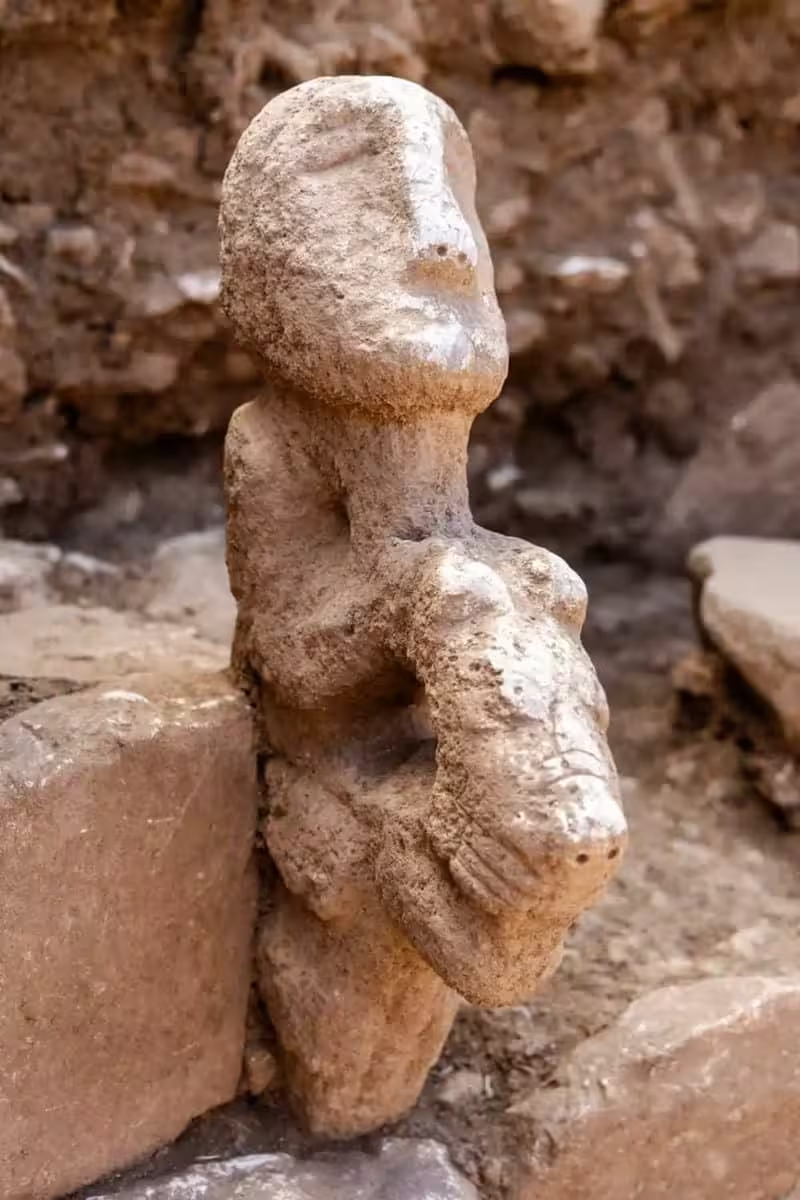
Turkish Minister of Culture and Tourism Mehmet Nuri Ersoy highlighted the significance of the find, noting that it opens vital new lines of inquiry into the developmental stages of early human civilization. By examining the artifact in situ, researchers hope to discern whether the figure represents a deified ancestor, a tribal leader, or a spiritual entity meant to evoke protection or power.
Shifting Perspectives on Early Settled Life
Karahantepe continues to rewrite the history of humanity’s transition to sedentary life. Since excavations began in 2019, the site—located in proximity to the famous Göbekli Tepe—has provided evidence that early hunter-gatherer communities possessed far more sophisticated social organization and architectural capabilities than previously credited by historians.
The work is currently being conducted under the Legacy for the Future project, with support from the General Directorate of Cultural Heritage and Museums. This ongoing initiative aims to map out the cultural evolution of the Anatolian region, seeking to understand how these ancient groups interpreted their environment and their place within the natural world.
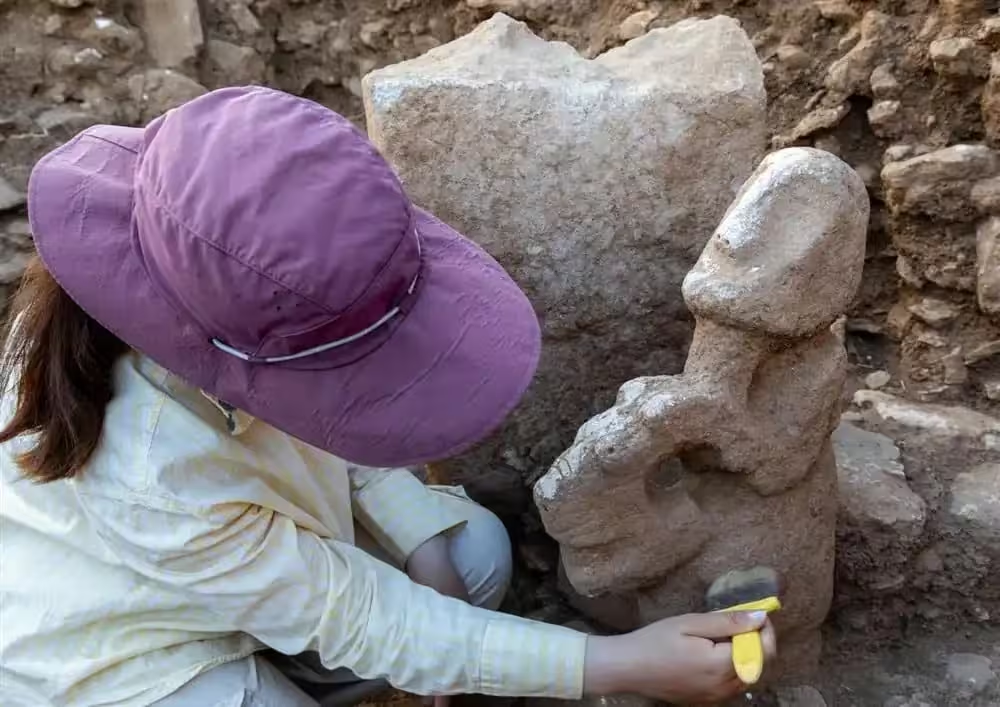
As the sculpture undergoes further analysis, including studies into its carving techniques and material composition, experts will compare the findings against other Neolithic discoveries to determine if the leopard motif was a localized phenomenon or part of a broader, shared regional tradition. Following conservation, the sculpture is expected to be moved to a regional museum, providing the public with an opportunity to view one of the most intriguing artistic relics of the early human era.
This article has been fact checked for accuracy, with information verified against reputable sources. Learn more about us and our editorial process.
Last reviewed on .
Article history
- Latest version
Reference(s)
- “KARAHANTEPE’DE 11 BİN YILLIK BENZERSİZ HEYKEL.”, August 25, 2026 <https://basin.ktb.gov.tr/TR-472351/karahantepede-11-bin-yillik-benzersiz-heykel.html>.
Cite this page:
- Posted by Vikram Desai