Ancient Footprints Reveal A Massive Mammal That May Have Hunted Dinosaurs
Mysterious footprints found in an ancient Brazilian desert don’t match any known dinosaur or crocodile species, leaving scientists with a prehistoric puzzle.
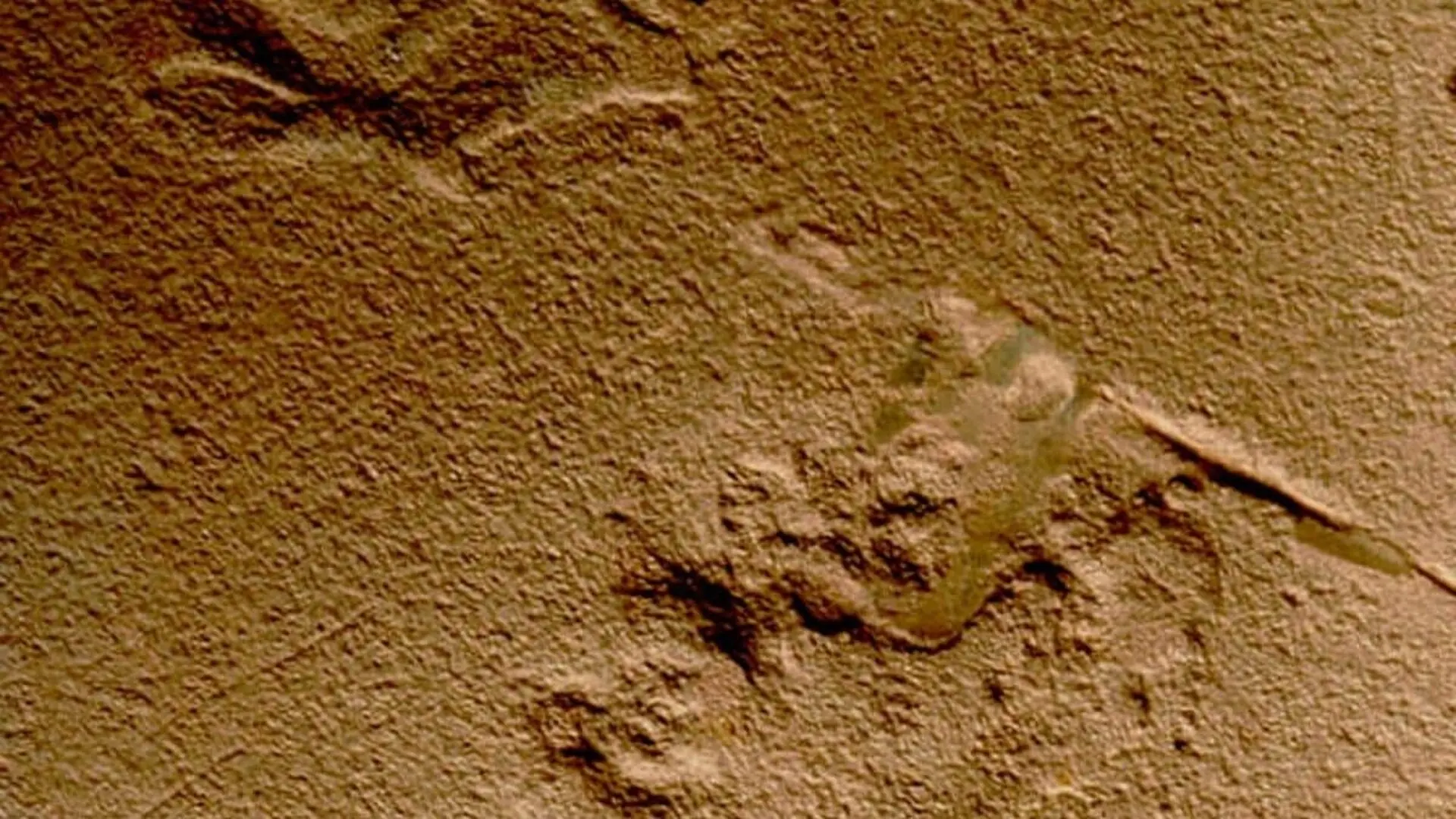
Paleontologists in Brazil have uncovered a series of 130-million-year-old footprints that challenge the long-held assumption that all mammals living alongside dinosaurs were diminutive, shrew-like creatures. The tracks, discovered within the Botucatu Formation, suggest the presence of a mammal reaching approximately 1.55 meters in length—a size estimate that would make it the largest mammal known from the Cretaceous period.
The discovery, detailed in the Journal of South American Earth Sciences, provides a rare window into an ancient ecosystem that may have been more mammal-friendly than previously envisioned. While the fossil record for Mesozoic mammals in the Southern Hemisphere is notoriously sparse, these tracks offer a glimpse into a creature potentially substantial enough to have served as an apex predator for small or young dinosaurs.
Evidence of a Mammalian Giant
The scale of the footprints is striking. With the largest prints measuring 11.4 centimeters in length and 13.4 centimeters in width, combined with a stride length of roughly 40 centimeters, the data points to an animal far larger than any of its known contemporaries. Lead author Dr. Pedro Buck and his team argue that these dimensions reflect a creature with a stature more comparable to a modern mountain lion or a large dog.
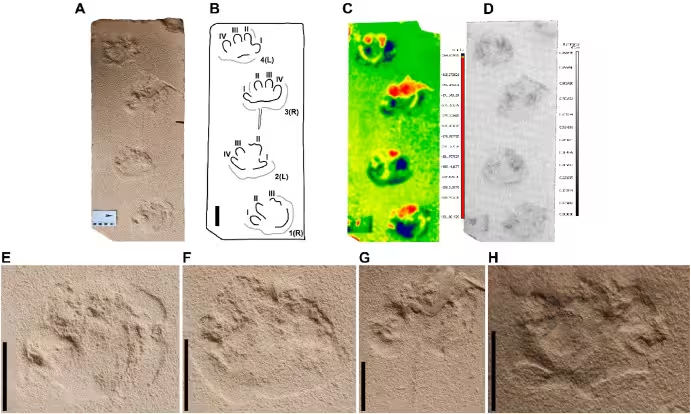
Although the team has categorized the finds within the Chelichnopodidae family, they have refrained from defining a new species due to the absence of associated skeletal remains. Despite this, the researchers maintain that the find is a significant departure from the scientific norm. As Dr. Buck stated, the trackmaker is substantially larger than any other mammalian species documented in the fossil record for that era, representing a genuine turning point in our understanding of early mammal evolution.
Ecological Niches in a Desert Landscape
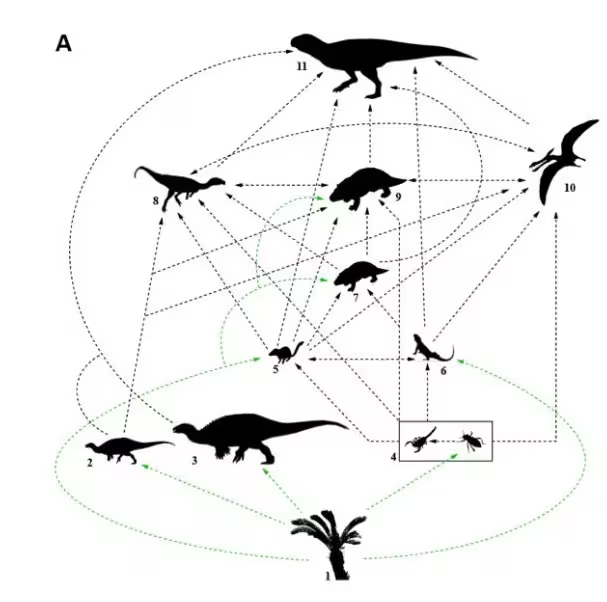
The Botucatu Formation represents an ancient, vast desert environment that existed before the supercontinent Gondwana underwent its final fragmentation. The researchers hypothesize that the absence of large, competing dinosaurs in this specific region may have allowed mammals to occupy broader ecological niches. This finding follows earlier evidence of dog-sized or cat-sized mammals discovered in the same geological formation, reinforcing the idea that this desert served as a unique refuge.
The Challenge of the Missing Bones
While the footprints provide compelling evidence of size, the lack of bone fossils remains a major hurdle. Dr. Hermínio Ismael de Araújo-Júnior, a co-author of the study, notes that these tracks are critical precisely because they document animals that are otherwise missing from the Brazilian skeletal fossil record. He suggests that while the desert environment favored footprint preservation, more favorable conditions for skeletal fossilization might be found in nearby geological deposits.
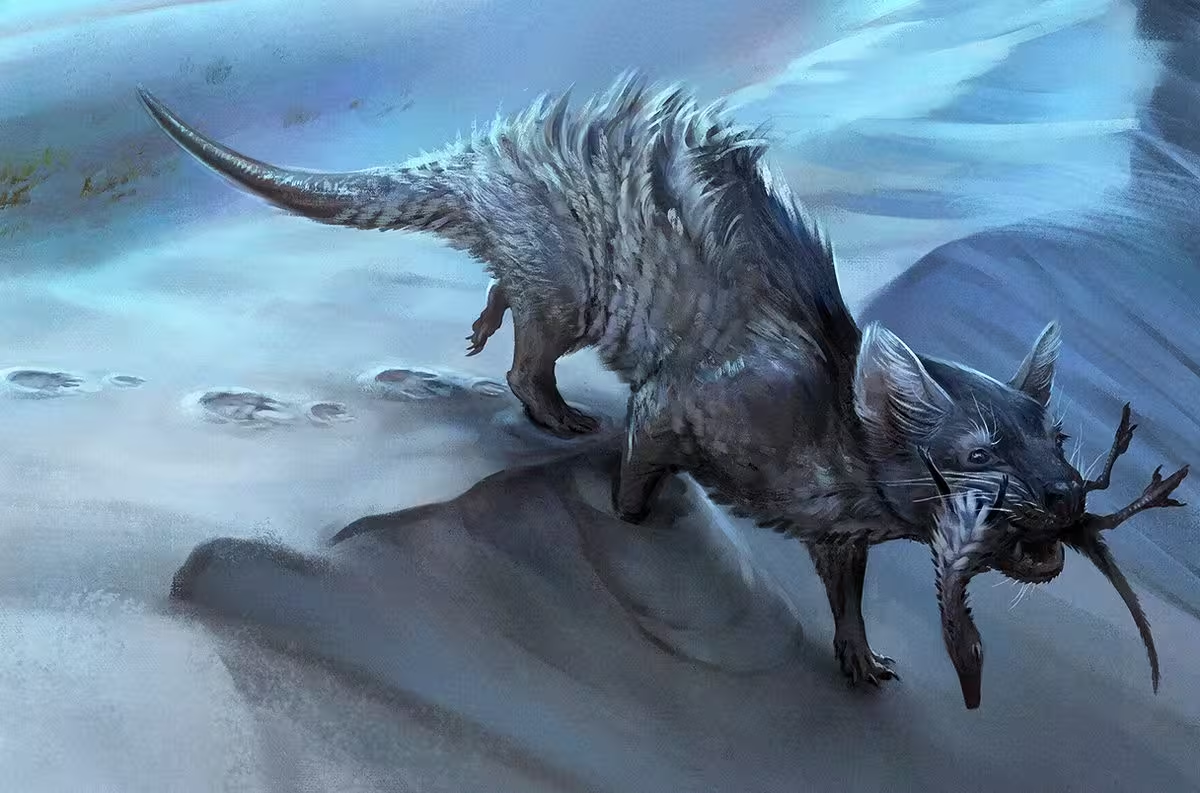
The research team suggests that institutional bias might also play a role in the scarcity of such finds. The prevailing scientific narrative that Mesozoic mammals were exclusively tiny may lead researchers to inadvertently overlook or misidentify larger, fragmentary remains. Moving forward, the team advocates for a more flexible interpretive framework to account for the possibility of larger mammals having existed throughout the age of dinosaurs.
While diet remains speculative, the authors propose that an animal of this size was likely an omnivore, capable of hunting juvenile dinosaurs in addition to consuming smaller prey and vegetation.
This article has been fact checked for accuracy, with information verified against reputable sources. Learn more about us and our editorial process.
Last reviewed on .
Article history
- Latest version
Reference(s)
- <https://www.researchgate.net/profile/Pedro-Buck>.
- Rodrigues, Meghie. “Hermínio Ismael de Araújo Júnior: Savvy Planning Can Get You Far.”, July 28, 2025 American Geophysical Union <https://eos.org/features/herminio-ismael-de-araujo-junior-savvy-planning-can-get-you-far>.
Cite this page:
- Posted by Vikram Desai