Archaeologists Discover 2,500-Year-Old Etruscan Well Containing Rare Bronzes and Human Remains
Archaeologists have discovered that an ancient Etruscan well may hold the key to understanding the full evolution of a mysterious sacred ritual tradition.
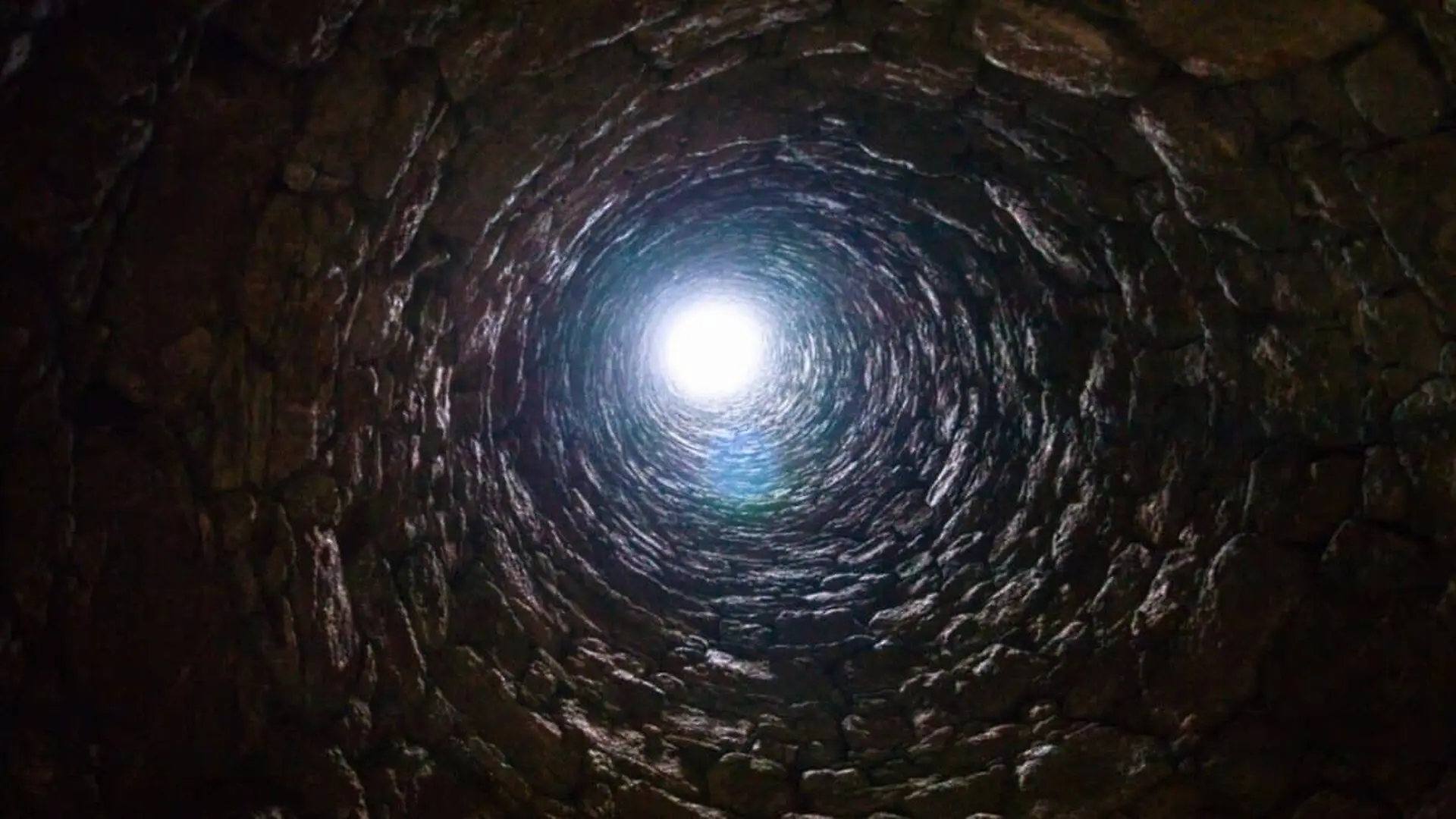
Archaeologists working at the ancient Etruscan site of Kainua, located near modern-day Bologna, have unearthed a remarkable ritual well that sheds new light on the intersection of urban development and sacred practice. Dating back approximately 2,500 years, the site offers a rare glimpse into how the Etruscans integrated their spiritual life with the fundamental infrastructure of their city.
The excavation, led by Dr. Elisabetta Govi of the University of Bologna, revealed a site that appears to have served a dual purpose: providing essential water while acting as a focal point for religious ceremonies. The well was situated near a sanctuary dedicated to the deity Uni, who held significant sway over themes of birth, marriage, and feminine growth. Research on the site, including studies published by Govi in 2023, suggests that the well was likely a nexus for the community’s sacred and practical daily needs.
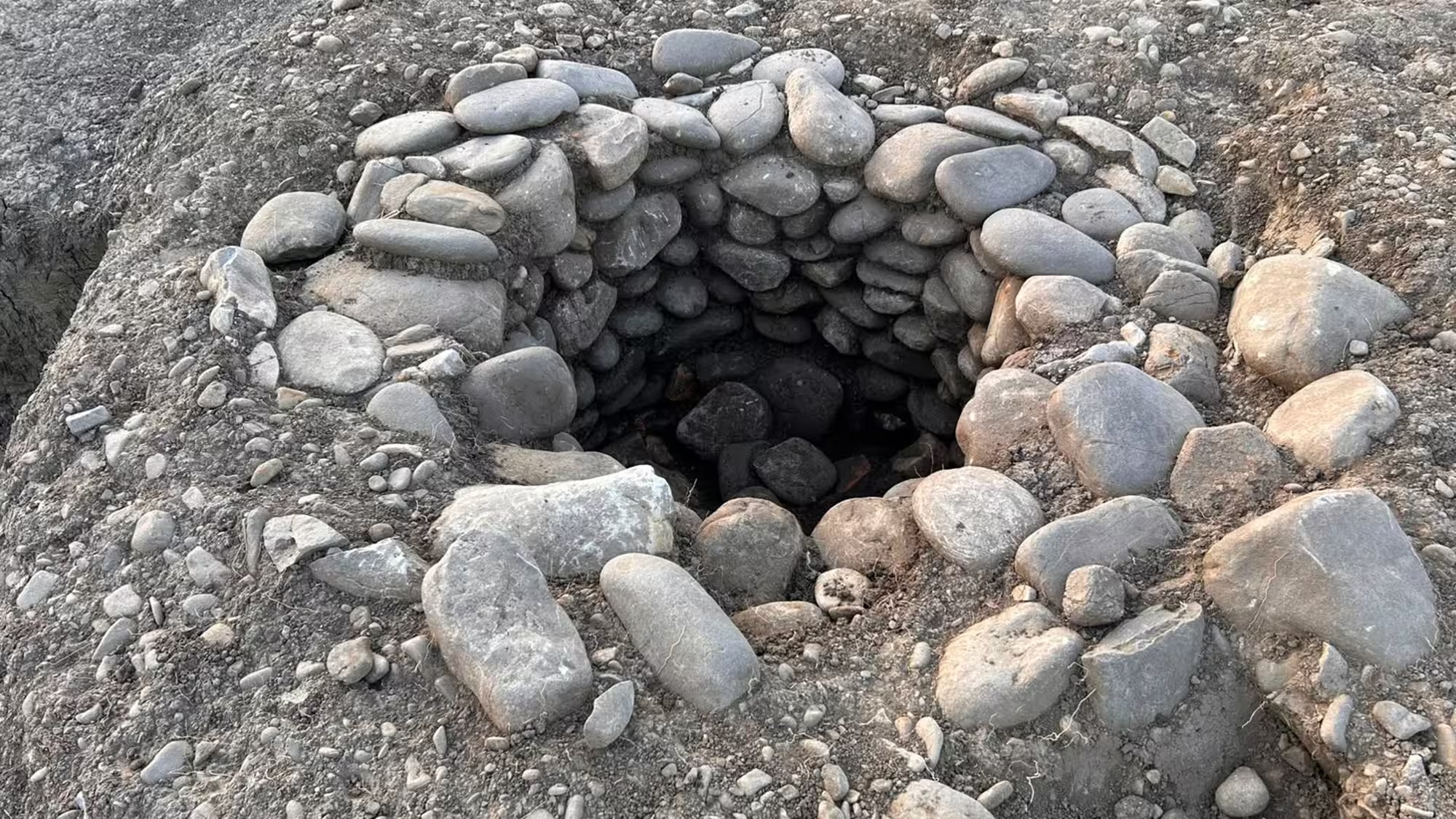
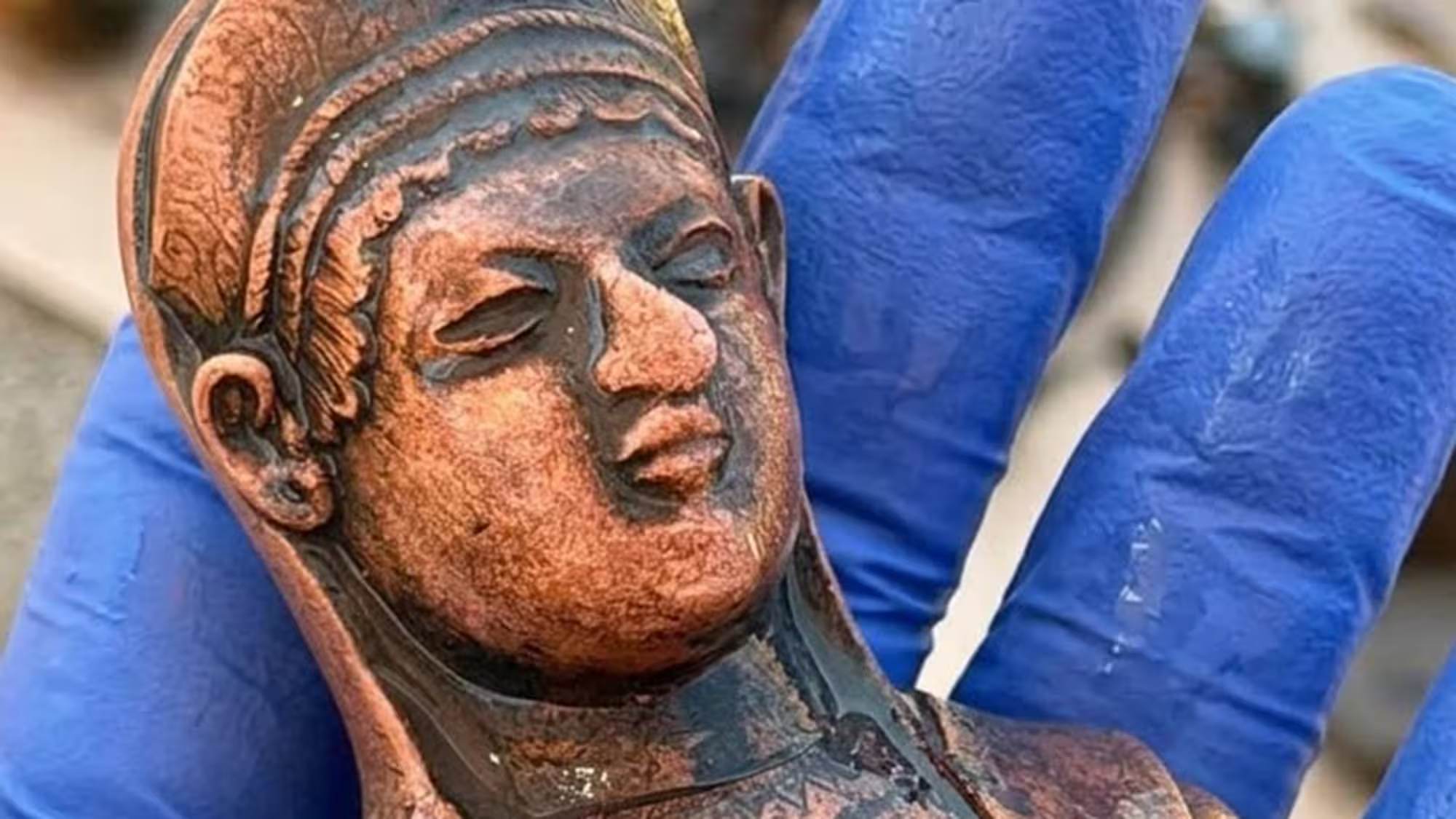
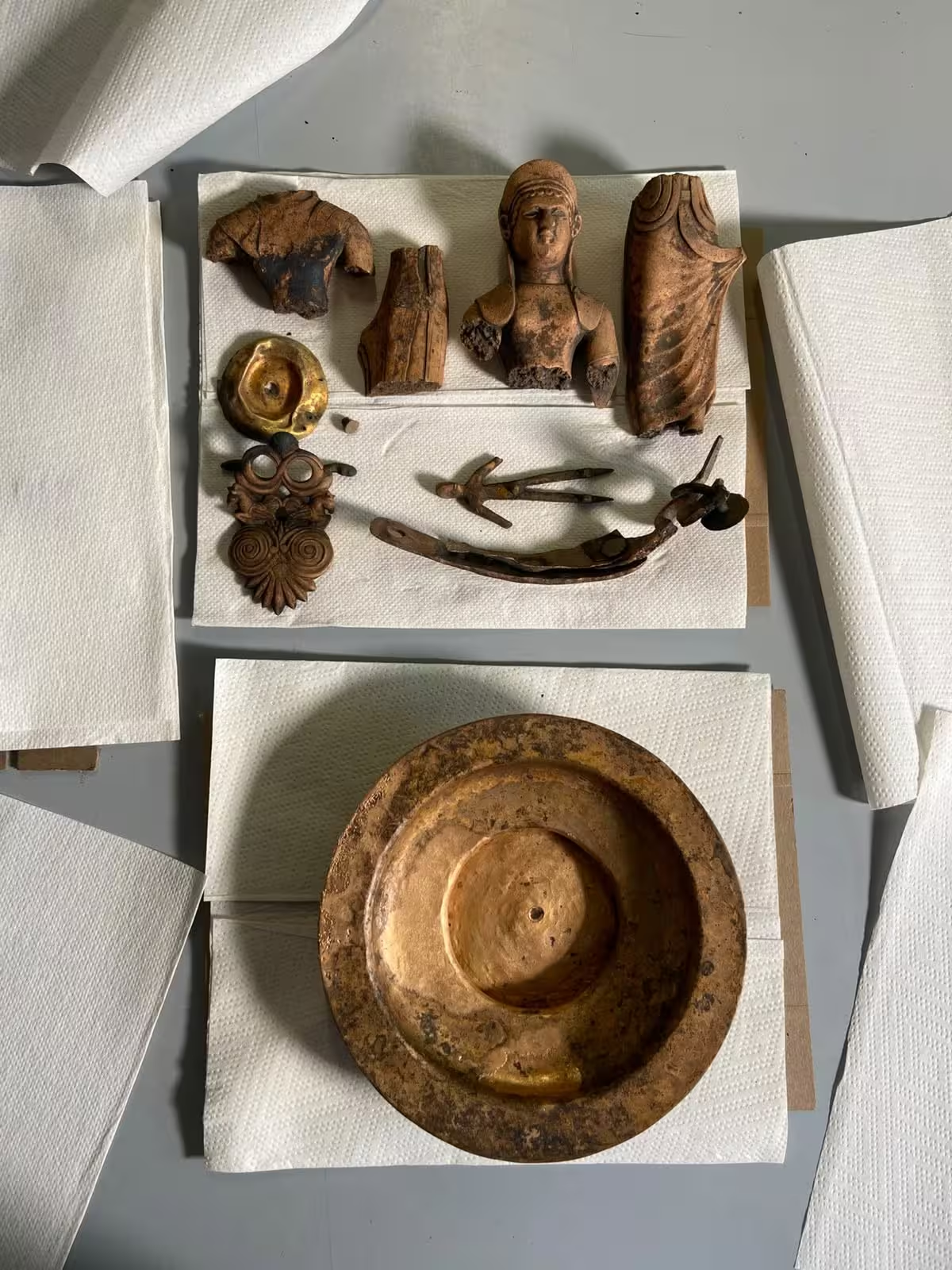
The findings within the well suggest a deliberate chronological sequence of ritual use. At the deepest levels, researchers discovered the skeletal remains of a man and a woman. Above these, they found a collection of high-quality artifacts, including a unique bronze plate and two partially intact bronze statuettes depicting young women or girls. These items appear to represent two distinct phases in the well’s lifespan: an opening ceremony marked by the dedication of votive offerings, and a later closure ritual involving the deposition of human remains.
The discovery of the bronze objects is particularly significant. While bronze figurines are known in Etruscan water-related rituals, finding them deposited within a well is unprecedented. Furthermore, the bronze plate is currently considered a unique example of its kind by the Italian Ministry of Cultural Heritage and Tourism. Dr. Govi suggests that for the Etruscans, the process of creating bronze from copper and tin was seen as a regenerative act, imbuing the metal with a symbolic “living” quality that resonated with the themes of fertility and growth associated with the nearby sanctuary.
Despite the presence of human remains, there is currently no evidence of violent death or sacrifice on the two skeletons. The research team is approaching the interpretation with caution, emphasizing that the findings represent a hypothesis rather than a confirmed historical event. “Everything fits together to describe this story about rituals centered on the feminine element,” Govi noted during a recent interview with LiveScience.
Moving forward, the team plans to conduct DNA testing and carbon-14 dating on the skeletons to better understand the identity of the individuals and the timeline of their interment. Once the analysis is complete, the artifacts are expected to be housed at the National Etruscan Museum in Marzabotto. By bridging the gap between urban infrastructure and sacred architecture, the Kainua well provides a profound new perspective on how ancient societies sanctified the very resources required for their survival.
This article has been fact checked for accuracy, with information verified against reputable sources. Learn more about us and our editorial process.
Last reviewed on .
Article history
- Latest version
Reference(s)
- “Book Details - University of Texas Press.”, April 5, 2022 University of Texas Press <https://utpress.utexas.edu/9781477326626/>.
- “A Kainua (Marzabotto), l’eccezionale scoperta di un pozzo rituale con manufatti integri e resti umani – Direzione generale Musei.”, August 4, 2026 Direzione generale Musei <https://musei.cultura.gov.it/notizie/notifiche/a-kainua-marzabotto-leccezionale-scoperta-di-un-pozzo-rituale-con-manufatti-integri-e-resti-umani?utm_source=chatgpt.com>.
- Bassi, Margherita. “Archaeologists discover Etruscan well that was ritually opened with offerings for a goddess — and 'closed' with human bodies.”, August 18, 2026 Live Science <https://www.livescience.com/archaeology/archaeologists-discover-etruscan-well-that-was-ritually-opened-with-offerings-for-a-goddess-and-closed-with-human-bodies?utm_source=chatgpt.com>.
- “Museo nazionale etrusco "Pompeo Aria" e Parco archeologico di Kainua.”, August 11, 2026 Ministero per i Beni e le Attività culturali e per il Turismo <https://cultura.gov.it/luogo/museo-nazionale-etrusco-pompeo-aria?utm_source=chatgpt.com>.
Cite this page:
- Posted by Vikram Desai