Archaeologists Have Discovered One of the World’s Oldest Examples of Branding
Ancient pottery unearthed in Arabia is shedding new light on Bronze Age life, revealing a remarkable archaeological discovery buried for thousands of years.
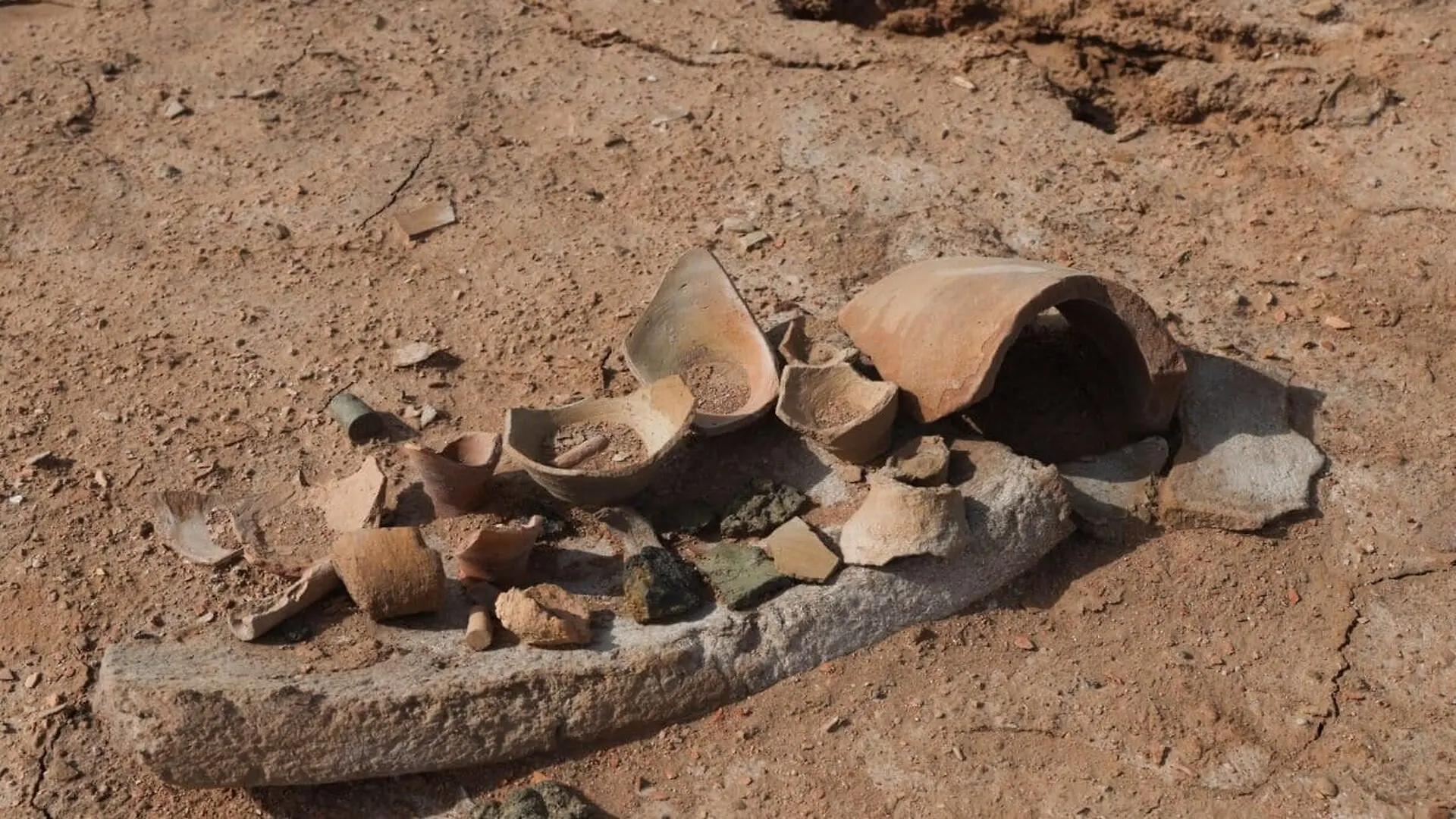
Long before corporate logos and modern trademarks defined consumer culture, ancient artisans in northwestern Arabia were already mastering the mechanics of branding. A new study suggests that the distinctive, highly recognizable pottery known as Qurayyah Painted Ware serves as one of history’s earliest examples of a successful brand identity, flourishing across vast trade networks nearly 3,600 years ago.
The research, published in PLOS One, indicates that the communities inhabiting the Oasis of Qurayyah during the Bronze Age developed a ceramic style so unique and consistent that it transcended its local origins. While these vessels lacked written labels or stamped makers’ marks, their specific aesthetic, technical construction, and cultural motifs acted as a visual shorthand for quality and origin.
Establishing a Commercial Identity in the Bronze Age
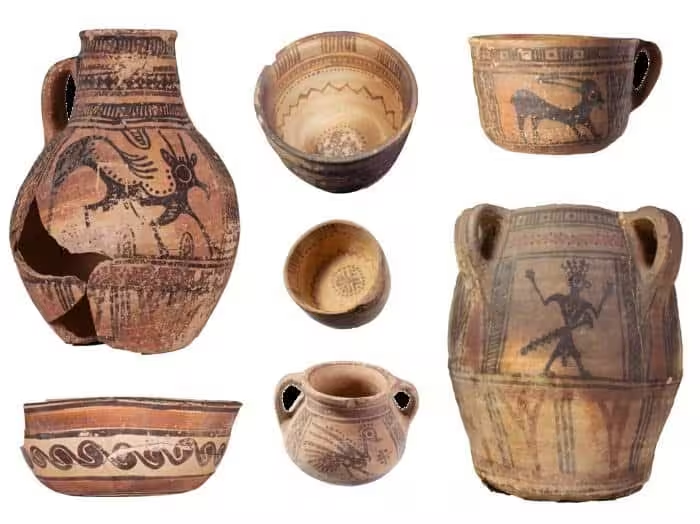
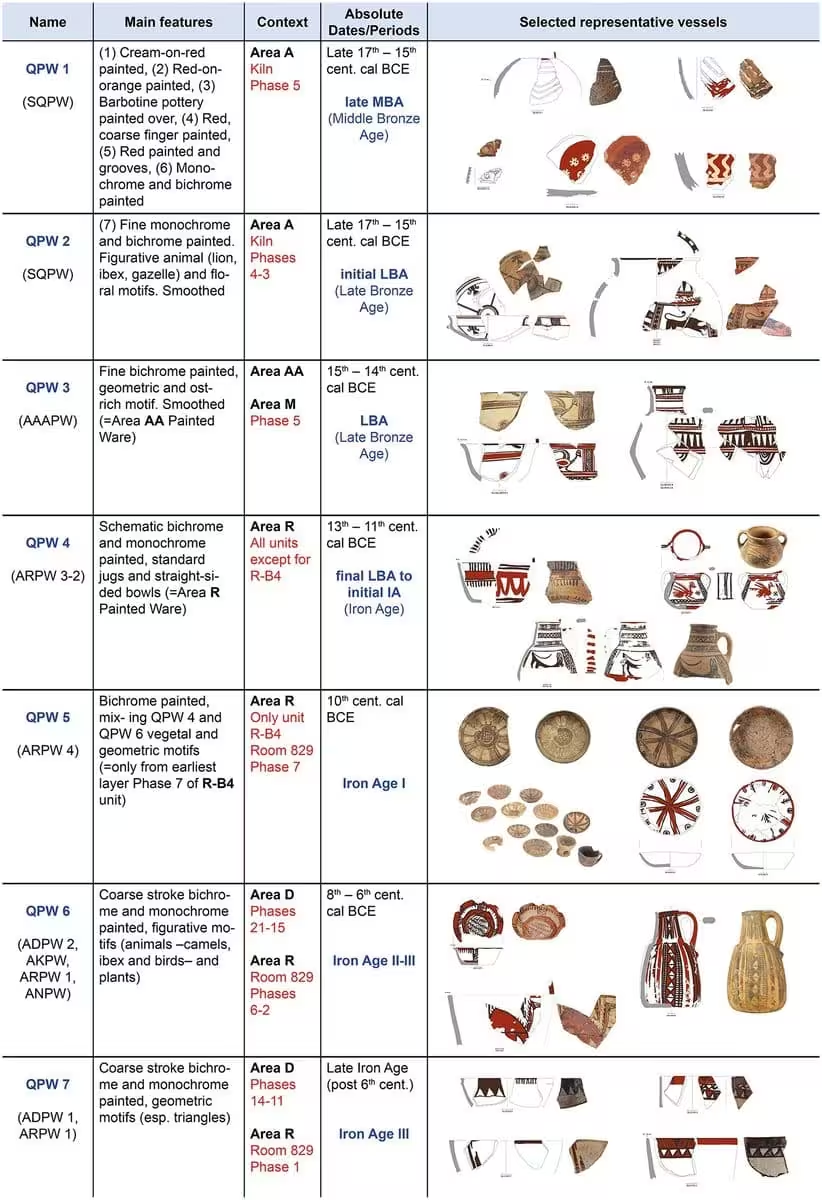
Emerging during the Middle Bronze Age, the pottery produced at the Qurayyah oasis is characterized by intricate painted decorations, often featuring stylized animals and ritualistic human figures. By analyzing archaeological strata, vessel-forming techniques, and chemical composition, researchers from the University of Vienna and the Austrian Archaeological Institute determined that these ceramics exhibit the core hallmarks of a brand: a cohesive visual identity, standardized production methods, and significant market reach.
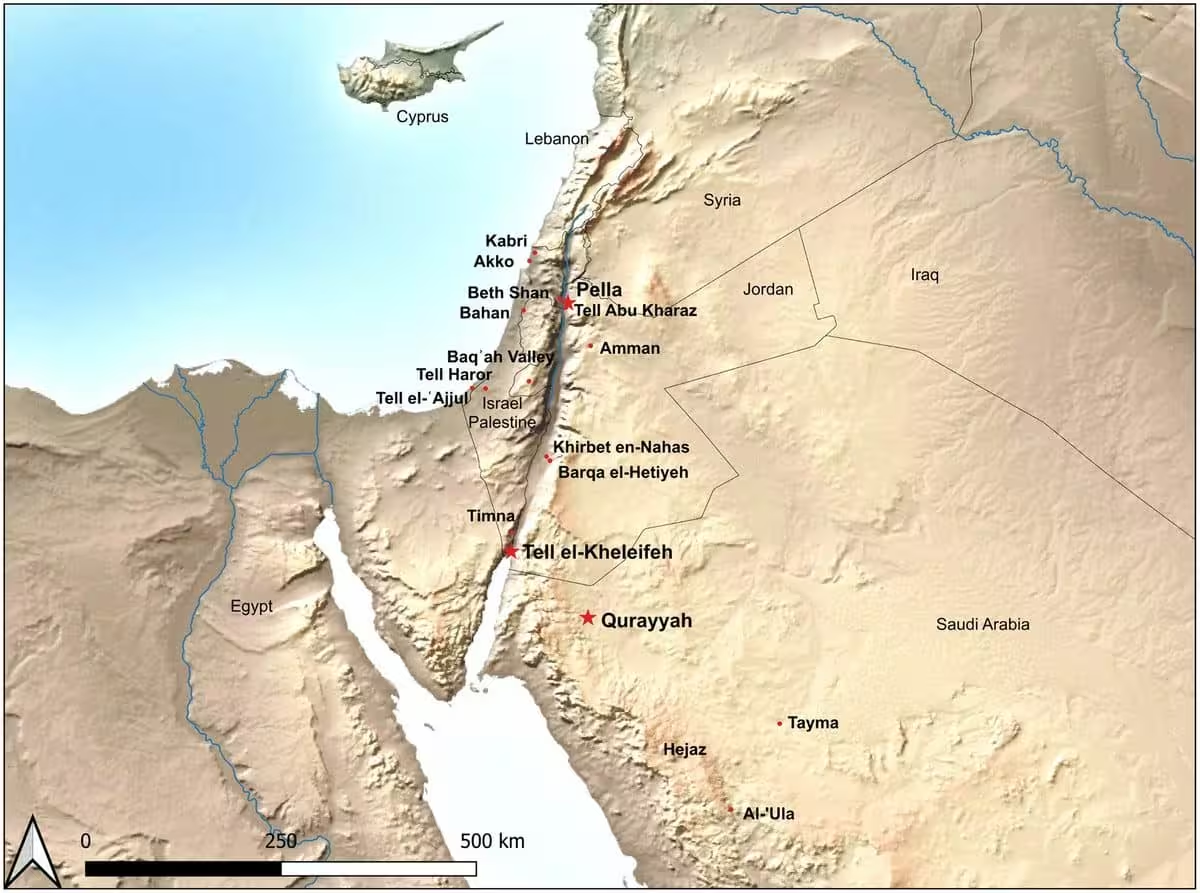
Marta Luciani, a professor at the University of Vienna, noted that these artisans managed to cultivate a sophisticated ceramic tradition despite the inherent challenges of an environment where essential resources like fuel, water, and high-quality clay were scarce.
From Desert Oasis to Regional Trade Power
The reputation of these ceramics was not confined to the oasis. Archaeological evidence shows that Qurayyah Painted Ware circulated widely, reaching sites across the Southern Levant, Syria, and Northern Arabia. Formerly misidentified by scholars as “Midianite Pottery,” the material’s true origin was clarified as researchers mapped the movement of these goods through ancient exchange networks.
According to Pamela Fragnoli, head of the Ceramic Lab at the Austrian Archaeological Institute, the integration of petrographic analysis with traditional morphology allowed the team to confirm that even distant samples shared the specific manufacturing signature of the Qurayyah workshops.
The Ultimate Validation: Ancient Imitation
The most compelling evidence for this “early branding” is the existence of knockoffs. Archaeologists have discovered numerous attempts by outside craftspeople to replicate the Qurayyah style, proving that the original design was highly coveted and recognizable enough to warrant imitation.
Co-author Doralice Klanscek highlights that the production remained dynamic, with artists continuously evolving their decorative repertoire to include new figurative elements over several generations. This long-term cultural and commercial influence suggests that the concept of brand value is far older than the industrial era, originating with skilled artisans who understood the power of a consistent, high-status product.
This article has been fact checked for accuracy, with information verified against reputable sources. Learn more about us and our editorial process.
Last reviewed on .
Article history
- Latest version
Reference(s)
- “Marta Luciani.” <https://uha.univie.ac.at/en/about-us/staff-members/scientific-staff/associate-and-assistant-professors/marta-luciani/>.
- <https://www.oeaw.ac.at/en/oeai/institute/team/person/pamela-fragnoli>.
- “Doralice Klainscek.” <https://uha.univie.ac.at/en/about-us/staff-members/scientific-staff/project-staff/doralice-klainscek/>.
Cite this page:
- Posted by Vikram Desai