NASA Satellite Just Spotted a Massive New Crater on the Moon That Defies Explanation
Scientists have discovered a massive lunar crater, larger than the Roman Colosseum, hidden within 17 months of detailed moon surface data.
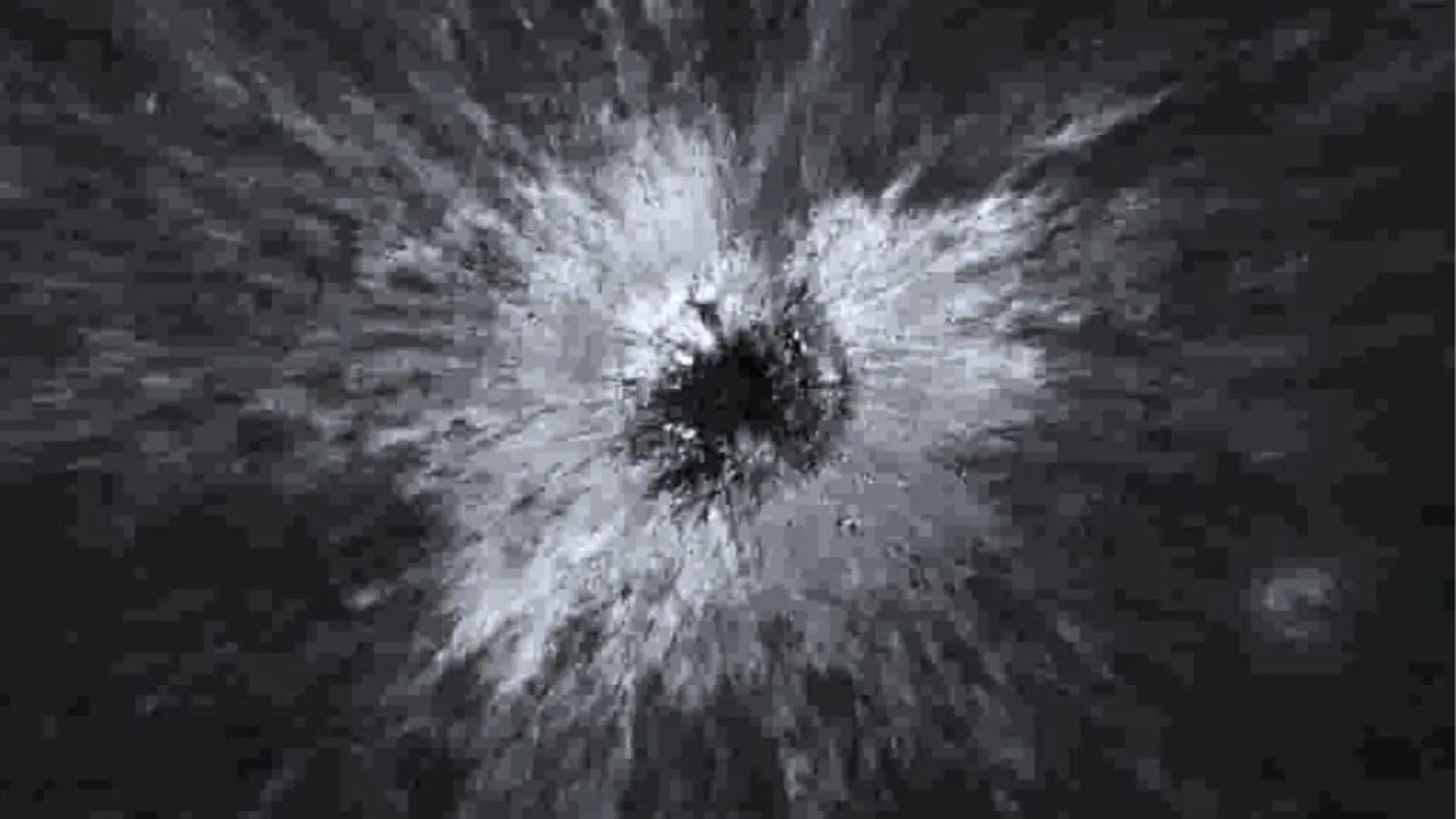
While conducting a routine examination of lunar imagery on October 24, 2025, Robert Wagner, an image-processing specialist at Intuitive Machines, encountered a striking anomaly. Sprawled across hundreds of pixels in a frame captured by NASA’s Lunar Reconnaissance Orbiter (LRO), a massive, bright impact scar stood out against the lunar surface, marked by a distinct dark halo.
“I just stopped, dropped everything, and started looking into what that spot was,” Wagner remarked. “It was by far the most obvious impact debris pattern I’ve ever seen in one of these images.”
The feature, which did not exist in LRO imagery taken just 18 months prior, represents the largest newly formed impact crater ever documented. Measuring 728 feet (222 meters) in diameter and 141 feet (43 meters) in depth, the crater is physically larger than the Roman Colosseum. The data suggests the impact occurred between April 11 and May 22, 2024, yet the discovery remained buried in the mission’s extensive archives for over a year before being identified.
A Violent Collision on the Lunar Frontier
The impact site, now designated McGetchin Crater, sits near the eastern edge of the Moon’s visible face, straddling the transition zone between lunar highlands and the dark basaltic plains known as maria. The crater honors Thomas McGetchin, a former director of the Lunar and Planetary Institute in Houston.
Analysis suggests the object responsible was likely an asteroid or comet fragment roughly equivalent in scale to a three- to six-story building. Following Wagner’s initial detection using wide-angle photography, the team utilized the LRO’s Narrow-Angle Camera, which provides a resolution of roughly three feet per pixel. These high-resolution images, captured between December 2025 and March 2026, reveal a brilliant blanket of ejected material and dramatic surface streaks extending far beyond the crater rim.
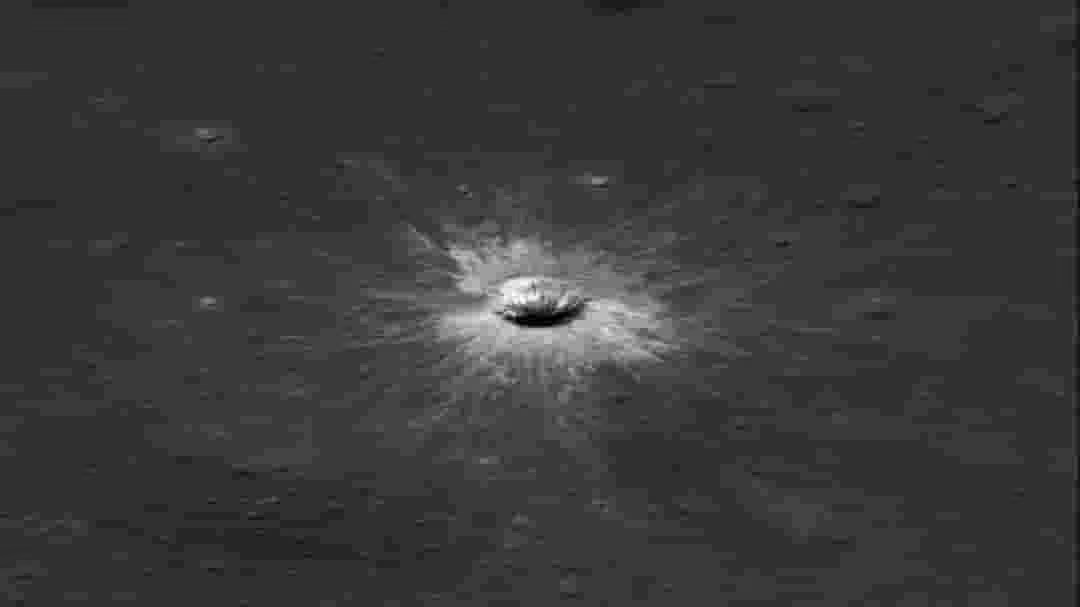
The findings, detailed in Science Advances and led by the LRO camera team’s chief scientist Mark Robinson, indicate the debris field and surface disruption extended more than 66 miles (100 kilometers) from the impact point. Robinson noted to the Associated Press that the trajectory of the dust and rock suggests an unusually high ejection angle.
Thermal Anomalies in the Regolith
Beyond visual imagery, the LRO’s Diviner radiometer instrument provided a thermal profile of the site from November 2025 through February 2026. The data revealed a distinctive “cold spot” approximately four miles (seven kilometers) wide. During the lunar night, temperatures within this region are 14 to 16 degrees Fahrenheit lower than the surrounding terrain.
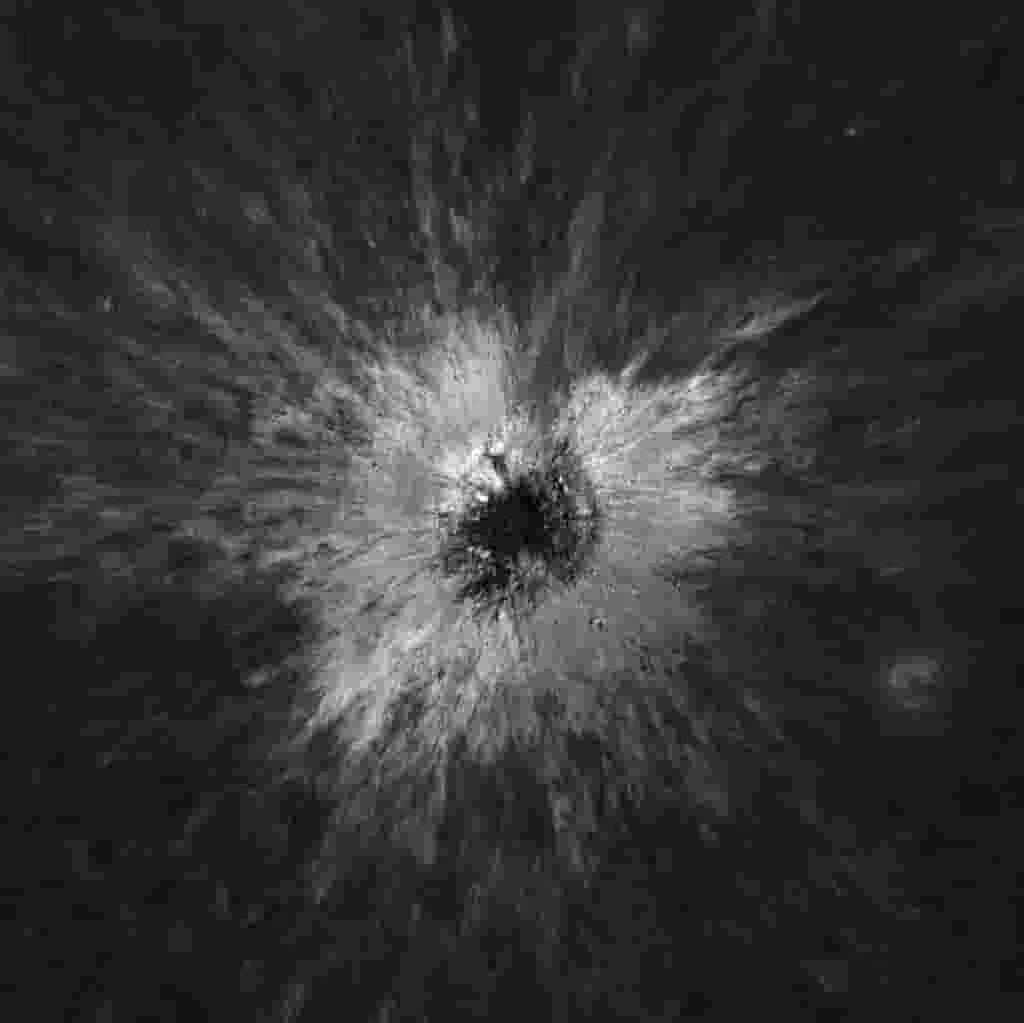
Researchers attribute this to the disturbance of the lunar regolith. The impact churns the upper layers of dust and fractured rock, and studies show that this loose, disrupted material is significantly less efficient at retaining heat than the more densely packed, undisturbed surface. Co-author David Paige of the University of California, Los Angeles, compared the effect to gardening, noting that the violent process brings subterranean material to the surface.
A Rare Statistical Event
Crater formation models indicate that an impact of this magnitude on the Moon is a rare occurrence, estimated to happen only once every 132 years. “As such, this event constitutes a statistically rare, effectively once-in-a-lifetime observation,” the researchers concluded.
Since its launch in 2009, the LRO has documented at least 1,000 new impact craters and logged approximately 100,000 surface changes. While smaller impacts—those creating craters roughly 30 feet wide—occur with a frequency of about 140 per year, the silent strike that created McGetchin went entirely undetected by both ground-based and space-based telescopes at the time of its occurrence.
This article has been fact checked for accuracy, with information verified against reputable sources. Learn more about us and our editorial process.
Last reviewed on .
Article history
- Latest version
Reference(s)
- Shekhtman, Lonnie. “NASA’s Moon Orbiter Spots New, ‘Once-in-Century’ Moon Crater - NASA Science.”, September 16, 2026 NASA <https://science.nasa.gov/?p=1346028>.
- Robinson, Mark S.., et al. “A new 222-m diameter lunar crater.” Science Advances, vol. 12, no. 38, September 18, 2026 American Association for the Advancement of Science (AAAS), doi: 10.1126/sciadv.aeh7812. <https://doi.org/10.1126/sciadv.aeh7812>.
- Dunn, Marcia. “NASA spacecraft discovers a huge new crater on the moon.”, September 19, 2026 ABC13 Houston <https://abc13.com/story/nasa-spacecraft-discovers-huge-new-crater-moon/19849983/>.
- Powell, Tyler M.., et al. “New lunar crater reveals extensive distal regolith modification.” Science Advances, vol. 12, no. 38, September 18, 2026 American Association for the Advancement of Science (AAAS), doi: 10.1126/sciadv.aeh9568. <https://doi.org/10.1126/sciadv.aeh9568>.
Cite this page:
- Posted by Karan Das