Perseverance Rover Discovery Rewrites The Water History Of Mars In Jezero Crater
A Mars rover’s laser analysis has uncovered turbulent rock formations, challenging previous theories about the history of water on the Red Planet.
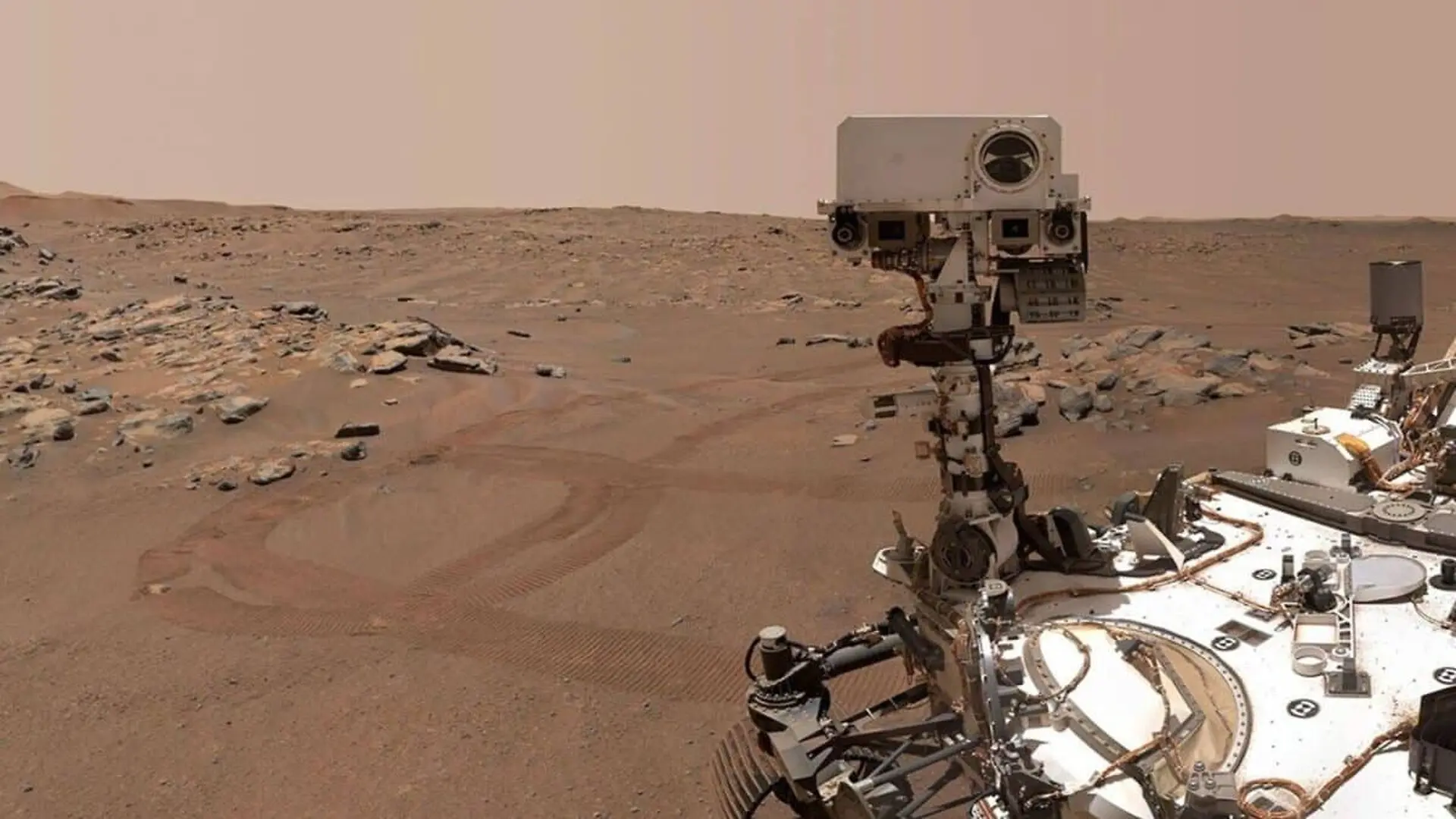
New data from NASA’s Perseverance rover has revealed that the geologic history of Mars’ Jezero Crater is far more complex than orbital observations previously suggested. Rather than a simple ancient lakeshore, the region known as the Margin Unit appears to have been transformed by at least three distinct episodes of water activity, ranging from groundwater circulation to the influence of a ancient lake and later hydrothermal shifts.
Scientists originally anticipated that the Margin Unit would consist of sedimentary rocks deposited by the lake that once occupied the crater. While orbital signatures of carbonate minerals initially supported this theory, the reality on the ground proved different. According to a study published in Communications Earth & Environment, Perseverance discovered igneous rocks shaped by multiple, separate phases of aqueous alteration.
Unraveling the Martian Subsurface
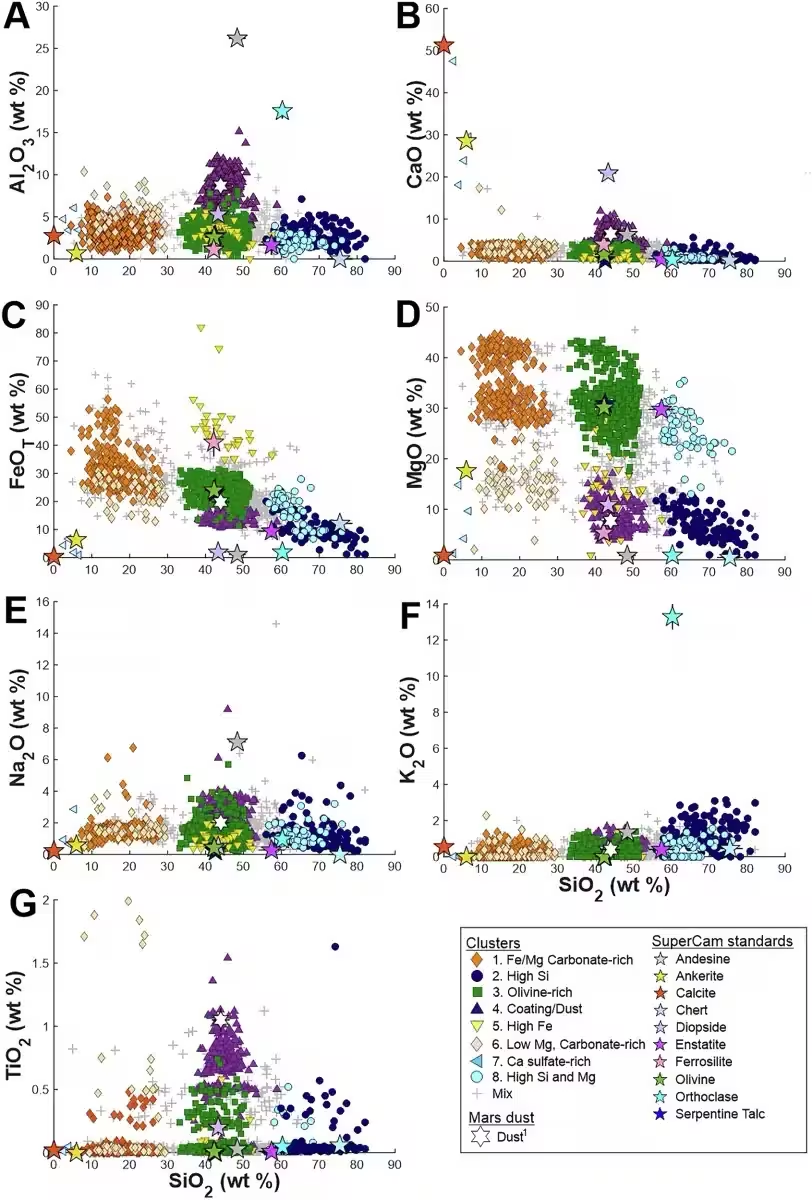
The findings rely heavily on the rover’s SuperCam instrument, which utilizes a laser to vaporize small sections of rock from up to 21 feet (6.5 meters) away. By analyzing the resulting plasma spectrum, researchers were able to assess the mineral composition of over 185 bedrock targets. Candice Bedford, a research scientist at Purdue University and lead author of the study, described the site as a dynamic crossroads for water-based systems.
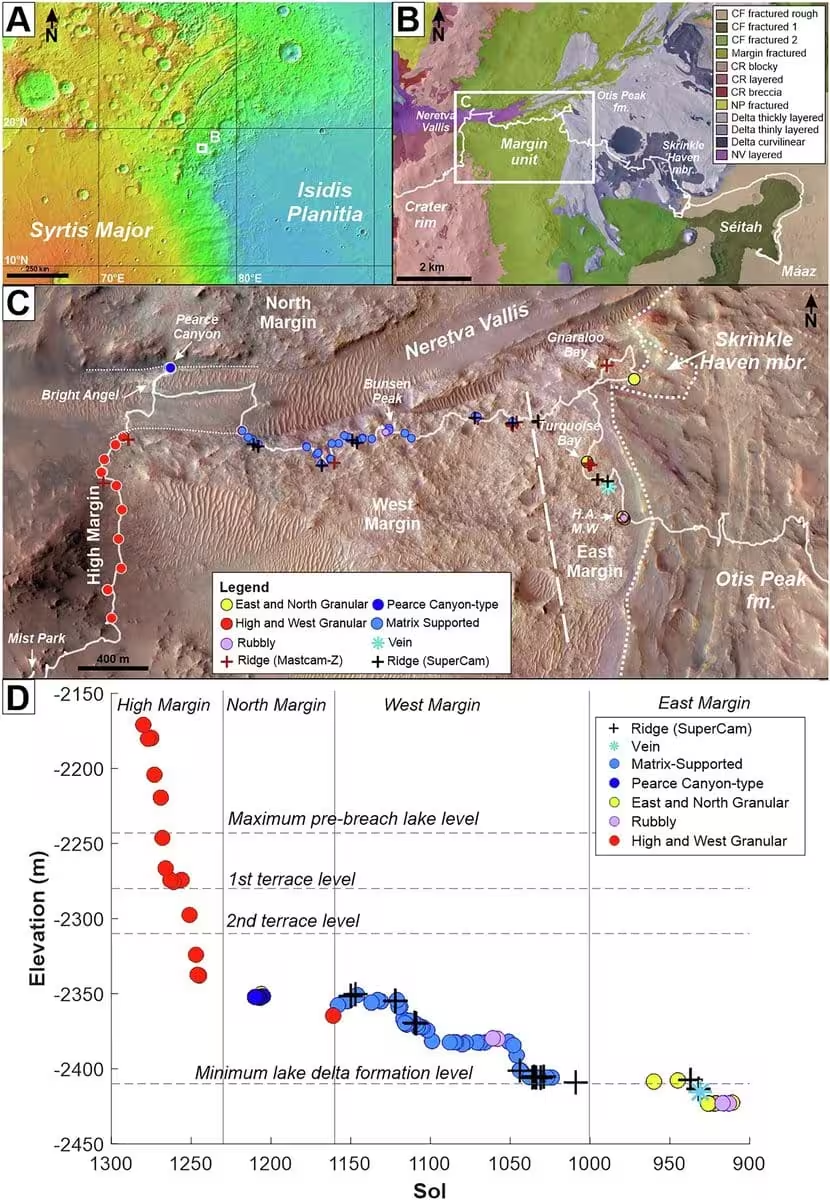
The mission encountered significant geological variation across a 870-foot (265-meter) elevation gradient. At higher elevations, the rover identified crystalline rocks rich in olivine that showed minimal signs of water interaction, suggesting these materials formed in subterranean magma before being exposed by surface erosion.
Evidence of Multiple Aqueous Events
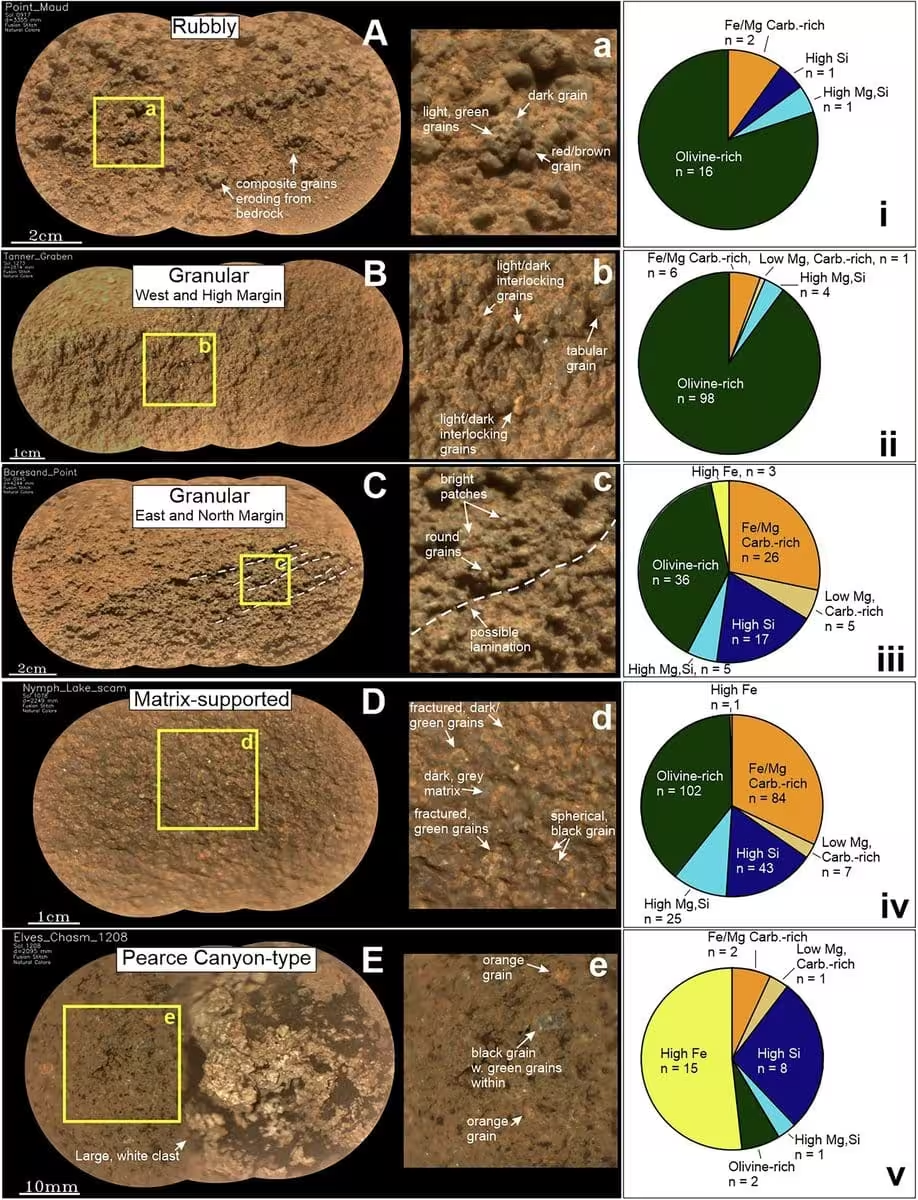
Near the former lakebed, the evidence of alteration becomes pronounced. Olivine grains appear fractured and filled with silica, likely the result of carbon dioxide-rich groundwater moving through the rock. This process formed carbonates within the cracks. Subsequent erosion wore away the surrounding softer rock, leaving these carbonate-filled ridges exposed. Researchers suggest a second phase of alteration may have been linked to the lake itself, as coauthor Eleni Ravanis of the University of Hawaii at Manoa notes that rocks situated below the ancient water line show higher concentrations of silica, a byproduct of the olivine-to-carbonate transition.
These mineralogical findings are significant, as similar interactions on Earth can produce hydrogen, a potential energy source for microbial life, and serve to preserve biological signatures.
A Hydrothermal Surprise
The third phase of geological modification was discovered in the eastern portion of the Margin Unit, where Perseverance identified veins composed of calcium sulfate and fluorite. Because fluorite typically precipitates from hot water circulating through volcanic rock, its presence indicates a period of hydrothermal activity occurring well after the initial groundwater and lake-driven events.
This discovery underscores the unpredictability of Martian exploration. According to Bedford, the findings necessitate a reevaluation of the history of water within Jezero Crater. By demonstrating that the same landscape was subjected to diverse environmental conditions over geological time, the research provides a new framework for understanding the planet’s evolving climate and its potential for past habitability.
This article has been fact checked for accuracy, with information verified against reputable sources. Learn more about us and our editorial process.
Last reviewed on .
Article history
- Latest version
Reference(s)
- Bedford, Candice. “Lake- and groundwater-associated alteration of the olivine-rich Margin unit in Jezero crater, Mars - Communications Earth & Environment.”, vol. 7, no. 1, September 21, 2026, pp. 728 Nature, doi: 10.1038/s43247-026-03997-9. <https://www.nature.com/articles/s43247-026-03997-9>.
Cite this page:
- Posted by Karan Das