Burglars Ignored This Humble Doorstop That Turned Out to Be a Million Dollar Treasure
A humble rock used as a doorstop for decades was hiding a secret worth millions. Discover the surprising true identity of this rare geological find.
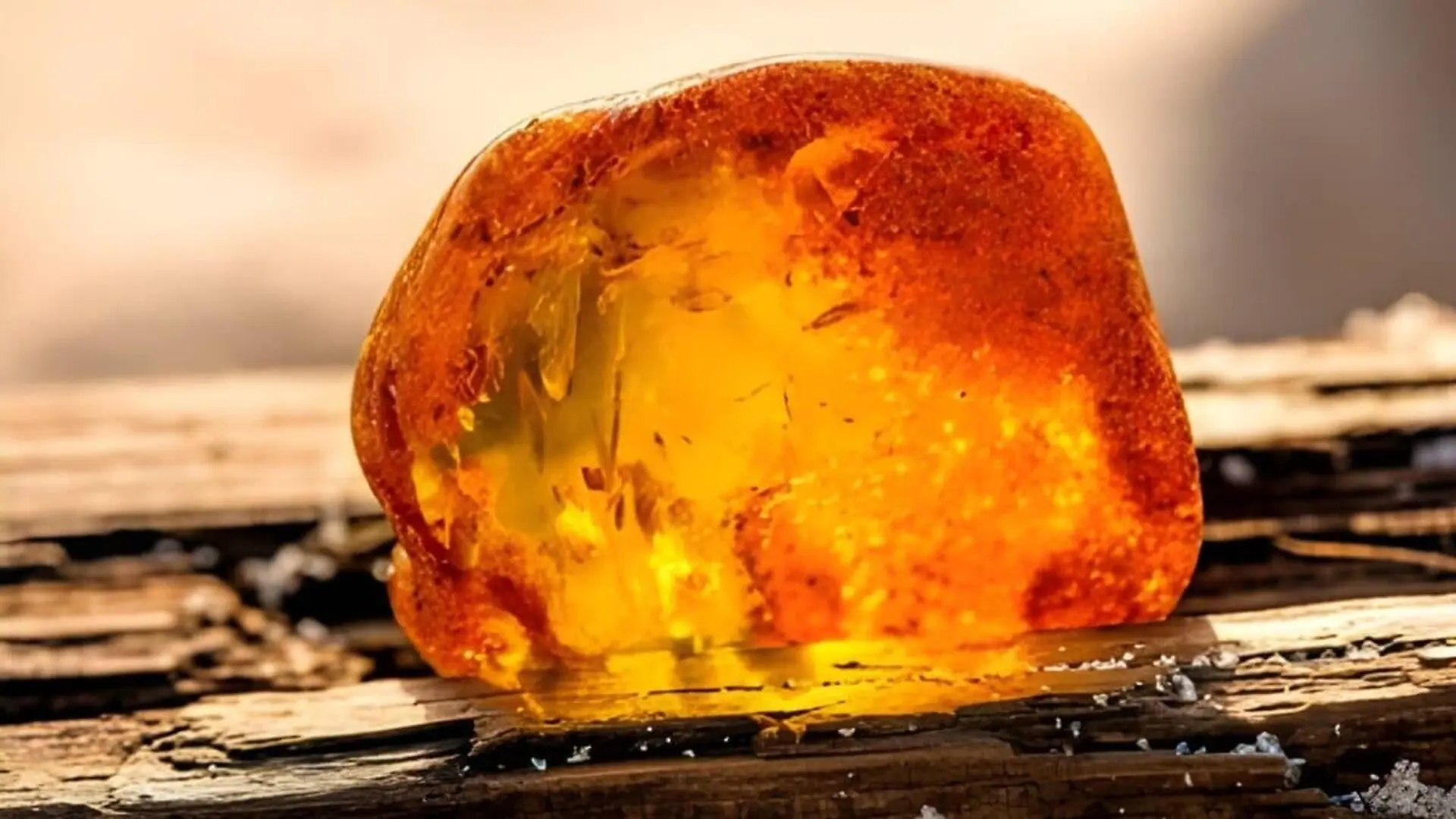
In a twist of irony that underscores the difference between perceived and actual value, a group of burglars once ransacked a home in the Romanian village of Colți, stealing modest gold jewelry while completely ignoring an unassuming, heavy rock acting as a doorstop. For decades, that 3.5-kilogram (7.7-pound) stone had served a purely utilitarian purpose, holding a door open for an elderly resident who had discovered it long ago in a nearby stream bed.
The woman, who passed away in 1991, never learned that her doorstop was actually an extraordinary specimen of rumanite—a rare variety of amber unique to the hilly terrain of the Buzău region. Experts at the Museum of History in Kraków, Poland, later dated the fossilized tree resin to between 38.5 million and 70 million years old. The artifact is now estimated to be worth approximately 1 million euros (roughly $1.1 million).
Daniel Costache, director of the Buzău County Museum, where the piece is now safely housed, described it to El País as one of the largest and most significant examples of its kind in existence. The stone’s transition from a common household object to a recognized national treasure began in 1998, when the woman’s relative inherited the property and began to suspect the rock might have historical importance. The relative sold the stone to the Romanian state for a modest sum, after which it was authenticated by Polish specialists and officially designated as a protected national asset.
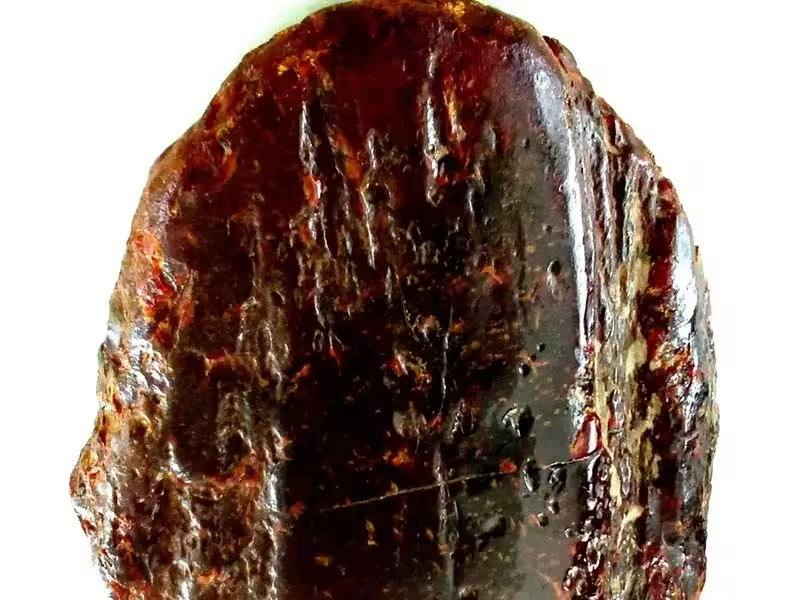
The global scientific community recently reaffirmed the status of the specimen, with the World Record Academy listing it in late 2024 as the largest rumanite nugget ever discovered. While the region around Colți has a storied history of amber extraction dating back to prehistory, the industrial-scale mining operations that once defined the area largely shuttered between the world wars.
Today, the landscape of amber hunting has shifted dramatically. According to local artisan and UNESCO geopark representative Cristinel Scutaru, the accessible seams are largely depleted. Only a handful of locals still scour the terrain, hoping to find small fragments in ponds following heavy rainfall. The area is now subject to strict preservation efforts, including a 2.52-hectare reserve encompassing the historic Strâmba mine, and the commune was formally integrated into a UNESCO geopark in April 2022.
Historically, rumanite was deeply embedded in local culture, serving not only as decorative jewelry but also as a component in traditional folk remedies. However, as large, high-quality nuggets have become increasingly rare, the focus has shifted entirely toward conservation and research.
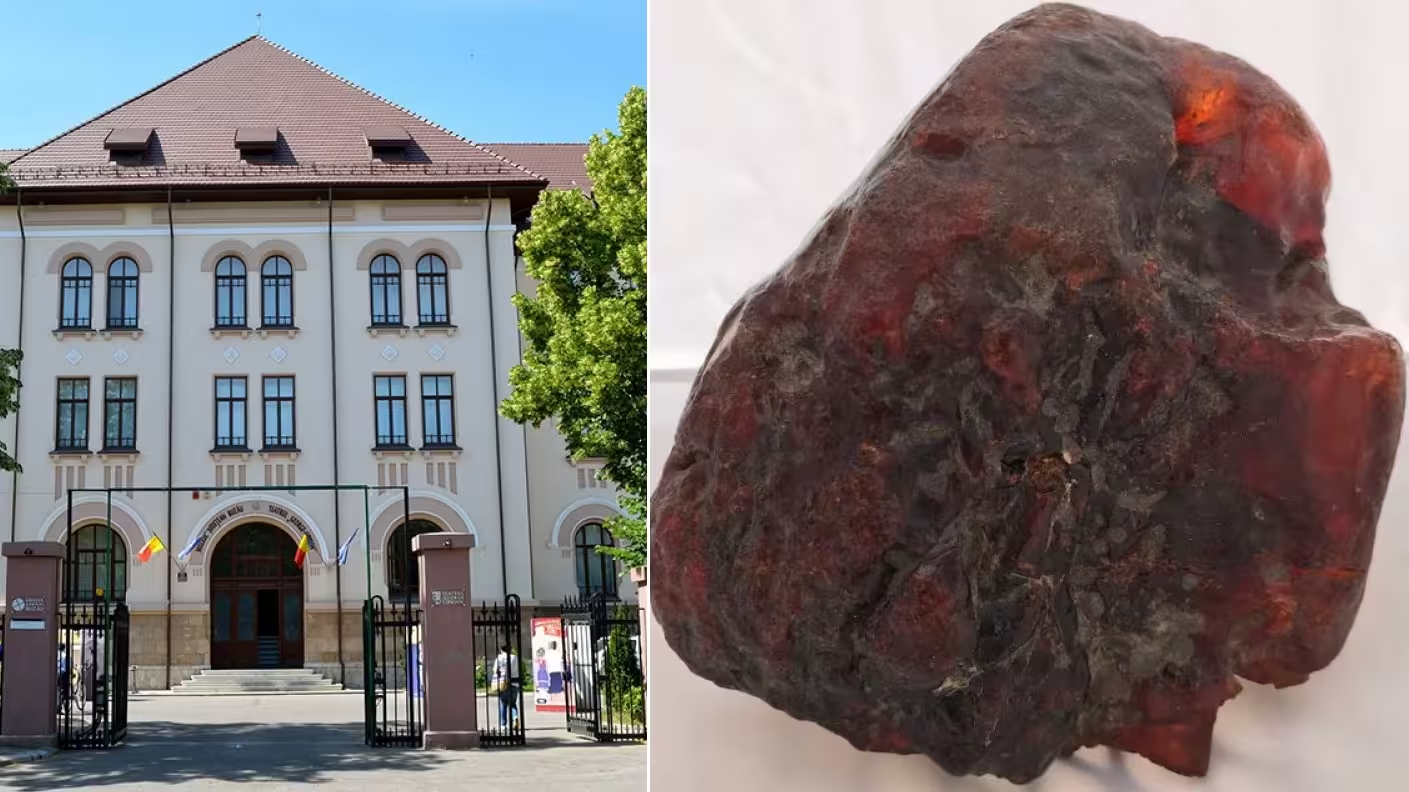
The story remains a poignant reminder of the gulf between human perception and geological time. As a relative of the original owner noted during an interview with CGTN, the burglars who invaded the home were so blinded by their immediate, frantic desire for conventional wealth that they overlooked a literal million-dollar fortune lying in plain sight.
This article has been fact checked for accuracy, with information verified against reputable sources. Learn more about us and our editorial process.
Last reviewed on .
Article history
- Latest version
Reference(s)
- “How an amber stone went from doorstop to museum treasure worth $1.1m.” <https://newseu.cgtn.com/news/2024-09-10/How-an-amber-stone-went-from-doorstop-to-museum-treasure-worth-1-1m-1wGmSP4zoDC/p.html>.
Cite this page:
- Posted by Zara Tariq