Century Old Typo Revealed as Key to Solving Mystery of Earliest Space Weather Disaster
New research reveals the true cause of a historic railway disruption, uncovering vital insights into the impact of space weather on our modern infrastructure.
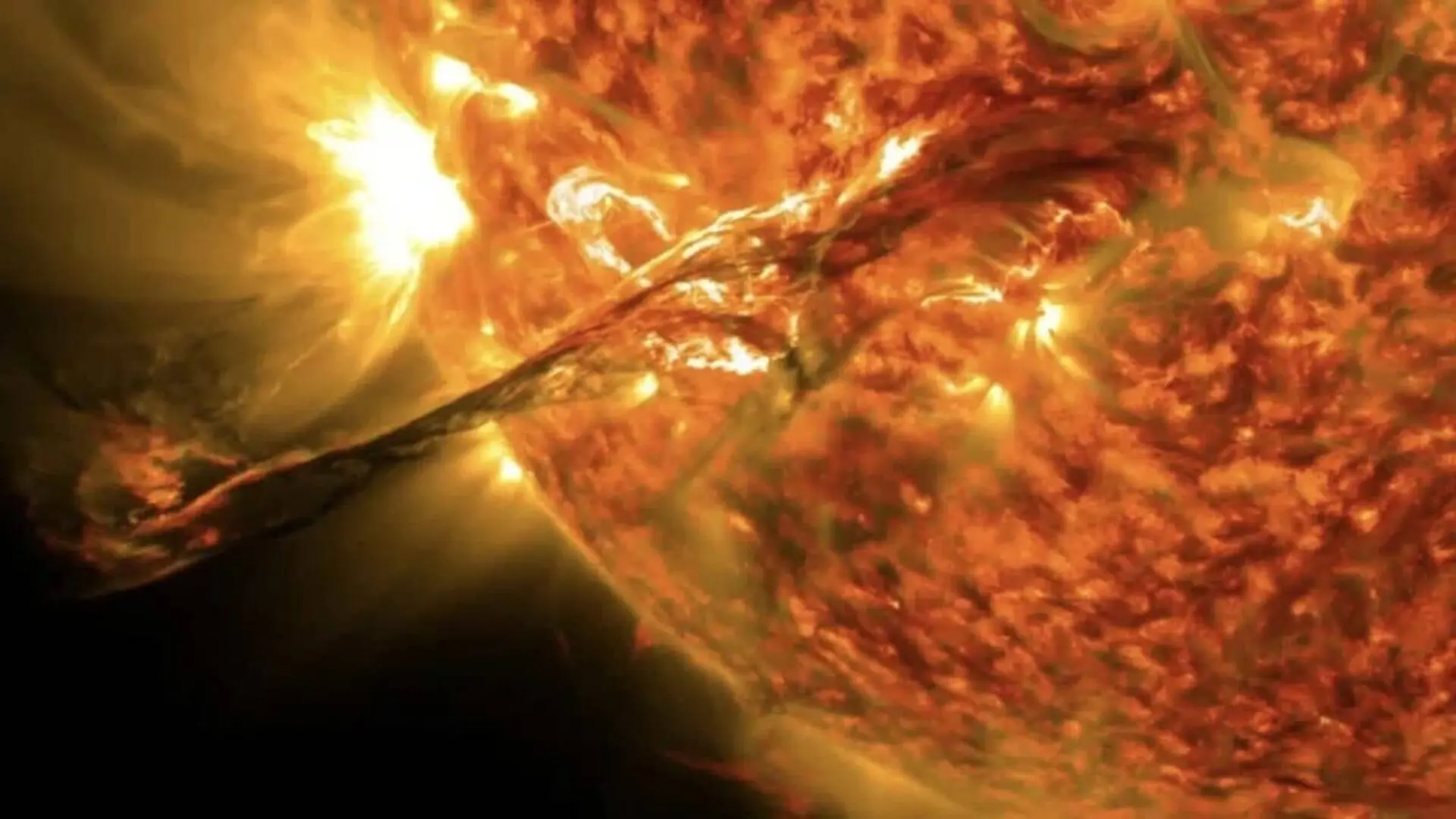
A longstanding mystery regarding one of history’s earliest recorded encounters between space weather and human infrastructure has finally been solved. For over a century, an anonymous report published in the journal Nature in 1871 cited an October 1841 geomagnetic storm as the culprit behind a chaotic railway delay in Exeter, England. However, a new investigation by researchers at Lancaster University and other institutions has revealed that the incident was misdated, shifting the timeline of this technological interference to 1848.
The original account described a tense moment where a telegraph operator, unable to verify if a track was clear, caused a 16-minute delay for an express train. While the story was frequently cited as a landmark case of solar activity impacting early electrical grids, the new study published in Space Weather reveals a fatal flaw: the railway line in question did not exist in 1841.
Historical Records Correct a Century-Old Error
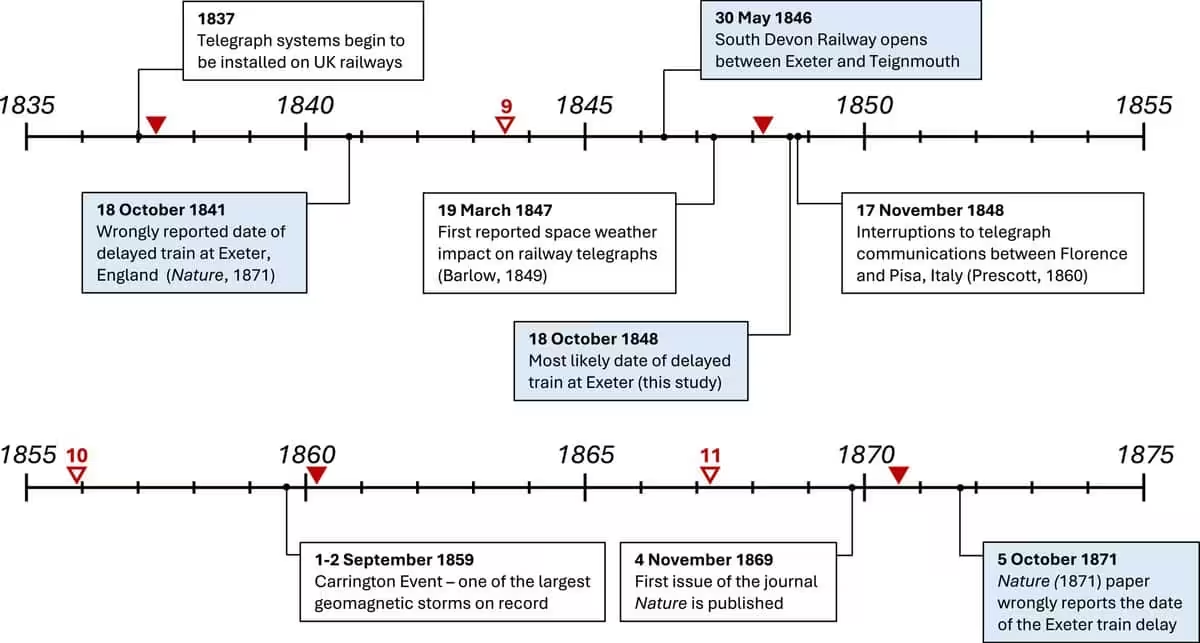
By cross-referencing parliamentary records, the researchers determined that the South Devon Railway Company only secured approval for the Exeter to Plymouth route in 1844, with the relevant track section not opening until May 1846. Further archival sleuthing pointed to Nathaniel John Holmes, an electrical engineer and acquaintance of Nature editor Sir Norman Lockyer, as the likely anonymous author of the 1871 report, who seemingly fell victim to a simple typographical error regarding the year.
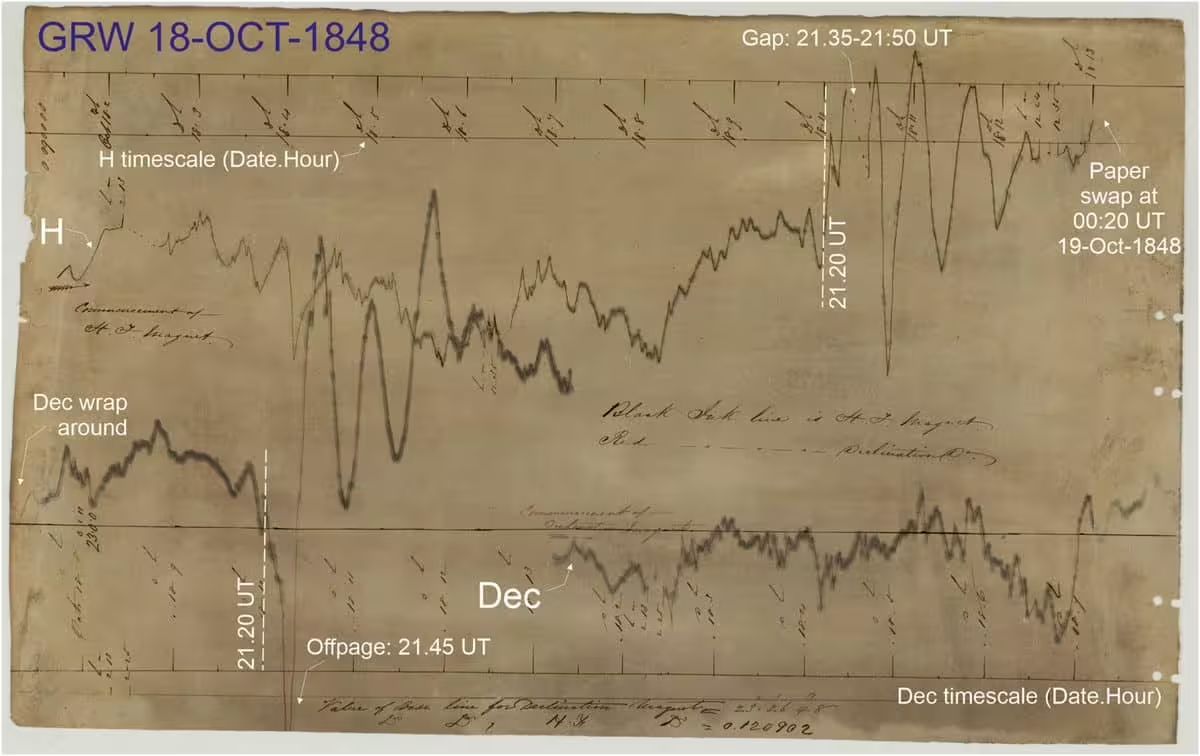
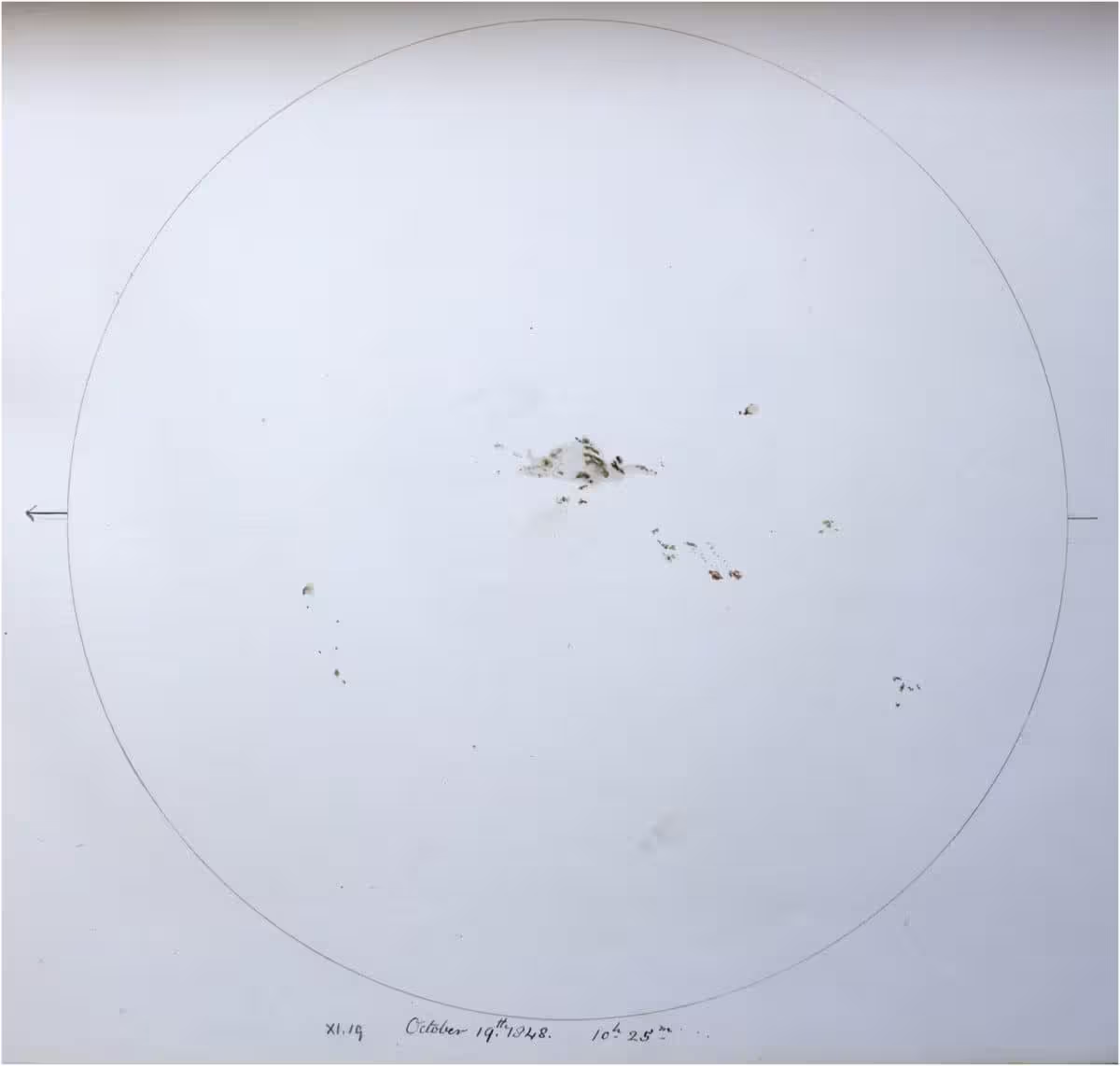
To pinpoint the actual date, the team analyzed historical magnetograms from the Greenwich Magnetic Observatory. These records confirm that while October 1841 was magnetically quiet, October 1848 saw intense geomagnetic activity. This aligns with contemporary reports of auroras across Britain and documented sunspot observations made by astronomer Temple Chevallier on October 19, 1848. Additionally, historical timetables confirm that the specific 10:05 PM express train mentioned in the account was only in service between 1848 and 1849.
Solar Storms and Early Technology
The correction provides a clearer view of how emerging Victorian-era technologies first collided with the volatile nature of our star. While this 1848 event is now accurately cataloged, it remains part of a broader, early timeline of solar interference. The researchers noted that a similar incident involving spontaneous electrical currents on the Midland Railway had been documented as early as March 1847, while the massive 1859 Carrington Event remains the most famous example of nineteenth-century space weather disruption.
“Space weather is often discussed as a modern challenge because of our dependence on technologies such as satellites, communications systems and electricity networks,” explained co-author Jim Wild of Lancaster University. “What this study shows is that society has been experiencing the effects of space weather on technology for almost as long as electrical technologies have existed. The Exeter train delay is a fascinating story because it sits right at the point where emerging technologies first began to encounter the realities of the space environment.”
This article has been fact checked for accuracy, with information verified against reputable sources. Learn more about us and our editorial process.
Last reviewed on .
Article history
- Latest version
Reference(s)
- Wild, James A.., et al. “Did Space Weather Delay the 10:05 p.m. Train Departure From Exeter on 18 October 1841?.” Space Weather, vol. 24, no. 9, September 16, 2026 American Geophysical Union (AGU), doi: 10.1029/2026SW005239. <https://agupubs.onlinelibrary.wiley.com/doi/10.1029/2026SW005239>.
- <https://www.eurekalert.org/news-releases/1143888>.
Cite this page:
- Posted by Zara Tariq