Scientists Have Created a Super Strong Ice Composite as Tough as Concrete
Researchers have engineered a new, ultra-strong ice composite using plant materials and proteins, potentially revolutionizing how we use frozen water.
Researchers at the Hebrew University of Jerusalem have engineered a high-performance ice composite that could transform construction in extreme climates. Known as BioPykrete, the material addresses the inherent fragility of standard ice by integrating plant-derived components and advanced protein technology to create a structure with the compressive strength of conventional concrete.
The development, detailed in the journal Colloids and Surfaces B: Biointerfaces, builds upon the historical concept of Pykrete—a mixture of wood pulp and ice famously explored for military applications during World War II. While the original material improved durability, the modern iteration employs molecular engineering to achieve superior structural integrity.
Nanoscale Reinforcement
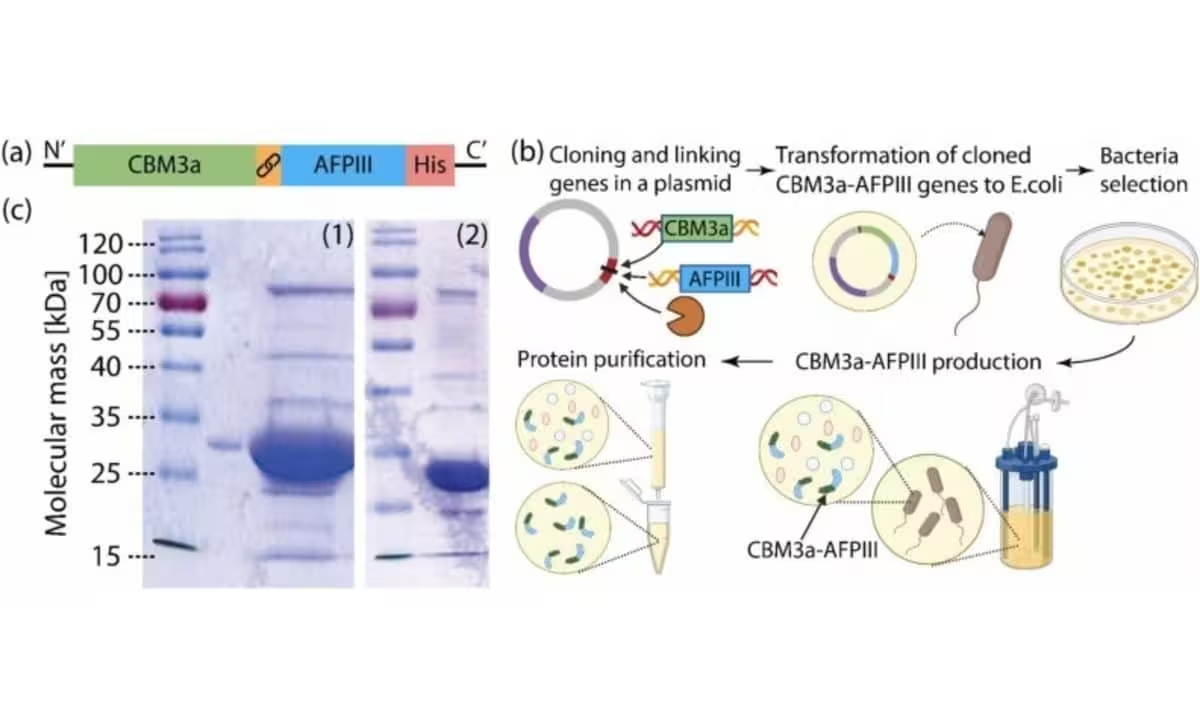
To overcome the tendency of ice to shatter under stress, the team utilized cellulose nanocrystals (CNCs). These rigid particles, sourced from plant matter, form a protective, three-dimensional mesh within the frozen matrix. To ensure these fibers remain locked to the ice crystals, the scientists introduced a chimeric protein called CBM3a-AFPIII.
This synthetic protein functions as a molecular adhesive. One side of the protein anchors itself to the ice crystal lattice, while the other binds securely to the cellulose nanocrystals. This dual-action bonding creates a reinforced scaffold that prevents the rapid propagation of cracks, which typically leads to the catastrophic failure of untreated ice.
Testing Mechanical Resilience
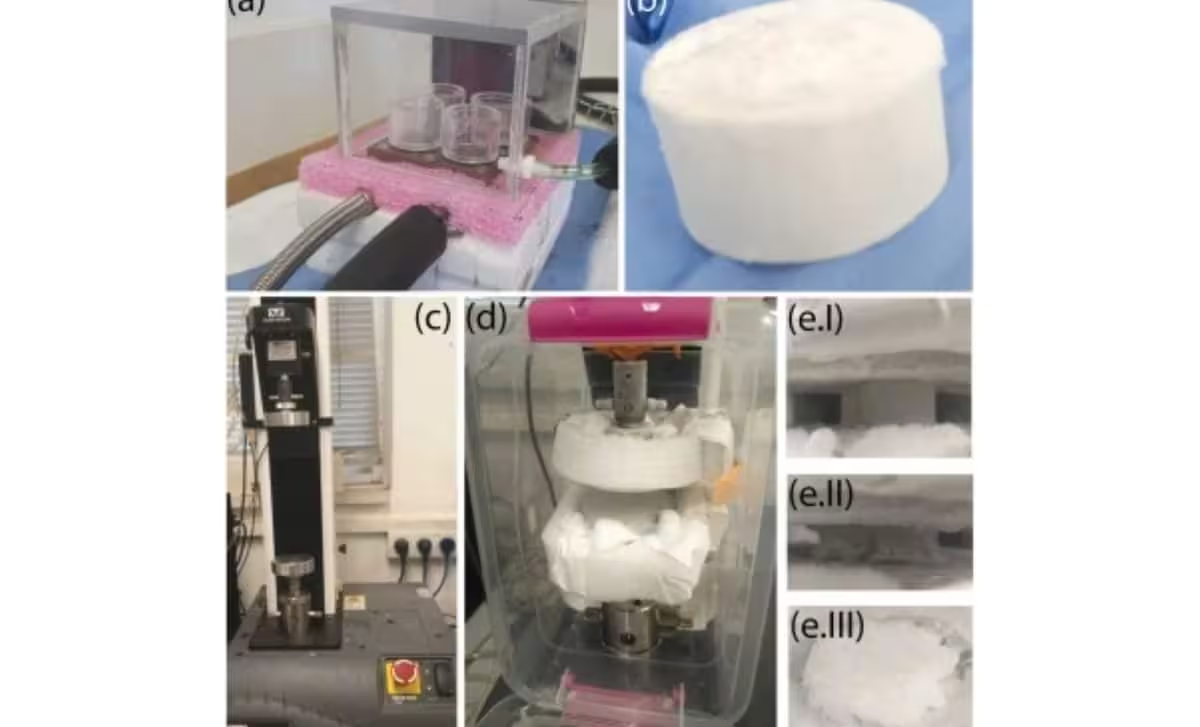
Laboratory stress tests revealed that BioPykrete is significantly more robust than previous iterations of ice-based materials. The addition of the protein bridge doubled the material’s energy absorption and strength compared to simple ice-cellulose mixtures. When subjected to compression, the composite demonstrated a 10-fold increase in strength over standard ice, allowing it to deform gradually rather than fracturing abruptly.
The findings indicate that BioPykrete can absorb roughly 70 times more energy before failure than plain ice, bringing its performance metrics within the range of traditional building materials like concrete.
Logistics for Polar Infrastructure
For research teams operating in the Arctic or Antarctic, the ability to manufacture building materials on-site is a significant logistical advantage. Because BioPykrete relies primarily on abundant local water, it could theoretically reduce the need to transport heavy steel or concrete to remote research outposts. The use of biodegradable cellulose and protein further mitigates environmental concerns regarding waste in fragile polar ecosystems.
Despite these promising initial results, the researchers emphasize that BioPykrete remains in the experimental phase. Future research is required to determine how the material withstands the harsh realities of field use, including persistent thermal fluctuations, freeze-thaw cycles, and sustained environmental pressure. Only through long-term durability testing can scientists determine if this bio-engineered composite is ready to support actual infrastructure in the world’s most unforgiving climates.
This article has been fact checked for accuracy, with information verified against reputable sources. Learn more about us and our editorial process.
Last reviewed on .
Article history
- Latest version
Cite this page:
- Posted by Zara Tariq