JWST Just Found A Bizarrely Cold Giant Planet That Defies The Laws Of Physics
JWST has discovered that the giant exoplanet HATS-6 b is colder and chemically unique, challenging our current understanding of how planets form.
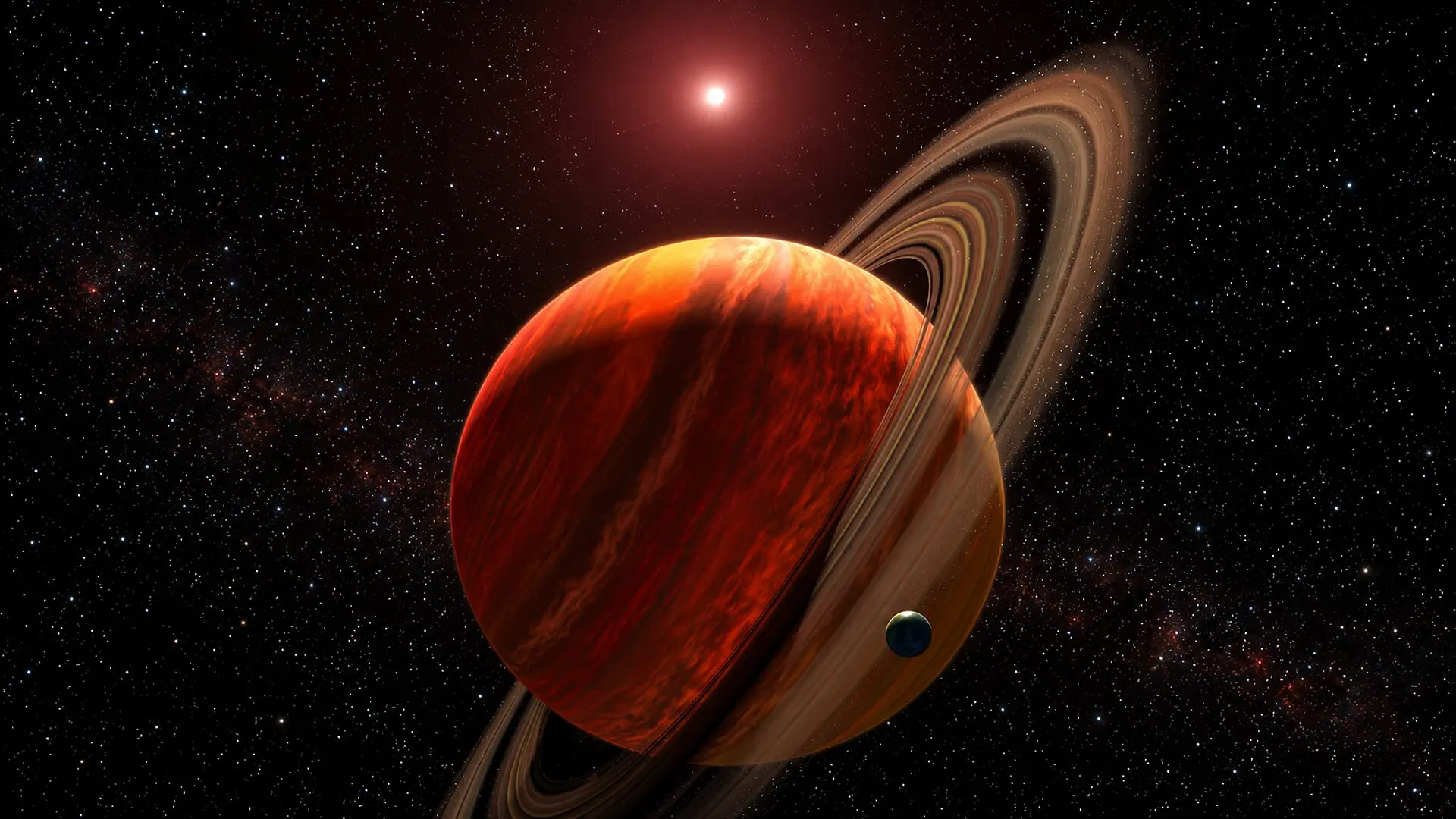
The James Webb Space Telescope (JWST) has turned its gaze toward HATS-6 b, a peculiar giant exoplanet that continues to defy conventional models of planetary formation and atmospheric behavior. Located 500 light-years away, the planet possesses the physical dimensions of Jupiter but only one-third of its mass, all while orbiting a diminutive M-dwarf star every 3.3 days. This arrangement is difficult to reconcile with standard theories, which suggest that small stars generally lack the massive protoplanetary disks required to assemble such gargantuan gas worlds.
Chemical signatures in distant skies
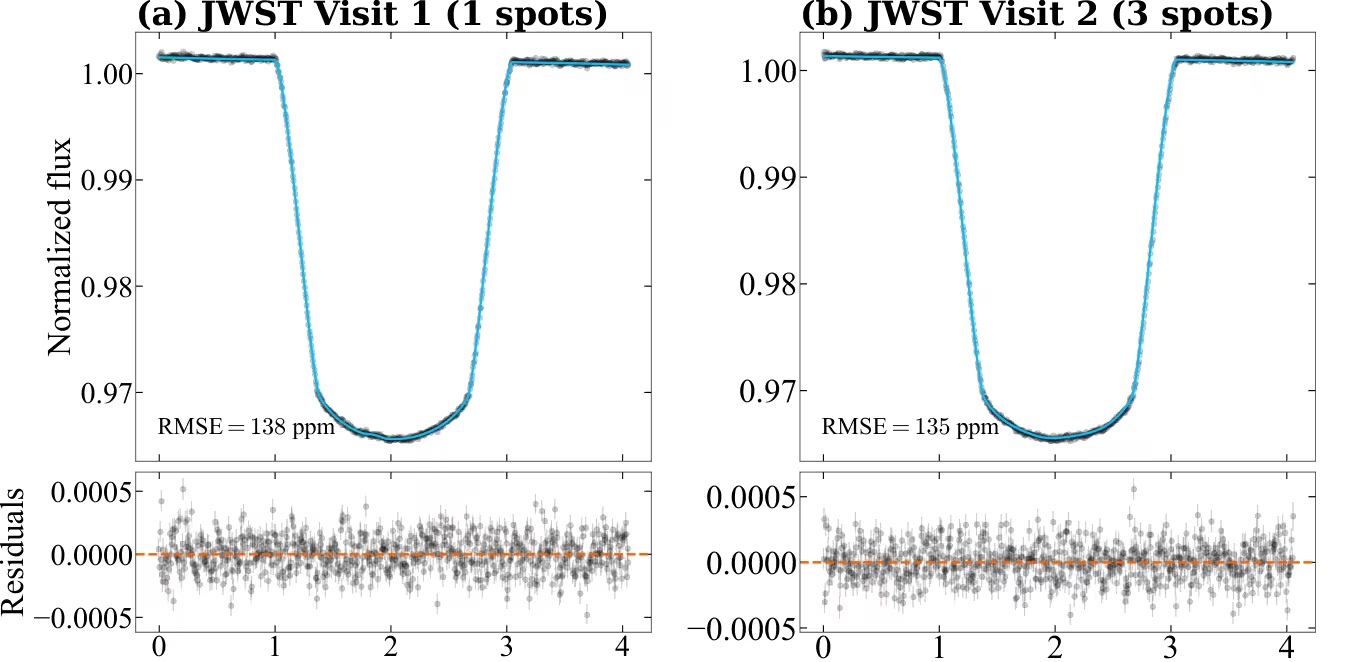
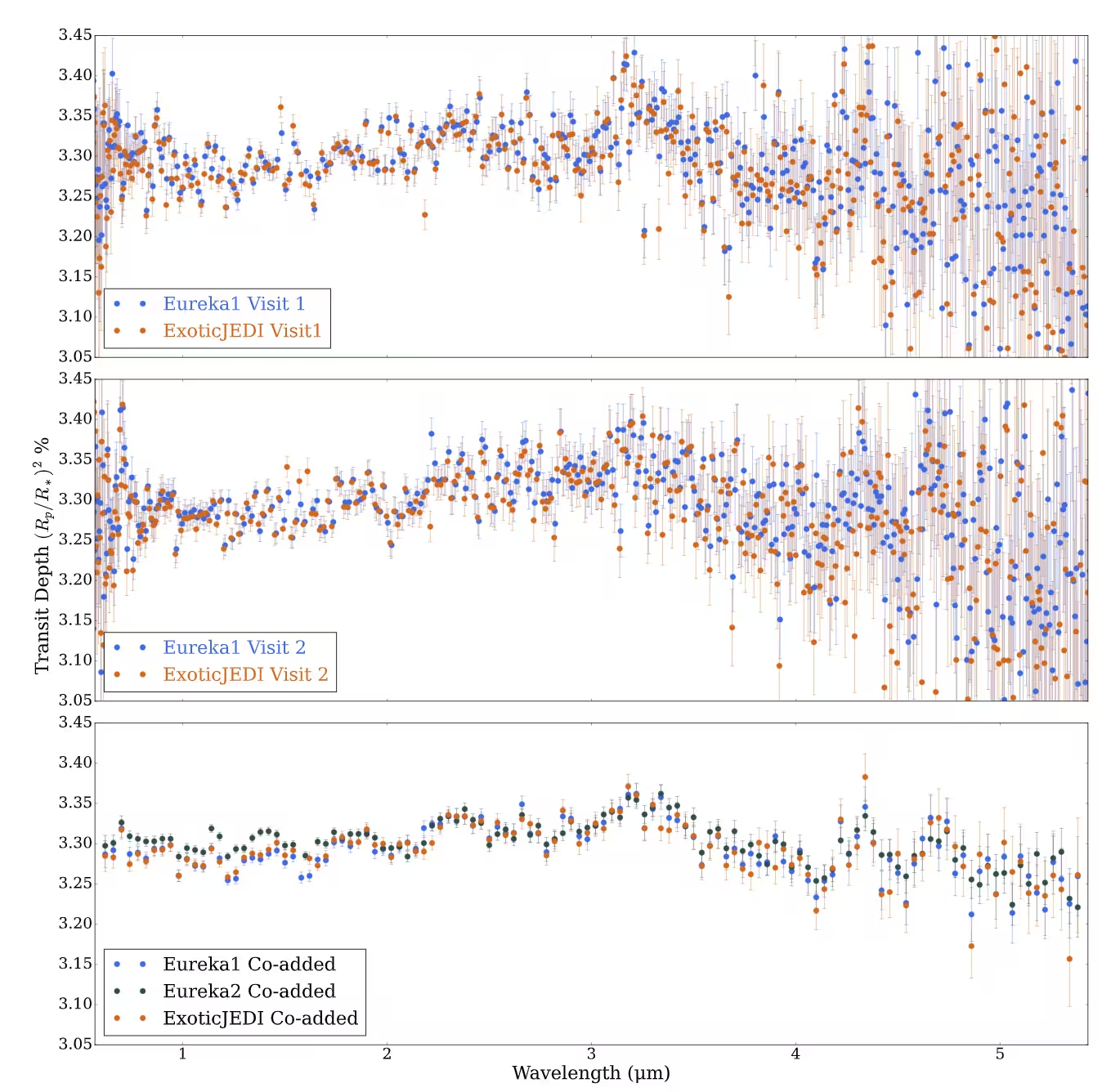
As part of the Giant Exoplanets around M-dwarf Stars (GEMS) survey, researchers at the University of Maryland used the JWST’s Near Infrared Spectrograph to analyze the starlight filtering through the planet’s atmosphere during transits. By observing two separate transits across a wide spectral range, the team identified clear markers of water and methane, along with a statistically significant signal for ammonia—a molecule rarely documented in exoplanetary atmospheres.
“Carbon, hydrogen and oxygen are all things that have been previously found in atmospheres of giant planets outside our solar system, but ammonia is something almost never detected before,” said lead author Giannina Guzmán Caloca. “It’s an entirely new molecule to think about.” The presence of carbon dioxide was also noted, though the data for this molecule proved less definitive than the others.
A temperature anomaly
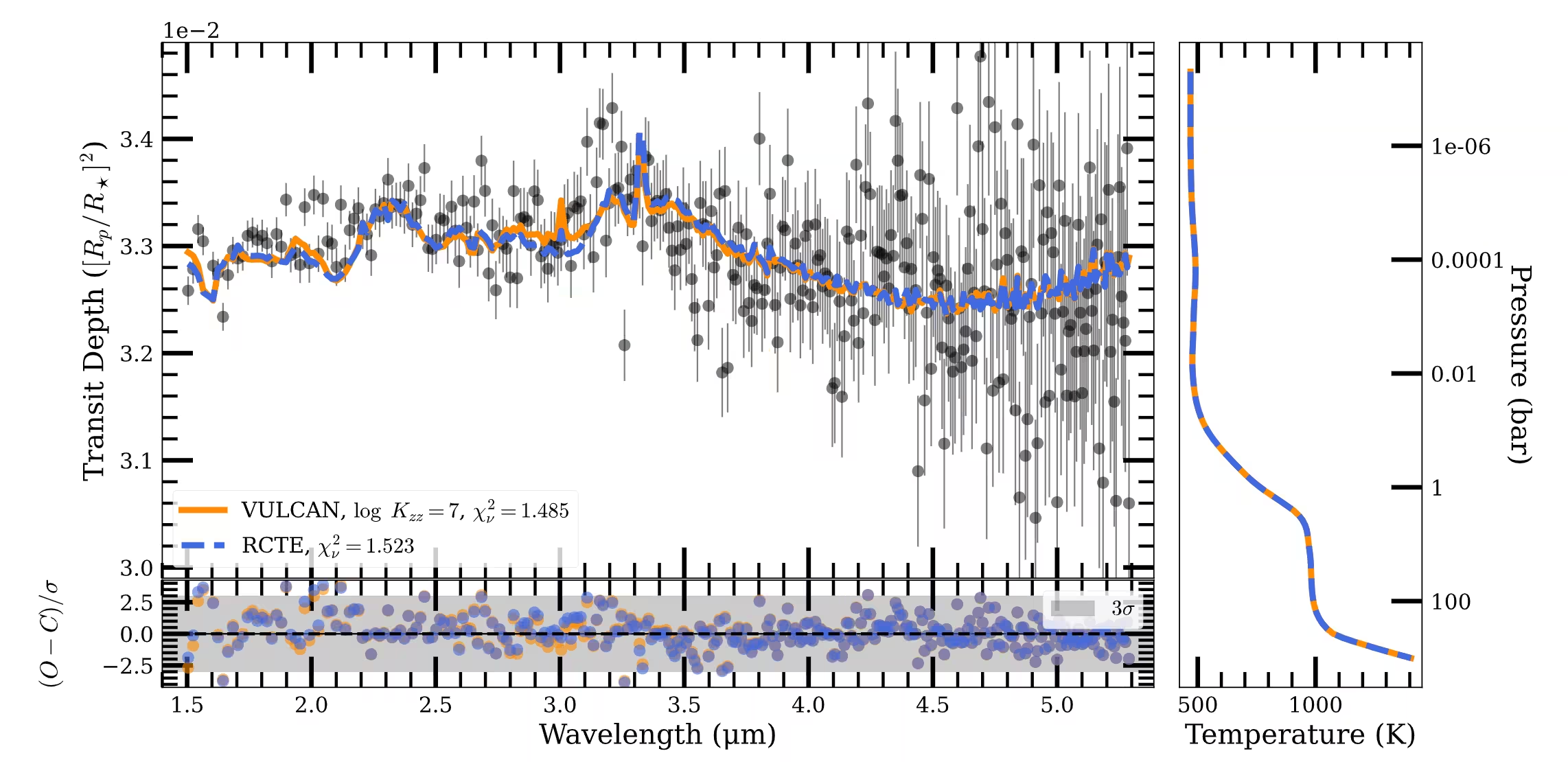
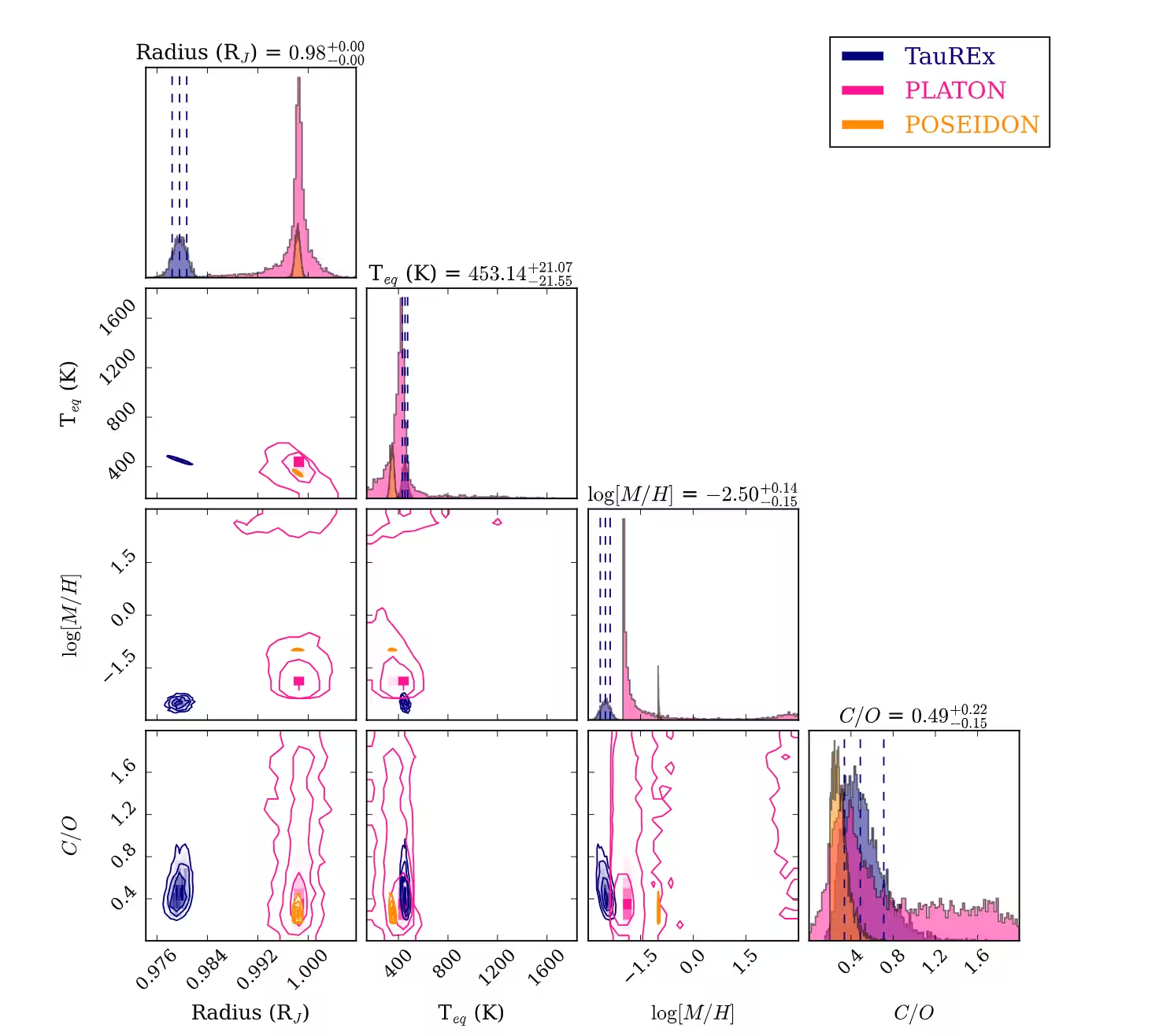
Beyond the chemical composition, HATS-6 b presents a thermal mystery. Predictive models anticipated an equilibrium temperature of approximately 713 kelvins (824 degrees Fahrenheit) based on its orbital distance and the radiation emitted by its host star. However, the JWST data suggests a much cooler atmosphere, resting at roughly 514 kelvins (466 degrees Fahrenheit). This discrepancy suggests that the planet may be far more reflective than previously assumed, potentially due to the presence of high-altitude clouds or thick hazes that deflect stellar radiation.
Deep-seated atmospheric discrepancies
The study also highlights a striking contrast between the planet’s atmosphere and its likely interior. Analysis of the atmospheric metallicity—the abundance of elements heavier than hydrogen and helium—revealed levels two orders of magnitude lower than the expected solar values. Conversely, models of the planet’s interior suggest a significantly higher concentration of heavy elements. This leads researchers to suspect that HATS-6 b is not chemically homogenous and may possess internal heating mechanisms that explain its inflated size, which standard cooling models cannot currently account for.
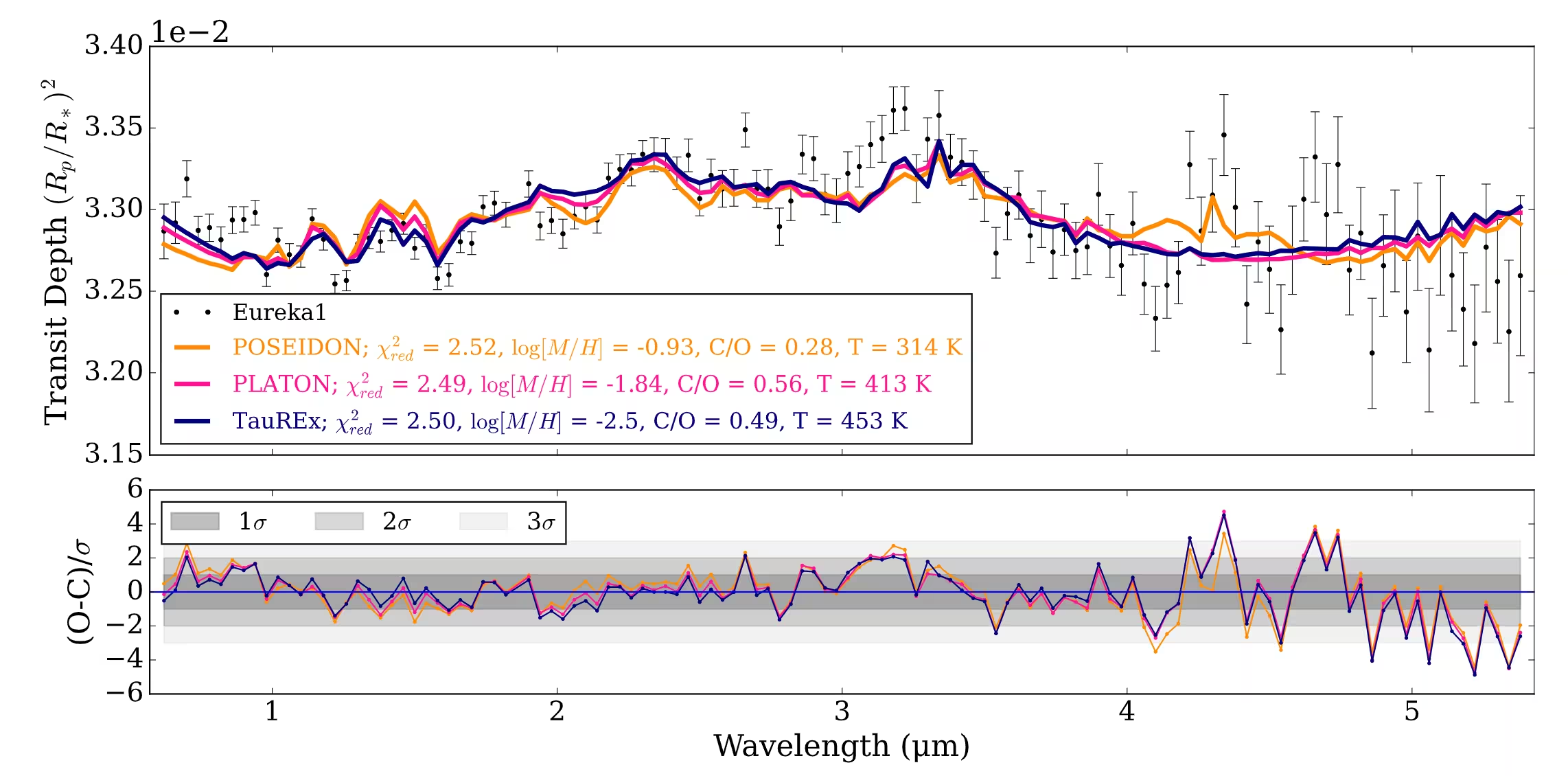
Further observation, particularly using the Mid-Infrared Instrument on the JWST, will be required to resolve lingering uncertainties, such as an unidentified absorption feature near 3 micrometers and potential stellar interference. As the GEMS program continues to compile data on these rare giant planets, HATS-6 b stands as a critical test case for understanding the diverse pathways of planetary evolution across the galaxy.
Relevant research context
- Warm Jupiters around M dwarfs are great opportunities for extensive chemical, cloud, and haze characterisation with JWST: Astronomy & Astrophysics, 2024
- A warm Neptune’s methane reveals core mass and vigorous atmospheric mixing: Nature, 2024
- Methane throughout the atmosphere of the warm exoplanet WASP-80b: Nature, 2023
- HATS-6b: A Warm Saturn Transiting an Early M Dwarf Star, and a Set of Empirical Relations for Characterizing K and M Dwarf Planet Hosts: The Astronomical Journal, 2015
- Looking at Giant Exoplanets around M-dwarfs (GEMS) with JWST: A Comprehensive Study on the Atmosphere of TOI-3714b: American Astronomical Society, 2025
This article has been fact checked for accuracy, with information verified against reputable sources. Learn more about us and our editorial process.
Last reviewed on .
Article history
- Latest version
Reference(s)
- “University of Maryland.” University of Maryland <https://umd.edu/>.
- Teinturier, L.., et al. “Warm Jupiters around M dwarfs are great opportunities for extensive chemical, cloud, and haze characterisation with JWST.” Astronomy & Astrophysics, vol. 690, October 22, 2024, pp. A380 EDP Sciences, doi: 10.1051/0004-6361/202450761. <https://doi.org/10.1051/0004-6361/202450761>.
- Sing, David K.., et al. “A warm Neptune’s methane reveals core mass and vigorous atmospheric mixing.” Nature, vol. 630, no. 8018, May 20, 2024, pp. 831-835. Springer Science and Business Media LLC, doi: 10.1038/s41586-024-07395-z. <https://doi.org/10.1038/s41586-024-07395-z>.
- Bell, Taylor J.., et al. “Methane throughout the atmosphere of the warm exoplanet WASP-80b.” Nature, vol. 623, no. 7988, November 22, 2023, pp. 709-712. Springer Science and Business Media LLC, doi: 10.1038/s41586-023-06687-0. <https://doi.org/10.1038/s41586-023-06687-0>.
- Hartman, J. D.., et al. “HATS-6b: A WARM SATURN TRANSITING AN EARLY M DWARF STAR, AND A SET OF EMPIRICAL RELATIONS FOR CHARACTERIZING K AND M DWARF PLANET HOSTS.” The Astronomical Journal, vol. 149, no. 5, April 28, 2015, pp. 166 American Astronomical Society, doi: 10.1088/0004-6256/149/5/166. <https://doi.org/10.1088/0004-6256/149/5/166>.
- <https://baas.aas.org/pub/2025n2i149p03/release/1>.
Cite this page:
- Posted by Aisha Ahmed