Enceladus May Be Pre-Sorting Alien Life Signs Into Tiny Ice Grains For Us To Find
New analysis of Cassini data reveals how Saturn’s moon Enceladus launches frozen ocean fragments into space, providing fresh clues in the search for life.
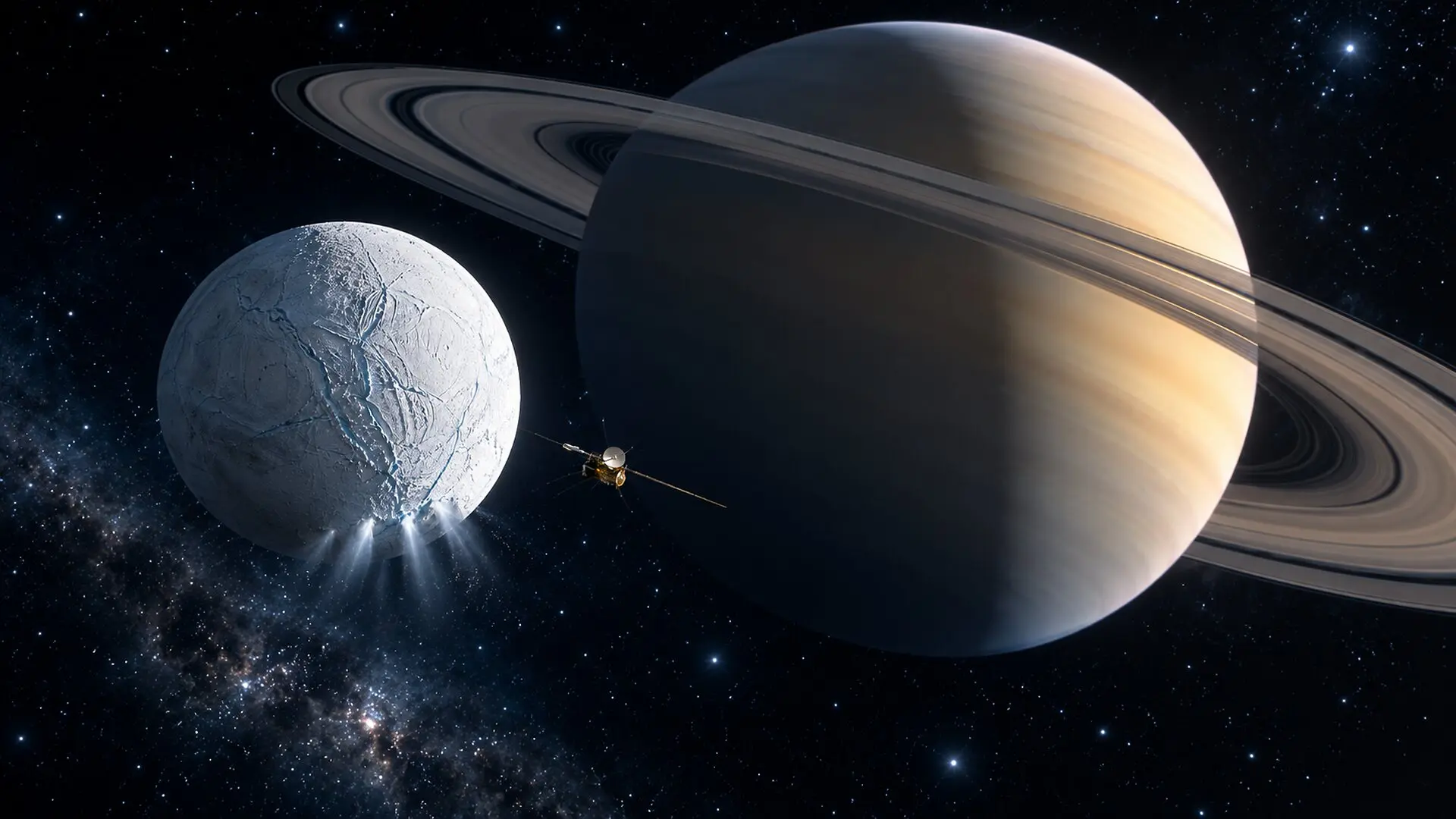
Enceladus, the small, icy moon orbiting Saturn, may be inadvertently acting as a sophisticated laboratory for astrobiologists. New research indicates that the plumes of salt-rich ice grains erupting from the moon’s hidden global ocean are not simply snapshots of the liquid water below, but are instead chemically segregated samples created by a natural freezing and fragmentation process.
This discovery, published in Science Advances, suggests that the physical mechanics inside the moon’s icy vents may concentrate rare organic molecules or potential biosignatures into specific particles. This could make it significantly easier for future space missions to detect evidence of life by analyzing individual grains rather than bulk samples.
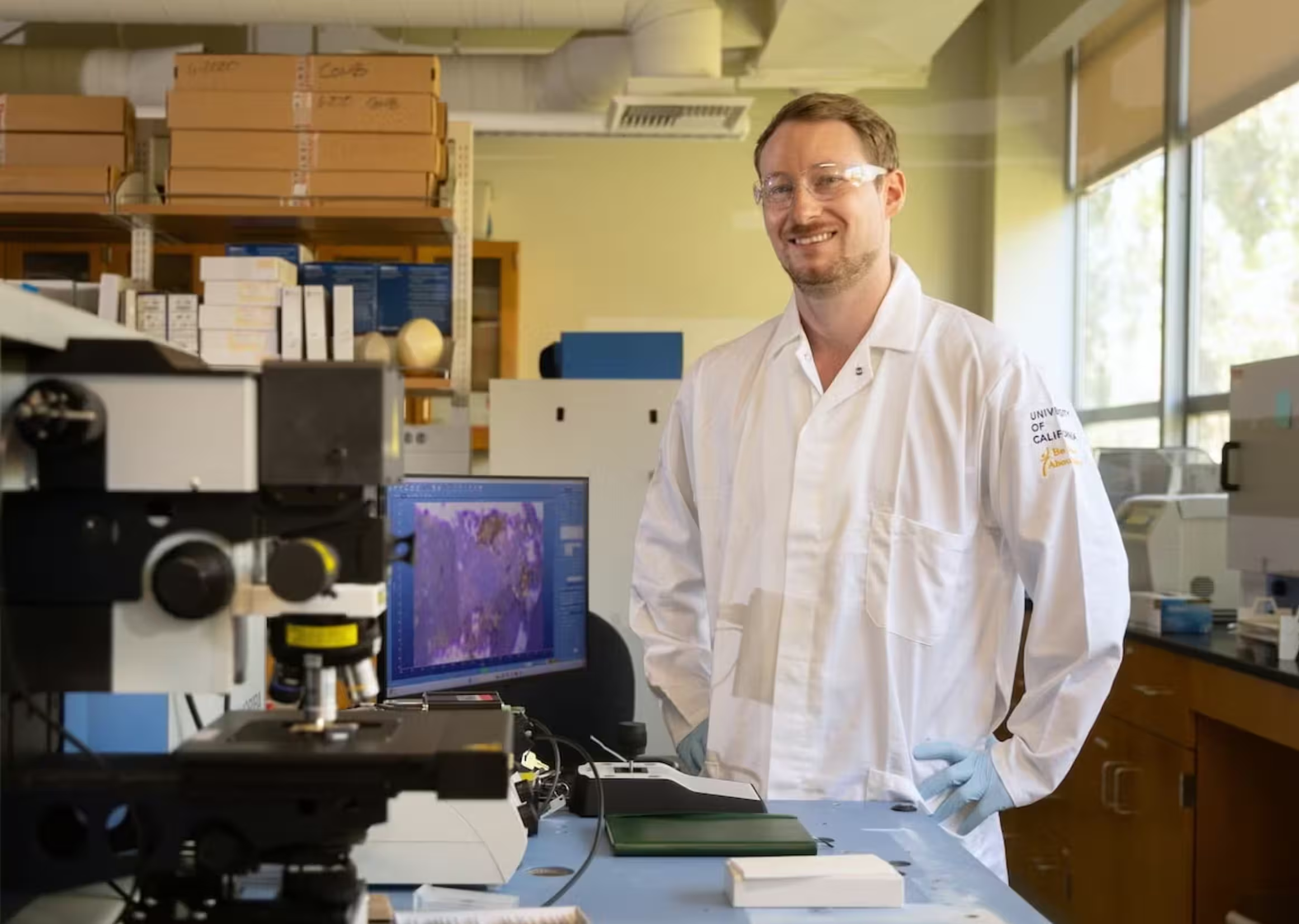
“We show that each grain is not necessarily a tiny scoop of the ocean,” explained Fabian Klenner, an assistant professor in the Department of Earth and Planetary Sciences at the University of California, Riverside. Instead, the research team posits that grains are the fragmented remains of larger droplets that underwent complex chemical changes as they froze during their journey through the moon’s icy crust.
Decoding the Unexpected Diversity of Ice Grains
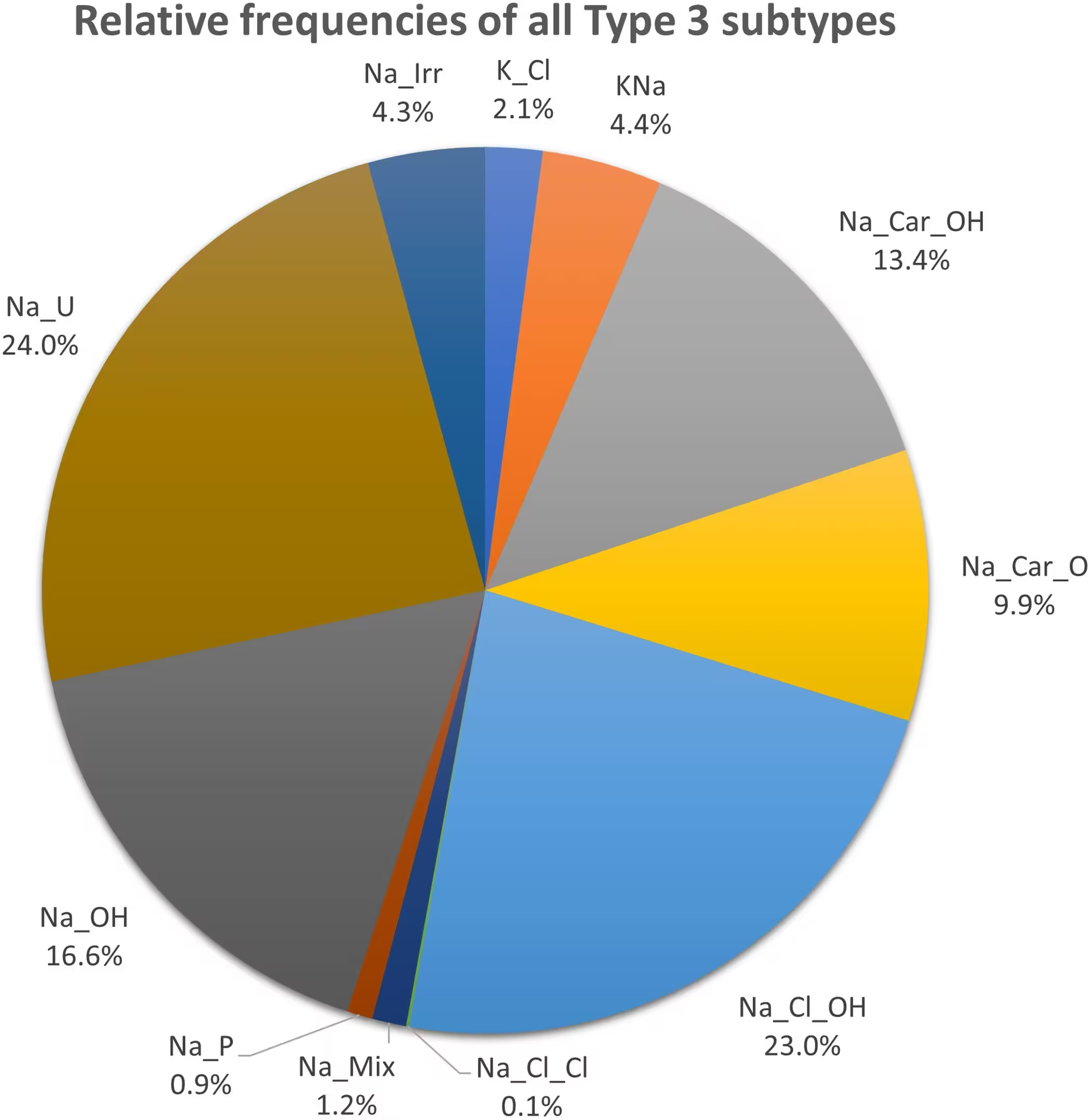
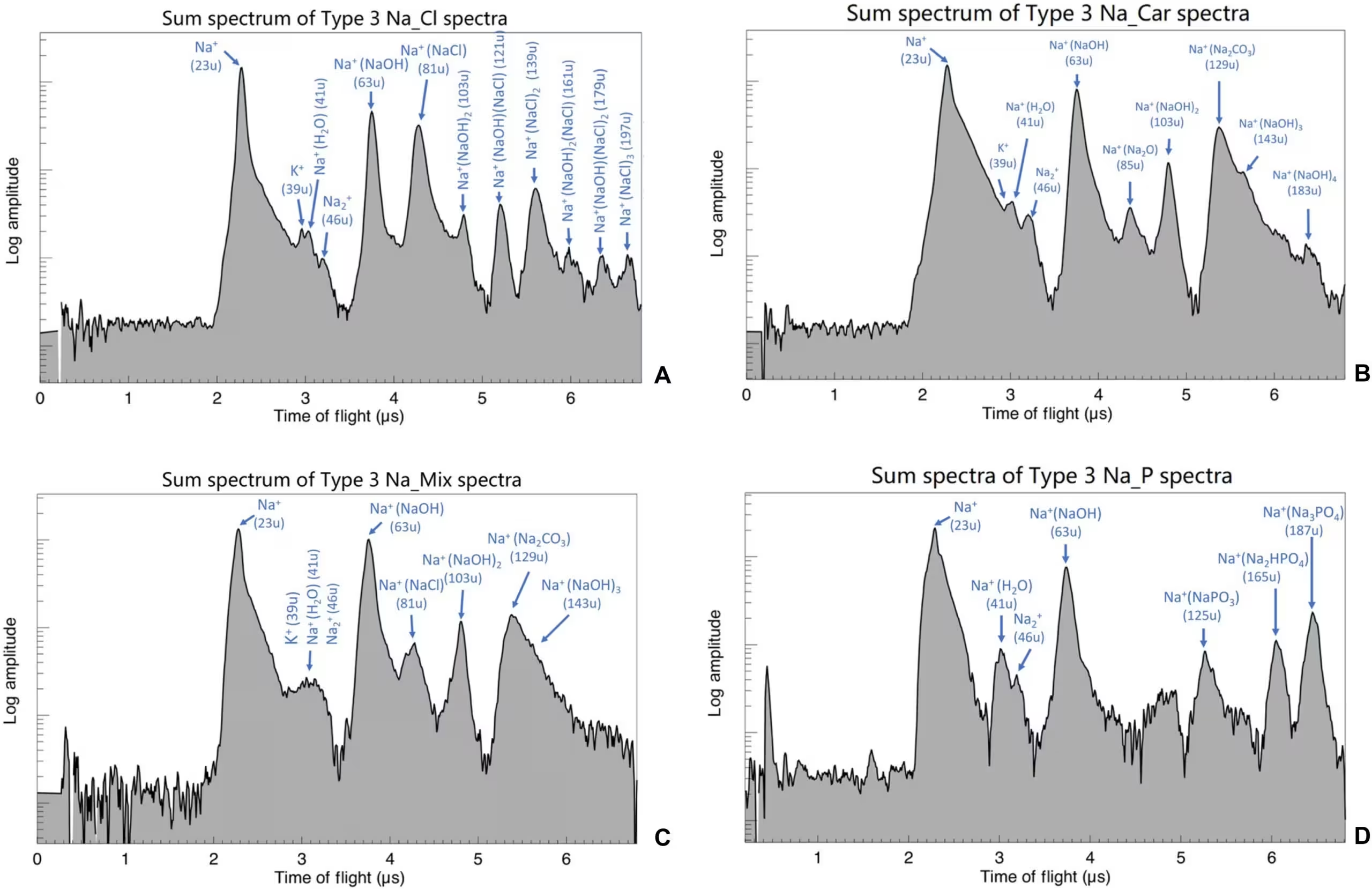
Data collected by NASA’s Cassini mission provided the foundation for this study, specifically focusing on 961 individual spectra from salt-rich “Type 3” grains. While researchers initially anticipated that these particles would reflect a uniform composition representative of the moon’s subsurface ocean, the actual data revealed striking chemical variations. The particles were categorized by distinct chemical signatures, with some dominated by sodium chloride, others by carbonates, phosphates, or potassium-rich salts.
Remarkably, these chemical markers rarely overlapped. Less than 2% of the sodium-rich grains contained both chloride and carbonate signatures, while phosphate-rich particles were almost entirely devoid of other salts. This level of segregation is inconsistent with a process of instantaneous, uniform freezing, prompting the research team to investigate a more nuanced mechanism.
The Mechanics of Natural Fractionation
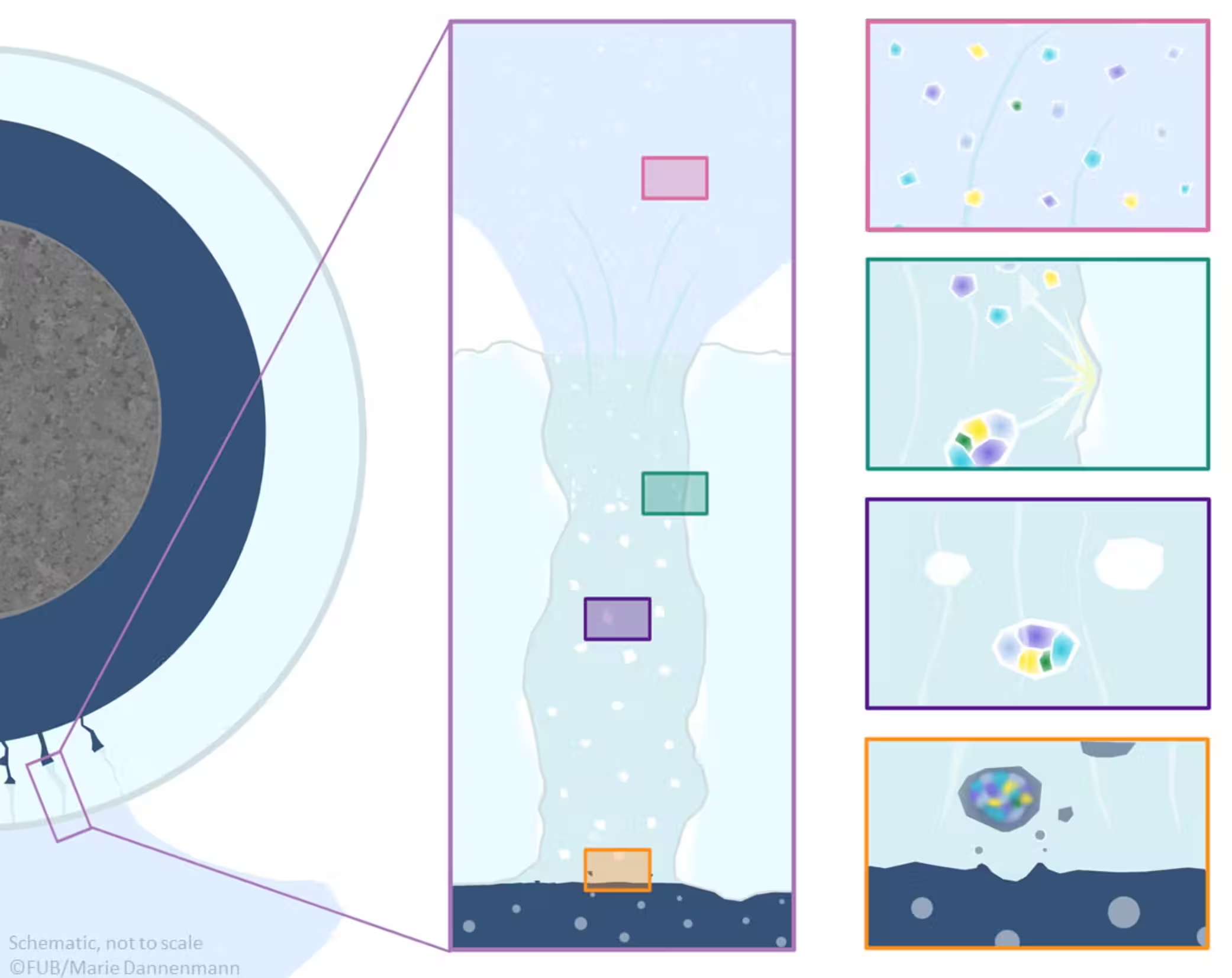
To recreate the environment inside Enceladus, the team performed laboratory experiments using alkaline saltwater mixtures designed to mimic the suspected composition of the moon’s ocean. They observed that when large droplets froze at a moderate rate—roughly a few degrees per minute—a process of fractional crystallization occurred.
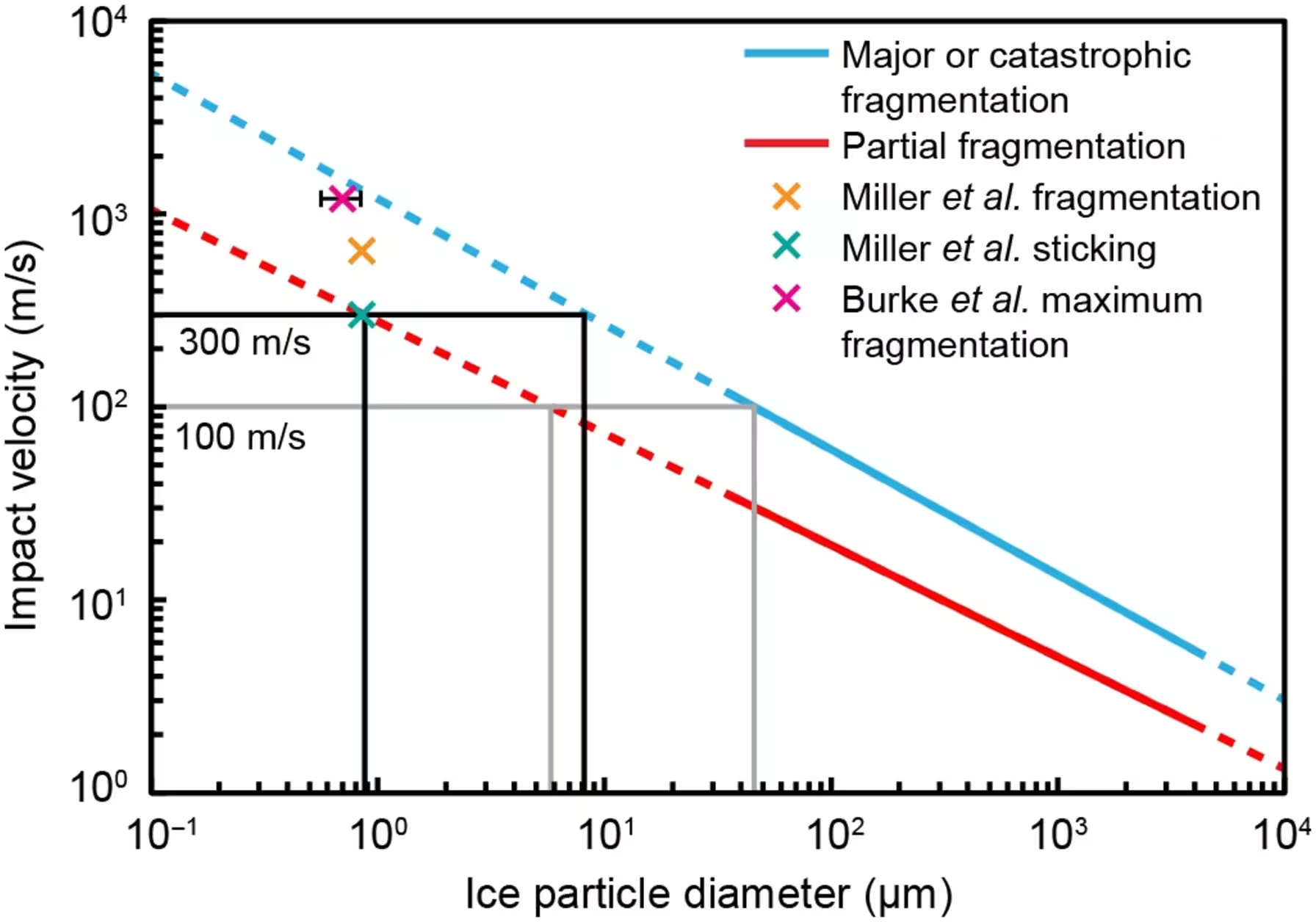
Thermodynamic modeling confirmed that different salts precipitate at different temperatures. Sodium phosphates and carbonates appear early in the cooling cycle, while sodium and potassium chlorides crystallize only as the final water content freezes. This sequential process effectively sorts the chemicals into different regions of a single droplet. As these frozen droplets ascend through the moon’s narrow fractures, they collide with icy walls and shatter, resulting in the chemically distinct grains detected by Cassini.
Improving the Odds for Biosignature Detection
This insight fundamentally alters how scientists view plume samples. If researchers rely on averaging measurements across large numbers of grains, they risk diluting rare, high-concentration particles that might hold the key to identifying life. By prioritizing the analysis of individual grains, future missions can better isolate these potentially enriched, distinct chemical signatures.
“Molecular signatures of life, if present, may be concentrated in only a few grains,” Klenner noted. While the study does not confirm the presence of biological material, it establishes a physical framework for how such molecules might be sequestered and delivered to space, providing a roadmap for the next generation of space exploration targeting the outer solar system.
Lead researcher Frank Postberg added that the moon itself is essentially performing the heavy lifting of sample preparation, conducting the type of chemical separation that would typically require extensive laboratory resources on Earth.
Scientific Context on Enceladus
The following studies offer additional insight into the hydrothermal processes, organic chemistry, and environmental conditions that make Enceladus a primary subject of astrobiological inquiry:
- Detection of organic compounds in freshly ejected ice grains from Enceladus’s ocean (Nature Astronomy, 2025): Details the identification of various esters, alkenes, and nitrogen-bearing compounds within the plume.
- Detection of phosphates originating from Enceladus’s ocean (Nature, 2023): Confirms that essential biological building blocks are present in the subsurface ocean.
- Macromolecular organic compounds from the depths of Enceladus (Nature, 2018): Highlights the presence of complex, carbon-rich molecules, suggesting a high level of chemical activity.
- Molecular hydrogen in the Enceladus plume: Evidence for hydrothermal processes (Science, 2017): Discusses chemical energy sources available for potential microbial life.
- Ongoing hydrothermal activities within Enceladus (Nature, 2015): Provides evidence for active high-temperature water-rock interactions at the moon’s core.
This article has been fact checked for accuracy, with information verified against reputable sources. Learn more about us and our editorial process.
Last reviewed on .
Article history
- Latest version
Reference(s)
- Postberg, Frank., et al. “Cassini CDA observes compositional segregation of Enceladus’ ice grains from slow freezing and fragmentation of oceanic spray.” Science Advances, vol. 12, no. 39, September 25, 2026 American Association for the Advancement of Science (AAAS), doi: 10.1126/sciadv.aee7256. <https://www.science.org/doi/10.1126/sciadv.aee7256>.
- “University of California, Riverside.”, September 02, 2026 University of California, Riverside <https://www.ucr.edu/>.
- Khawaja, Nozair., et al. “Detection of organic compounds in freshly ejected ice grains from Enceladus’s ocean.” Nature Astronomy, vol. 9, no. 11, October 1, 2025, pp. 1662-1671. Springer Science and Business Media LLC, doi: 10.1038/s41550-025-02655-y. <https://doi.org/10.1038/s41550-025-02655-y>.
- Postberg, Frank., et al. “Detection of phosphates originating from Enceladus’s ocean.” Nature, vol. 618, no. 7965, June 14, 2023, pp. 489-493. Springer Science and Business Media LLC, doi: 10.1038/s41586-023-05987-9. <https://doi.org/10.1038/s41586-023-05987-9>.
- Postberg, Frank., et al. “Macromolecular organic compounds from the depths of Enceladus.” Nature, vol. 558, no. 7711, June 27, 2018, pp. 564-568. Springer Science and Business Media LLC, doi: 10.1038/s41586-018-0246-4. <https://doi.org/10.1038/s41586-018-0246-4>.
- Waite, J. Hunter., et al. “Cassini finds molecular hydrogen in the Enceladus plume: Evidence for hydrothermal processes.” Science, vol. 356, no. 6334, April 14, 2017, pp. 155-159. American Association for the Advancement of Science (AAAS), doi: 10.1126/science.aai8703. <https://doi.org/10.1126/science.aai8703>.
- Hsu, Hsiang-Wen., et al. “Ongoing hydrothermal activities within Enceladus.” Nature, vol. 519, no. 7542, March 11, 2015, pp. 207-210. Springer Science and Business Media LLC, doi: 10.1038/nature14262. <https://doi.org/10.1038/nature14262>.
Cite this page:
- Posted by Aisha Ahmed