Can Smartphone Videos Reveal How Stroke Survivors Really Walk at Home
A new study compares clinic and home walking mechanics using mobile video, testing a core assumption in stroke rehabilitation.
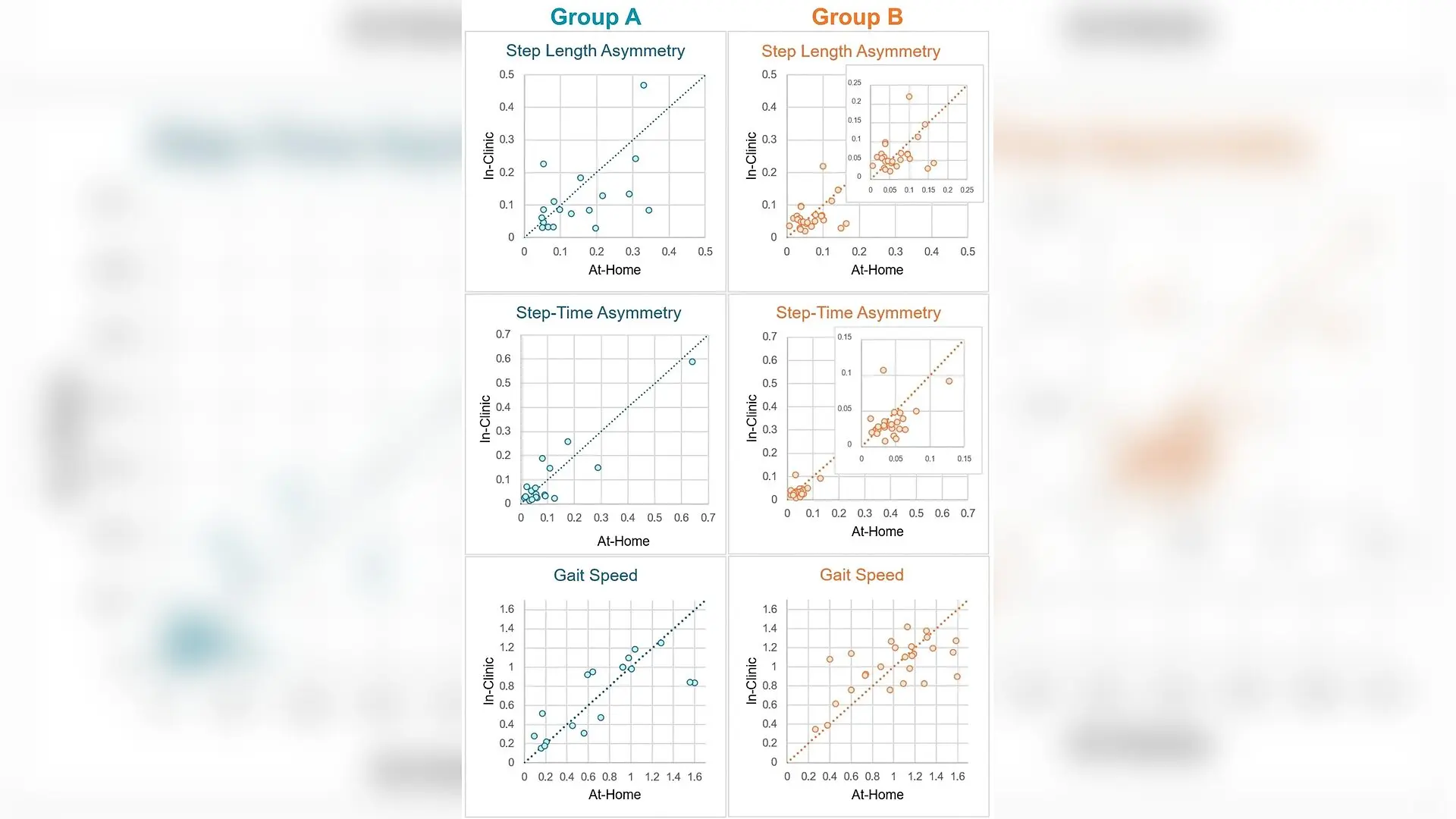
Adults recovering from a stroke often walk differently inside a controlled medical clinic than they do in their own living rooms, raising questions about the reliability of traditional therapy evaluations. A team of researchers set out to test whether standard clinic appointments truly capture how patients walk in everyday life, or if the supportive, level flooring of a hospital setting masks real-world challenges.
Stroke remains a leading cause of long-term disability, with millions of individuals facing persistent walking impairments that limit their independence and quality of life. Traditional clinical tests measure what a patient can achieve under ideal observation, but they frequently fail to reflect actual community mobility. To bridge this gap, investigators tracked the walking patterns of 43 community-dwelling adults, including 18 participants with a history of stroke and 25 healthy controls, using simple smartphone and tablet video recordings.
How Smartphone Cameras Captured Natural Walking Patterns
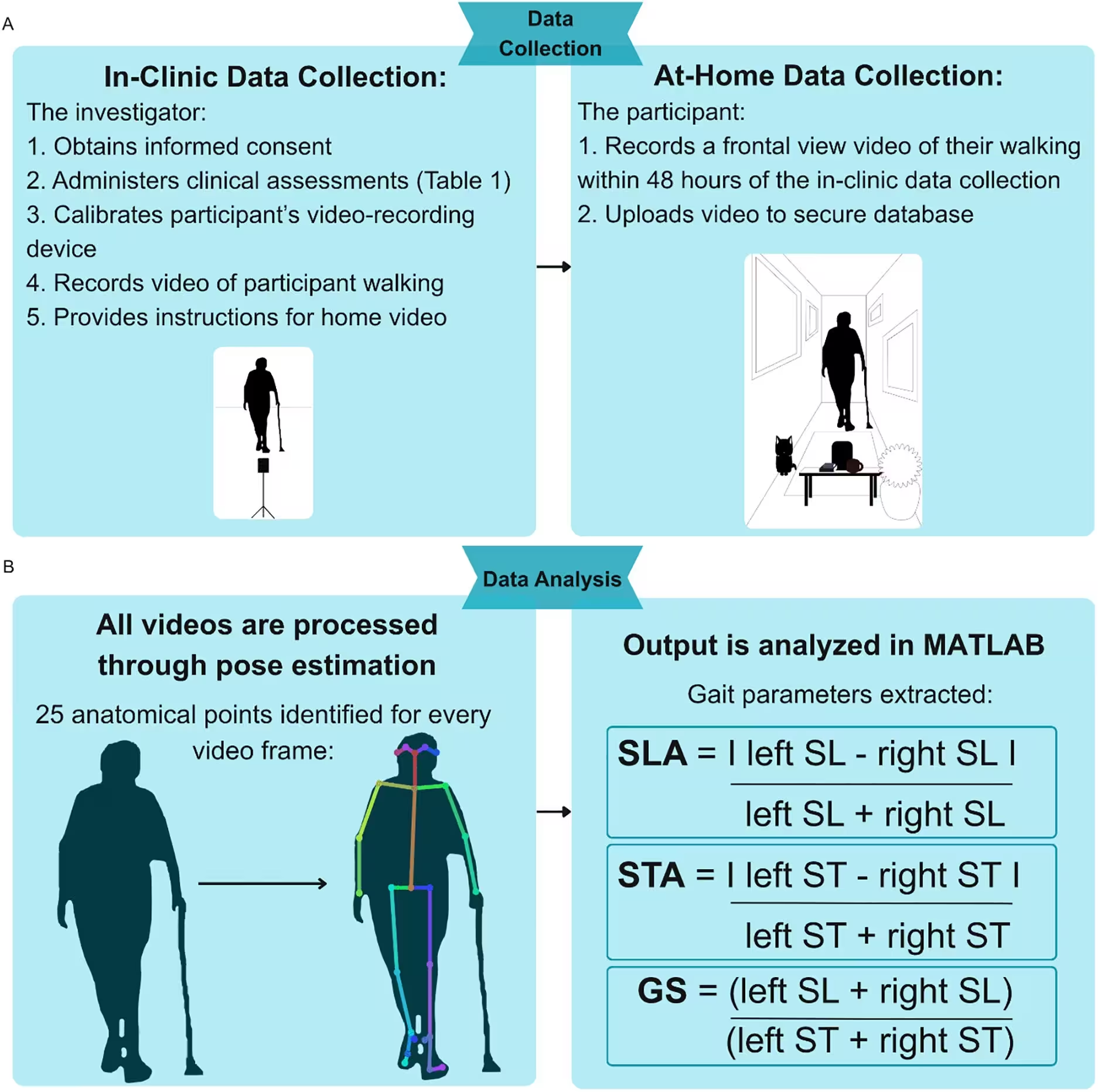
Evaluating movement outside the laboratory traditionally requires expensive three-dimensional motion capture systems that are restricted to specialized research centers. In this study, the researchers bypassed that barrier by utilizing everyday mobile devices and open-source software. Participants recorded two-minute walking sessions in both a clinical setting and their own homes. The research team processed these two-dimensional frontal-plane video files using the OpenPose workflow, a pose estimation system that identifies 25 distinct anatomical landmarks in every video frame, combined with custom MATLAB algorithms to extract precise kinematic data, as detailed in work published in PLOS One.
The primary measurements focused on gait speed, step time asymmetry, and step length asymmetry. By analyzing these metrics, the authors tested the foundational rehabilitation assumption that clinic observations reliably mirror everyday ambulation. Participants who used ankle-foot orthoses or assistive devices continued using them during both recordings to ensure authentic data collection.
What the Comparison Between Clinic and Home Revealed
The analysis uncovered weak-to-strong correlations between in-clinic and at-home gait parameters, demonstrating that clinic evaluations provide valuable general insights into daily walking performance. For participants with a history of stroke, step time asymmetry showed a moderate correlation between settings, while gait speed exhibited a strong correlation. Furthermore, statistical tests showed that most gait parameters did not differ significantly between the clinic and home environments for stroke survivors.
Despite these overall similarities, the strength of the relationships varied across individuals, indicating that clinic assessments do not tell the complete story for every patient. The pose estimation technology successfully distinguished between the two study groups, confirming that stroke survivors maintained slower speeds and greater movement asymmetries across both environments.
Limitations and Future Directions for Telerehabilitation
The authors noted several important limitations in their methodology, including the reliance on single-camera frontal-plane video rather than multi-angle sagittal views typically used in lab settings. Additionally, participants were aware they were being recorded at home, which could have subtly influenced their walking behavior, and the sample lacked broad demographic diversity. Nevertheless, the study establishes that smartphone-based kinematic tracking is a feasible, low-cost approach for monitoring rehabilitation progress outside hospital walls.
The research was published in PLOS One on November 11, 2026.
This article has been fact checked for accuracy, with information verified against reputable sources. Learn more about us and our editorial process.
Last reviewed on .
Article history
- Latest version
Reference(s)
- Ahrns, Rebecca., et al. “In-clinic versus at-home gait kinematics in adults with and without stroke: Associations across environments.” PLOS One, vol. 21, no. 11, November 11, 2026, pp. e0361481 Public Library of Science (PLoS), doi: 10.1371/journal.pone.0361481. <https://doi.org/10.1371/journal.pone.0361481>.
Cite this page:
- Posted by Priya Sharma