Scientists Finally Identify Mysterious Himalayan Insect Spotted Nearly 50 Years Ago
Scientists have finally identified a mysterious creature that eluded researchers for decades, solving a scientific puzzle dating back to the late 1970s.
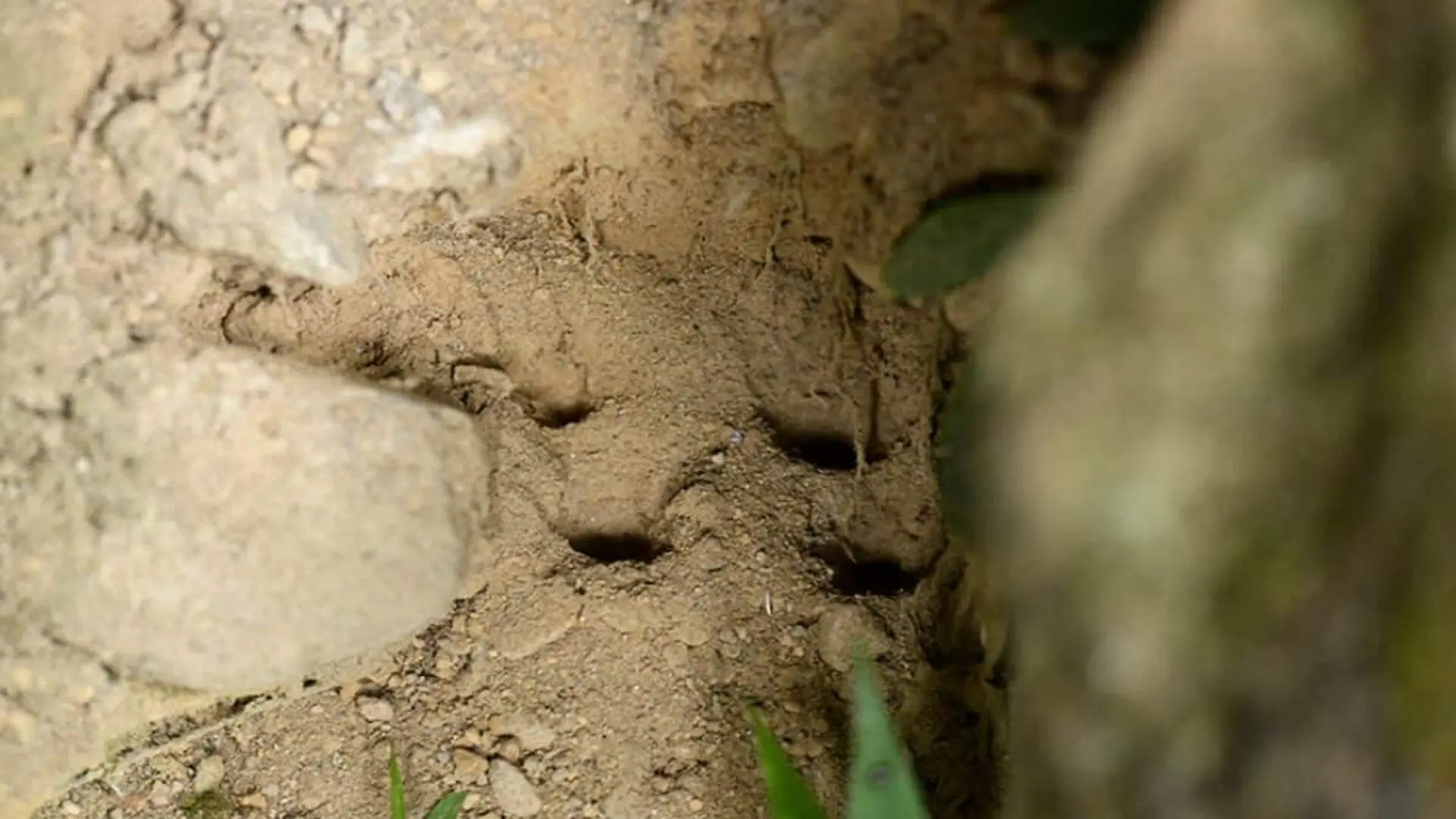
After nearly five decades of mystery, researchers have formally identified a unique insect species first observed in the Himalayas in 1978. The discovery of Vermitigris tsangyanggyatso, a species of fly that thrives in high-altitude environments, challenges existing assumptions about the distribution and habitat requirements of these elusive insects.
The identification, detailed in the journal ZooKeys in April 2026, marks the end of a long taxonomic puzzle. While scientists had previously collected the larvae of these “wormlions,” the lack of adult specimens prevented formal classification. It was not until 2025, during an expedition to Yadong County in China’s Xizang region, that researchers successfully secured the adult flies necessary to confirm the species.
Distinctive Anatomy and Hunting Tactics
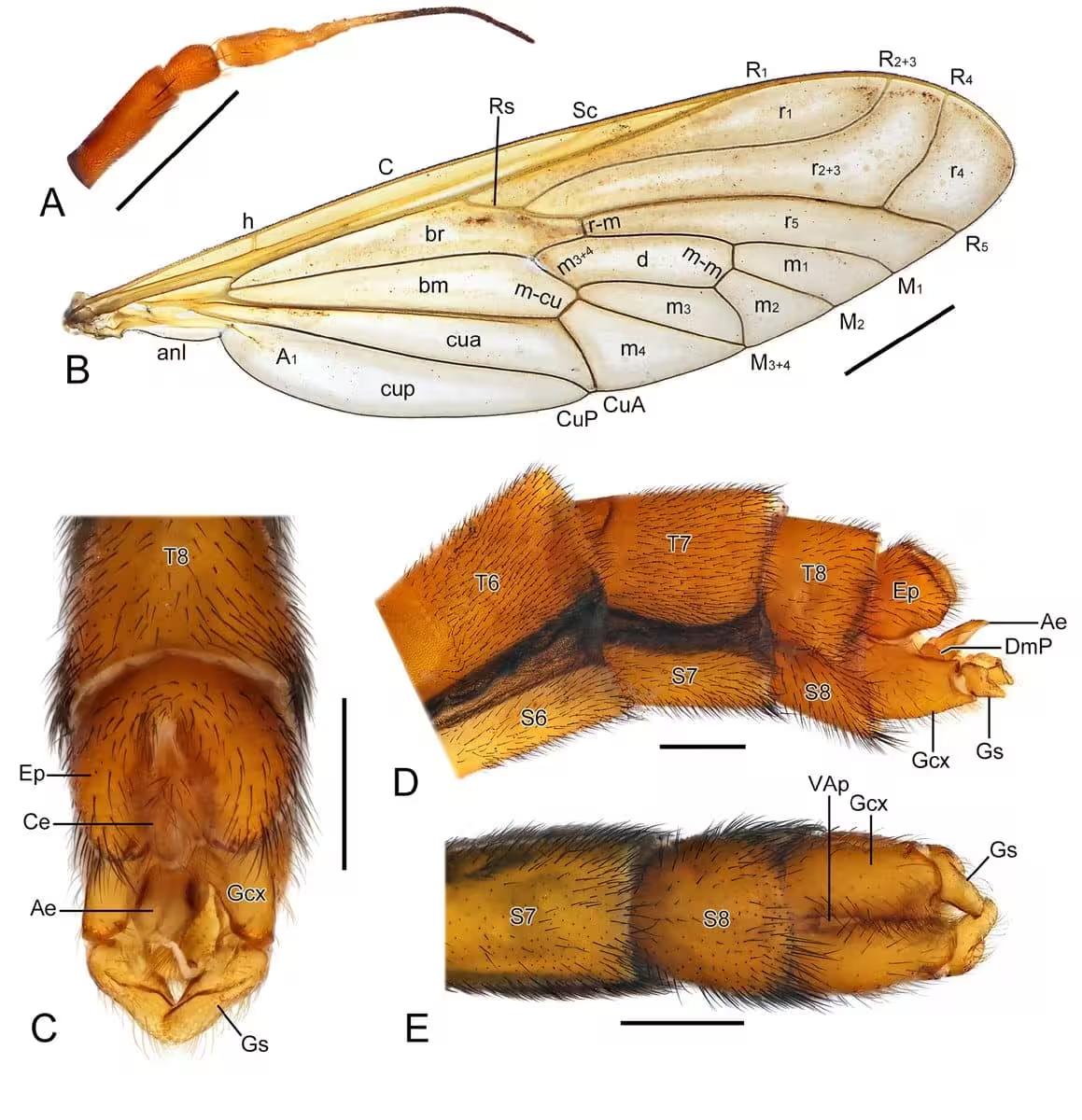
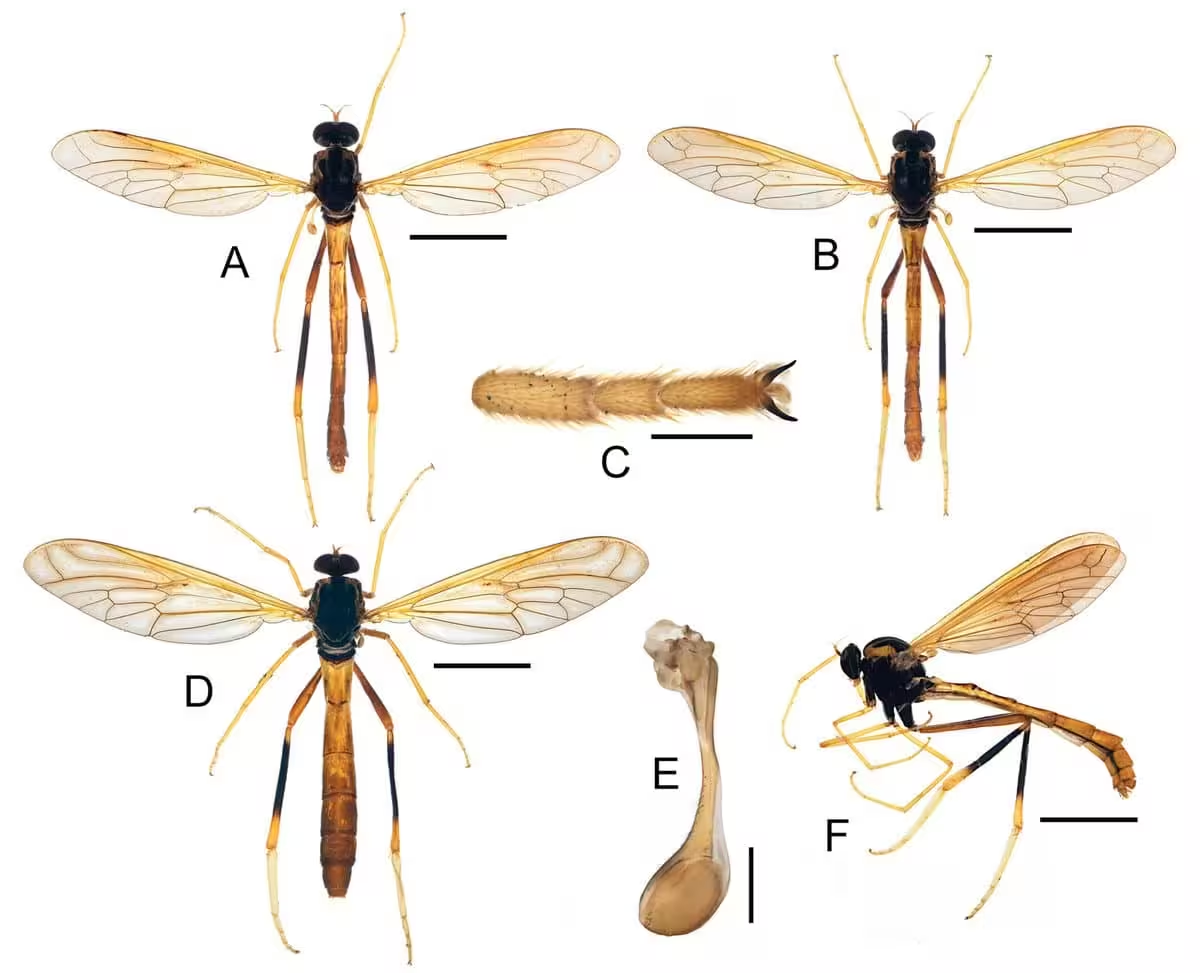
The newly classified fly exhibits several physical traits that set it apart from its known relatives. Measuring up to 19.5 millimeters with a wingspan of nearly 16 millimeters, the insect is notably larger than many other wormlions. Its coloration is characterized by a warm, reddish-brown to yellowish-brown abdomen, diverging from the striped patterns commonly seen in the genus.
Perhaps most intriguing is the fly’s mouth structure. The species possesses an exceptionally short rostrum, which may indicate that the adults do not feed at all during their brief lifespans. This makes the collection of live adults a notoriously difficult feat for entomologists.
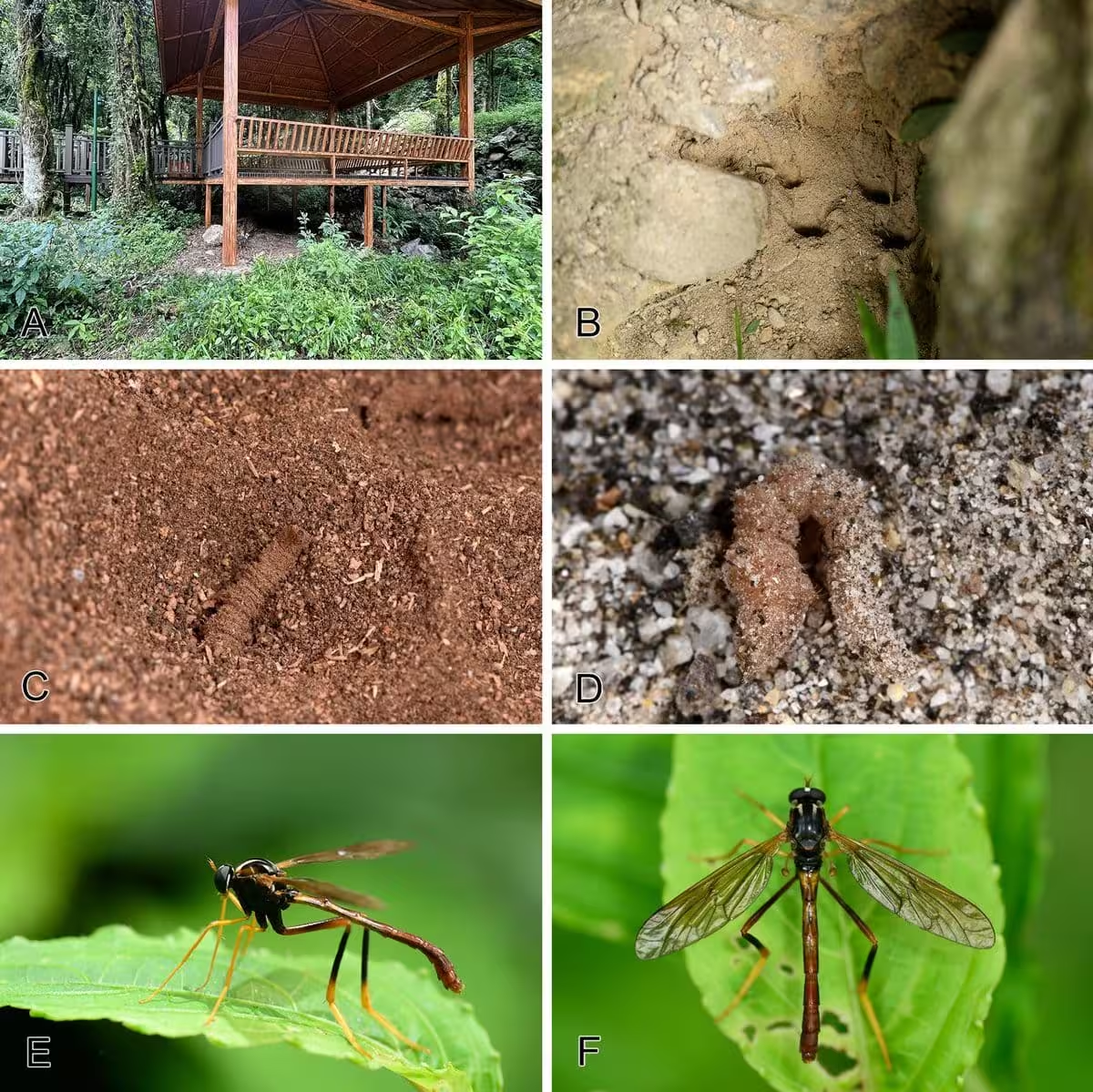
As larvae, these creatures employ a specialized predatory technique, digging funnel-shaped traps in loose soil to ensnare prey. While this behavior is remarkably similar to that of antlions, the two insects belong to entirely different biological orders and developed their trapping strategies through convergent evolution. Field observations revealed these larvae residing in varied substrates, from river sand to wood debris, though they appear to favor fine river sand.
Redefining Tropical Constraints
Historically, the genus Vermitigris was believed to be restricted to the tropical forests of Southeast Asia, with experts assuming that the damp conditions of the Himalayas were unsuitable for their survival. The presence of this species in the humid, rain-protected pockets of the southern Himalayan slopes forces a reassessment of the genus’s environmental tolerances.
The research team noted that while most adults were found resting near their larval sites, at least one specimen was discovered in the vicinity of agricultural fields. This suggests the species possesses robust dispersal capabilities, likely bolstered by efficient flight. The insect was given the name tsangyanggyatso to honor the sixth Dalai Lama, who was a renowned Tibetan poet.
This discovery brings the total count of recognized Vermitigris species to five and adds to the 67 known species of wormlion flies globally. Given the vast, rugged, and largely unsurveyed terrain of the southern Himalayan region, scientists anticipate that further biodiversity discoveries remain on the horizon.
This article has been fact checked for accuracy, with information verified against reputable sources. Learn more about us and our editorial process.
Last reviewed on .
Article history
- Latest version
Reference(s)
- Shan, Li-Xia. “After forty-eight years: An enigmatic new wormlion fly from Xizang, China (Diptera, Vermileonidae).”, vol. 1276, April 7, 2026, pp. 249-262. Pensoft Publishers, doi: PropertyValue. <https://zookeys.pensoft.net/article/184675/>.
Cite this page:
- Posted by Hassan Raza