Ancient Molting Clues Show Flightless Anchiornis Had Wings but Couldn’t Soar
New fossil feather study uncovers a hidden pattern, revealing a clue missed for 160 million years and reshaping our view of ancient plumage
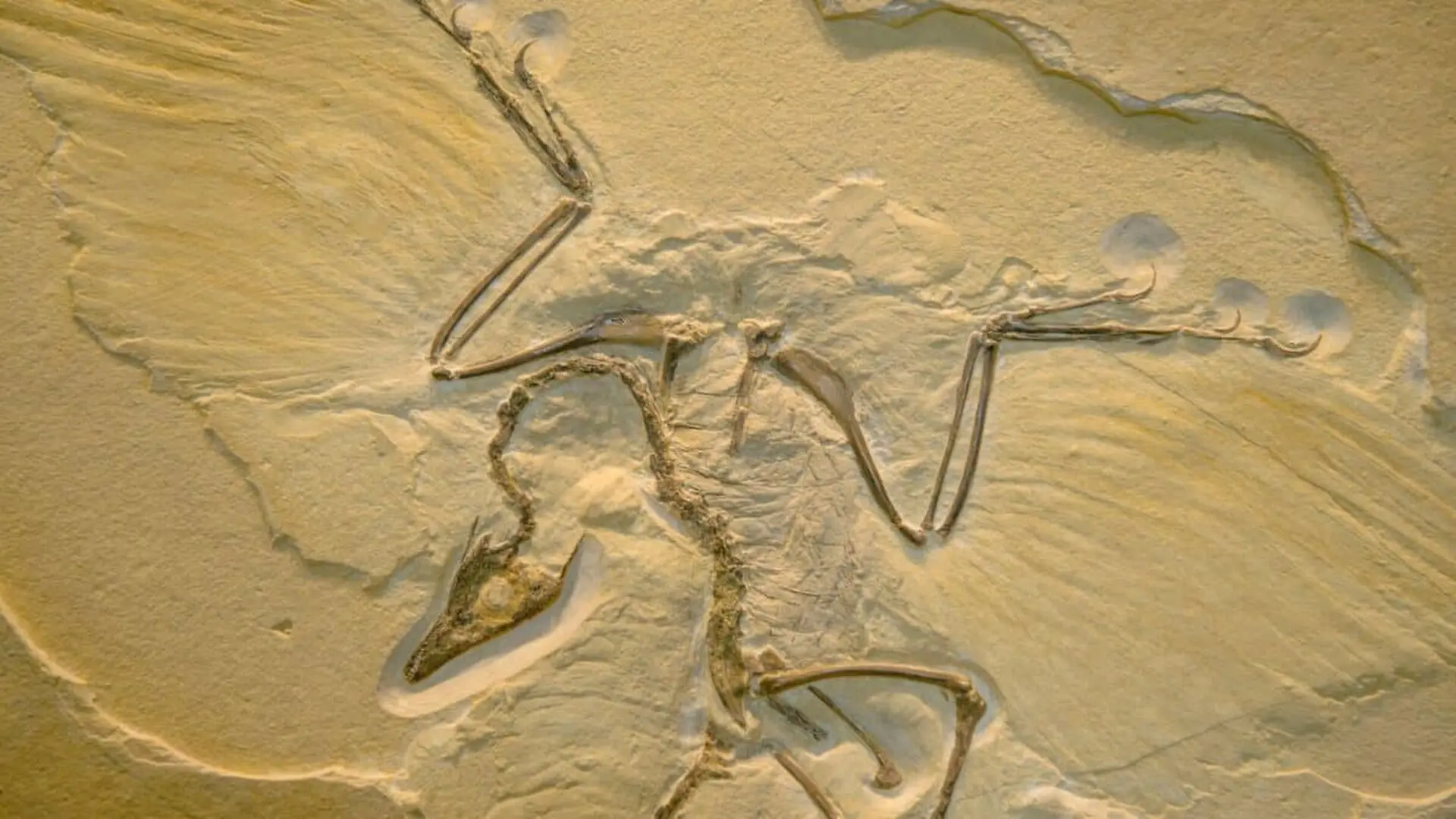
A new investigation of exceptionally rare dinosaur fossils from China indicates that Anchiornis, a feather‑covered theropod that roamed the Earth roughly 160 million years ago, probably never achieved powered flight, even though its wings were well developed. The findings, released in Communications Biology, suggest that the route to avian flight was far more tangled than earlier models have proposed.
The research was spearheaded by Dr. Yosef Kiat of Tel Aviv University’s School of Zoology and the Steinhardt Museum of Natural History, together with collaborators from China and the United States. Their focus centered on exceptionally preserved specimens that retain feather details seldom captured in the fossil record.
Feathered dinosaurs have long served as a window into the origins of birds, yet feathers are not solely an adaptation for flight. Numerous dinosaur lineages sported plumage millions of years before the first true birds emerged, leaving scientists to wonder which of these creatures could actually lift off the ground.
What the Fossils Tell Us Beyond Plumage
The team examined nine Anchiornis fossils belonging to the Pennaraptora clade, recovered from sedimentary rocks in eastern China where conditions favored the preservation of soft tissues. According to the study, these specimens not only kept feather architecture but also retained traces of original pigmentation, displaying primarily white wing feathers punctuated by a distinct black mark near each tip.
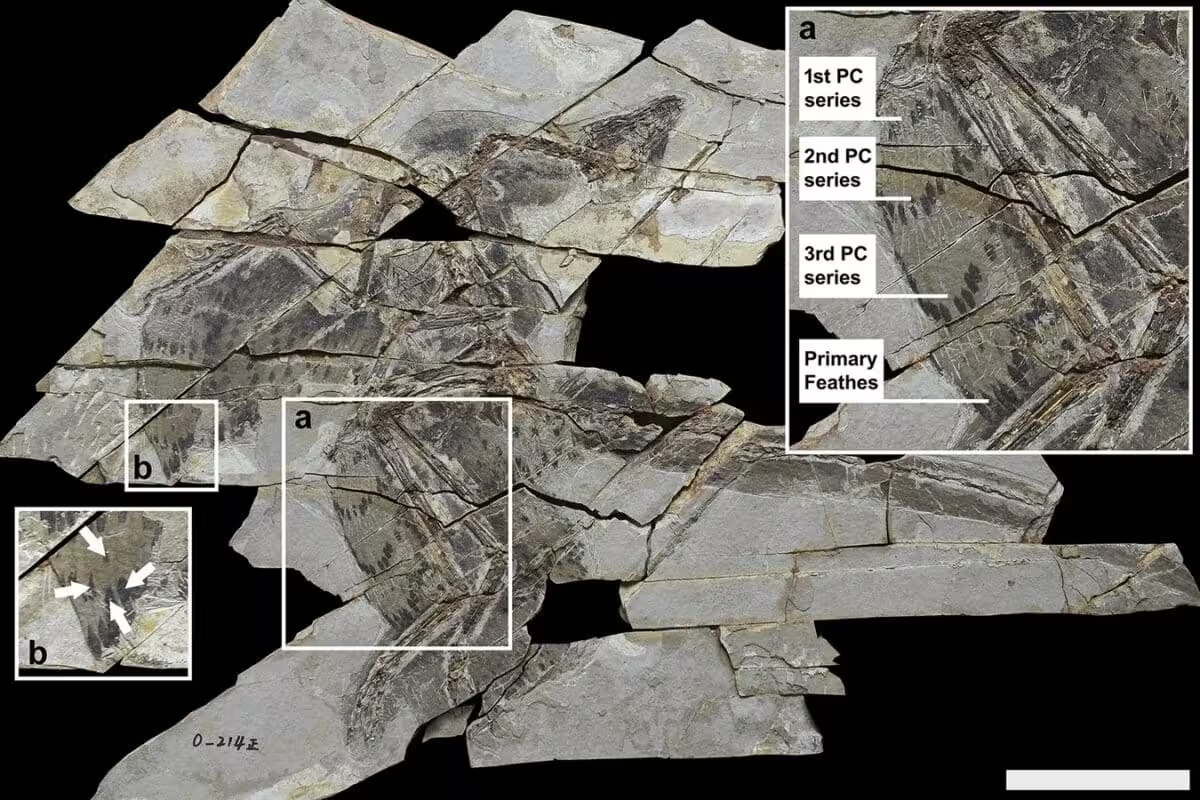
Such a level of detail is exceptional. The researchers explain that the preserved colour patterns enabled them to differentiate individual feathers and to monitor their growth stages—an approach that is usually impossible with extinct organisms.
Analysis revealed a continuous series of dark spots along the wings, although some feathers displayed misaligned markings, indicating that those feathers were still in development when the animal died. The feathers in question were evidently at an earlier growth phase.
Molting Signals Offer Clues to Flight Capability
The crux of the study lies in molting, the process by which birds replace worn‑out feathers. Dr. Yosef Kiat notes that a feather typically expands over a period of two to three weeks, after which it disconnects from the vascular supply and becomes a dead structure.
“Feather molting seems like a small technical detail — but when examined in fossils, it can change everything we thought about the origins of flight, highlighting how complex and diverse wing evolution truly was,” explained the authors.
In living birds, molting strategies differ according to ecological demands. Species that depend heavily on aerial locomotion usually replace feathers gradually and symmetrically, preserving balance between the two wings and allowing continuous flight during regrowth.
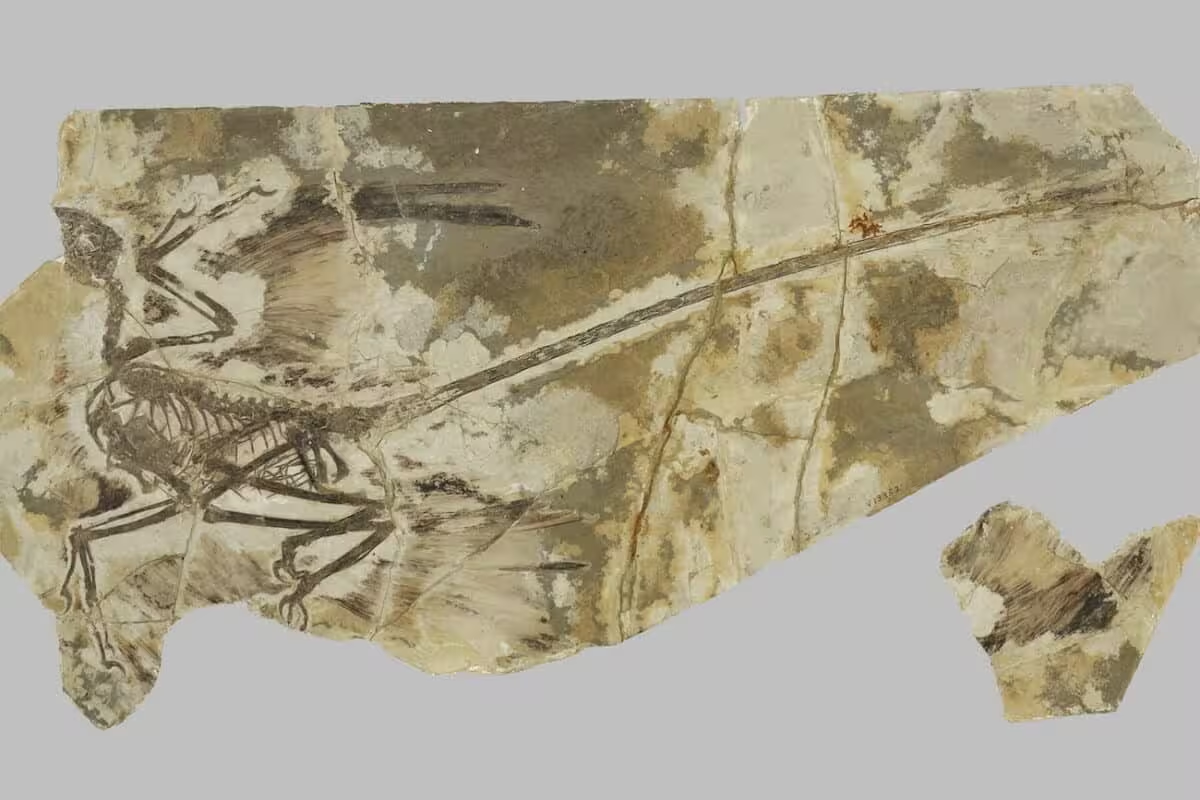
Dr. Kiat added that birds incapable of flight often display a far less orderly molting pattern, because aerodynamic performance does not constrain feather replacement. The fossil evidence from Anchiornis matched this irregular pattern, with developing feathers arranged in a manner that lacks the symmetrical order typical of flying birds.
Rethinking How Flight Emerged in Dinosaurs
The investigators concluded that Anchiornis was most likely unable to fly.
“Based on my familiarity with modern birds, I identified a molting pattern indicating that these dinosaurs were probably flightless,” Dr. Kiat said.
The study demonstrates that the fine details of feather preservation can illuminate functional aspects of extinct species, reinforcing the notion that the evolution of flight was a multi‑step, branching process rather than a single, straightforward transition.
“This finding has broad significance, as it suggests that the development of flight throughout the evolution of dinosaurs and birds was far more complex than previously believed,” the research team noted.
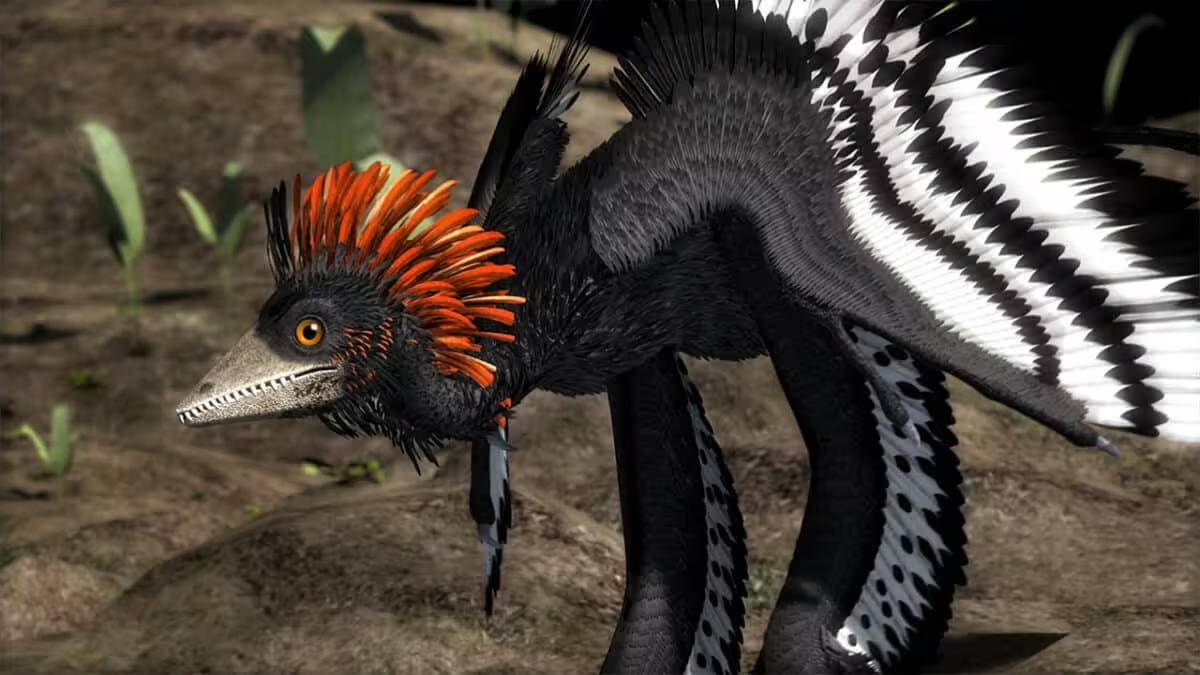
The authors suggest that some dinosaur lineages may have briefly experimented with rudimentary flight before abandoning it, and they now place Anchiornis among the expanding roster of feathered dinosaurs that likely remained ground‑bound, underscoring the rich tapestry of evolutionary experiments that preceded the rise of modern birds.
This article has been fact checked for accuracy, with information verified against reputable sources. Learn more about us and our editorial process.
Last reviewed on .
Article history
- Latest version
Reference(s)
- Kiat, Yosef. “Wing morphology of Anchiornis huxleyi and the evolution of molt strategies in paravian dinosaurs - Communications Biology.”, vol. 8, no. 1, November 21, 2025, pp. 1633 Nature, doi: 10.1038/s42003-025-09019-2. <https://www.nature.com/articles/s42003-025-09019-2>.
- “Dr. Yosef Kiat | The George S. Wise Faculty of Life Sciences.” <https://en-lifesci.tau.ac.il/profile/yosefkiat>.
Cite this page:
- Posted by Hassan Raza