Ancient Crete footprints, 6 million years old, predate Laetoli and reshape human evolution
Unexplained 3.6M-year-old footprints rewrite early human walking history with Mediterranean discovery
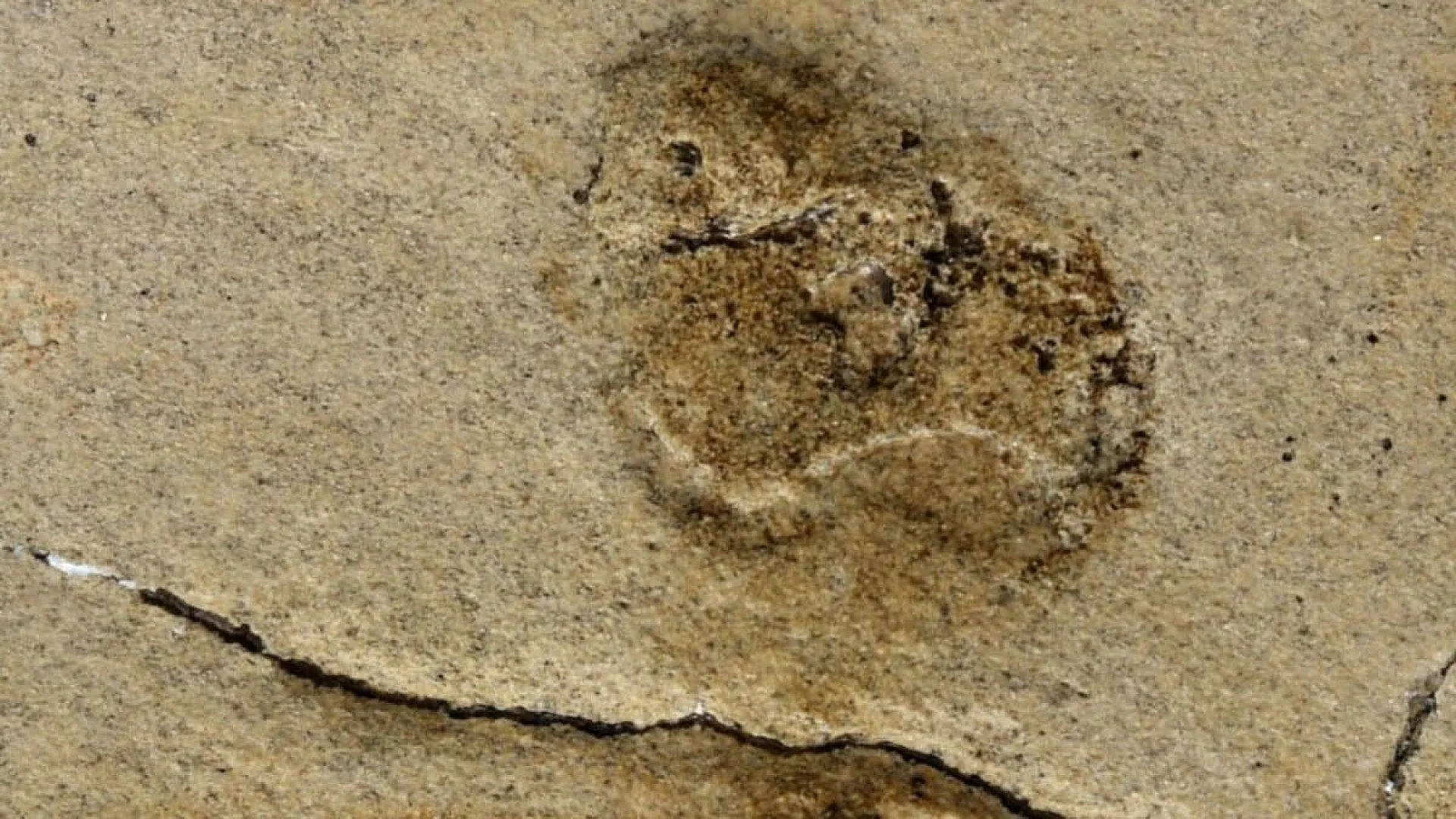
Researchers have identified a collection of fossilised footprints on Crete that date back roughly 6.05 million years, representing the earliest known direct proof of a human‑like foot adapted for bipedal locomotion.
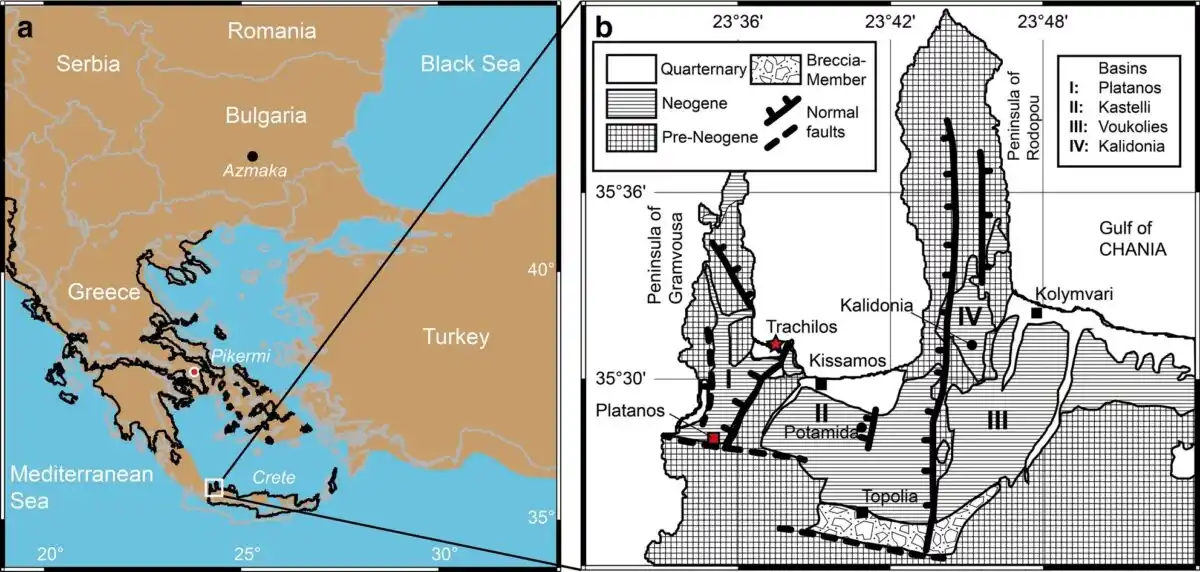
The imprint site lies near the western Cretan village of Trachilos and was initially reported in 2017. A multinational team, coordinated by scholars from the University of Tübingen, later employed geophysical surveying and micropaleontological analysis to refine the chronology of the deposit.
For paleoanthropologists, trace fossils are especially valuable because they capture an organism’s movement in situ, unlike fragmented skeletal remains. In this instance, the tracks extend the fossil record of hominin‑related material to a period when body‑fossil evidence is scarce.
Footprints Precede the Iconic Laetoli Trail by Millions of Years
The revised dating places the Trachilos prints at about 6.05 million years old, according to a paper in Scientific Reports. Lead author Uwe Kirscher highlighted that the tracks are roughly 2.5 million years older than the celebrated Laetoli footprints attributed to Australopithecus afarensis, the species that includes the famous fossil “Lucy”.
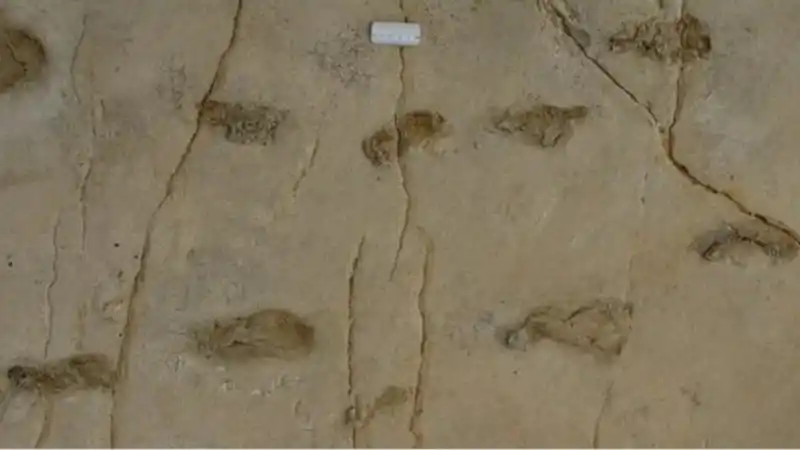
The age range of the prints also overlaps with that of Orrorin tugenensis, an early pre‑human species known from Kenyan deposits dated between 6.1 and 5.8 million years ago. While Orrorin femora suggest upright walking, no foot bones or trace fossils have yet been linked to that taxon, underscoring the significance of the Crete evidence for early hominin pedal anatomy.
What the Tracks Reveal About an Ancient Foot
The prints exhibit several hallmarks of bipedal gait. Professor Per Ahlberg of Uppsala University, a co‑author, described a foot with a pronounced ball, a robust hallux aligned with the other toes, and progressively diminishing lateral digits.
“The earliest human foot used for upright walking possessed a ball, a strong parallel big toe, and successively shorter side toes,” Ahlberg explained.
Comparative analysis indicates that the sole was shorter than that of later australopiths, the longitudinal arch was modest, and the heel was relatively narrow, pointing to subtle differences in foot morphology between this specimen and later hominins.
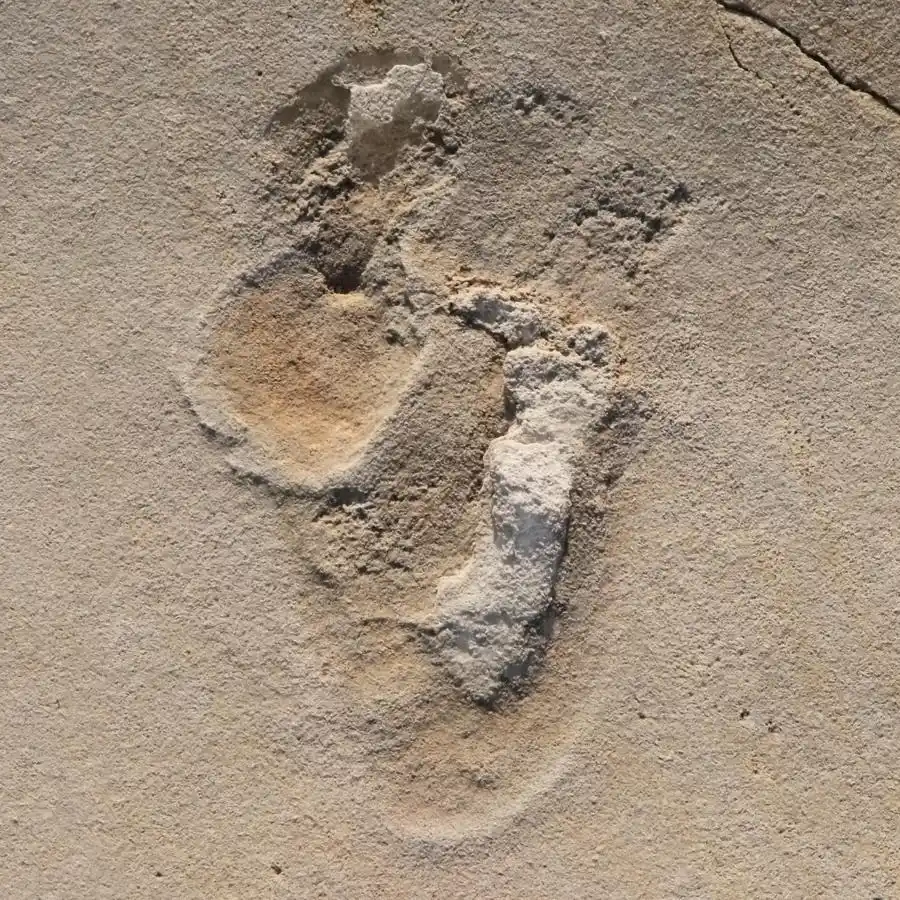
These impressions were formed in coastal sediments that later fossilised, providing a rare glimpse of how an ancient foot interacted with the substrate, complementing what can be inferred from skeletal remains alone.
Environmental Context and Possible Links to Early Hominins
At the time the tracks were made, Crete remained attached to the Greek mainland via the Peloponnese, creating a land bridge for terrestrial fauna. Co‑author Madelaine Böhme noted that a connection between the track‑maker and the enigmatic pre‑human Graecopithecus freybergi—known from deposits about 7.2 million years old and situated roughly 250 km away—cannot be ruled out.
“We cannot exclude a relationship between the producers of these tracks and the possible pre‑human Graecopithecus freybergi.”
Geochemical analyses of the surrounding sediments reveal North African desert dust particles dating between 500 and 900 million years, suggesting wind‑driven transport of Saharan material to Crete during the late Miocene. These findings support Böhme’s “desert swing” model, which proposes that episodic desert expansions in the Sahara and Mesopotamia periodically reshaped migration routes for mammals between Africa and Eurasia, potentially influencing the distribution of early hominin populations.
This article has been fact checked for accuracy, with information verified against reputable sources. Learn more about us and our editorial process.
Last reviewed on .
Article history
- Latest version
Reference(s)
- Kirscher, Uwe. “Age constraints for the Trachilos footprints from Crete - Scientific Reports.”, vol. 11, no. 1, October 11, 2021, pp. 19427 Nature, doi: 10.1038/s41598-021-98618-0. <https://www.nature.com/articles/s41598-021-98618-0>.
- “Public Staff Profile - Staff Portal.”, April 12, 2019 Staff Portal <https://staffportal.curtin.edu.au/staff/profile/view/uwe-kirscher-9f059b30/>.
- “Prof. Per Ahlberg – Department of Organismal Biology – Uppsala University.”, August 14, 2024 <https://www.uu.se/en/department/organismal-biology/research/devonian-world/the-team/prof.-per-ahlberg>.
- “Madelaine Böhme.” <https://scholar.google.com/citations?user=orISCfwAAAAJ&hl=de>.
Cite this page:
- Posted by Hassan Raza