1,700‑year‑old Roman egg still holds liquid and air bubble after millennia underground
Ancient waterlogged egg found near Aylesbury baffles experts with preserved liquid contents
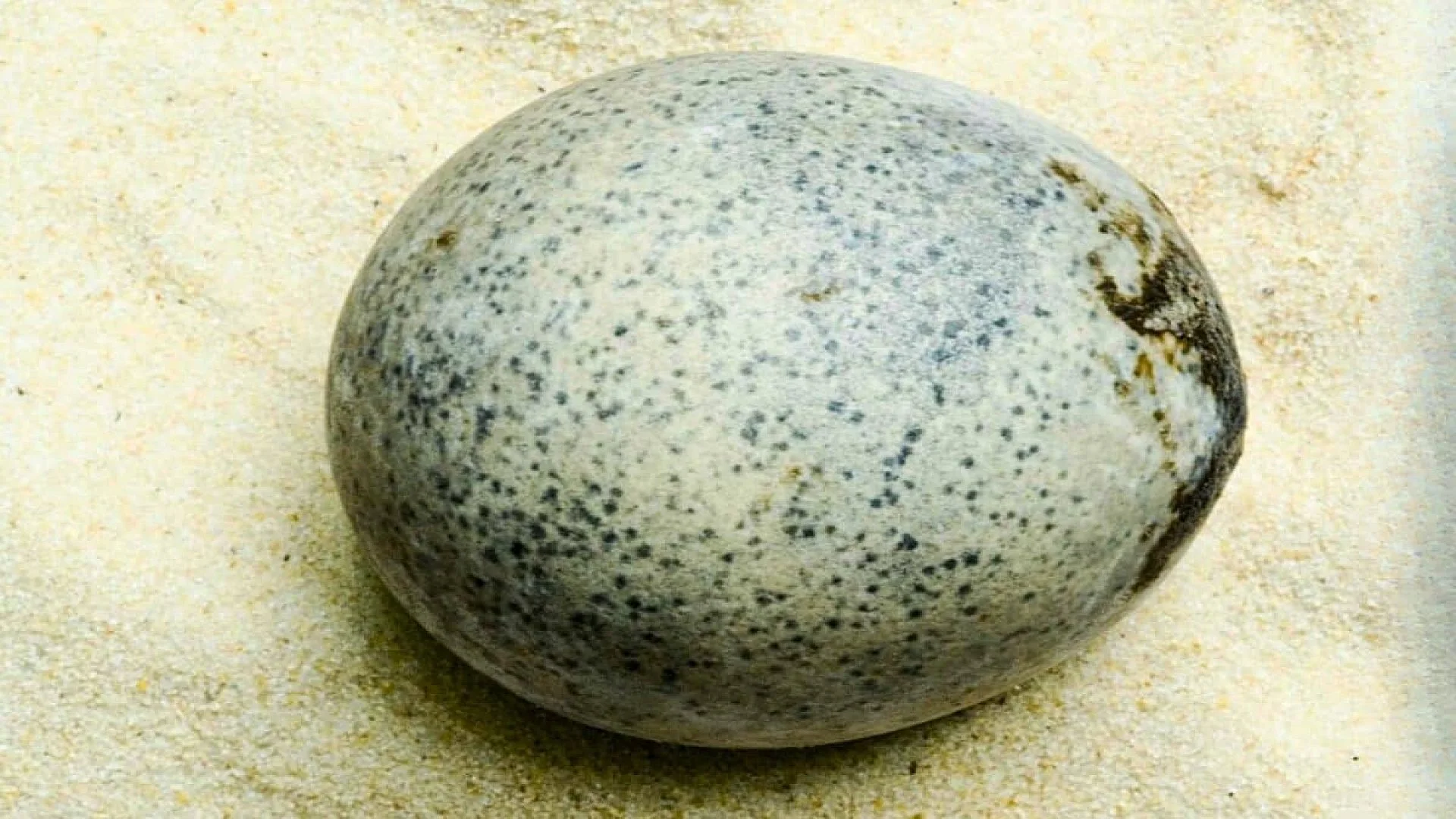
During the initial excavation three of the four Roman eggs shattered, releasing a pungent sulphur odor, while a lone specimen remained intact. Modern imaging, conducted more than ten years after the find, revealed that the seemingly fragile shell from the Berryfields site near Aylesbury still encloses both liquid and an air bubble after roughly 1,700 years beneath the ground.
Dubbed the Aylesbury egg, the artifact emerged in 2010 from a water‑logged Roman pit west of Aylesbury, Buckinghamshire, alongside a woven basket, ceramic vessels, leather footwear and animal bone. The Guardian noted that the egg was one of four recovered during a pre‑development survey of the area.
How a Flooded Roman Pit Shielded an Ancient Egg
Excavations at the Berryfields location ran from 2007 to 2016 ahead of a housing project, uncovering human activity spanning the early Neolithic to the post‑medieval era, with particular emphasis on the Roman occupation. Buckinghamshire Council’s archaeology team documented these layers, and Oxford Archaeology released a detailed monograph on the fieldwork in 2019.
The four eggs were recovered from a sizable water‑logged Roman pit that also contained a basket, pottery, coins, leather shoes and animal bone. Saturated conditions can arrest the decay of delicate organic material, allowing an egg to persist long enough for contemporary scientists to scan and analyze it.
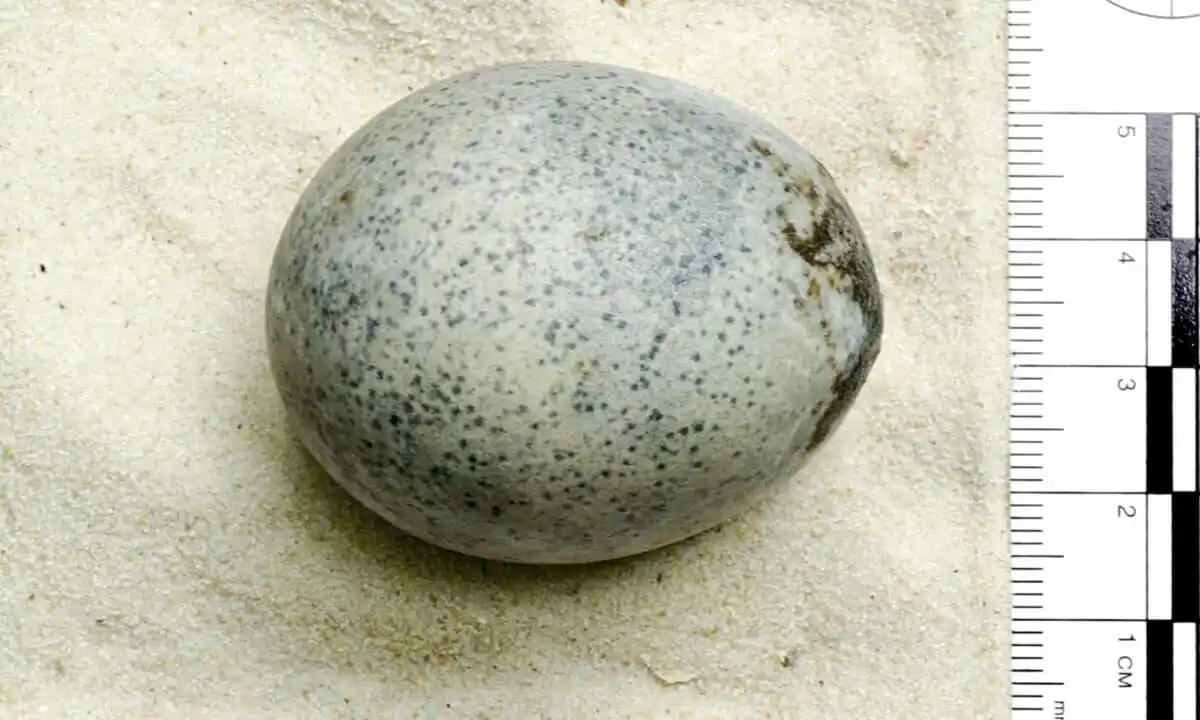
Only a single egg survived the breakage that accompanied the others, which emitted an “incredibly sulphurous smell,” according to Buckinghamshire Council. The intact specimen is more than a fragment; it is a sealed vessel from Roman Britain, offering a rare glimpse into ancient material culture.
Imaging Reveals Liquid Remains Inside
Conservation specialist Dana Goodburn‑Brown re‑examined the egg, employing a Micro‑CT scan overseen by Dr. Christopher Dunmore at the University of Kent’s Imaging Centre for Life Sciences. The non‑destructive technique allowed researchers to peer inside the shell without compromising its integrity.
Results confirmed that the egg is not empty; it still contains liquid and a small air pocket. The Guardian reported that the liquid is likely a blend of yolk and albumen that has coalesced over centuries.

Edward Biddulph, senior project manager at Oxford Archaeology, highlighted the rarity of an intact Roman‑era egg in Britain, noting that most finds are merely shell fragments. He added that the preserved contents could yield insights into the species that laid the egg nearly two millennia ago.
Conservation Dilemma for Museum Curators
Following the scan, the egg was consulted at the Natural History Museum in London. Senior curator Douglas Russell, responsible for the museum’s bird‑egg and nest collection, examined the specimen alongside colleague Arianna Bernucci, Buckinghamshire Council archaeologist Lucy Lawrence, Oxford Archaeology’s Edward Biddulph and conservator Dana Goodburn‑Brown.
The core challenge is balancing scientific inquiry with preservation. While the interior fluid holds valuable data, breaching the shell could jeopardize the only surviving example of its kind. Russell discussed the possibility of creating a minute aperture to extract the liquid, though no decision has been made.
Although older examples of eggs preserving organic material exist—some even mummified—the 1,700‑year‑old Aylesbury egg stands out as the oldest known unintentionally conserved specimen of its type, according to Buckinghamshire Council.
Possible Ritual Context for the Deposit
Beyond its physical preservation, the egg’s placement may hint at a ceremonial purpose. Biddulph suggested the pit, which once functioned as a well for malting and brewing near a Roman road, could have been used for a votive offering. The assemblage of basket, pottery, coins, shoes and bone supports a deliberate deposition rather than a casual discard.
Further research will focus on evaluating the scientific value of the liquid while ensuring the shell’s long‑term stability. Buckinghamshire Council indicated that plans are underway to determine the best approach for both analysis and conservation of this singular find.
This article has been fact checked for accuracy, with information verified against reputable sources. Learn more about us and our editorial process.
Last reviewed on .
Article history
- Latest version
Reference(s)
- Morris, Steven. “Roman egg found in Aylesbury still has contents after 1,700 years.”, February 12, 2024 The Guardian <https://www.theguardian.com/science/2024/feb/12/roman-egg-found-in-aylesbury-still-has-contents-after-1700-years>.
Cite this page:
- Posted by Hassan Raza