A Father and His Daughter Stopped Along a Road in Norway and Stumbled Upon 3,000-Year-Old Ancient Carvings Unlike Any Seen Before
A father and his young daughter strolled along the coast when they stumbled upon peculiar markings etched into a rocky outcrop near Oslo, undetected for millennia.
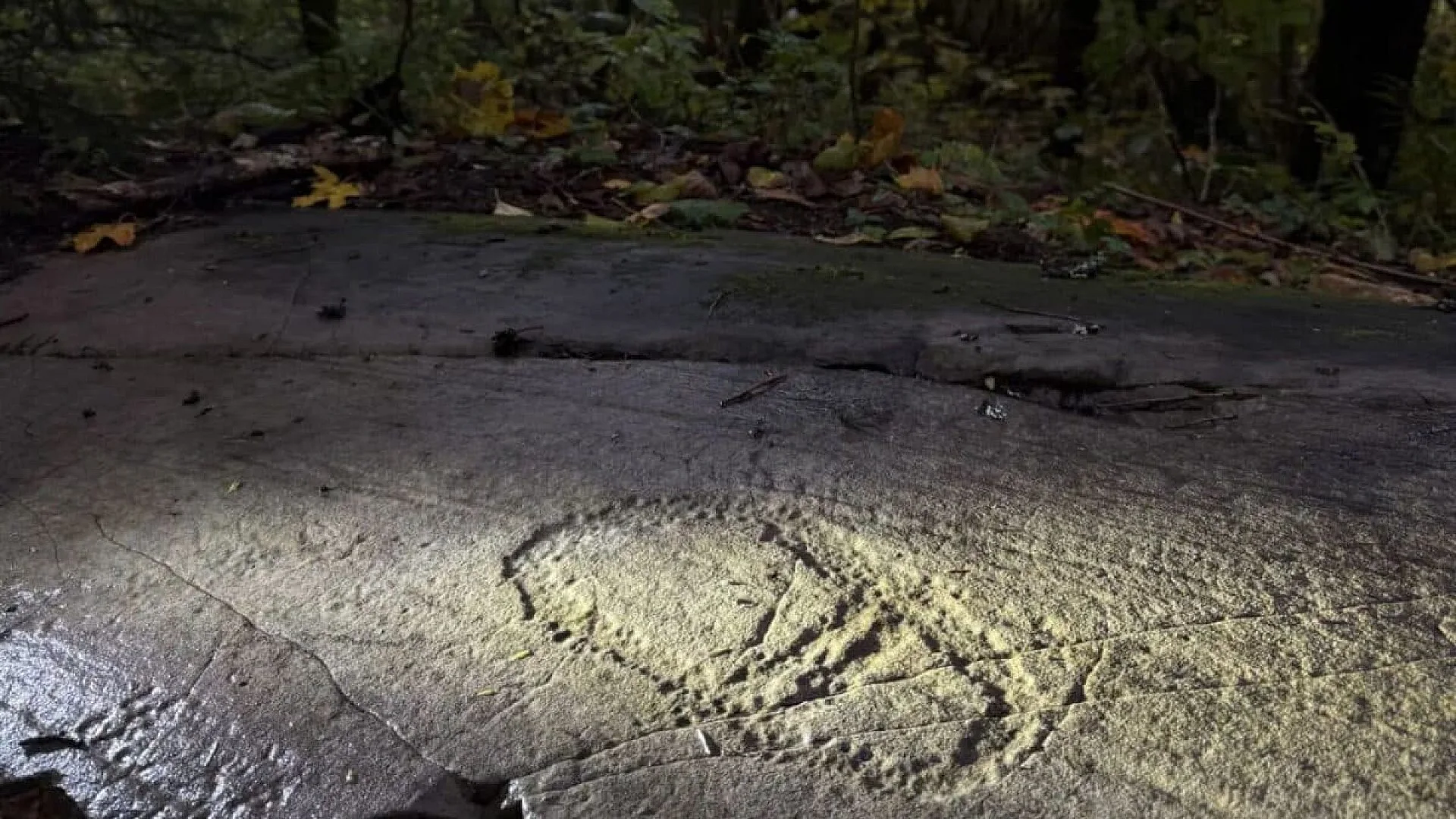
A recent discovery near Oslo has shed light on the rich history of Norway’s Bronze Age, with the uncovering of ancient rock carvings estimated to be around 3,000 years old. The site, found by Norwegian rock art enthusiast Tormod Fjeld and his daughter, features intricate depictions of ships, human figures, a footprint, and an unusual handprint carved into soft stone.
The discovery has garnered significant attention from archaeologists due to the unique combination of imagery and material used for the carvings. While ancient Nordic rock art often showcases maritime scenes, the newly documented panel in Bærum was carved into sandstone, a softer material than the granite commonly used during the Bronze Age.
Tormod Fjeld, a seasoned enthusiast with years of experience studying ancient coastal landscapes, has identified around 70 rock art scenes across the country using terrain interpretation and historical sea-level changes. His expertise has led him to predict the presence of forgotten carvings along former shorelines, making this discovery a significant addition to his body of work.
Unveiling the Secrets of the Past
The carvings, discovered on Kolsatoppen hill near Oslo, feature several ship figures, some depicted upright and others upside down. Human figures appear onboard some of the vessels, and a number of them seem to wear helmets. Alongside the ships, Fjeld also identified a carved footprint and a handprint with unusually broad fingers. The combination of these elements adds a personal and intimate dimension to the site, as described in a report by Ancientist.
The presence of both a handprint and footprint may suggest a ceremonial or symbolic dimension tied to the landscape itself. The imagery adds a unique layer of depth to the site, making it a significant find for archaeologists and enthusiasts alike.
A Rare Choice of Stone
One of the most intriguing aspects of the discovery involves the type of rock used by the original artists. Bronze Age carvings in Norway were typically engraved into granite surfaces, which are harder and more resistant to erosion over time. The Bærum carvings, however, were made in sandstone or limestone, a softer material that makes individual tool marks easier to distinguish.
Tormod Fjeld noted that the softer material required a different carving technique than the one used on granite. The panel is not carved as densely as many granite-based sites elsewhere in Norway, with even small details in the stone remaining visible. Some marks appear rougher and less uniform, giving the carvings a unique visual character compared to many previously documented Bronze Age panels.
Uncovering Hidden Gems
The discovery has also renewed attention on how archaeological sites are identified and recorded in Norway. Fjeld’s work focuses heavily on studying ancient shorelines, sun-facing rocks, and old maritime travel corridors to predict where carvings may still exist.
Professional archaeologists were impressed by the discovery, with Reidun Marie Aasheim, county archaeologist for Akershus, describing Fjeld’s findings as “very exciting.” She noted that many cultural heritage sites are probably still waiting to be found, highlighting the importance of contributions from enthusiasts like Fjeld.
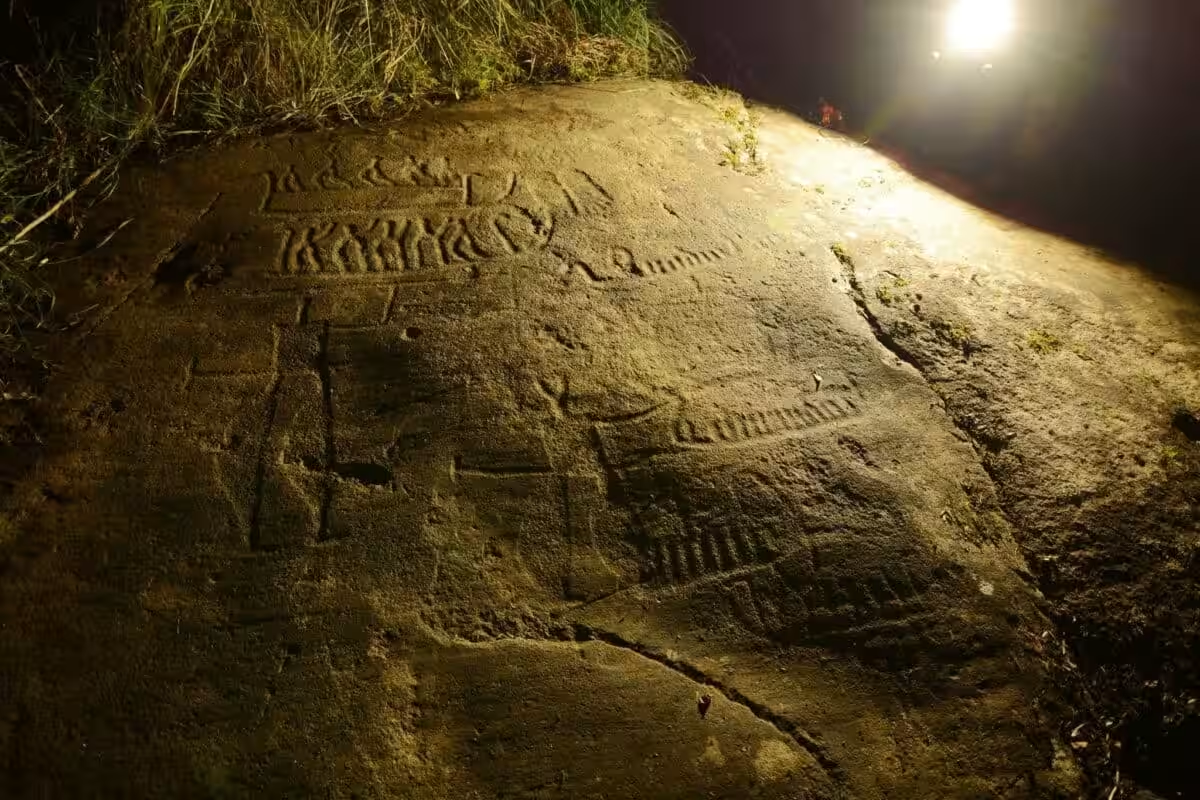
Among the carvings is a figure believed to represent an unknown animal, adding to the mystique of the site. The discovery has sparked renewed interest in the study of ancient rock art and the importance of preserving our cultural heritage.
As mentioned in the Ancientist report, the presence of both a handprint and footprint may suggest a ceremonial or symbolic dimension tied to the landscape itself. The imagery adds a unique layer of depth to the site, making it a significant find for archaeologists and enthusiasts alike.
Professional archaeologists were impressed by the discovery, with Reidun Marie Aasheim, county archaeologist for Akershus, describing Fjeld’s findings as “very exciting.” She noted that many cultural heritage sites are probably still waiting to be found, highlighting the importance of contributions from enthusiasts like Fjeld.
This article has been fact checked for accuracy, with information verified against reputable sources. Learn more about us and our editorial process.
Last reviewed on .
Article history
- Latest version
Cite this page:
- Posted by Hassan Raza