Researchers Create Plastic That Completely Self-Destructs on Command in Just Six Days
Plastic items meant for single use frequently endure for hundreds of years in landfills and marine environments.
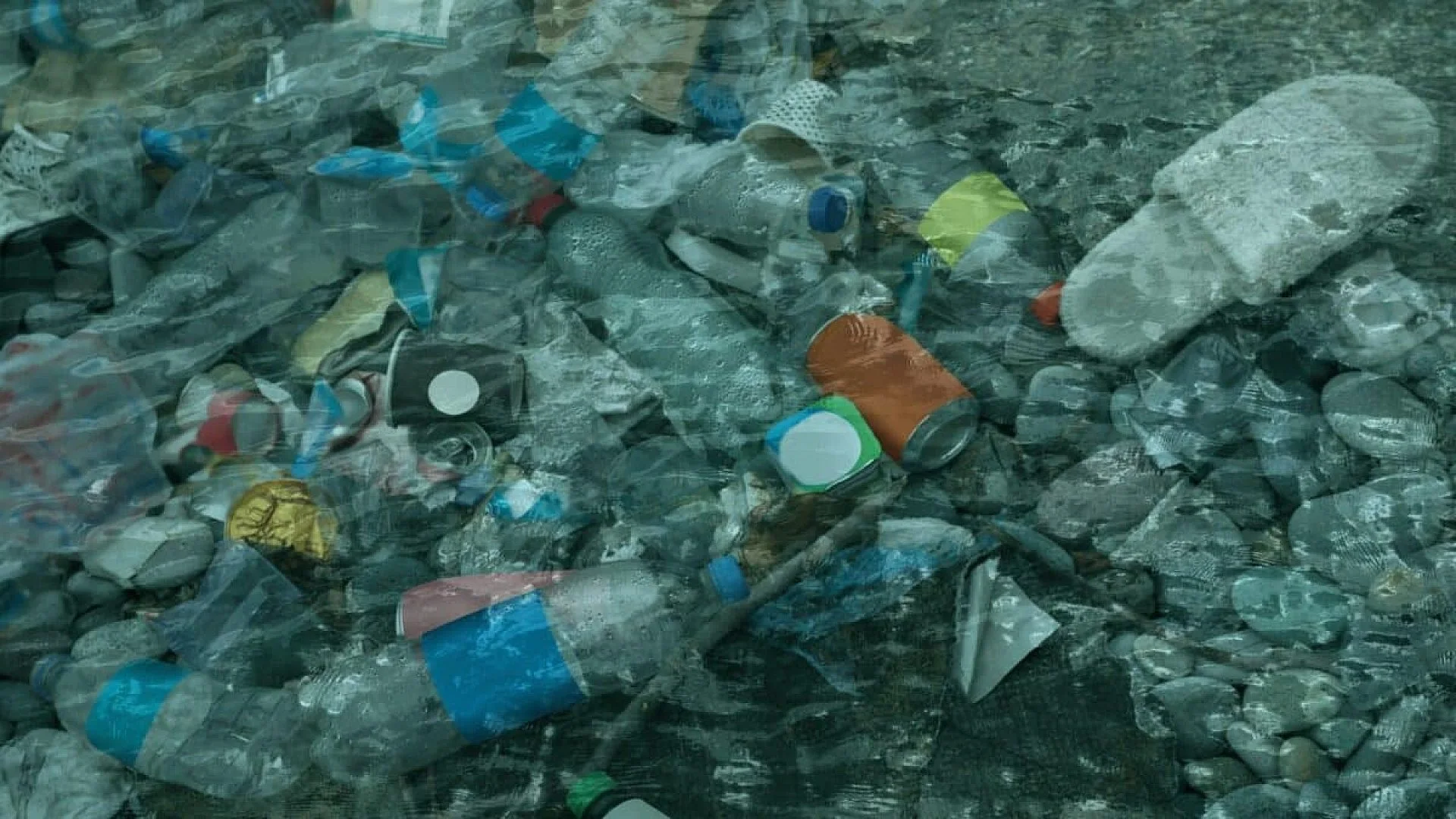
A groundbreaking innovation in plastic technology is poised to tackle one of the world’s most pressing environmental concerns: the scourge of plastic waste. Scientists have developed a revolutionary new plastic that can be programmed to self-destruct, offering a potential solution to the long-standing problem of plastic’s indestructibility.
The creation of this “living plastic” is a direct response to the paradox of plastic’s durability. While plastics are essential for numerous products, from packaging to medical supplies, their very durability has become an environmental nightmare. Disposable plastics, designed to be used briefly, often persist for centuries in landfills and oceans.
A Pioneering Two-Enzyme Strategy
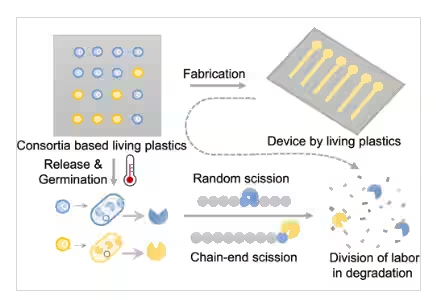
For years, researchers have attempted to use enzymes to break down synthetic materials, but these efforts have yielded limited success. That was until this research introduced a more advanced, two-enzyme approach. As the researchers noted in their work:
“To address this challenge, we engineered a consortia-embedded living plastic.” They continued, explaining the technical approach. “Bacillus subtilis were separately programmed with an inducible gene circuit capable of secreting two complementary plastic-degrading enzymes: Candida antarctica lipase, responsible for random-chain scission, and Burkholderia cepacia lipase, responsible for processive depolymerization and is stressed to sporulation.”
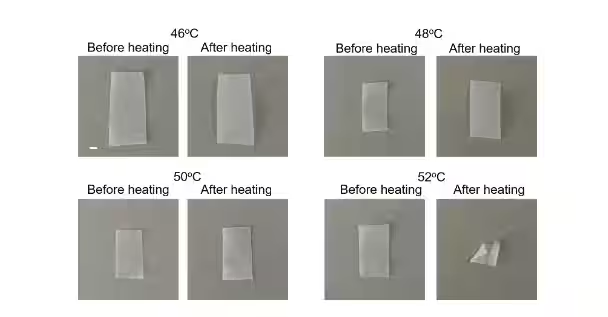
When mixed with polycaprolactone, a plastic used in 3D printing and medical devices, the dormant spores of the bacteria didn’t affect the material immediately. However, when researchers added a nutrient broth heated to 50°C, the spores activated, and the enzymes quickly went to work.
“By embedding these microbes, plastics could effectively ‘come alive’ and self-destruct on command, turning durability from a problem into a programmable feature,” as Zhuojun Dai, a corresponding author on the paper, put it.
From Lab to Wearable: A Proof of Concept
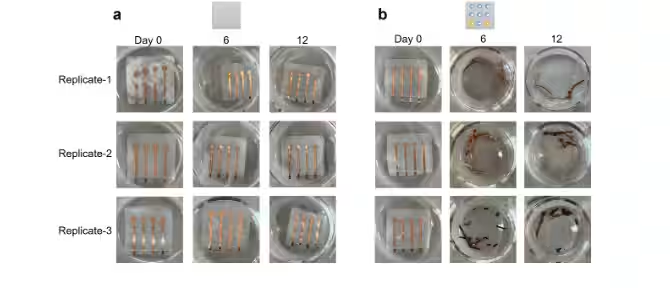
Taking the technology from the lab to real-world applications, the team created a wearable plastic electrode to demonstrate the practicality of their living plastic. As explained in the study, published by ACS Applied Polymer Materials, the electrode was designed to detect human electromyography (EMG) signals and worked just like a regular electrode when dormant.
Once activated, the material completely degraded in two weeks, showing it could perform in consumer products while still maintaining its necessary properties during its functional life.
The electrode’s ability to stay intact when needed and then degrade after use is an important step in proving the real-world value of the living plastic. It also showcases how durability can be a feature that’s not fixed but instead programmable, a significant shift in how materials are designed.
The Broader Environmental Opportunity
Plastics are ubiquitous, but their inability to break down in nature has led to serious pollution problems. According to the team, recent advances in synthetic biology have made it possible to create plastics that biodegrade in ways that weren’t possible just a few years ago.
While this first prototype focuses on polycaprolactone, researchers believe the same principles can be applied to other types, particularly the single-use plastics that contribute heavily to global waste.
This is especially important because much of the plastic waste ends up in oceans, where it remains for years. If they could degrade in the water itself, it would represent a huge step forward in solving one of the most difficult aspects of plastic pollution.
By turning the durability of plastic into a feature that can be controlled, researchers may have found a way out of the plastic paradox, a long-lasting material that doesn’t stay around for centuries.
This article has been fact checked for accuracy, with information verified against reputable sources. Learn more about us and our editorial process.
Last reviewed on .
Article history
- Latest version
Reference(s)
- “Zhuojun Dai.” <https://scholar.google.com/citations?user=_EAkcx8AAAAJ&hl=en>.
- Tang, Chenwang., et al. “Degradable Living Plastics Programmed by Engineered Microbial Consortia.” ACS Applied Polymer Materials, vol. 8, no. 8, April 9, 2026, pp. 5496-5506. American Chemical Society (ACS), doi: 10.1021/acsapm.5c04611. <https://pubs.acs.org/doi/10.1021/acsapm.5c04611>.
Cite this page:
- Posted by Hassan Raza