Underwater ROV Discovers a Hidden “Shipwreck City” Full of Sunken Vessels Lost in the Dark Beneath Seattle’s Famous Lake
Découverte intacte d’un dragueur de mines de la Seconde Guerre mondiale dans les eaux de Seattle
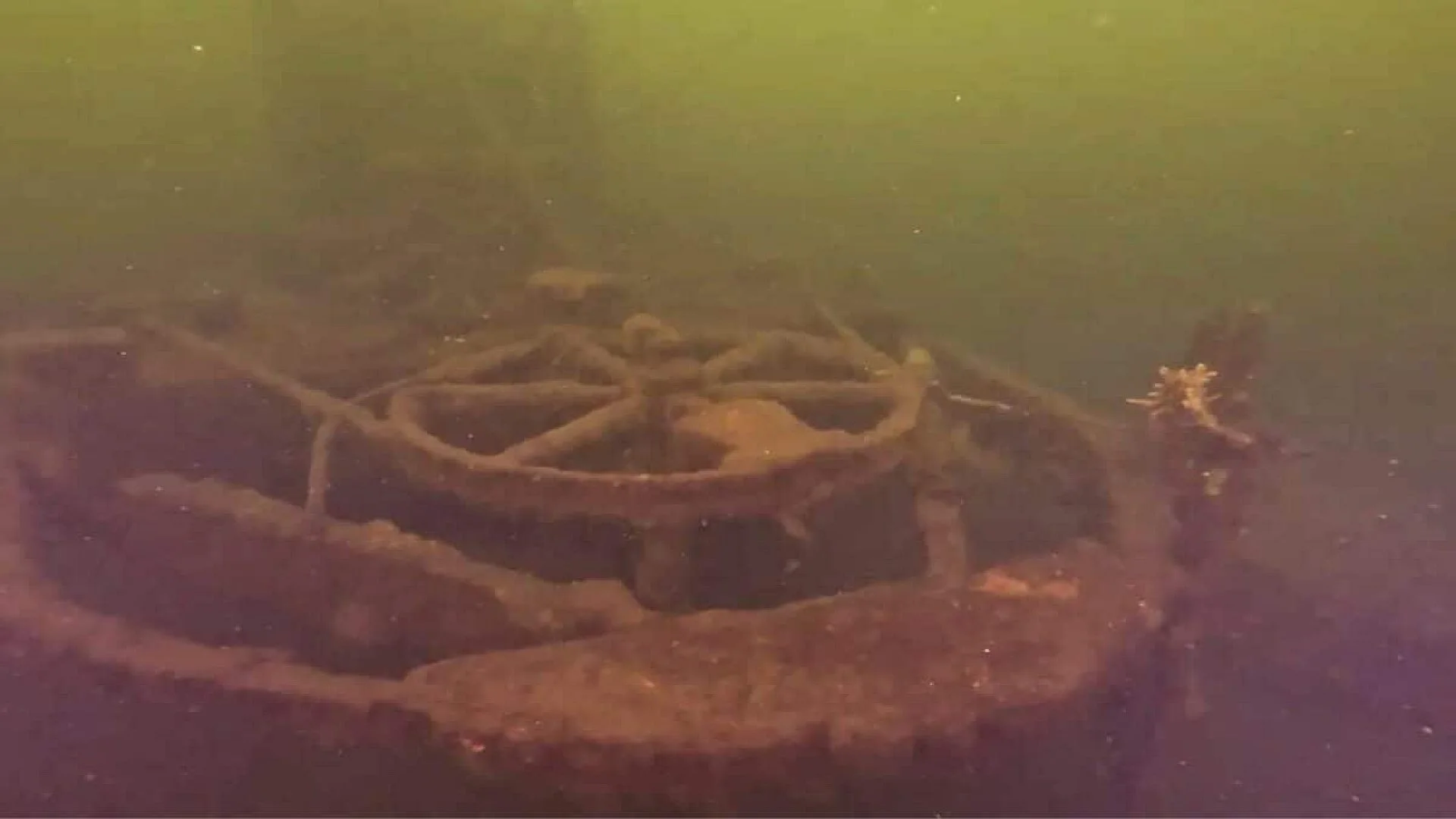
While seaplane engines droned overhead and kayakers paddled nearby, a bright green patch flickered across Phil Parisi’s screen. The remotely operated vehicle Finn was navigating through water that looked like stained glass, and the sonar return resolved into a wooden hull, upright and unbroken, resting in the shallow waters of one of Seattle’s busiest urban lakes.
Above the site, cars crossed the Aurora Bridge and lunch‑goers waited at waterfront cafés. Below, in just 15 feet of water, a vessel that had escaped inspection for decades lay waiting.
“Seeing that there were wrecks in our own backyard that we haven’t been able to fully identify and understand what’s really there just spoke to me on a personal level,” Parisi told KING‑TV.
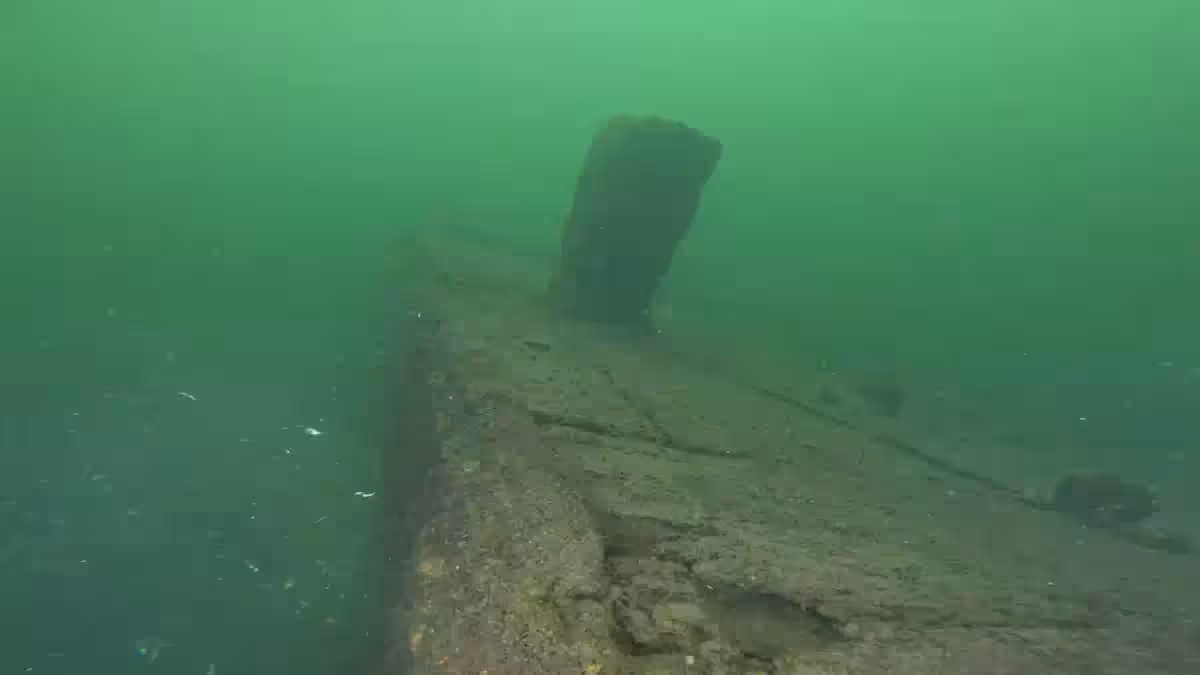
That initial spark has expanded into a systematic survey that researchers now call “Shipwreck City,” a sprawling field of vessels scattered across the Lake Union bottom. After 21 hours of dives and mapping of 34 targets, Parisi’s crew visually confirmed more than 20 wrecks and uncovered at least two previously undocumented ones.
High‑Resolution Sonar Mapped Hundreds, Yet Identification Remained Elusive
An earlier high‑resolution sonar sweep had flagged close to 100 distinct echoes on the lake floor, according to the catalog hosted at shipwreckcity.org. The returns appeared as bright geometric shapes—rectangles, slender lines—against the flat sediment. Historians estimate that roughly half of those signatures correspond to actual shipwrecks, while the remainder could be collapsed docks, discarded equipment, cable bundles, or accumulated debris.
A sonar shadow alone does not confirm a vessel’s identity; acoustic profiles cannot tell a wooden minesweeper from a steel barge. Until Finn was deployed, most of the points existed only as coordinates on a map.
“Right now all we have is these kind of high‑level top‑down views of what’s in there,” Parisi told KING 5 reporter Dalton Day.
Two‑Stage ROV Search Cuts Through the Murk
Parisi assembled the project with Libbie Barnes, associate curator at Seattle’s Museum of History & Industry, and George Spano, a veteran boat captain and ocean‑conservation advocate. Together they devised a two‑step approach to counter Lake Union’s notoriously poor visibility.
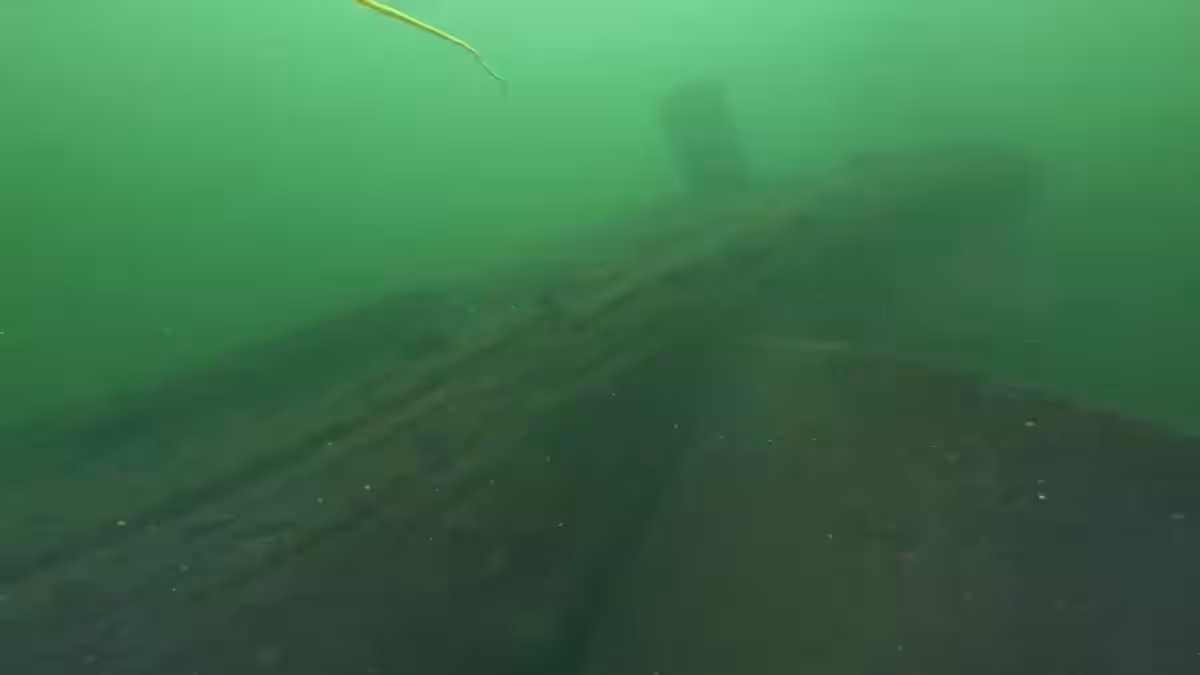
First, the team pilots the ROV to within roughly 30 meters of a target using GPS. Then Finn’s onboard side‑scan sonar fires, generating a higher‑resolution acoustic image. Only when the sonar registers a solid return does the vehicle descend, allowing its camera and lights to capture the first clear visual evidence.
“Flying blind through murky, low‑visibility waters is difficult, so we rely on ROV‑mounted sonars to ‘see’ and determine the target’s relative position,” Parisi told Fox News Digital.
World War II Minesweeper Gypsy Queen Lies Intact on the Lakebed
Among the catalogued remains, the Gypsy Queen stands out. Built in 1941 as a wooden‑hulled minesweeper (originally YMS‑105) for the U.S. Navy, the 136‑foot vessel was designed to avoid magnetic mines. Its crew adopted the blunt motto, “Wherever the fleet goes, we’ve been.” Detailed service records are maintained by the Lake Union History project.
After the war the Navy sold the ship. A Seattle couple purchased it in 1958 with plans to tow it to Alaska for a floating fish‑processing plant, but the Gypsy Queen never left the dock and sank in 1968. Diver Dan Warter photographed the wreck in 2011, confirming that the wooden structure remained remarkably intact after more than five decades.
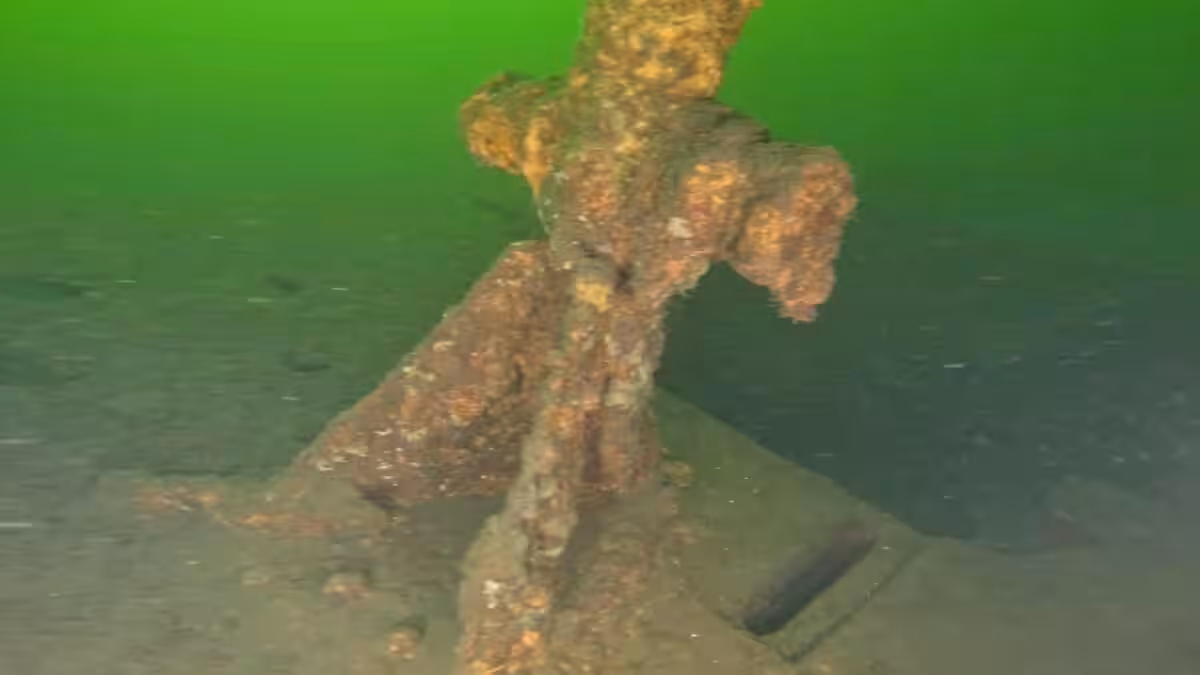
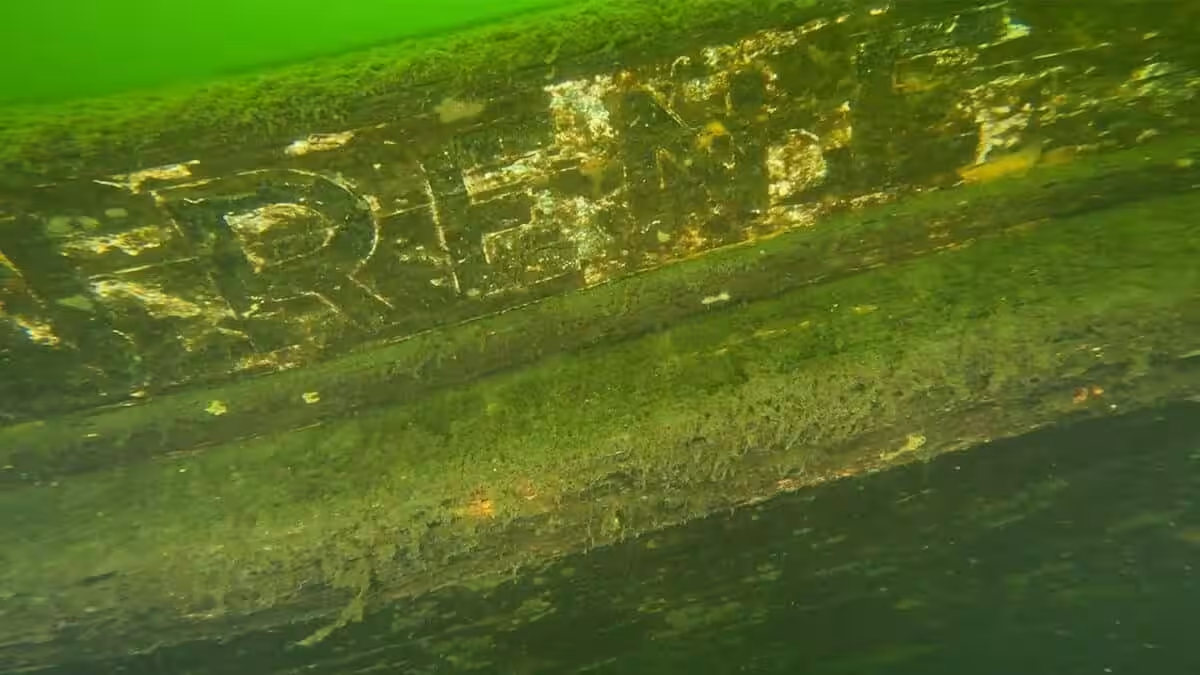
Near Gas Works Park, Finn documented the 91‑foot wooden barge catalogued as LU007, known as Foss 54, sitting in 15 feet of water. A 40‑foot converted landing craft rested nearby, as did a 45‑foot wooden vessel still bearing the name Irene on its hull.
Each discovery is entered into a public database, complete with catalog number, vessel type, depth, dimensions, and GPS coordinates. The list now exceeds 100 recorded wrecks.
Decay and Biofouling Complicate Identification
A clear photograph does not automatically reveal a ship’s name. Decades underwater erode the usual markers.
“Biofouling, rust, poor public anchoring techniques and other environmental degradation often shed registration stickers, obscure painted hull names and cause wrecks to collapse,” Parisi explained.
One dive produced a breakthrough when Finn’s camera captured a registration plate still attached to a hull. “This was last registered in 1985, presumably didn’t register in 1986 because it went down,” Parisi said. “That’s a huge win.”
Access to many sites remains uneven. Several wrecks lie directly beneath docks and floating‑home moorages, and some marina owners have been hesitant to grant filming permission. The team relies exclusively on ROVs rather than scuba divers, partly to limit exposure to potential contaminants.
Below roughly 25 feet, aquatic plant life dwindles. “There is a harsh lack of life,” Parisi noted. “It’s a ghost town.” Yet the lake compensates for the biological void with an abundance of sunken hulls. “It’s crazy that there’s so much down there. Looking at these maps, it’s shipwreck city.”
An Underwater Archive Preserves a Vanished Waterfront
Nathaniel Howe, director of the Puget Sound Maritime Historical Society, sees the initiative as a safeguard against collective forgetting. Much of Seattle’s historic working waterfront has already disappeared from the shoreline; the submerged wrecks provide a physical record that cannot be recreated.
“One thing I loved about that project is how it engaged the public with the history of the lake, and the fascination that comes with shipwrecks, not in Hollywood films, but right here in the middle of our city,” Howe said.
He added that Parisi’s use of robotics minimizes the damage often associated with treasure hunting. The goal is documentation, not salvage; none of the wrecks are being raised.
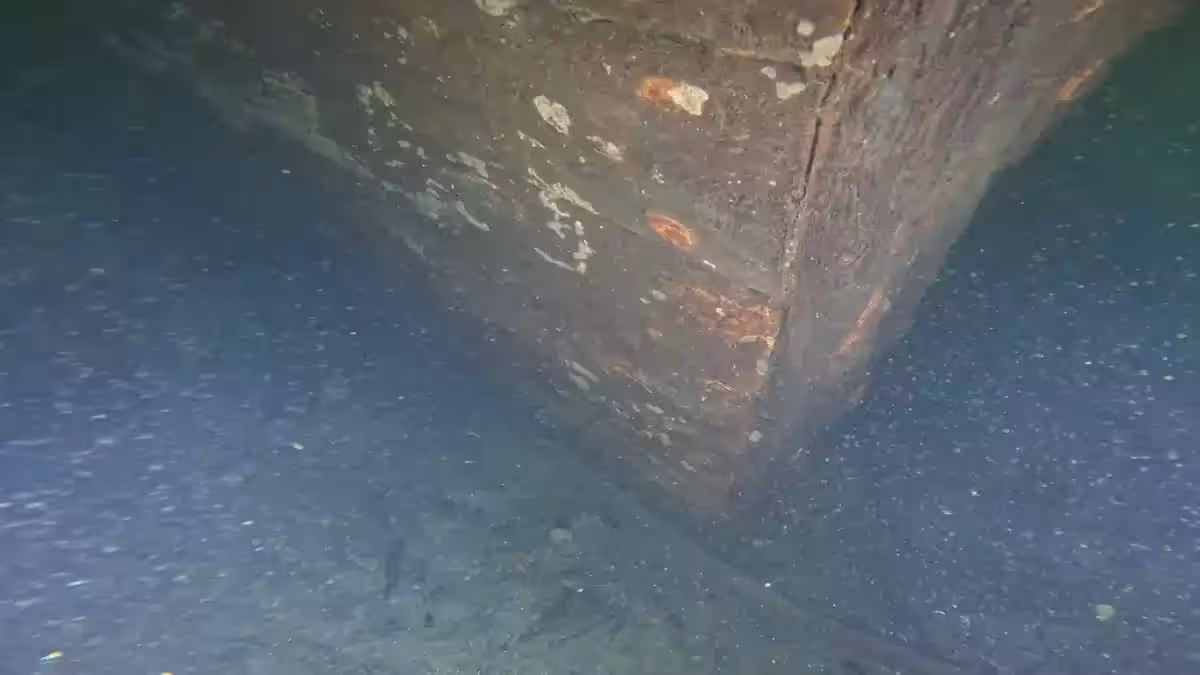
Finn’s cameras have not uncovered any sunken treasure; instead they recorded tires, plastic debris, and collapsed wreckage alongside the verified hulls. The team plans to continue site‑by‑site verification until every accessible target carries visual confirmation.
“Every place holds incredible landmarks and hidden treasures, yet we’re often distracted by the humdrum of life,” Parisi told Fox News Digital. “When you get the chance, allow curiosity to take over and do a deep dive into your local city or town’s history, it is amazing what happened not so long ago, and it never disappoints.”
“The study of Lake Union’s wrecks is just beginning,” Howe concluded.
This article has been fact checked for accuracy, with information verified against reputable sources. Learn more about us and our editorial process.
Last reviewed on .
Article history
- Latest version
Reference(s)
- Day, Dalton. “Inside the effort to build Lake Union’s underwater archive of shipwrecks.”, May 8, 2026 KING <https://www.king5.com/article/news/local/lake-union-underwater-archive-shipwrecks/281-0b2512c8-e577-4960-81d3-2bb709367f81>.
- “Loading....” <https://shipwreckcity.org/wrecks/lu007.html>.
- Margolis, Andrea. “Underwater robotics expert reveals 'shipwreck city' hiding beneath major urban lake.”, May 5, 2026 Fox News <https://www.foxnews.com/travel/underwater-robotics-expert-reveals-shipwreck-city-hiding-beneath-major-urban-lake>.
- “Gypsy Queen.” <http://www.lakeunionhistory.org/Gypsy_Queen.html>.
Cite this page:
- Posted by Hassan Raza