Researchers Examining a Meteorite Fragment Discovered Strange Microfossils Buried Deep Inside
An unearthed meteorite fragment contained a discovery that left scientists utterly astonished.
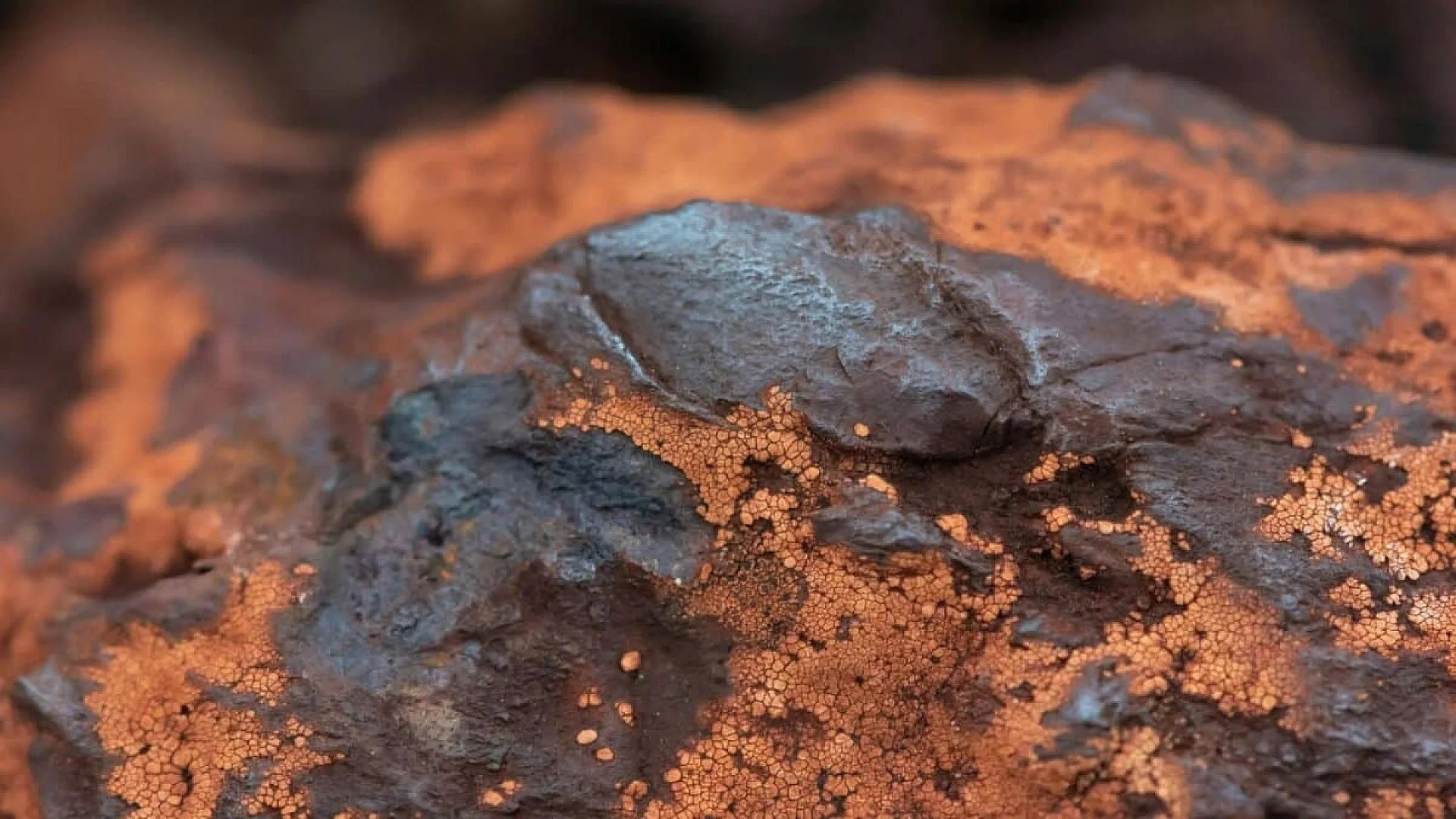
A mysterious meteorite seen over Sri Lanka in late 2012 has sparked a debate that continues to this day. In a highly contentious paper published in 2013, researchers claimed that fragments from the object may have contained fossil-like remains of microscopic algae embedded within the rock itself. The study, which appeared in the Journal of Cosmology, involved scientists from Cardiff University, Sri Lanka, and the United States. The researchers argued that the discovery could support the idea that life exists elsewhere in the universe and may even travel through space aboard comets and meteorites. Witnesses reported seeing a bright yellow fireball turn green as it crossed the sky above the Polonnaruwa region on December 29, 2012. Local police later collected fragments from the area and sent them to the Medical Research Institute in Colombo for examination.
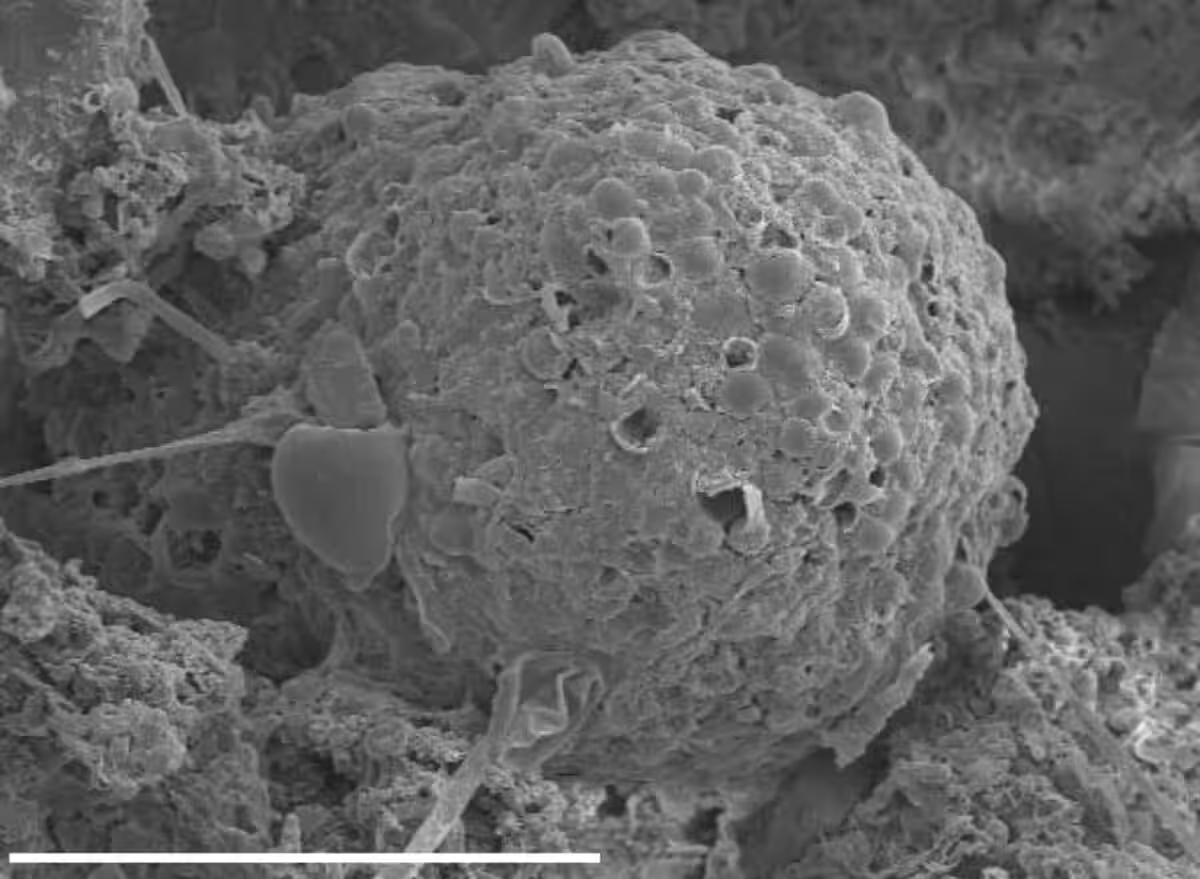
Tiny Mysterious Shapes Discovered in Rocks
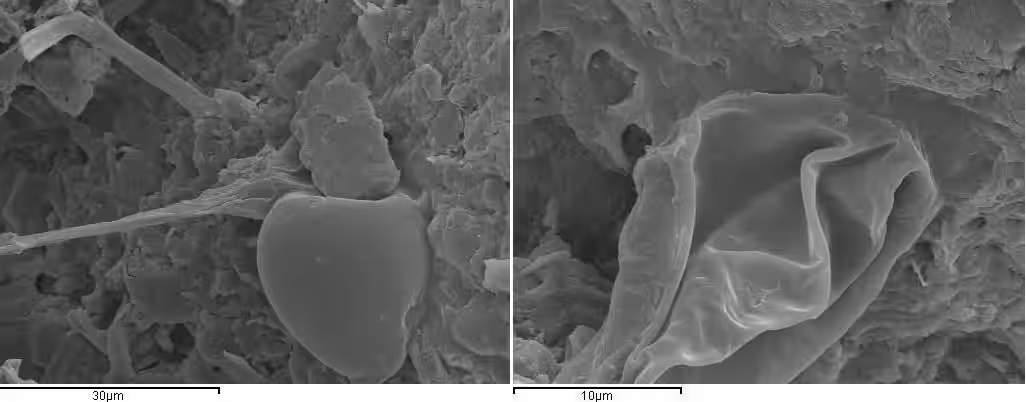
When scientists examined material taken from deep inside the stones, they reported finding tiny structures between 10 and 40 micrometers wide. The paper published in the Journal of Cosmology described the shapes as closely resembling diatoms, a type of microscopic known for their intricate silica shells.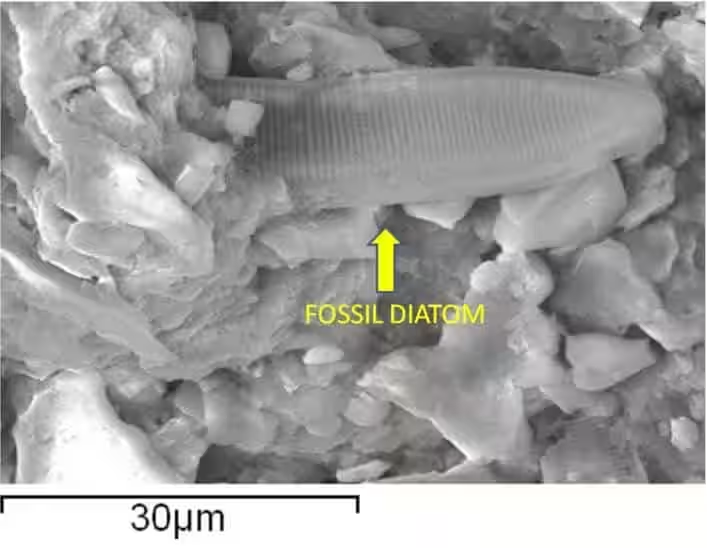
The Rock’s Composition Analyzed
The scientists also carried out elemental analysis on the samples. The study stated that the structures showed no detectable traces of nitrogen. They argued that this absence pointed to ancient biological remains rather than modern living organisms. In the paper, the team said that:The article also noted that the objects were integrated into the mineral matrix of the rock. For the authors, that supported the idea that the material existed before the meteorite reached Earth.“Preliminary inspection of a few of the SEM images revealed the presence of a number of highly carbonaceous biological structures. Some of these were deeply integrated in the surrounding mineral matrix indicating they could not have been recent biological contaminants.”
Alien Life Debate Explodes Again
Dr. N. Wickramasinghe, one of the study’s senior authors from the University of Buckingham, strongly defended the interpretation. Speaking to Sri Lanka’s The Island news site, he said the patterns visible on the structures could only be produced through biological processes.“I think the discovery of an unequivocal microbial structure such as a diatom, deeply trapped in the rock matrix, proves beyond doubt that this life existed in the parent comet from which the meteorite was derived,” he said.
This article has been fact checked for accuracy, with information verified against reputable sources. Learn more about us and our editorial process.
Last reviewed on .
Article history
- Latest version
Reference(s)
- “1303.” <https://arxiv.org/pdf/1303.1845>.
- “Nira Wickramasinghe.” Leiden University <https://www.universiteitleiden.nl/en/staffmembers/nira-wickramasinghe>.
- “EPSC2014 698.” <https://meetingorganizer.copernicus.org/EPSC2014/EPSC2014-698.pdf>.
Cite this page:
- Posted by Hassan Raza