Scientists Found the Oldest Reptile Embryos Ever Recorded Hidden Inside Fossils for 280 Million Years
Researchers uncovered an extraordinary discovery within the preserved remains of these prehistoric reptile fossils—something rarely documented in creatures from such an early era.
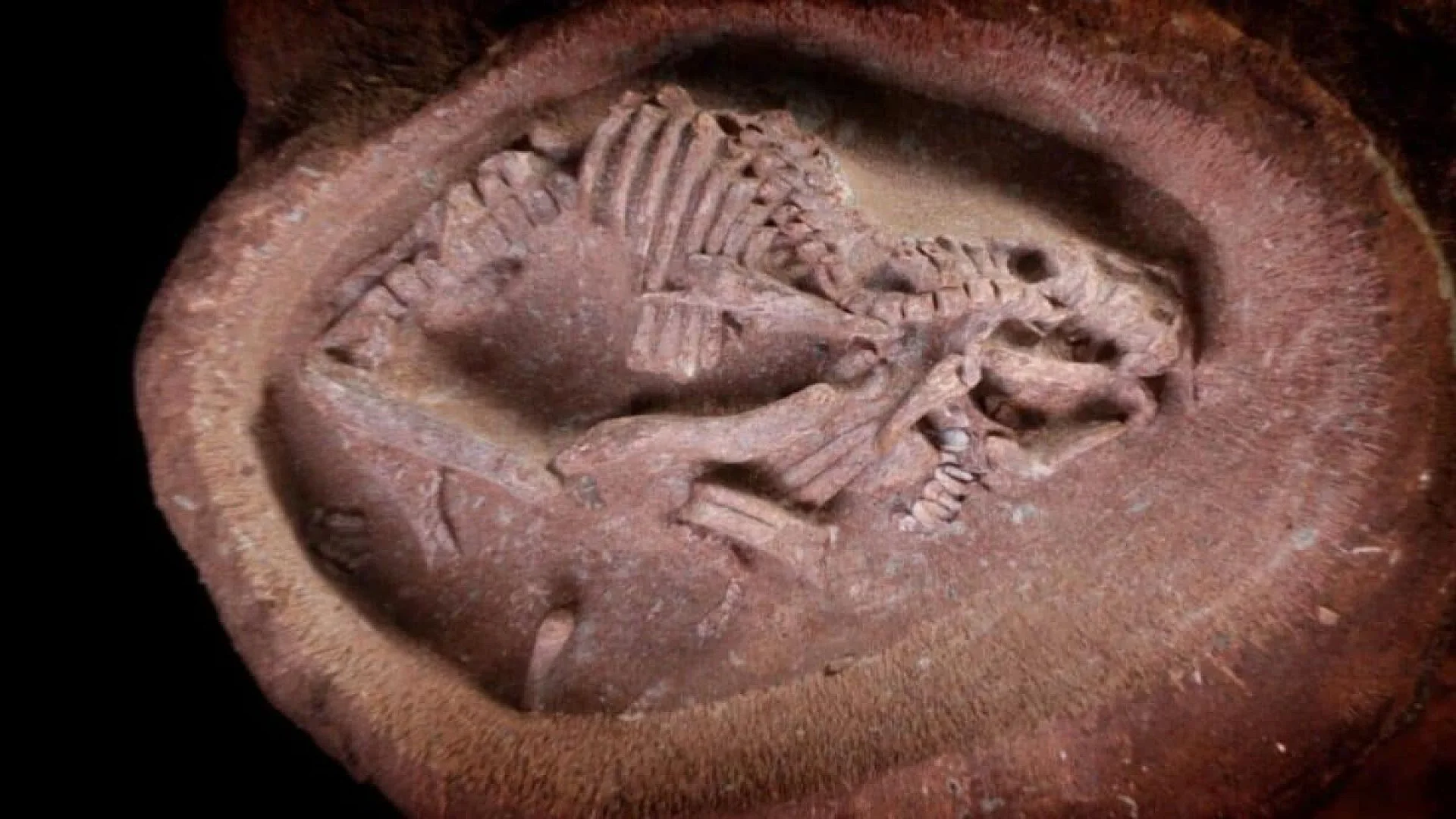
The groundbreaking discovery of 280-million-year-old reptile embryos in Brazil and Uruguay has provided paleontologists with the oldest known fossil evidence of amniote embryos. The remarkable remains, linked to the aquatic reptile mesosaur, suggest these animals may have retained embryos inside the body during development or laid eggs shortly before hatching.
The research, published in the esteemed journal Historical Biology by an international team of scientists, sheds new light on the reproductive habits of ancient reptiles. Fossilized embryos from the Paleozoic era are exceptionally rare, with adult amniotes known from fossils dating back roughly 315 million years ago. However, preserved embryos and eggs from that period have seldom been found, limiting research into how the earliest reptiles reproduced and cared for their offspring.
The newly described specimens come from sites dating to the Early Permian, a period of significant geological change. Researchers reported that the discoveries include embryos associated with adult mesosaurs, possible juvenile remains, and an isolated egg, all of which provide valuable insights into the reproductive biology of these ancient creatures.
A Fossil Embryo Found in a Mesosaur Specimen
One of the most significant discoveries came from Brazil, where scientists identified a mesosaur specimen containing an embryo. The research team noted that the fossil shows the embryo was kept in the uterus through most of its development, providing strong evidence for the embryo retention hypothesis.
” The absence of a recognizable eggshell, combined with the presence of a partially articulated but well-preserved embryo inside an adult specimen, also supports the idea that mesosaurs were viviparous or laid eggs at very advanced stages of development,” the authors explained.
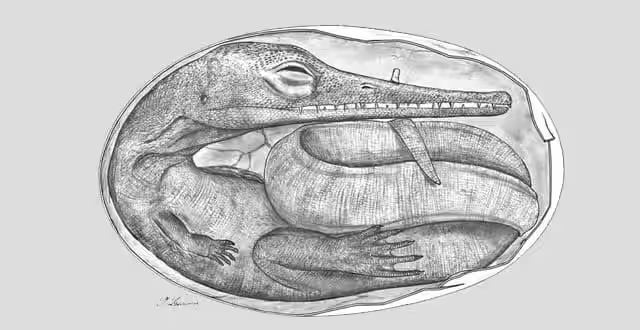
Researchers believe this finding strengthens the hypothesis that mesosaurs may have given birth to live young instead of laying eggs externally, pushing the known history of that reproductive strategy back by approximately 60 million years. This groundbreaking discovery has significant implications for our understanding of the evolution of reproductive strategies in ancient reptiles.
Ancient Embryos Discovered in Uruguay
The team also examined 26 adult mesosaur specimens discovered in Uruguay, each associated with embryos or very young individuals from the same geological period as the Brazilian fossil. Researchers noted that several fossils were partially disarticulated, making interpretation more challenging. However, they believe most likely represent embryos retained inside the uterus, adding more support to the embryo retention hypothesis.
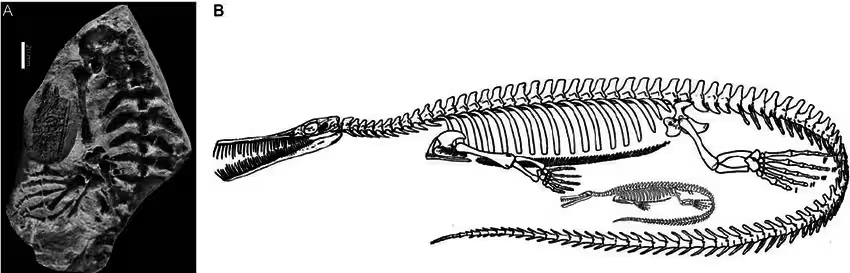
Some larger specimens found near adults may represent young mesosaurs that stayed close to at least one parent, a possible sign of parental care. However, researchers remained cautious about this interpretation, as evidence of parental behavior in reptiles this ancient is rare.
A Fossil Egg Introduced Another Possibility
Researchers also uncovered a single isolated mesosaur egg at the Uruguayan site, complicating the idea that these reptiles were fully viviparous. The study suggests that mesosaurs may have laid eggs containing highly developed embryos that hatched shortly afterward, providing a reproductive strategy that combines internal development with late-stage egg laying.
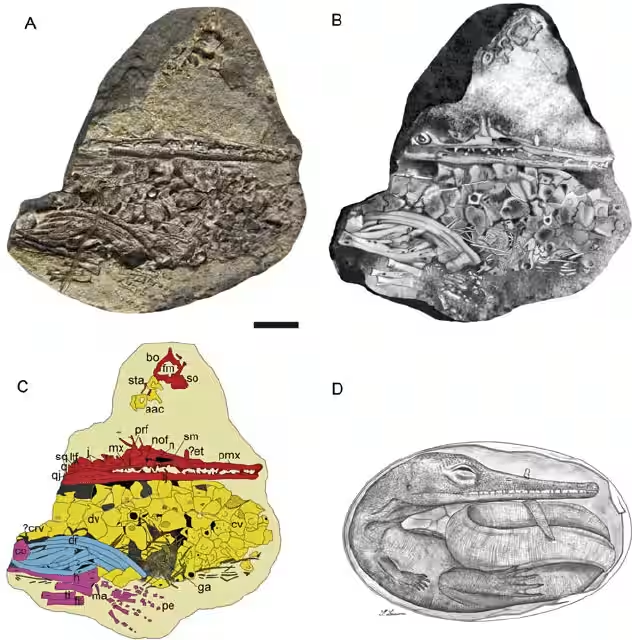
The specimens described in Historical Biology are now considered the oldest known amniote embryos from the Paleozoic era, which lasted from approximately 543 to 250 million years ago. As the researchers wrote:
“Our finds represent the only known documentation of amniotic embryos in the Paleozoic and the earliest known case of viviparity.” Researchers also describe the fossils as the oldest known evidence of embryo retention in the fossil record.
This article has been fact checked for accuracy, with information verified against reputable sources. Learn more about us and our editorial process.
Last reviewed on .
Article history
- Latest version
Cite this page:
- Posted by Hassan Raza