Renaissance-Era Shipwreck Hidden for 500 Years Found Nearly Untouched 2,500 Meters Beneath the Mediterranean
A mechanical explorer plunged 2,500 meters into the abyss and made contact with a centuries-old shipwreck unseen by human eyes for half a millennium.
The robot’s mechanical claws closed around the pitcher with agonizing slowness. On the surface, a French Navy officer watched the feed, his hands steady on the controls. One wrong twitch, one burst of disturbed sediment, and a 500-year-old artifact could shatter on the seafloor. The descent alone had taken an hour.
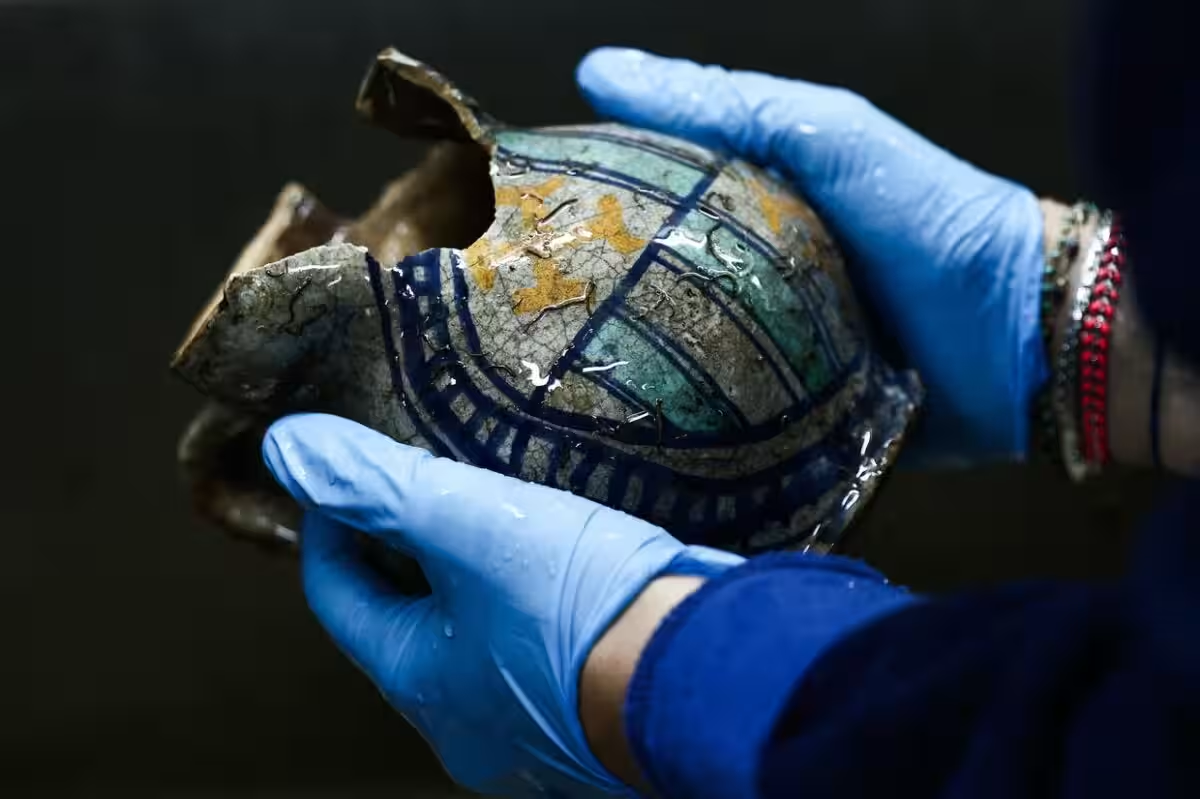
That pitcher now sits in a Marseille laboratory, its turquoise and saffron geometric patterns visible for the first time since the 16th century. “It’s one of the deepest objects ever recovered from a wreck in France,” said Marine Sadania, the lead archaeologist on the mission. She and her team had just finished the first survey of France’s deepest known shipwreck, a merchant vessel resting more than 2,500 meters below the Mediterranean.
The wreck, named Camarat 4, was spotted by chance in March 2025 during a French Navy seabed operation off Ramatuelle, near Saint-Tropez. Over three days in April 2026, a remotely operated vehicle captured 67,000 images and brought up three pitchers and a plate. According to the Maritime Prefecture of the Mediterranean, the extreme depth had preserved the site from looting and decay since the moment the ship sank roughly five centuries ago.
Cannons, Cauldrons, and a Cargo of Ceramics
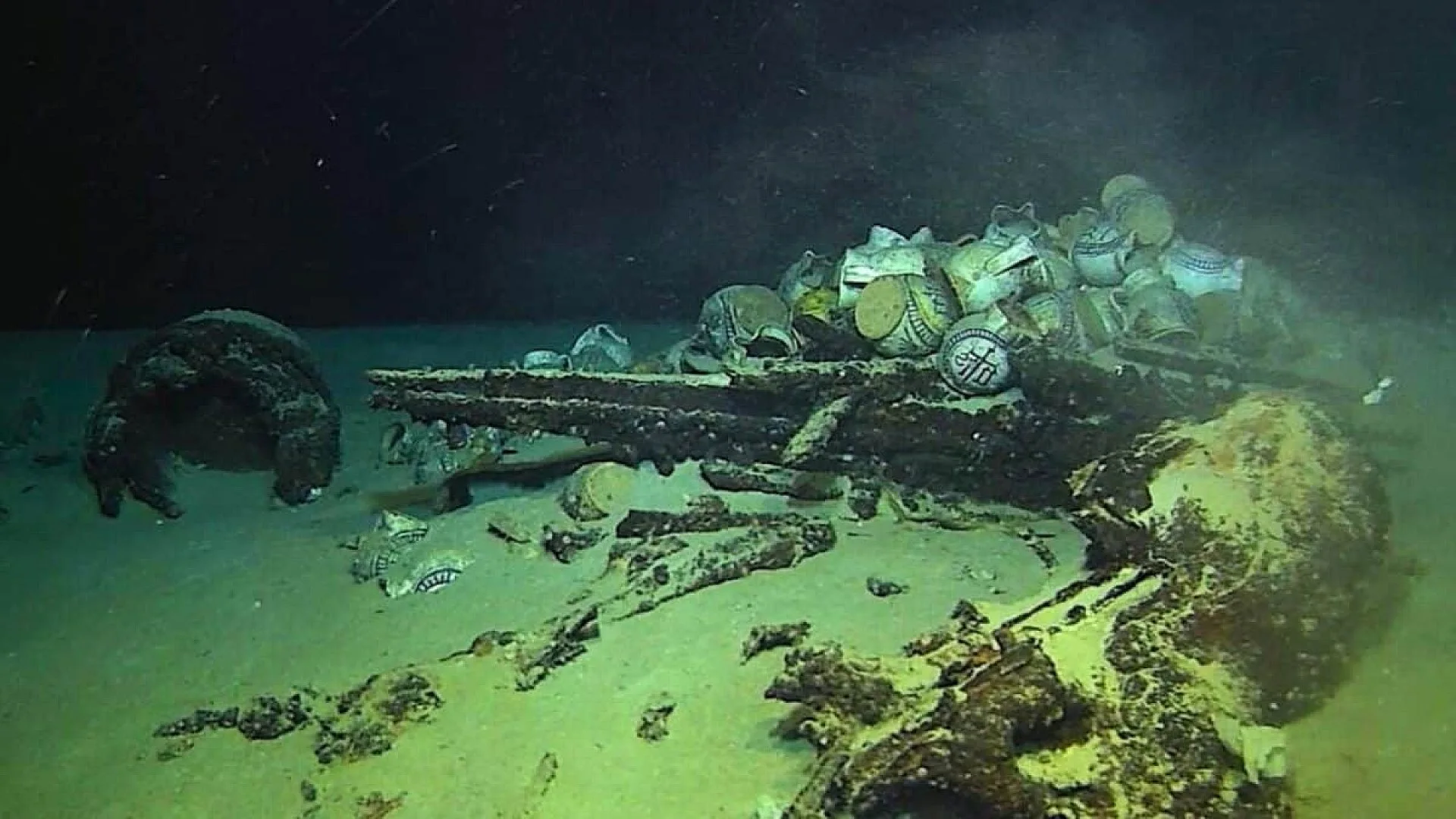
The ship measures roughly 30 meters long and 7 meters wide. Archaeologists believe it was an Italian merchant vessel, probably sailing from Liguria toward the French coast when it went down. Six cannons lie scattered across the site, standard armament for protecting valuable cargo from pirates and rival ships.
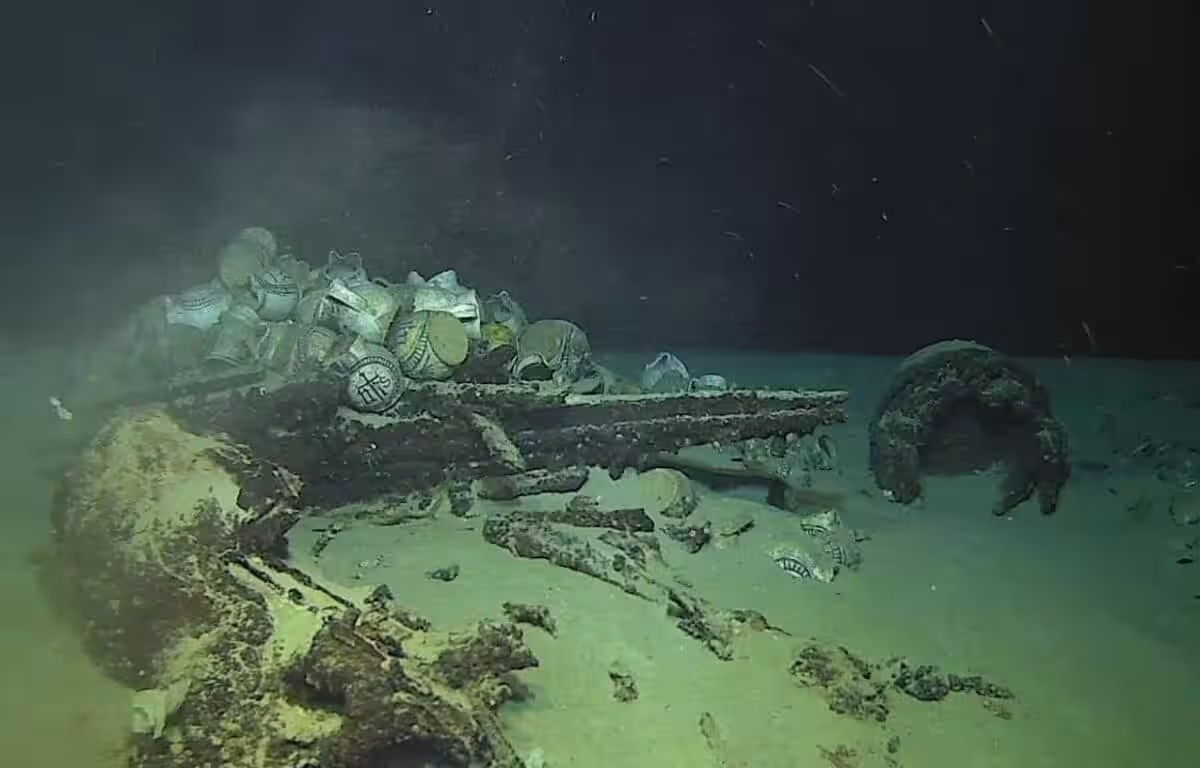
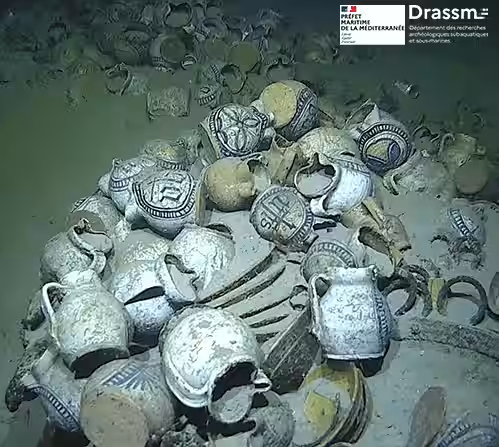
Two cauldrons and an anchor rest nearby, but the real volume comes from the ceramics. Hundreds of glazed ceramic jugs and plates remain visible on the seafloor, with many more likely buried in sediment. Sadania said surviving texts from the period are scarce, making the physical evidence especially valuable.
“This is a valuable source of information on maritime history,” she told Agence France-Presse, as reported by CBS News. The cargo holds clues to trade routes, manufacturing centers, and the everyday commerce that connected Mediterranean ports in the Renaissance.
The Pottery That Named the Ship’s Home Port
Franca Cibecchini, an archaeologist with France’s underwater archaeology department (DRASSM), recognized the ceramics immediately. The globular pitchers with pinched spouts and strap handles match Ligurian production from the 16th century, well-documented in workshops around Genoa and Savona.
Roughly 200 pitchers are visible on the seabed. Some carry the Christogram “IHS” across their glazed surfaces. Others display floral bands, fish motifs, or geometric patterns framed by double lines beneath the rim. About a hundred plates accompany them, likely from the same regional workshops.
The quantity and decorative range point to a commercial shipment rather than everyday shipboard kitchenware. Metal bars found in the hold reinforce the picture of a merchant running a routine route, carrying manufactured goods westward from the Italian coast.
The Robot That Goes Where Divers Cannot
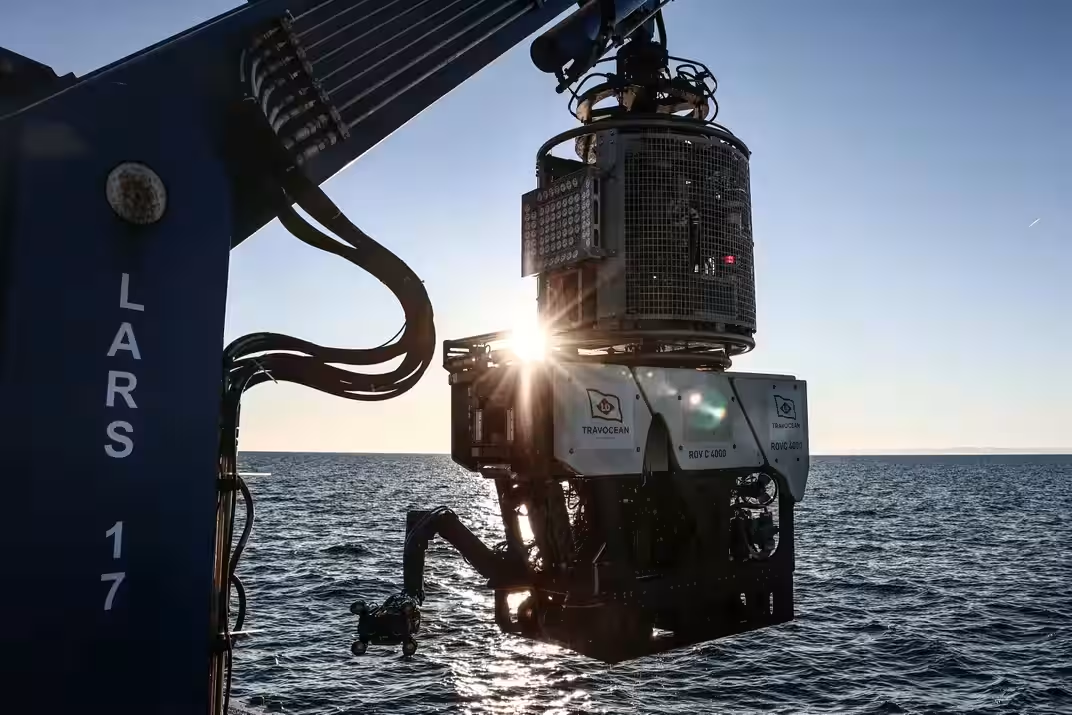
No human diver can reach 2,500 meters. The mission depended entirely on a remotely operated vehicle (ROV) rated for 4,000 meters, the only one of its kind in the French fleet. Deployed from a navy tugboat, the machine needed roughly an hour just to descend to the wreck.
Navy officer Sebastien, whose surname was withheld for security reasons, operated the controls from the surface. “You have to be extremely precise so as not to damage the site, so as not to stir up sediment,” he said, according to Smithsonian Magazine. Every movement of the pincers required calculation and patience.
Over several hours, the ROV fired eight frames per second, producing 67,000 photographs. Researchers stitched those images into a 3D photogrammetric model, a first for a wreck at this depth in French waters, reported L’Indépendant. The team also installed topographic markers to monitor any shifts over time. The model now gives scientists a permanent digital baseline of the site as it sat during the April mission.
Objects Raised from Crushing Depths
Bringing artifacts up from 2,500 meters is delicate work with no guarantee of success. Sadania noted that roughly a third of ceramics recovered from underwater sites break during the process. The pressure differentials and physical stress on materials are still poorly understood.
The team guided the ROV’s pincers with extreme care, placing each piece into a protective case before beginning the slow ascent. They surfaced with three pitchers and a plate, a modest but significant haul given the depth and the risks involved.
In Marseille, Sadania rinsed one pitcher and traced its decoration: dark blue lines crossing the rounded body, rectangles filled with turquoise blue and saffron yellow. Conservators are now testing new conservation protocols for materials brought up from extreme depths, work that will inform every future recovery mission.
DRASSM and the navy plan further missions to the site. The next-deepest French wreck remains La Minerve, a submarine lost in 1968 and located in 2019 at roughly 2,300 meters off Toulon with 52 crew members aboard.
The Garbage That Followed the Ship Down
The robot’s cameras captured more than Renaissance pottery. Plastic bottles, fishing nets, aluminum cans, and yogurt containers litter the wreckage, drifted down from the surface and trapped in the ship’s ancient structures.
One official image shows what appears to be a soda can resting beside an anchor. Arnaud Schaumasse, director of DRASSM, addressed the pollution at an earlier press conference. “After the awe of the discovery comes the sadness of finding such things,” he said, according to Le Monde.
The navy has not released the wreck’s exact coordinates. The depth alone makes unauthorized access nearly impossible without specialized deep-sea equipment. Researchers plan to continue the photogrammetry work and may recover additional artifacts. The pollution trapped in the ship’s structures will be documented as part of long-term site monitoring, a modern layer atop a 500-year-old tragedy.
This article has been fact checked for accuracy, with information verified against reputable sources. Learn more about us and our editorial process.
Last reviewed on .
Article history
- Latest version
Reference(s)
- “Découverte remarquable : L’épave la plus profonde référencée dans les eaux sous juridiction française, au large de Ramatuelle (83) - Préfecture maritime de la Méditerranée.” <https://www.premar-mediterranee.gouv.fr/communiques-presse/decouverte-remarquable-l-epave-la-plus-profonde-referencee-dans-les-eaux-sous-juridiction-francaise-au-large-de-ramatuelle-83>.
- “Robot exploring France's deepest shipwreck finds cannons and ceramics that sank 5 centuries ago.”, April 29, 2026 <https://www.cbsnews.com/news/france-deepest-shipwreck-robot-diver-images/>.
- Wexler, Ellen. “Here's What Underwater Robots Are Finding at France's Deepest Shipwreck, a 16th-Century Merchant Vessel Resting at the Bottom of the Mediterranean.”, May 7, 2026 Smithsonian Magazine <https://www.smithsonianmag.com/smart-news/heres-what-underwater-robots-are-finding-at-frances-deepest-shipwreck-a-16th-century-merchant-vessel-resting-at-the-bottom-of-the-mediterranean-180988685>.
- Courty-Torcatis, Gabriel. “Découverte à 2 500 m de profondeur en Méditerranée : la fascinante épave d’un navire de la Renaissance attire.”, May 17, 2026 L'Indépendant <https://www.lindependant.fr/2026/05/17/decouverte-a-2-500-m-de-profondeur-en-mediterranee-la-fascinante-epave-dun-navire-de-la-renaissance-attire-scientifiques-et-marine-nationale-13348759.php>.
Cite this page:
- Posted by Hassan Raza