Archaeologists Just Opened a 2,000-Year-Old Road Hidden Beneath the Streets of a Modern City
Archaeologists unearthed a hidden street beneath a thriving Jerusalem neighborhood, revealing a thoroughfare untouched since Roman forces razed the city in 70 AD.
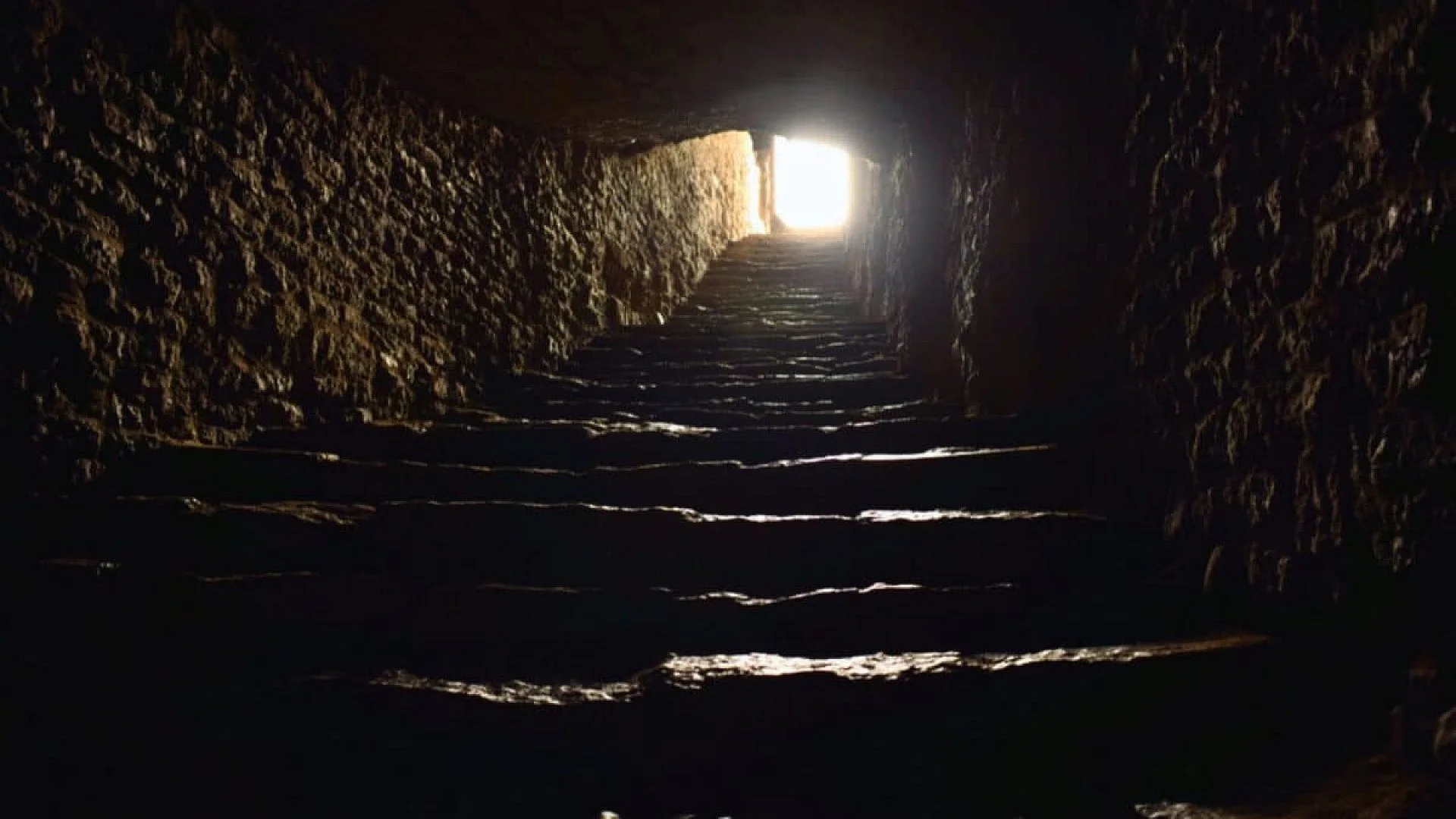
Beneath the bustling streets of a residential neighborhood in Jerusalem, archaeologists have unearthed one of the most significant urban streets of the ancient world: a 600-meter stone thoroughfare that once served as the main route for Jewish pilgrims traveling to the Temple Mount during the Second Temple period. Excavated over a decade by the Israel Antiquities Authority, the road is now open to the public through the City of David National Park, offering visitors a unique opportunity to walk in the footsteps of their ancestors nearly 2,000 years ago.
The excavation project was the most complex and expensive archaeological endeavor in Israel’s history. A recent study published in ‘Atiqot sheds new light on the site’s significance, revealing a Byzantine-era stone street excavated nearby, which confirms the route functioned as a major north-south artery across multiple centuries and civilizations.
A Road Built Under Roman Rule
The Pilgrimage Road, also known as the Stepped Street, stretches from the Pool of Siloam in Jerusalem’s City of David to the southwestern corner of the Temple Mount. For centuries, scholars attributed its construction to King Herod, but coins discovered beneath the road have changed that narrative entirely.
According to the Israel Antiquities Authority, the road was built during the rule of Roman prefect Pontius Pilate, dating it to between 30 and 40 AD. The Jewish historian Josephus recorded that Pilate funded an aqueduct using money from the Temple treasury, sparking riots. The road suggests Pilate was overseeing other major construction projects in the city at the same time.
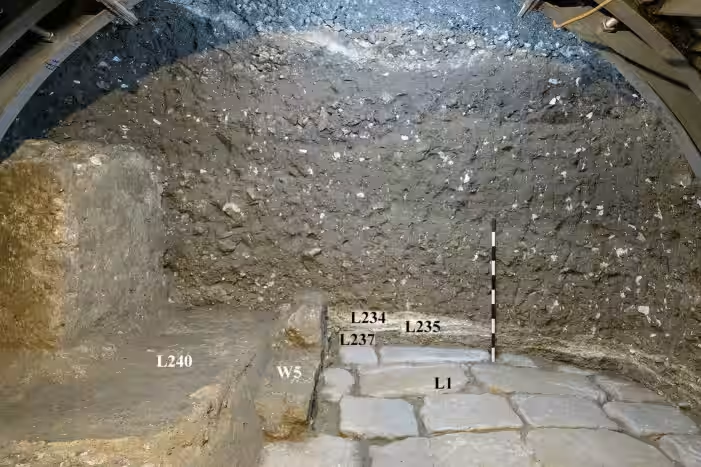
“This is the second major urban project in Jerusalem after the Temple Mount,” said Szanton. Each stone slab used in the road’s construction measured approximately 2 meters long, 1.5 meters wide, and weighed around 2.5 tons. In total, about 10,000 cubic meters of stone were quarried north of Jerusalem and transported to the building site.
About 7.5 meters wide and lined by houses on both sides, the street served pilgrims during festivals and local residents the rest of the year. Merchants set up stalls along its edges during pilgrimage seasons, where visitors could buy food or animals for Temple sacrifice. A stepped structure discovered partway along the route may have served as a meeting place or lost-and-found station, although its exact function remains uncertain.
Digging Sideways Through a Living Neighborhood
Excavating the road presented a unique challenge. Because the ancient street lies directly beneath occupied buildings, the team couldn’t simply dig straight down.
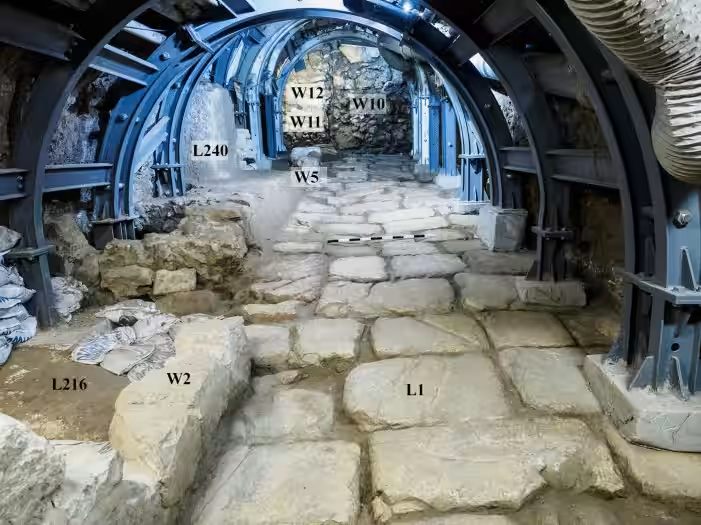
“We had to invent a new methodology,” Szanton explained. Instead of the standard vertical approach, workers began underground and moved horizontally, clearing half a meter at a time. Every 1.5 to 2 meters, construction crews installed metal support arches to hold up the street above before the next section could be cleared. Electricians and ventilation specialists worked alongside the archaeologists throughout.
© 2026 Israel Antiquities Authority
The excavations took over a decade and involved hundreds of people. The result is a tunnel-like walkway beneath the modern city, fully accessible and illuminated, where visitors can see the original stone paving underfoot.
A Destruction Layer and a Hidden Drainage Channel
Among the most striking finds along the Pilgrimage Road is the destruction layer left by the Roman siege of Jerusalem in 70 AD. When Roman forces set the city on fire, buildings on either side of the street collapsed directly onto the road surface. Pottery, glass, stone vessels, wooden objects, and coins minted in Judea at the time were sealed beneath that debris and preserved.
Beneath the road itself, archaeologists found a drainage channel constructed at the same time as the street, designed to carry rainwater away during the rainy season. Evidence suggests Jewish fighters used the channel as a hiding place during the Great Revolt. Archaeologist Eli Shukron, who excavated the channel, found a Roman sword inside. Other objects recovered there include ancient trading tokens, likely used in the exchange of animals for Temple sacrifice, and a golden pomegranate possibly made for the High Priest’s robe.
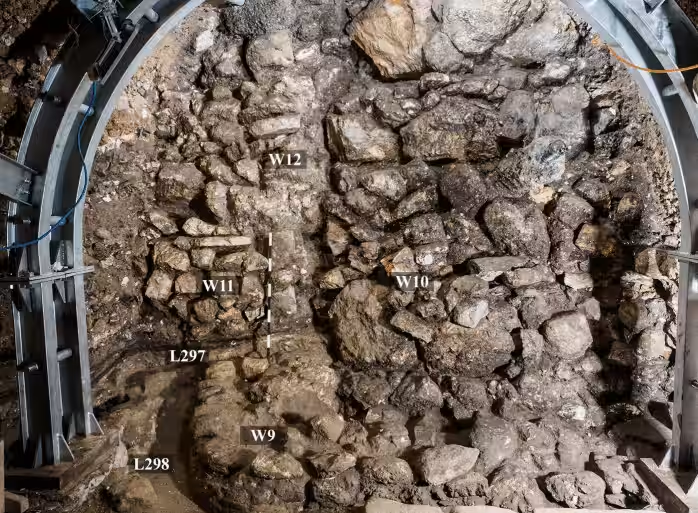
About two-thirds along the road’s length, the large stone paving slabs disappear entirely before resuming near the Temple Mount’s southwestern corner. Researchers believe the missing stones were looted in a later era and repurposed elsewhere, although the question remains open.
The Givati Parking Lot and the Byzantine Street
The Givati Parking Lot excavation, running since 2007 on the northwestern edge of the City of David, has produced finds spanning the First Temple period through the early Islamic era. Among the most significant discoveries: cellars from a large Second Temple residential structure possibly connected to Queen Helena of Adiabene, a convert to Judaism who lived in Jerusalem during that period, and 264 gold coins from 613 AD found in a Byzantine-era building, deposited on the eve of the Persian conquest of the city.
A 2026 study documents the excavation of a separate Byzantine stone-paved street in the same area, between the Givati Parking Lot and the Ottoman walls of the Old City. Six settlement strata were exposed, ranging from the Early Roman to the Early Islamic period. The Byzantine street, running north-south along the Tyropoeon Valley, likely served as a processional route connecting the Siloam Church to the Nea Church and the Church of the Holy Sepulcher.
The Pilgrimage Road ends at the foot of the Temple Mount, just south of the Western Wall Plaza, within the Davidson Archaeological Park, where the stone surface meets the ruins of the wall destroyed by Rome in 70 AD.
This article has been fact checked for accuracy, with information verified against reputable sources. Learn more about us and our editorial process.
Last reviewed on .
Article history
- Latest version
Reference(s)
- “Excavations at Jerusalem: The Byzantine Street (Area S2).” Israel Antiquities Authority Publications Portal <https://publications.iaa.org.il/atiqot/vol120/iss1/13>.
- <https://www.chabad.org/library/article_cdo/aid/7264106/jewish/In-Our-Ancestors-Footsteps-The-Pilgrimage-Road-in-Jerusalem.htm>.
- ויצטום, גליה. “Givati Parking Lot - City of David.”, September 13, 2023 City of David <https://cityofdavid.org.il/en/givati-parking-lot-eng/>.
- “Tyropoeon Valley - Madain Project (en).” <https://madainproject.com/tyropoeon_valley>.
Cite this page:
- Posted by Hassan Raza