Scientists Found a Massive Dinosaur Footprint Site Around an Ancient Lake With Nearly 18,000 Tracks
Researchers delving into the remnants of an ancient lakeshore in Bolivia stumbled upon a treasure trove of fossilized footprints, far exceeding their initial expectations.
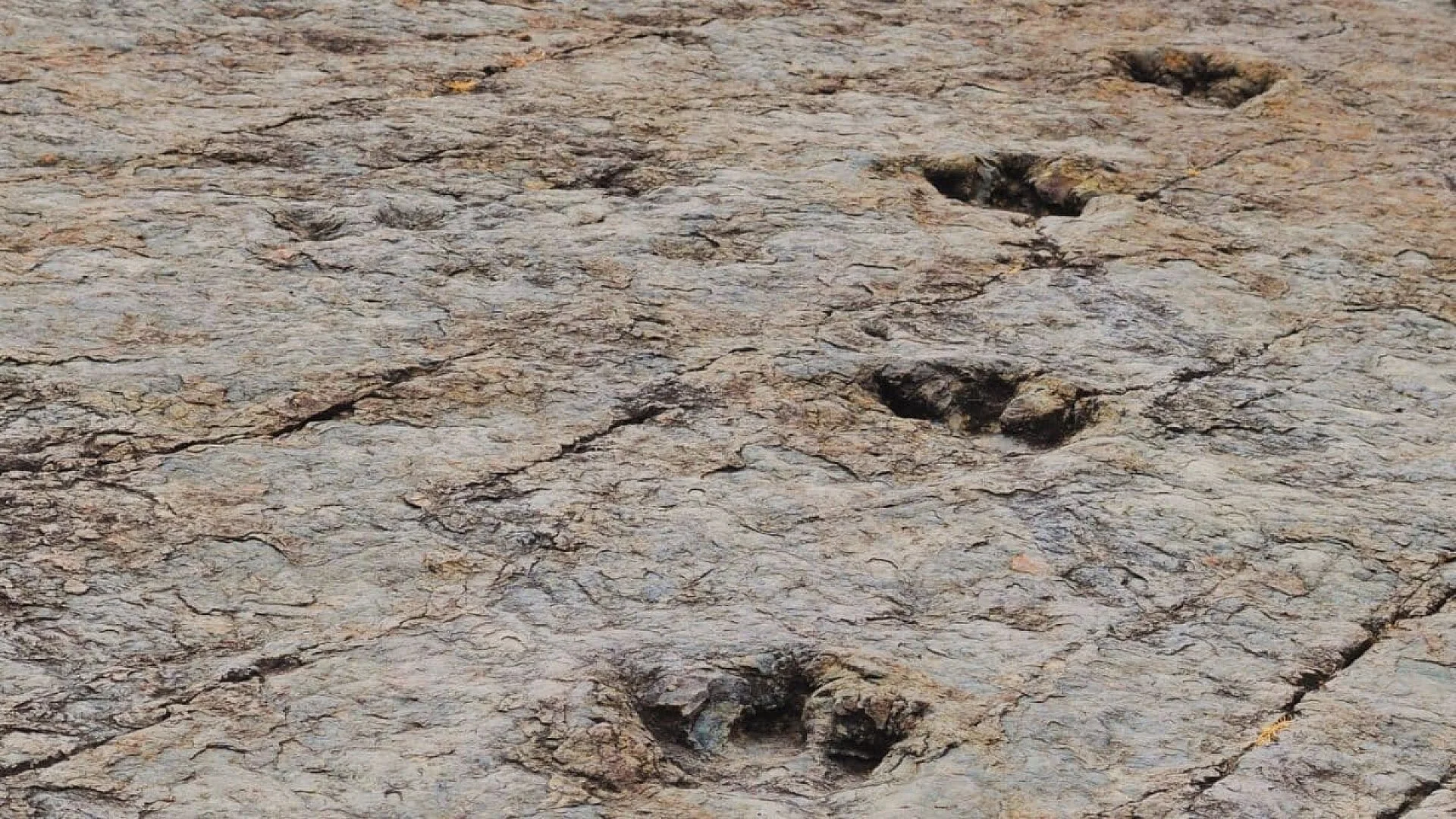
A groundbreaking discovery has been made in Bolivia, where a massive dinosaur tracksite has revealed an astonishing 18,000 fossilized footprints dating back an astonishing 70 million years. Located within the Torotoro National Park, the site is now recognized as the largest known collection of dinosaur tracks ever documented.
The footprints were left along the muddy shoreline of an ancient freshwater lake during the Late Cretaceous period. Many of them are “ghost tracks,” faint impressions believed to have been made by theropod dinosaurs walking across soft sediment.
The discovery was led by renowned paleontologist Raúl Esperante from the Geoscience Research Institute and published in PLOS ONE. At Carreras Pampa, the team documented 1,321 trackways containing approximately 16,600 three-toed footprints, 289 isolated prints and tail marks, plus 1,378 swim traces spread across 280 trackways. Some prints still preserve clear details, while others appear as faint shapes pressed into ancient mud.
Unveiling the Secrets of a Dinosaur Lakeshore
Millions of years ago, the landscape of central Bolivia was vastly different from what it is today. The dry sandstone terrain was once a humid region filled with shallow lakes and muddy shorelines where dinosaurs regularly moved through wet sediment.
“Bolivia boasts one of the most extensive and diverse records of dinosaur tracksites in the world, spanning the Triassic, Jurassic, and Cretaceous,” Raúl Esperante noted. “However, despite the abundance of tracksites, few scientific studies have been published.”
Researchers explained in PLOS ONE that the tracks survived because layers of sediment quickly buried them before water or erosion could erase them. Over time, the mud hardened into rock and preserved the footprints in remarkable detail.
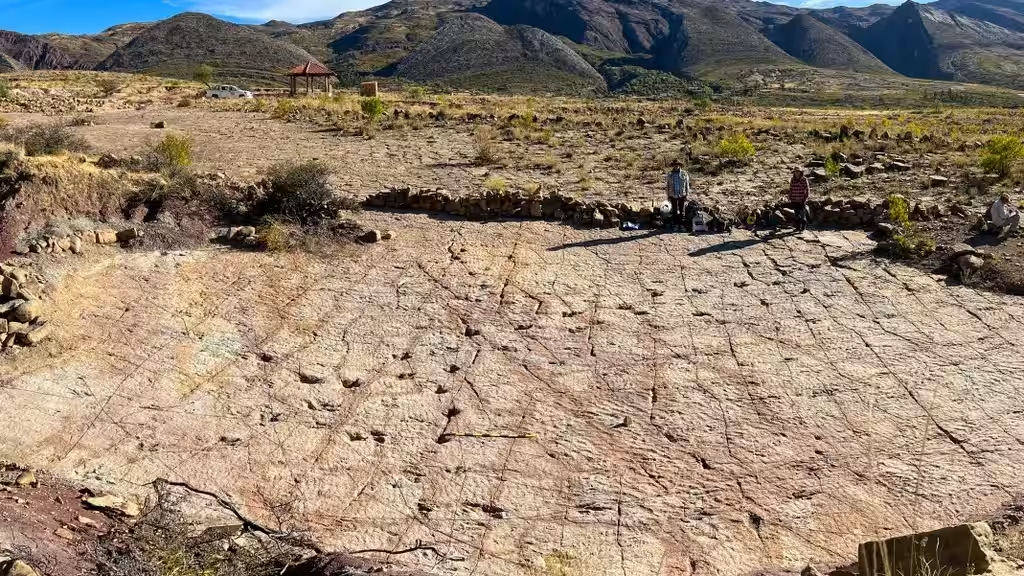
What sets this site apart is the absence of nearby dinosaur bones. Scientists believe carcasses close to the water were probably scavenged, scattered by waves, or eroded before they could fossilize properly.
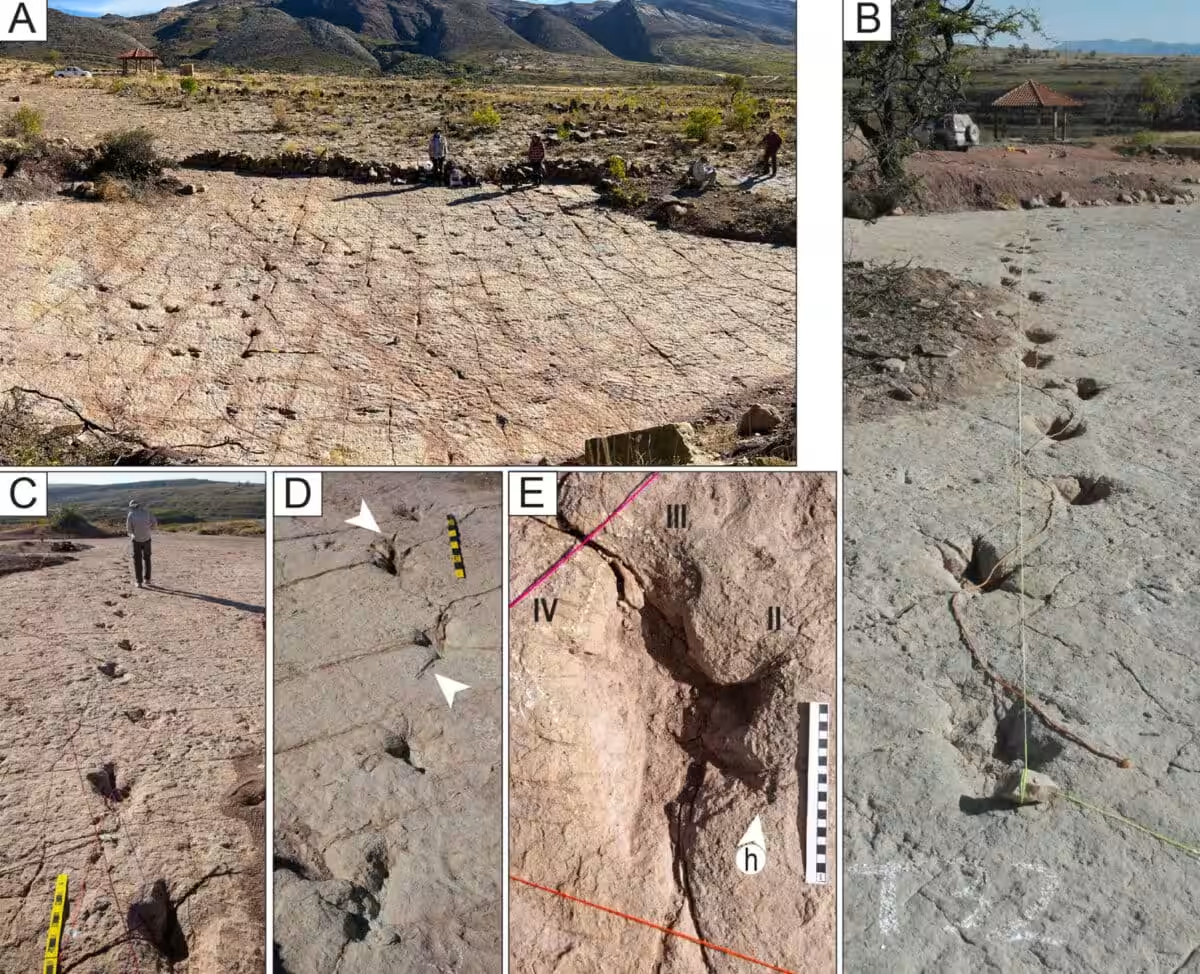
Instead, researchers can follow long trackways showing how dinosaurs walked across the shoreline, sometimes changing direction or pausing along the way.
Unraveling the Mystery of “Ghost Tracks”
These marks preserve claw impressions but often lack clear heel prints, giving them a faint and incomplete appearance. Esperante and his team found that the tracks alternate in left-right patterns and match the spacing expected from bipedal dinosaurs. Their connection with better-preserved theropod prints strongly suggests they were made by theropods rather than random markings in the rock.
Some footprints are deep and elongated, with tail drag marks nearby. Others are much clearer, preserving details such as claw traces, toe padding, heel impressions and even the hallux, the innermost toe.
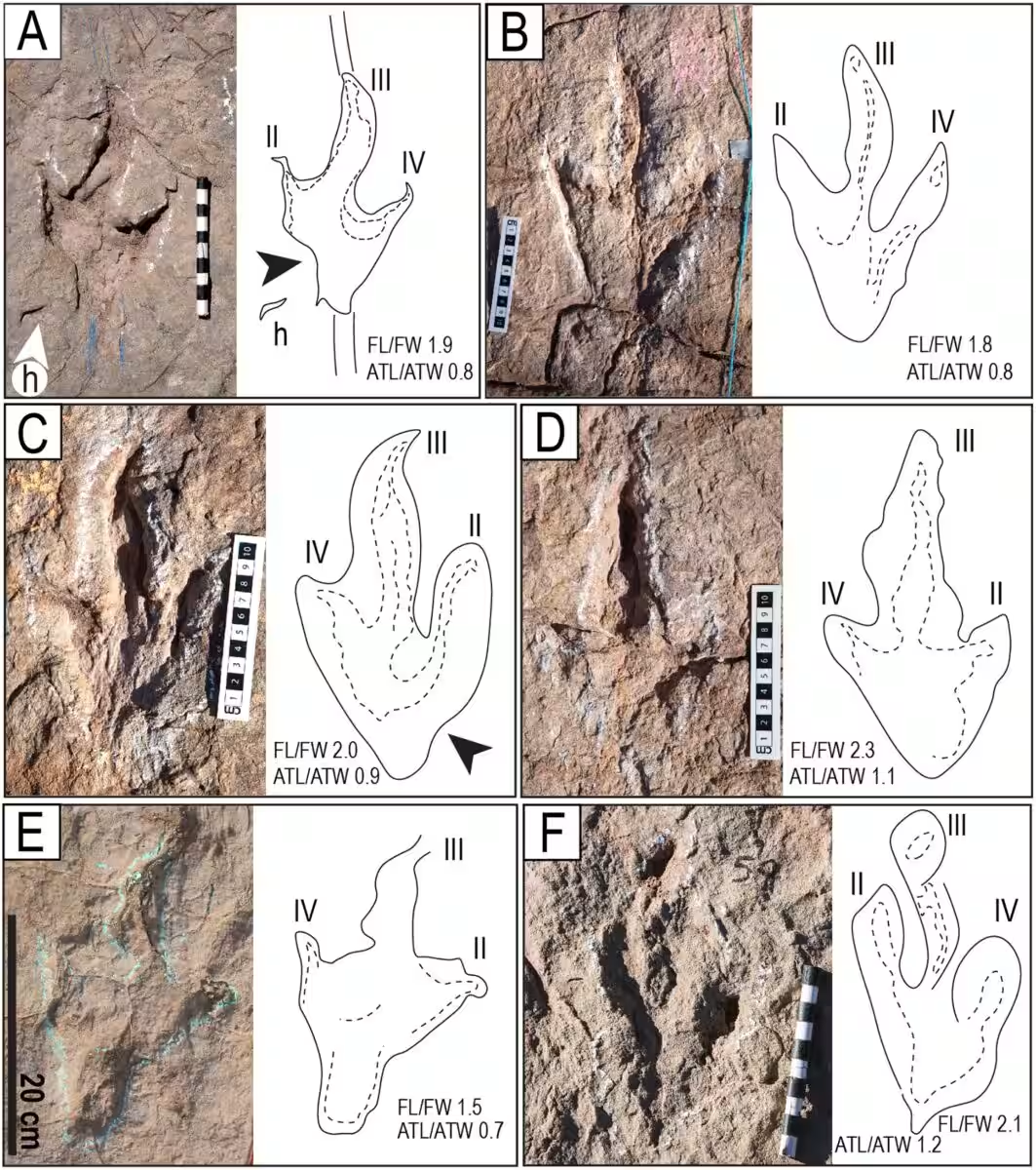
Researchers identified several footprint shapes across the site, though most point toward three-toed theropods. Some larger tracks resemble the feet of adult Tyrannosaurus–type predators, while smaller prints look similar to juvenile Grallator tracks. They also estimated the size of the animals from the footprints. The study found that:
“Most (80%) of the trackmakers had a hip height between 65 cm and 1.15 m, with a greater percentage in the 75 cm – 1.05 m range,” they said. “Notably, very few trackmakers exceeded a height of 1.25 m.”
Toe spacing also gave scientists clues about how the animals moved. The tracks suggest moderate walking speeds rather than running, with enough toe spread to stay stable on soft mud.
Unveiling the Secrets of Dinosaur Swim Traces
The site also contains hundreds of long scratches interpreted as swim traces. These grooves likely formed when clawed feet brushed the lakebed while animals moved through shallow water.
Researchers said it remains unclear whether the marks were left by theropods, ancient crocodilians, or both. Still, the overwhelming number of theropod tracks at the site makes dinosaurs a strong possibility.
Scientists found ancient bird tracks along with rosette-shaped invertebrate burrows inside some dinosaur footprints. Esperante described the site as an exceptional concentration of trace fossils adding that:
“The swim tracks, tail traces, and avian tracks are remarkably well preserved, and most tracks are found in continuous trackways,” he said. “The abundance and exceptional preservation of these tracks and traces make the Carreras Pampa tracksite an ichnologic concentration and conservation Lagerstätte.”
This article has been fact checked for accuracy, with information verified against reputable sources. Learn more about us and our editorial process.
Last reviewed on .
Article history
- Latest version
Reference(s)
- Esperante, Raúl. “Morphotypes, preservation, and taphonomy of dinosaur footprints, tail traces, and swim tracks in the largest tracksite in the world: Carreras Pampa (Upper Cretaceous), Torotoro National Park, Bolivia.”, vol. 20, no. 12, pp. e0335973, doi: 10.1371/journal.pone.0335973. <https://journals.plos.org/plosone/article?id=10.1371/journal.pone.0335973>.
Cite this page:
- Posted by Hassan Raza