Scientists Unearth a Dinosaur Bone From a 4-Ton Predator in New Mexico Dating Back 74 Million Years
Researchers in New Mexico have discovered a massive dinosaur skeleton that could represent a predatory species dating back much further than previously believed.
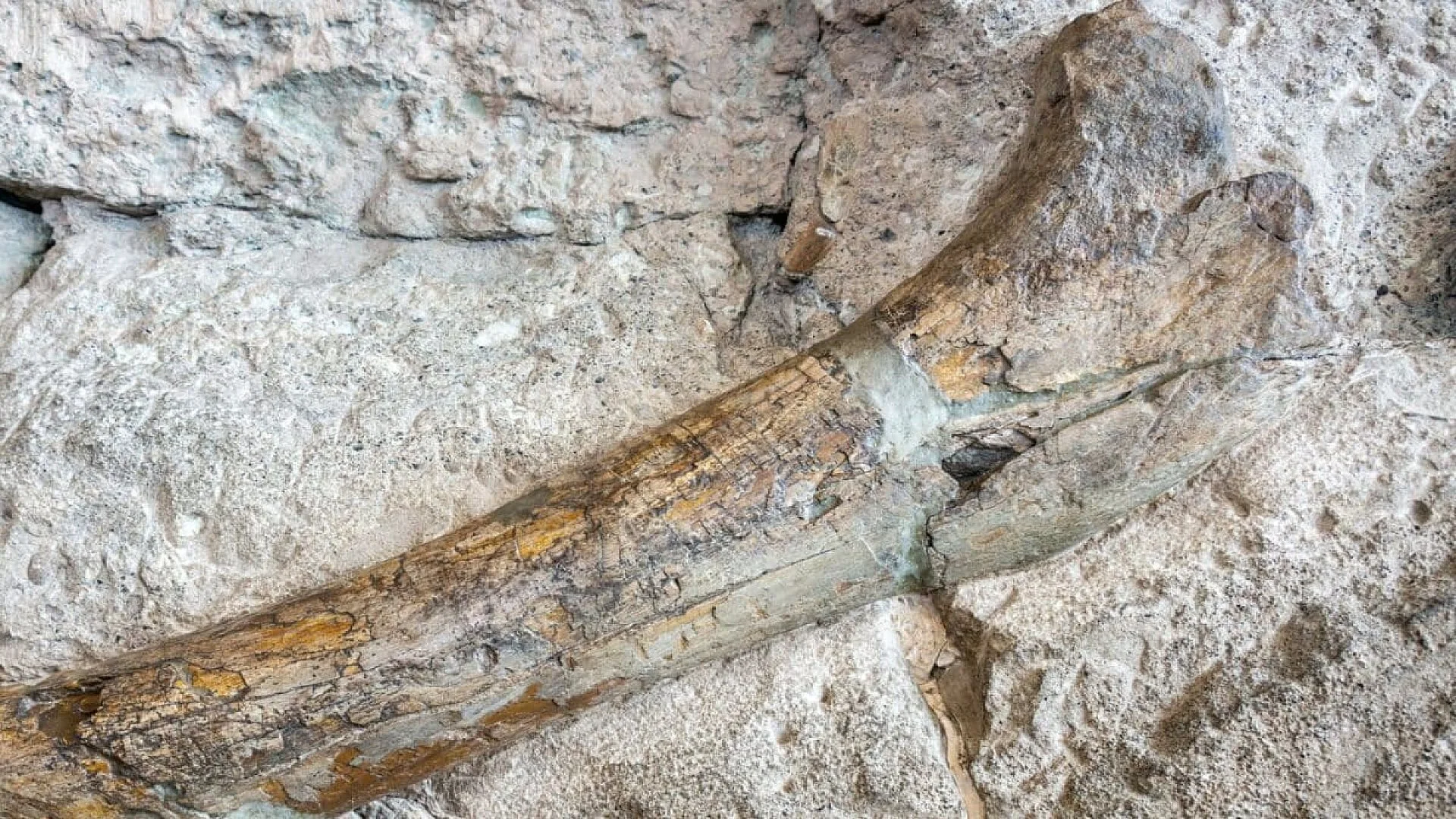
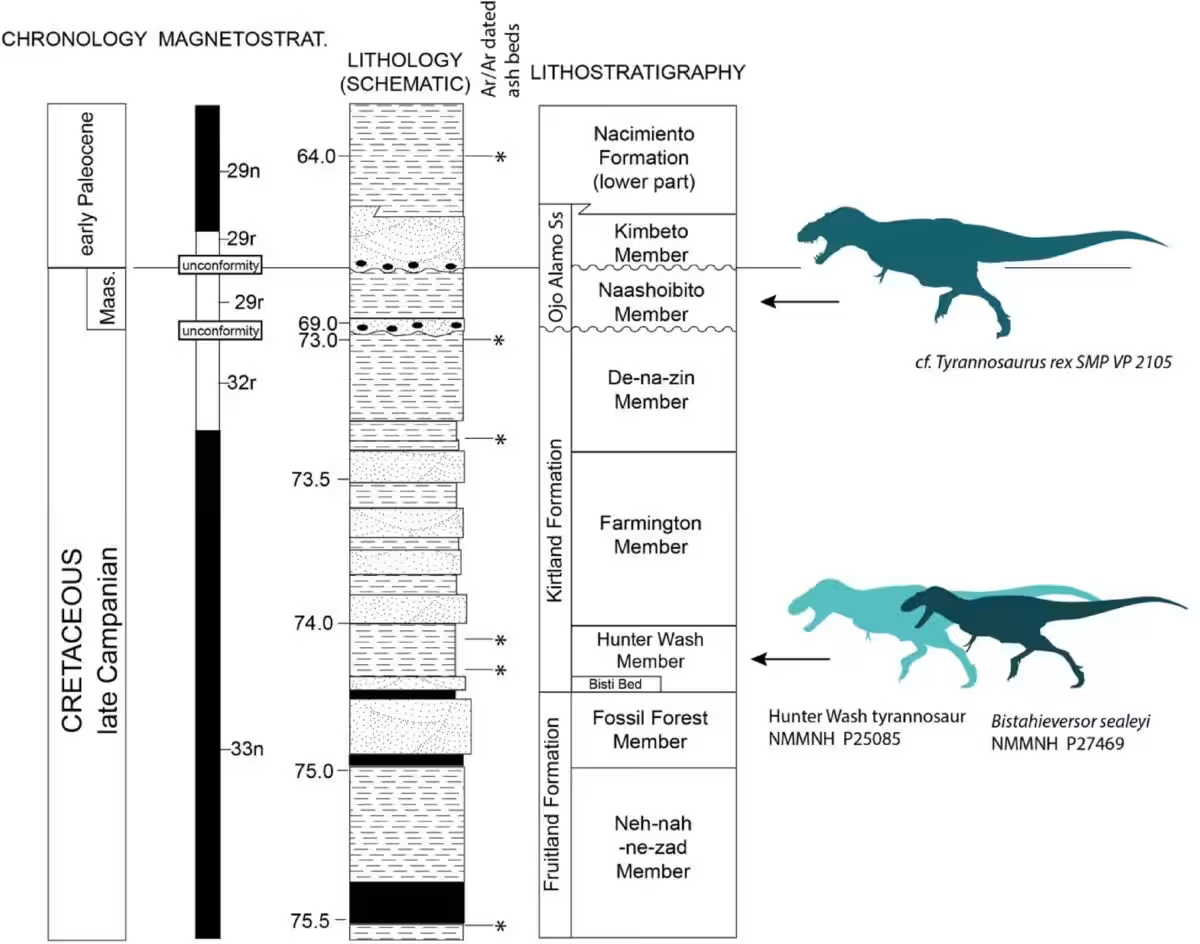
A massive dinosaur fossil uncovered in New Mexico is adding crucial evidence to a long-standing debate about the origins of the largest predatory dinosaurs in North America. Researchers claim the fossilized tibia belonged to a colossal tyrannosaurid that roamed the earth nearly 74 million years ago during the Late Cretaceous period.
According to a study published in Scientific Reports, the specimen may represent the earliest known giant tyrannosaur discovered in North America.
The discovery was made in the Hunter Wash Memberof the Kirtland Formation in New Mexico and analyzed by scientists from the University of Bath, Montana State University, and the New Mexico Museum of Natural History and Science. The research centered on an exceptionally large tibia, or shinbone, extracted from sediment layers.
A Tibia Comparable to a T. Rex Specimen
The fossilized tibia measured 96 centimeters in length and 12.8 centimeters in width. The researchers explained that these dimensions correspond to roughly 84% and 78% of those of the largest known Tyrannosaurus rex tibia.
Tyrannosaurs dominated ecosystems near the end of the age of dinosaurs, although their evolutionary history remains disputed. As explained by the lead author Dr. Nicholas Longrich and his colleagues, tyrannosaurids diversified after the extinction of carcharodontosaurs during the mid-Cretaceous period. By the Late Campanian, several groups had already reached estimated body masses of two to three tons. Using comparisons with other tyrannosaur species, the team estimated that the animal weighed approximately four to five tons.
“This represents the oldest known giant tyrannosaur from North America and may represent the oldest known member of the Tyrannosaurini,” the researchers wrote in the study.
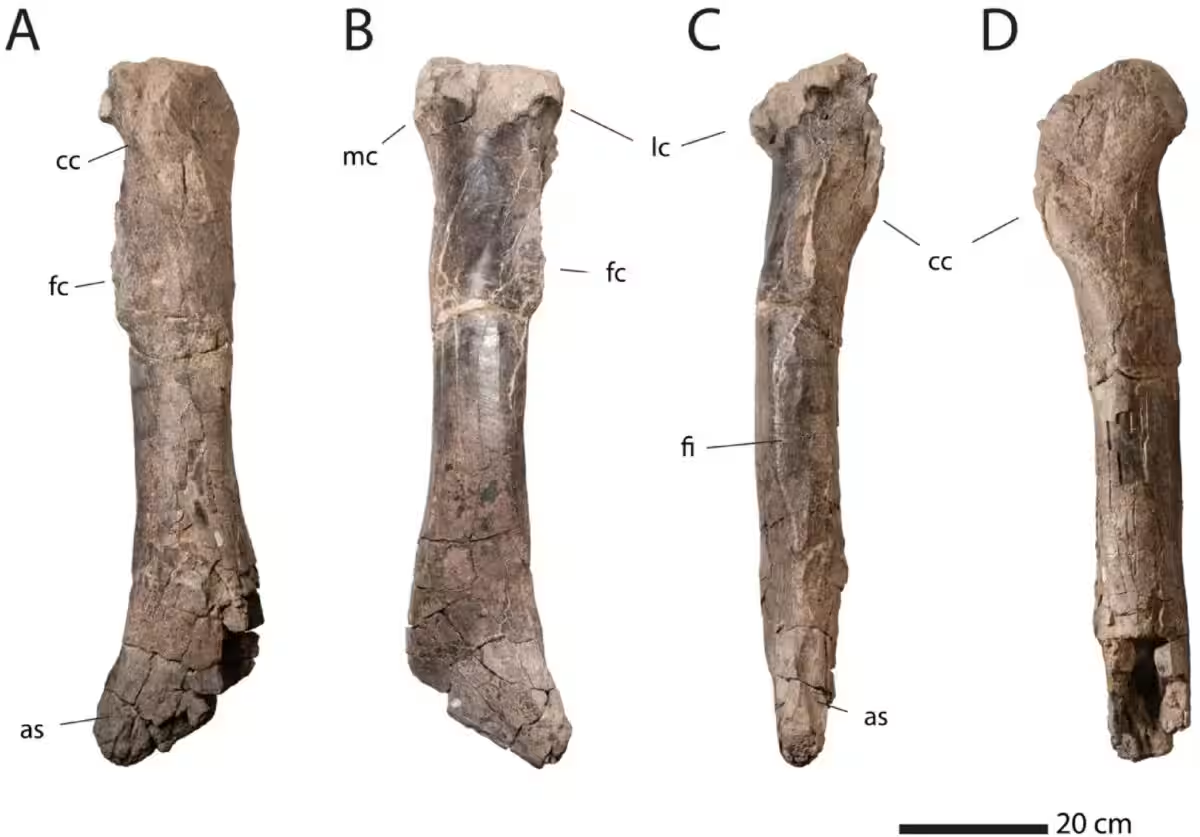
The paper notes that the dinosaur bone shares several anatomical features with later tyrannosaurs, particularly Tyrannosaurus rex. Researchers described the fossil as an unexpectedly early example of a giant-bodied tyrannosaurid, a discovery that could reshape discussions about the evolution of large tyrannosaurs.
“Regardless of which hypothesis is adopted, the unusual size of the Hunter Wash tyrannosaur is significant, as it represents a previously unrecognized appearance of large tyrannosaurids in the Late Campanian, and shows that they evolved earlier than previously believed,” the authors wrote.
Three Different Explanations Tested
The scientists explored three possible identities for the dinosaur before settling on their preferred interpretation. One possibility was that the fossil belonged to an unusually large individual of Bistahieversor sealeyi, a tyrannosaur species previously identified in New Mexico.
Another hypothesis proposed that the bone represented a completely unknown lineage of giant tyrannosaurs. The third explanation suggested the fossil came from an early member of the Tyrannosaurini group, which later included Tyrannosaurus rex and several Asian relatives.
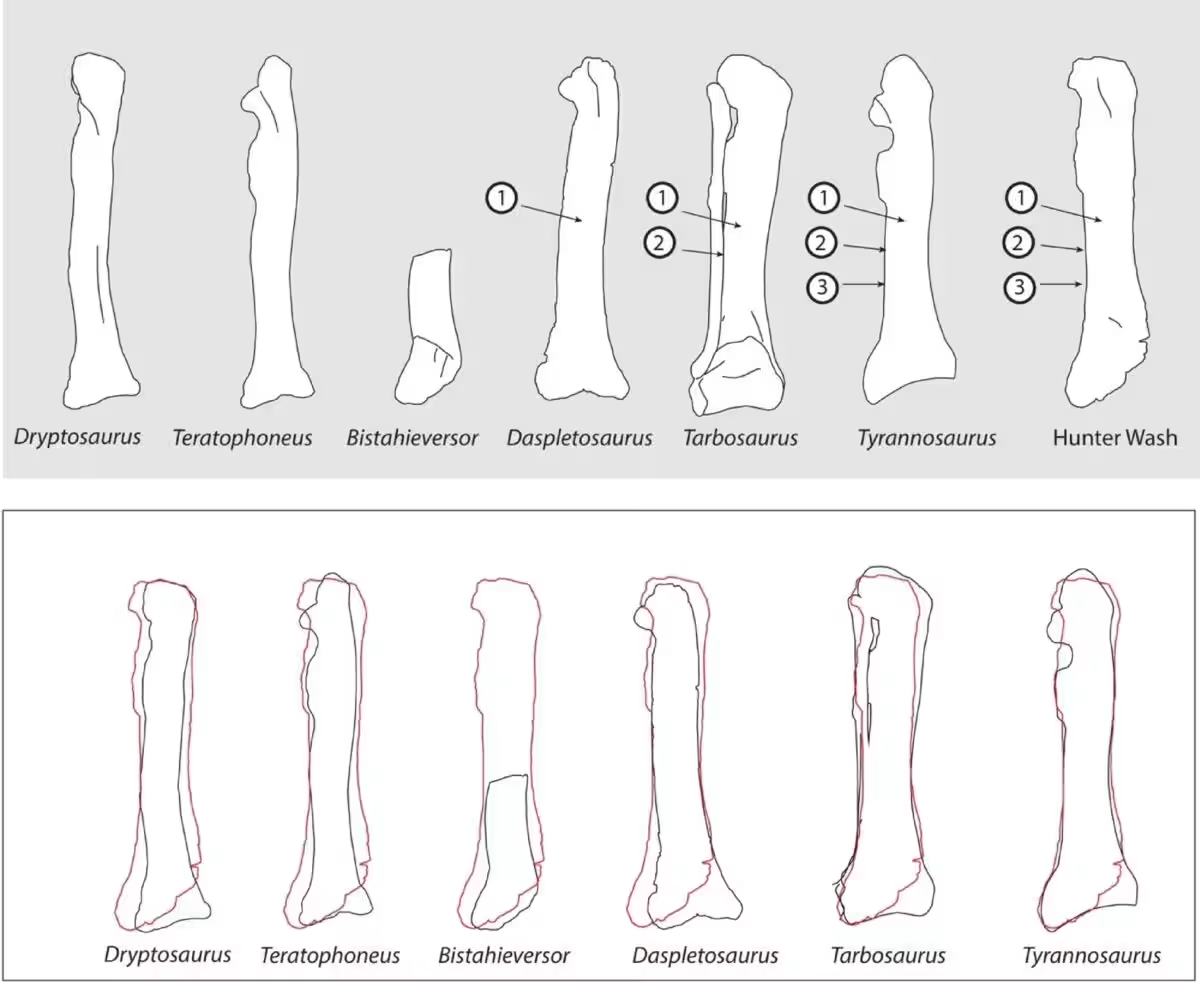
After comparing the specimen with known tyrannosaur fossils and conducting a phylogenetic analysis, the researchers concluded that the third explanation was the most likely. As explained by the authors, the fossil’s characteristics aligned more closely with early tyrannosaurins than with other known regional species.
The researchers also stressed that, regardless of the exact classification, the specimen demonstrates that giant tyrannosaurs existed earlier than previously recognized in the fossil record.
A Strange Discovery Is Fueling the Southern-Origin Theory
The origin of giant tyrannosaurs has been debated for decades among paleontologists. Some researchers have argued that the lineage first evolved in Asia before spreading into North America. Others have suggested that giant tyrannosaurs emerged in southern Laramidia, the western landmass that once split prehistoric North America.
The team behind the study said the New Mexico fossil adds support to the southern-origin theory. The findings also highlight differences between dinosaur populations living in the northern and southern parts of Laramidia during the Late Cretaceous period.
Researchers said smaller tyrannosaurs like Albertosaurinae and Daspletosaurini lived mostly in northern regions, while giant tyrannosaurins likely dominated farther south. The New Mexico dinosaur fossil seems to fit that pattern.
This article has been fact checked for accuracy, with information verified against reputable sources. Learn more about us and our editorial process.
Last reviewed on .
Article history
- Latest version
Reference(s)
- “Nick Longrich.” Nick Longrich <https://www.nicklongrich.com/>.
- Longrich, Nicholas. “A large tyrannosaurid from the Late Cretaceous (Campanian) of North America - Scientific Reports.”, vol. 16, no. 1, March 12, 2026, pp. 8371 Nature, doi: 10.1038/s41598-026-38600-w. <https://www.nature.com/articles/s41598-026-38600-w>.
Cite this page:
- Posted by Hassan Raza