In Rome, Researchers Discover the Oldest English Poem Hidden Inside a Long-Lost 8th-Century Latin Manuscript
A long-overlooked 8th-century Latin manuscript, tucked away in a Roman archive, has unveiled a concealed literary gem tracing its roots to the very origins of English literature.
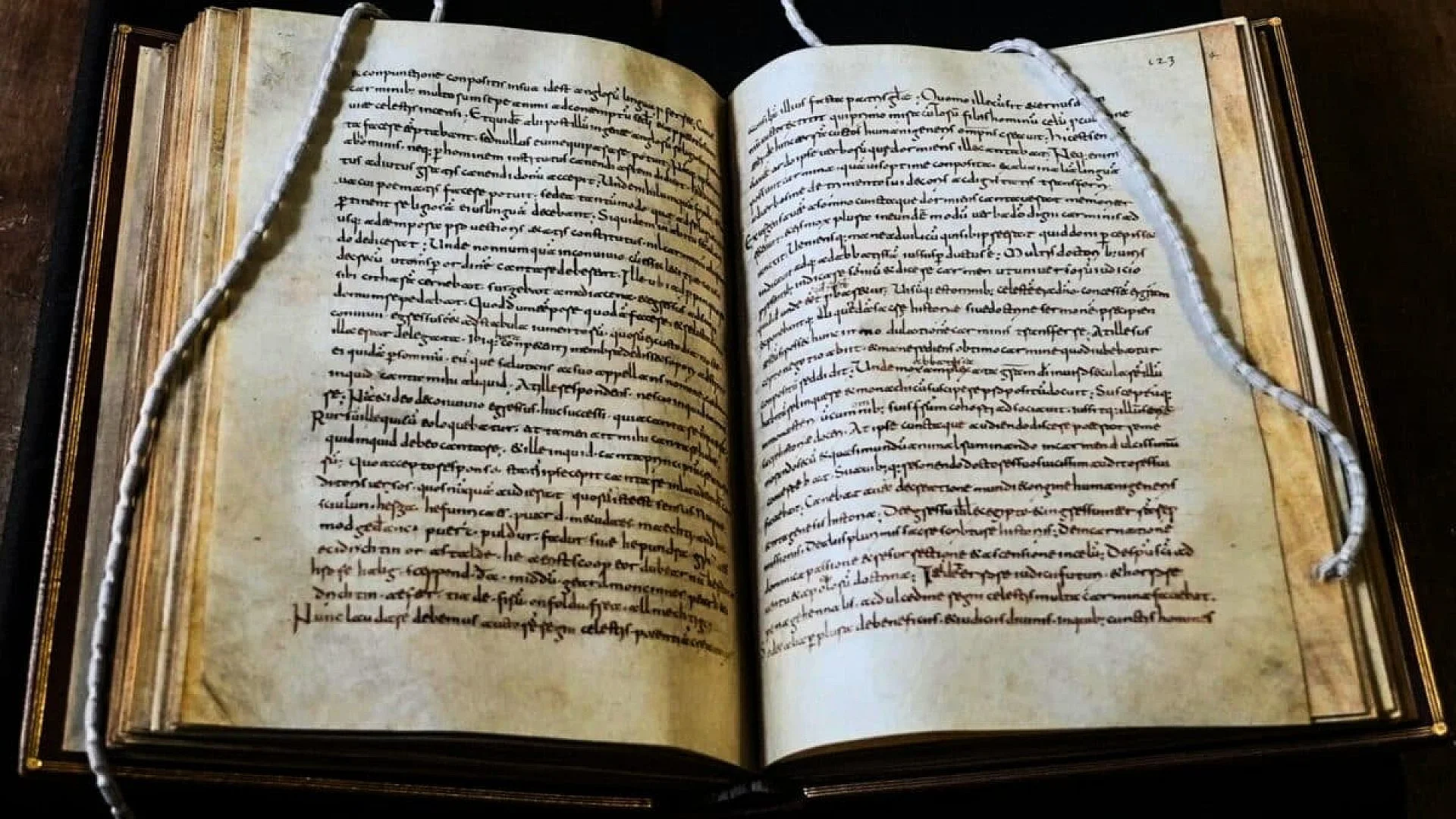
Archaeologists from Trinity College Dublin have unearthed a long-lost manuscript containing the oldest known poem in the English language, hidden for decades in the National Central Library of Rome. The 9th-century copy of Caedmon’s Hymn was concealed within a Latin text, its whereabouts unverified by scholars since the 1970s.
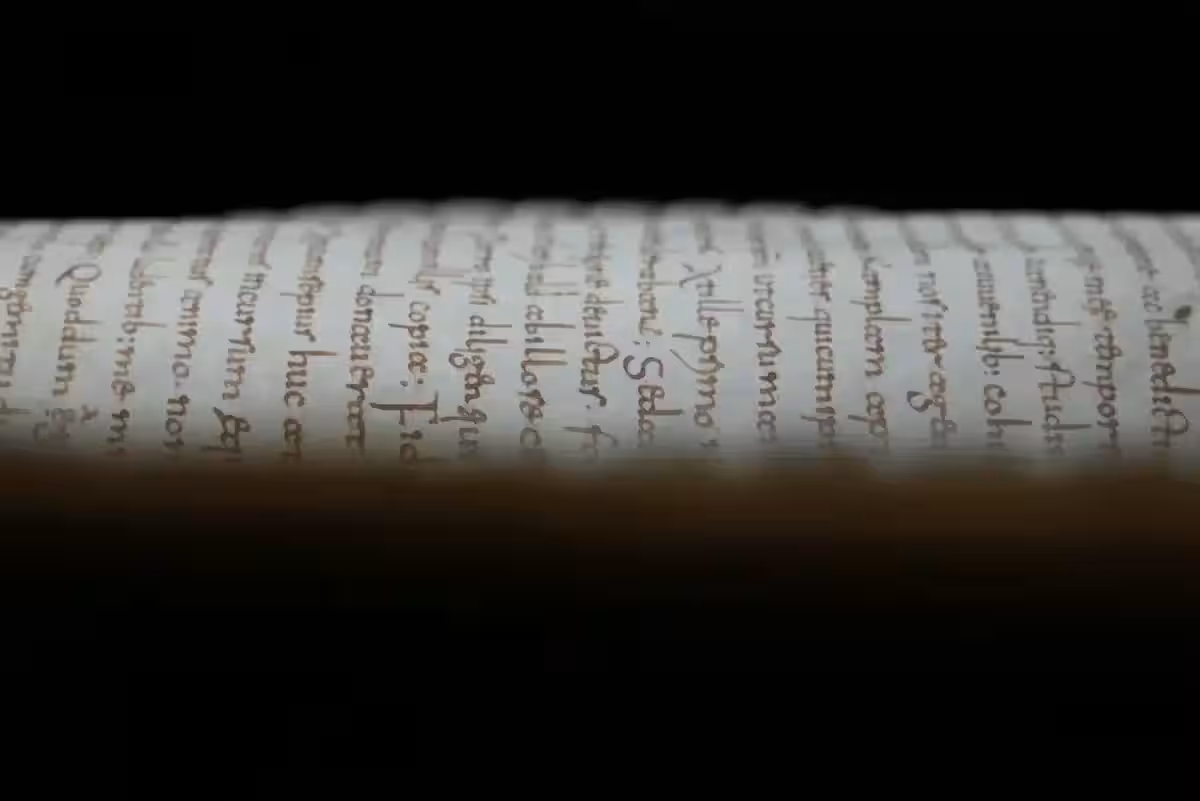
Elisabetta Magnanti and Mark Faulkner, both medieval manuscript specialists at Trinity’s School of English, stumbled upon the poem while reviewing digitized pages of the Venerable Bede’s Ecclesiastical History of the English People. The manuscript, copied between 800 and 830 AD, is now the third oldest surviving text of the hymn. Unlike the two older witnesses, this one integrates the Old English directly into the main body of the Latin work instead of placing it in a margin or appendix.
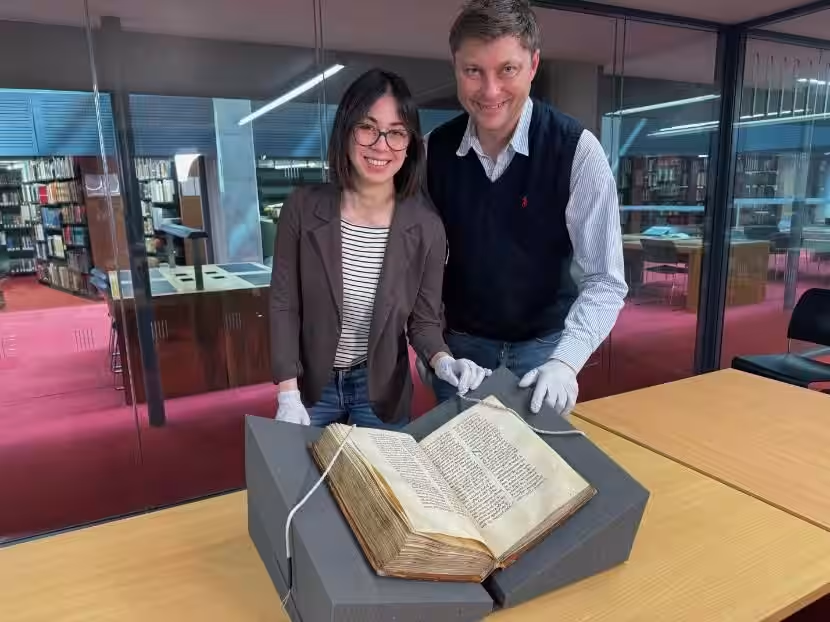
“When we saw it we looked at each other and I said, ‘No one knows about this,’” Magnanti said. The find, announced by Trinity College Dublin, was published in the journal Early Medieval England and its Neighbours. Bede specialists had considered the manuscript lost for nearly fifty years.
A Dream, a Cowherd, and the Beginning of English Poetry
Caedmon’s Hymn is nine lines praising God for creating the world. Bede’s 8th-century history attributes the composition to Caedmon, an illiterate cattle herder at Whitby Abbey in North Yorkshire. During a feast, guests traded verse around the table. Caedmon, who knew no songs, slipped away and fell asleep among the animals.
A figure appeared in a dream and instructed him to sing about Creation. He woke and, as the story goes, produced the hymn that became the earliest surviving poem in Old English. The poet Paul Muldoon translated the opening lines: “Now we must praise to the skies, the Keeper of the heavenly kingdom, / The might of the Measurer, all he has in mind.”
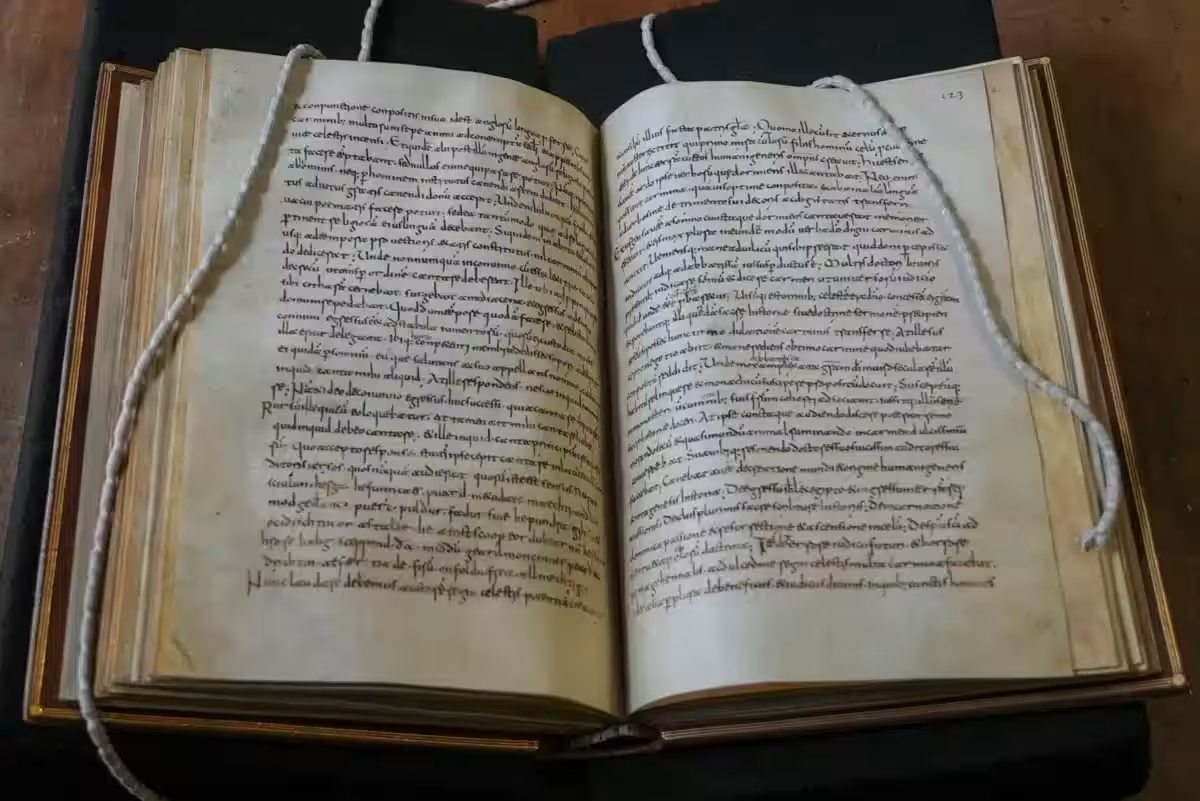
Bede set the story inside his Ecclesiastical History of the English People, a Latin work finished in the 8th century. He chose to include only a Latin translation, leaving out the original Old English. That editorial decision held for centuries. This newly surfaced manuscript breaks with it.
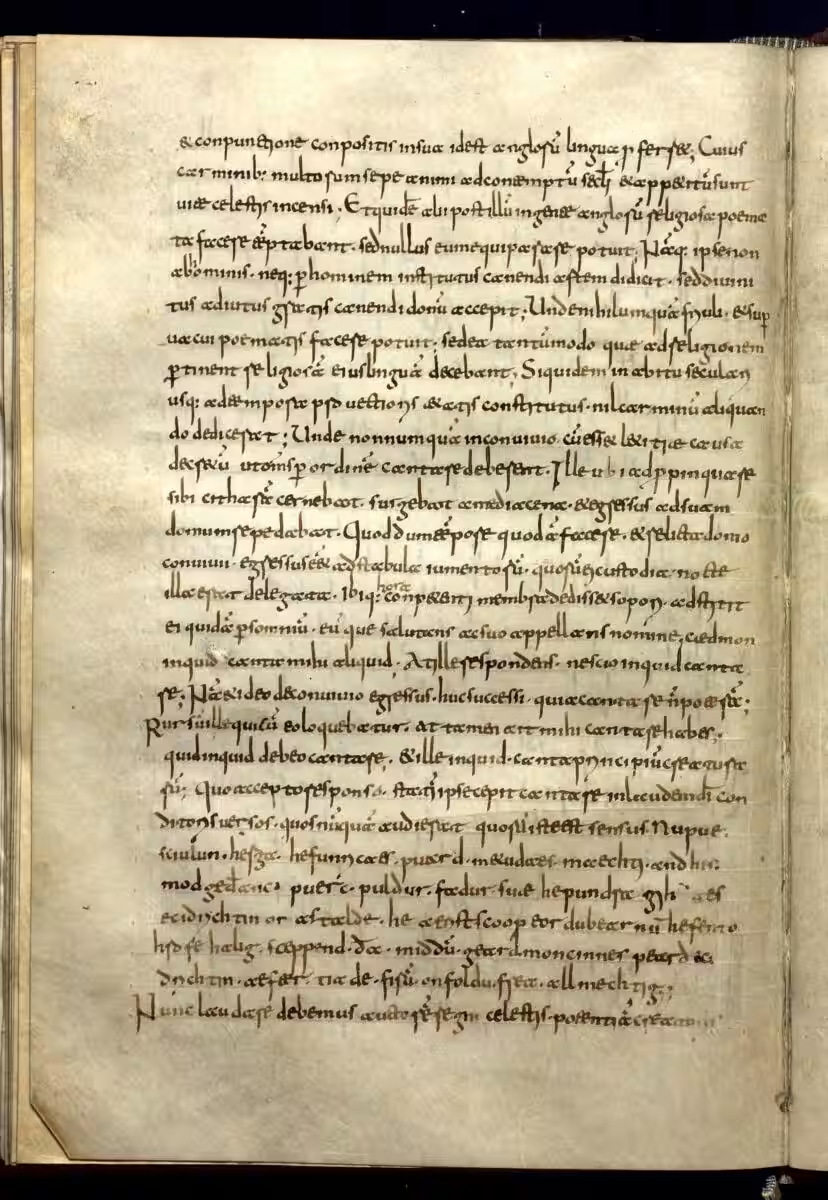
Within roughly a hundred years of Bede’s death, a monk at the Abbey of Nonantola in northern Italy copied the text and placed the Old English version straight into the narrative. Faulkner said the arrangement shows “how much early readers valued English poetry.” The two older copies, kept in Cambridge and St. Petersburg, confine the Old English to margins or closing leaves. Here, the vernacular poem sits at the center of the history.
The Manuscript’s Tangled Path to the Library
The book’s survival story is nearly as strange as its discovery. Monks produced it at Nonantola, a major transcription hub in the early Middle Ages. Much later, the collection traveled to Rome for protection during the Napoleonic Wars. Thieves then stole it from the church of San Bernardo alle Terme, and the manuscript scattered through private hands across Europe and North America.
It belonged, at different moments, to the English antiquarian Thomas Phillipps, the Swiss collector Martin Bodmer, and eventually the Austrian-born rare bookseller H.P. Kraus in New York. Italy’s culture ministry, searching for Nonantola’s missing manuscripts, bought it from Kraus in 1972 and deposited it in the National Central Library of Rome. There it sat, largely unopened, for more than fifty years.
Magnanti spent over four years building a catalogue of surviving Bede copies. She kept finding conflicting signals about the Rome manuscript. Some records said it existed, others that it had disappeared. She wrote to the library. Staff confirmed the book was still in the stacks. Three months later, digital images of the entire manuscript landed in Dublin.
“I realized that, because of the very complex history of this book, no Bede scholar had really looked at it,” Magnanti told the Associated Press. The AP report described how the two researchers traveled to Rome in early May 2026 to examine the physical manuscript, months after the digital images had already confirmed what they had found.
Clues About Early English Hidden on the Page
Roughly three million words of Old English survive. The vast majority date from the 10th and 11th centuries. Caedmon’s Hymn reaches back to a far earlier moment, when written English was still finding its shape. Faulkner called the poem a connection “to the earliest stages of written English.”
The Rome copy holds physical evidence of a language in transition. Every word ends with a full stop, a mark of how new word spacing was in the 9th century. Scribes were still experimenting with how to separate words on the page. The formatting inches toward the presentation of English that modern readers recognize.
The manuscript also challenges assumptions about where Old English traveled. It was copied in an Italian abbey, not an English scriptorium. A monk working far from England decided the original language was worth preserving in full. That decision, made over twelve centuries ago, carried the poem through war, theft, and long stretches of neglect.
Riccardo Fangarezzi, head of the abbey archive in Nonantola, called the find “a genuine ray of sunlight” and pointed to further possible connections between early England and Italy still buried in the abbey’s holdings. The Guardian noted that the discovery adds to a small but growing cluster of Anglo-Nonantolan cultural artifacts already identified in the abbey’s early catalogues.
Digitization Surfaces What Scholars Missed
The National Central Library of Rome has now digitized its entire Nonantola collection and made it freely available online. Andrea Cappa, the library’s head of manuscripts and rare books, said the institution is also finishing a large project to digitize holdings from Italy’s National Centre for the Study of the Manuscript. That work will eventually open access to more than 40 million images.
Valentina Longo, curator of medieval and modern manuscripts at the library, confirmed that routine digitization directly enabled the find. A poem composed by a Northumbrian farm laborer, copied by an Italian monk, and overlooked for decades in a Roman library is now visible to anyone with an internet connection.
Cappa described the Caedmon discovery as one manuscript that could point toward “countless other discoveries, in countless other fields.” The Nonantolan collection sits fully digitized and freely accessible, waiting for the next researcher to take a close look at what others passed over.
This article has been fact checked for accuracy, with information verified against reputable sources. Learn more about us and our editorial process.
Last reviewed on .
Article history
- Latest version
Reference(s)
- “New copy of earliest poem in English language discovered by Trinity researchers in Rome.” <https://www.tcd.ie/news_events/top-stories/featured/caedmons-hymn-discovery/>.
- Rosa, Andrea. “Researchers in Ireland uncover medieval book in Rome with oldest English poem.”, May 17, 2026 AP News <https://apnews.com/article/old-english-manuscript-poetry-bede-caedmon-hymn-latin-italy-106769c014901cf06d8a56839d56ac90>.
- Carroll, Rory. “Lost copy of seventh-century poem in Old English discovered at Rome library.”, April 29, 2026 The Guardian <https://www.theguardian.com/books/2026/apr/29/lost-copy-of-seventh-century-poem-old-english-discovered-rome-library-dublin>.
Cite this page:
- Posted by Hassan Raza