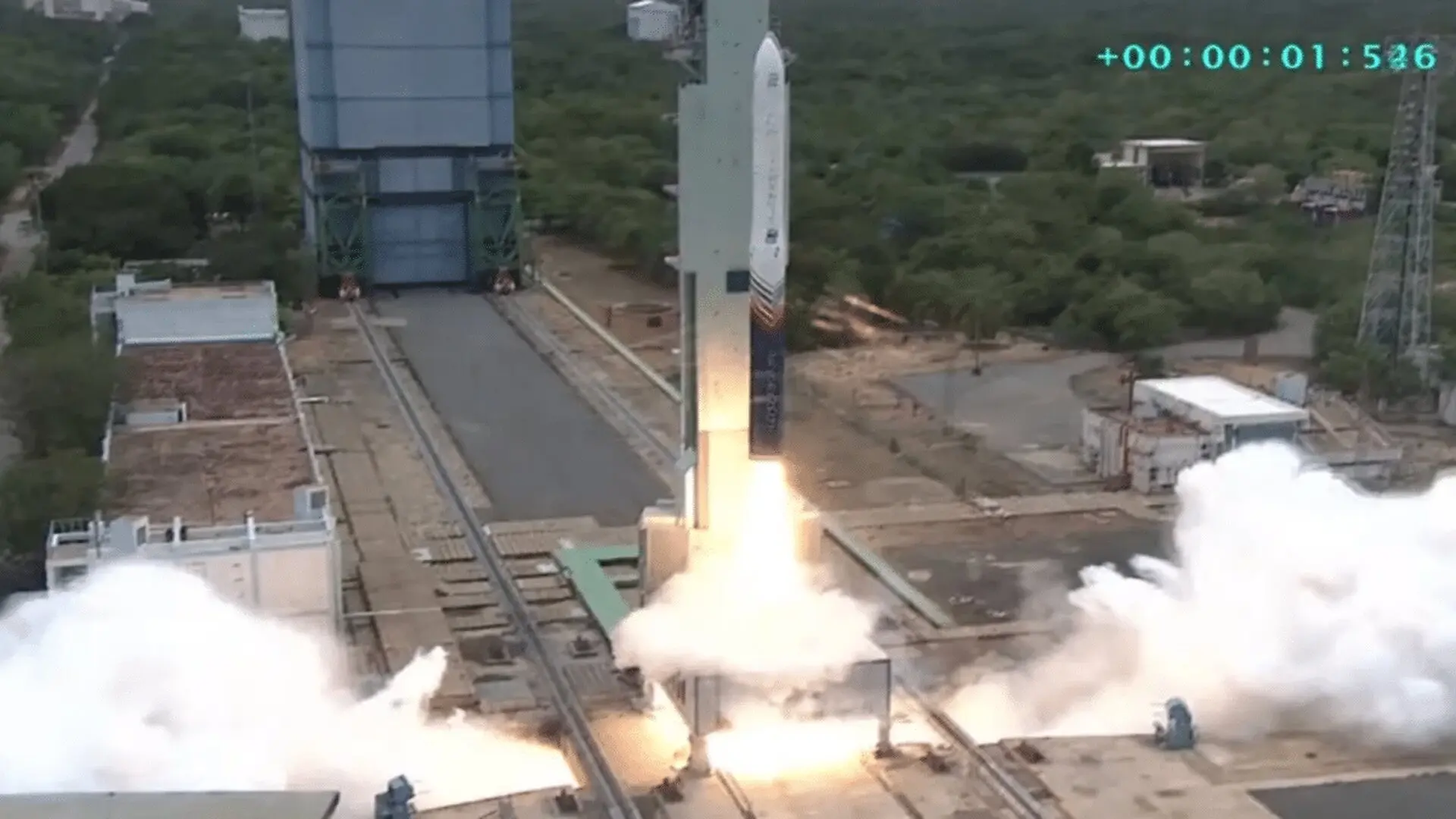
India has entered a new era of space activity as Skyroot Aerospace successfully placed its Vikram‑1 vehicle into orbit during the Mission Aagaman flight, delivering the nation’s inaugural fully private orbital launch. The event underscores the rapid maturation of India’s commercial space sector and proves that independent firms can now build and fly orbital‑class rockets.
Skyroot’s Vikram‑1 Reaches Orbit, Delivering India’s First Private Launch
The flight of Vikram‑1 positions Skyroot Aerospace among a growing cadre of private launch providers eyeing a share of the global space economy. Mission Aagaman was intended to prove the company’s orbital launch capability while signaling that India’s private sector can execute sophisticated space missions alongside traditional government programs.
Founded by engineers who previously served at the Indian Space Research Organisation (ISRO), Skyroot has been developing a family of small‑satellite launchers aimed at the expanding commercial market. The firm’s strategy mirrors a broader industry shift in which private enterprises design rockets, satellite platforms and mission services, reducing reliance on state‑run programs.
Mission Aagaman represents years of engineering work, testing cycles and capital investment aimed at establishing a stand‑alone private launch capability. With this success, India joins a short list of nations where commercial firms now contribute directly to orbital access.
The launch also illustrates the evolving architecture of modern space exploration. While government agencies remain central players, private companies are increasingly acting as partners that expand the reach of orbital services.
Co‑founder Naga Bharath Daka, who once held senior roles within ISRO, brings that institutional experience to Skyroot’s leadership team, bridging government expertise with entrepreneurial agility.
ORBIT ACHIEVED.
Vikram-1 Test Flight-1 has reached orbit. India’s first privately developed orbital rocket has completed its final burn and injected its payloads into a ~450 km orbit, making India the third country in the world with private orbital launch capability.…
Beyond the launch itself, Vikram‑1 opens commercial opportunities in sectors such as communications, Earth observation and data analytics. Executive Chandana highlighted the growth trajectory, noting that “the demand for services enabled by satellites in space will only continue to grow, and that is where Skyroot’s opportunity lies.”
The comment reflects a worldwide trend: smaller satellites and commercial missions are creating new revenue streams for launch providers, prompting competition to deliver flexible, cost‑effective access to orbit.
Skyroot’s successful test provides a platform for future missions and aligns with India’s goal of expanding its presence in the international commercial space market. The company is already developing a range of launch vehicles to accommodate diverse payload needs, with subsequent flights expected to build on this inaugural orbital achievement.
India’s Space Landscape Shifts Toward Private Competition
Skyroot’s achievement arrives amid rapid transformation in the global launch sector, where firms in the United States, Europe and Asia are fielding new rockets to vie for commercial and institutional customers.
Historically, India has depended on ISRO for flagship missions, from satellite deployments to planetary probes. The rise of private launchers adds a new layer to the nation’s space ecosystem, enabling a broader set of players to take part in orbital activities.
Space.com described the flight as a watershed moment for India’s commercial space aspirations, noting that Skyroot is the first Indian private firm to complete an entirely private orbital mission.
The milestone is expected to stimulate further investment in Indian space startups and foster collaborations between private firms, research institutes and overseas customers, potentially expanding the country’s footprint in a competitive global market.
Implications for India’s Future in Orbit
Mission Aagaman demonstrates that private enterprises can now deliver end‑to‑end orbital services, a capability that was once the exclusive domain of government agencies.
Skyroot Aerospace CEO Pawan Kumar Chandana and his team view the flight as a showcase of India’s technical expertise, while the next steps involve scaling launch cadence, enhancing reliability and securing contracts in the burgeoning small‑satellite sector.
“The successful orbital launch of Skyroot Aerospace’s Vikram‑1 (Mission Aagaman) is a defining milestone for India’s space journey,” Bhatt said in an emailed statement shortly after the mission wrapped up. “By executing the nation’s first fully private orbital flight, Skyroot has shattered legacy boundaries, demonstrating that our domestic industry is primed to handle end‑to‑end space missions.”
With Vikram‑1, India’s private space sector moves from aspiration to proven capability, opening a new pathway for commercial firms seeking reliable access to orbit.
Fact Checked
This article has been fact checked for accuracy, with information verified against reputable sources. Learn more about us and our editorial process.