SpaceX Sets July 23 Launch for Starship Flight 13 to Test New Starlink V3 Satellites
SpaceX’s Starship Flight 13 tests new hardware, heat shield tech, and next‑gen Starlink satellites, marking a key step toward future missions.
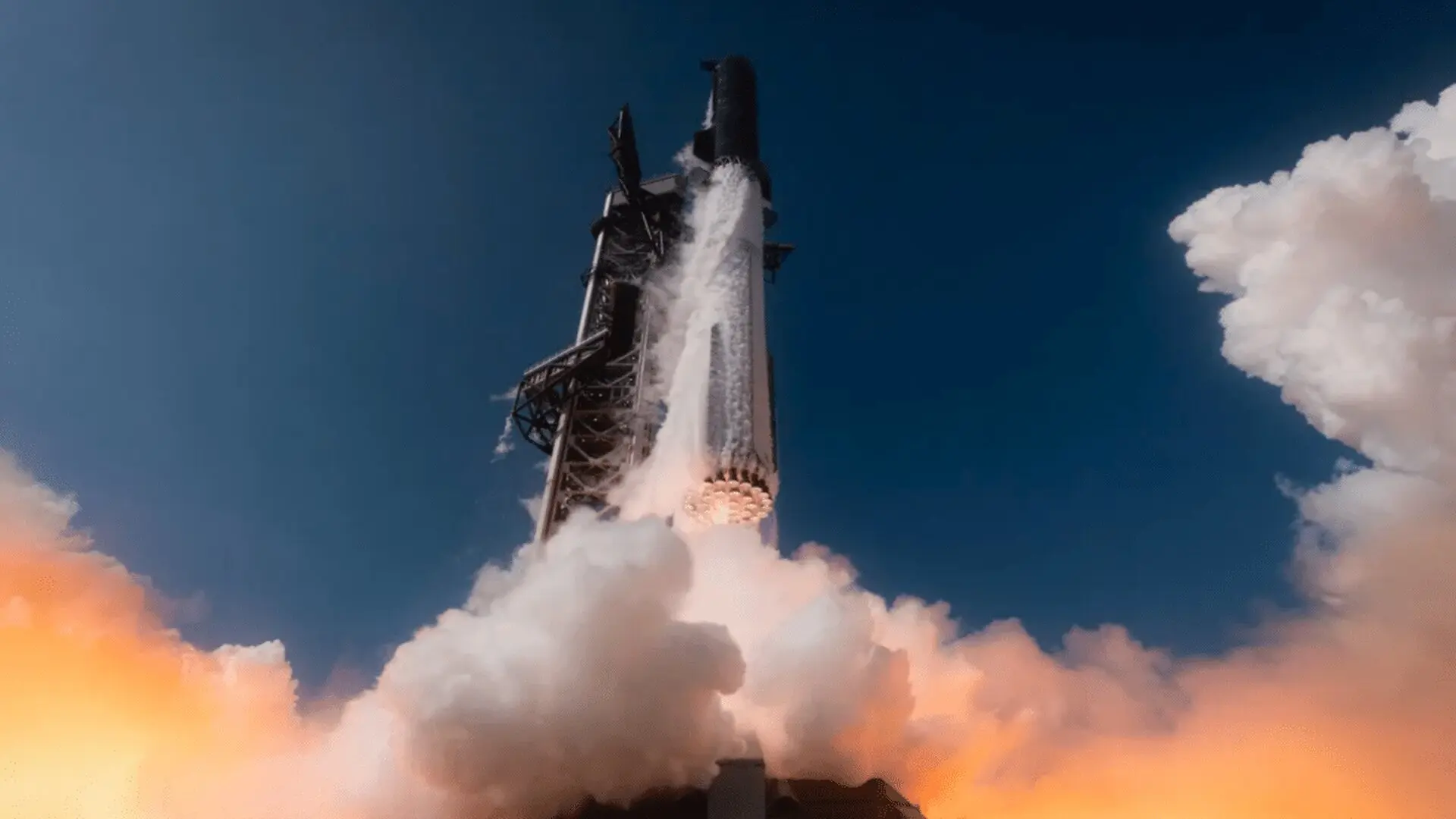
SpaceX is gearing up for the 13th launch of its colossal Starship vehicle, a flight that will trial fresh spacecraft systems and deliver the next‑generation Starlink V3 constellation. The lift‑off is slated from Starbase in South Texas during a window opening on July 23, with the primary aim of gathering data for future reusable launch operations.
The test will concentrate on boosting the performance of the world’s largest launch system, which pairs the Super Heavy booster with the Starship upper stage. By refining this architecture, SpaceX hopes to accelerate the cadence of launches, pave the way for lunar activities, and lay groundwork for eventual Mars missions.
13th Starship attempt scheduled from Texas launch site
Space.com reports that Starship Flight 13 will serve as a full‑scale validation of SpaceX’s integrated launch stack. The vehicle will depart from the company’s Starbase complex in southern Texas, with the entire mission projected to last roughly 90 minutes.
The stack comprises two main sections: the Super Heavy first‑stage booster and the Starship spacecraft. When mated, the rocket stands over 400 feet (122 meters) tall and is engineered to eventually lift more than 110 tons (100 metric tons) into orbit.
SpaceX envisions the Starship system as a fully reusable transport capable of supporting large‑scale off‑world operations, including lunar excursions and, in the long term, crewed journeys to Mars.
Flight 13 follows the inaugural flight of the Starship V3 configuration, which took place on Flight 12. That mission highlighted several upgrades, notably a successful payload deployment and a controlled splash‑down of the spacecraft in the Indian Ocean.
Now targeting to launch Starship’s thirteenth flight test as early as Thursday, July 23 → https://t.co/Rp7VwBzpWxpic.twitter.com/Y0YNzfc5zk, SpaceX July 19, 2026
Next‑gen Starlink payload to ride on Starship
A key milestone for Flight 13 is the release of 20 Starlink V3 satellites. These units represent the newest tier of SpaceX’s broadband constellation, engineered to boost overall capacity and deliver faster connections to end users.
After separation from Starship, the satellites will follow a sub‑orbital path, unfurl their solar arrays and antennas, and then conduct communication trials with the existing Starlink network using high‑capacity laser links.
SpaceX envisions a future network that could host as many as 100,000 Starlink V3 satellites in low Earth orbit. Each new craft weighs roughly 4,400 pounds (2,000 kilograms), a notable increase over earlier models.
Scaling the constellation will demand thousands of launches, a demand that SpaceX expects its next‑generation Starship system to satisfy.
Heat‑shield testing to inform future recoveries
Flight 13 will also probe the durability of the vehicle’s thermal protection system. Selected Starlink V3 payloads will carry cameras aimed at recording the behavior of Starship’s heat‑shield tiles during ascent.
The mission will subject the stack to higher aerodynamic pressure than prior flights, generating fresh data on tile performance and attachment techniques.
Specially engineered load‑sensing tiles will monitor stress throughout the flight phases, delivering engineers granular insights before the company attempts more sophisticated recovery strategies.
SpaceX ultimately plans for both the Super Heavy booster and the Starship spacecraft to touch down at the launch site. The proposed capture method involves mechanical arms—often called “chopsticks”—mounted on the launch tower to snag the returning vehicles.
While the Super Heavy booster has already been retrieved by such arms in earlier tests, a tower catch of the spacecraft itself has yet to be demonstrated.
Implications for lunar and Martian ambitions
Advancements in the Starship V3 configuration are tightly linked to SpaceX’s broader exploration roadmap. The company expects this iteration to play a central role in upcoming missions, including those aligned with NASA’s Artemis program.
NASA has chosen a modified Starship design for its lunar exploration plans, envisioning the vehicle for future crewed flights beyond Earth orbit.
Before those objectives can be realized, SpaceX must continue to enhance reliability, reusability, and turnaround speed. Each test flight supplies critical data that can shape subsequent vehicle designs.
Flight 13 therefore represents another step toward converting Starship from an experimental prototype into a routine workhorse for a wide range of space missions.
This article has been fact checked for accuracy, with information verified against reputable sources. Learn more about us and our editorial process.
Last reviewed on .
Article history
- Latest version
Reference(s)
- “http://spacex.com/launches/starship-flight-13.” <https://t.co/Rp7VwBzpWx>.
- “https://twitter.com/SpaceX/status/2078966109240262701/photo/1.” <https://t.co/Y0YNzfc5zk>.
Cite this page:
- Posted by Karan Das