Chinese Scientists Design Laser Network to Beam Power Across the Moon’s Dark Side
Study shows laser‑based power transmission could reliably power future lunar bases, even through the Moon’s long night.
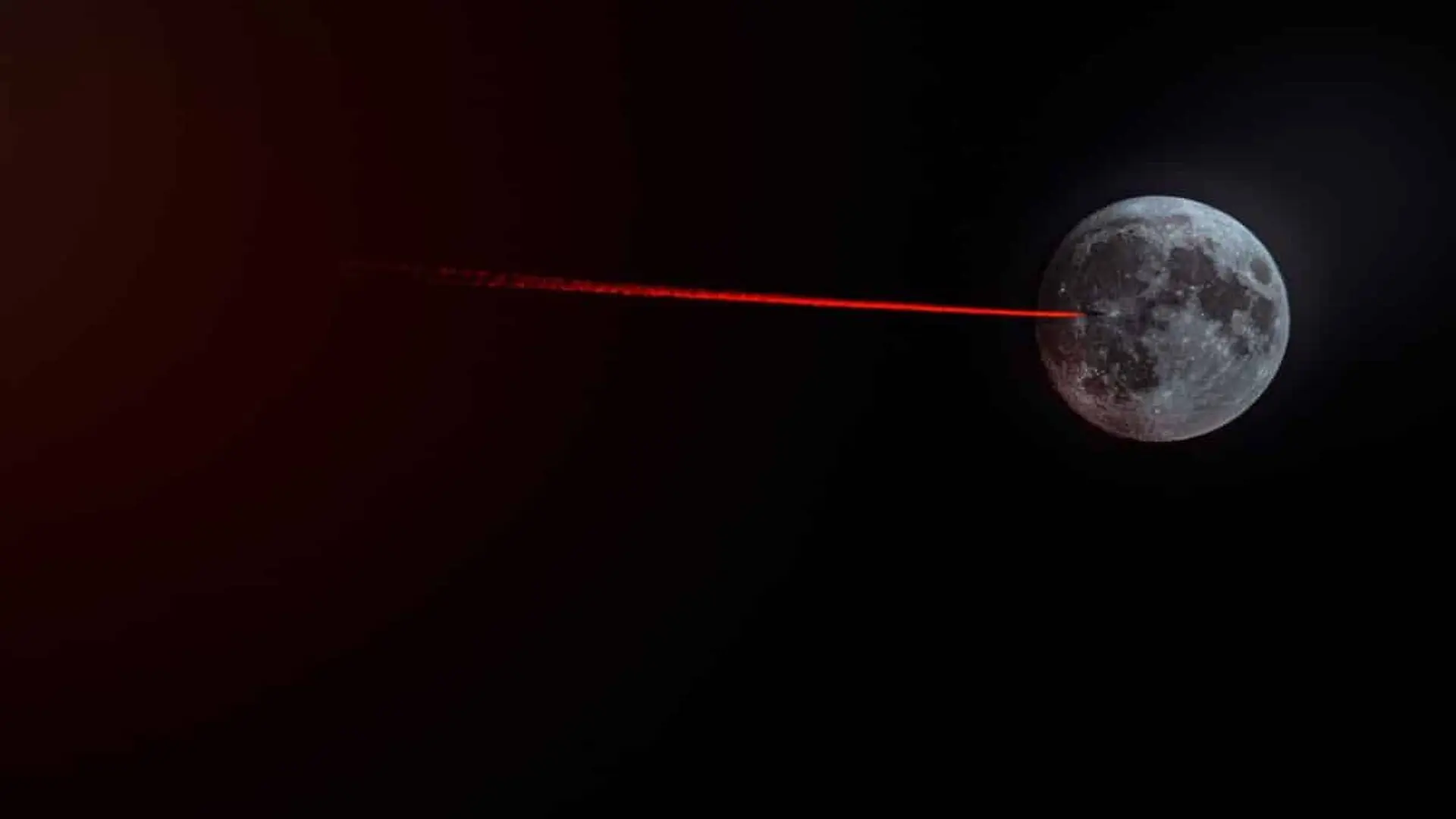
Sustaining human outposts on the Moon will hinge on a dependable power source as much as on launch vehicles and habitats. Research appearing in the Journal of Deep Space Exploration outlines a Chinese proposal that would move electricity across the lunar surface using a chain of laser‑driven stations. The design tackles the toughest hurdle for prolonged lunar activity: providing uninterrupted energy throughout the Moon’s roughly two‑week nights, when conventional solar arrays cannot generate power.
Laser‑Powered Grid Could Illuminate the Dark Side of the Moon
A lasting lunar settlement demands more than a foothold and a shelter; every instrument, communications relay, life‑support system and rover must draw from a stable electricity supply. Because the Moon experiences about fourteen Earth days of continuous daylight followed by an equally long period of darkness, solar panels are only useful half the time. When night falls, missions would have to rely on bulky batteries, radioactive generators, or entirely new concepts. Solar panels perform well under the sunlit portion, yet they become ineffective once the horizon is shrouded in darkness.
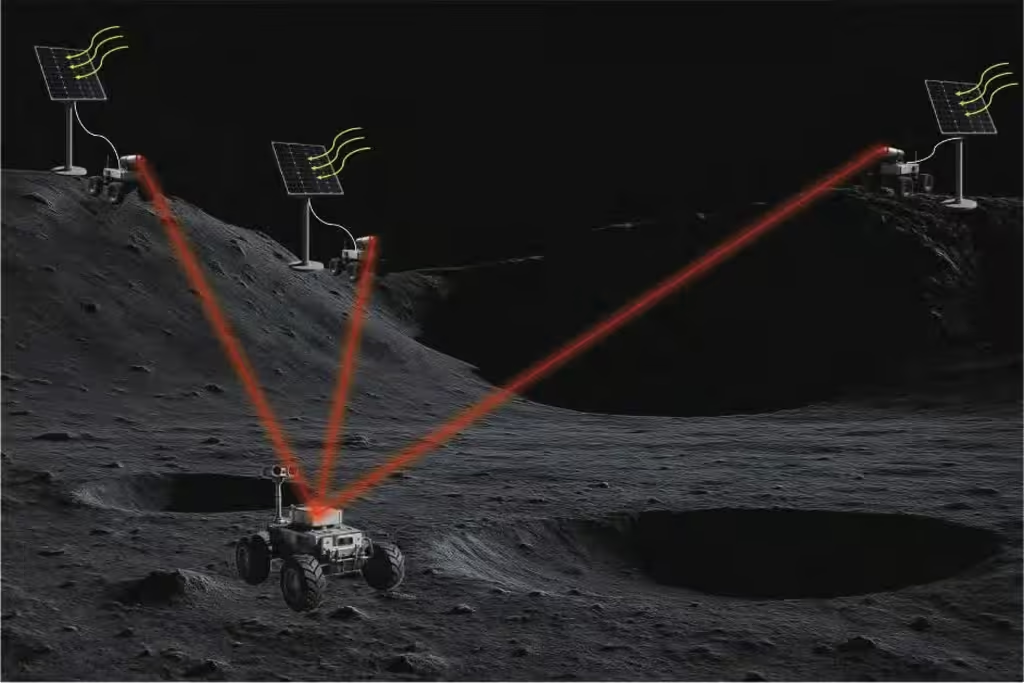
The Chinese team suggests linking a series of laser stations that harvest sunlight in sun‑lit zones and beam the collected energy toward installations stuck in darkness. Rather than stockpiling massive amounts of electricity for weeks, power would be routed on demand. The Journal of Deep Space Exploration frames this idea as part of a larger push to build technologies capable of supporting continuous lunar presence and infrastructure. By moving away from isolated power modules, future habitats could tap into a flexible energy web that spans extensive lunar regions, potentially cutting the launch mass required for storage devices.
Strategic Towers May Wire Together Separate Lunar Bases
According to SCMP, the concept relies on carefully placed towers equipped with high‑efficiency solar panels, precision laser emitters and receiver units that reconvert the laser beam into usable electricity. Simulations explored various deployment patterns to gauge how effectively such a network could spread power over the Moon’s uneven topography. Small shifts in tower locations were found to markedly boost overall performance.
“By adjusting deployment positions by roughly 100 metres (about 330 feet), the laser power network increased its effective coverage by more than 35 per cent, while the powered areas became nearly fully connected.”
This result underscores how fine‑tuning placement can dramatically raise efficiency without adding new hardware. An interconnected web would enable research stations, scientific observatories, autonomous rovers and communication hubs to share electricity in real time, providing redundancy if a single transmitter fails. While the idea mirrors Earth’s electrical grids, it must be adapted to lunar conditions, accounting for precise beam aiming, dust mitigation and thermal regulation. Ongoing progress in laser technology continues to improve the prospects for long‑range, wireless power delivery.
Pathway to Enduring Lunar Science and Exploration
China’s blueprint dovetails with worldwide plans to set up permanent or semi‑permanent stations near the lunar south pole, where water ice and prolonged sunlight present clear benefits. Even in these promising locales, guaranteeing continuous power is challenging because terrain can cast shadows and darkness still occurs. A shared‑energy network capable of moving electricity between distant points could lower operational risk and offer greater flexibility as infrastructure expands.
The authors stress the broader impact of their work, stating, “The study provides theoretical support for the construction of lunar research bases and energy supply systems.” While the proposal remains at the simulation stage, it lays a foundation for future experimental trials and technology maturation. Prospective demonstration missions might test wireless laser power transfer under authentic lunar conditions before scaling up to larger networks.
This article has been fact checked for accuracy, with information verified against reputable sources. Learn more about us and our editorial process.
Last reviewed on .
Article history
- Latest version
Reference(s)
- Kong, Chao. “Could China’s lunar laser tower bring Nikola Tesla’s free energy dream to life?.”, July 12, 2026 South China Morning Post <https://www.scmp.com/news/china/science/article/3359998/could-chinas-lunar-laser-tower-bring-nikola-teslas-free-energy-dream-life?module=top_story&pgtype=subsection>.
Cite this page:
- Posted by Karan Das