NASA Just Turned a Retired Boeing 777 Into the Largest Flying Lab Ever Built, Capable of Carrying 100 Scientists at Once
This Boeing aircraft has moved on from its previous role. The innovations engineers are crafting from it might revolutionize how we monitor our planet.
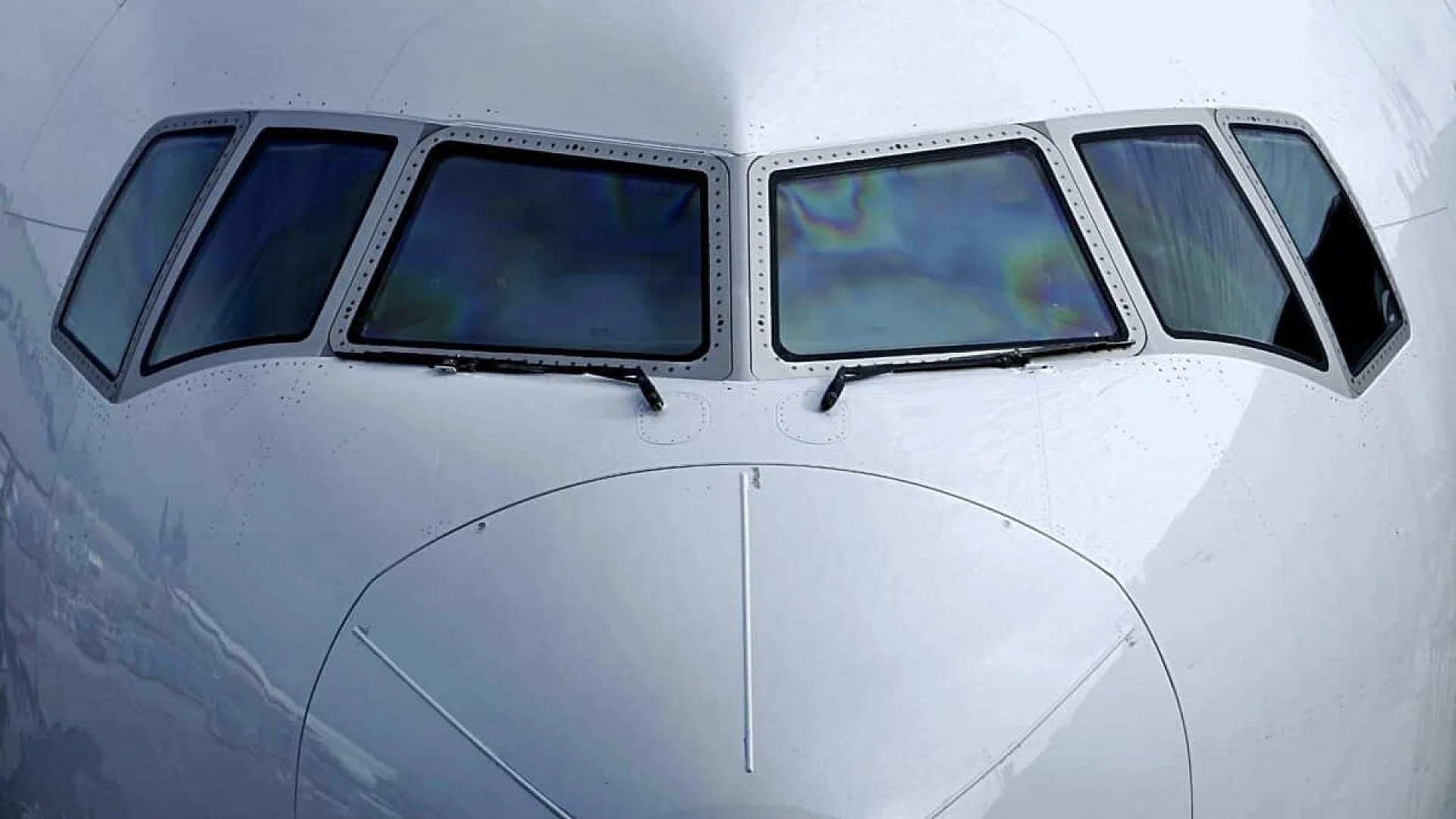
A cutting-edge Japan Airlines Boeing 777 has been transformed into a high-tech flying laboratory by NASA, revolutionizing the agency’s ability to study the atmosphere. This upgraded aircraft is designed to replace the aging DC-8, offering improved capabilities and a more efficient way to gather data in remote areas of the planet.
The shift marks a significant milestone in NASA’s efforts to enhance climate and atmospheric research. As scientists continue to seek better ways to collect continuous data at high altitudes, this project represents a major step forward in achieving that goal.
The DC-8 has been a workhorse for NASA, handling missions in extreme environments such as polar regions and volcanic zones. However, its retirement created a void that required more than just a simple replacement. The revamped Boeing 777 operates on a completely different level, offering enhanced capabilities and a more collaborative workspace for scientists.
Breaking New Ground in Atmospheric Research
Converting a commercial jet into a scientific platform demanded extensive engineering work. According to L3Harris Technologies, the fuselage was modified to enlarge observation windows and add large openings beneath the aircraft, providing a clear view of Earth’s surface and atmosphere.
These modifications enable instruments such as lidar systems and infrared spectrometers to operate with unobstructed views, while the Boeing’s internal systems were completely rewired to support modern research stations and high-energy equipment.

These extensive modifications are unprecedented for an aircraft of this size, requiring engineers to balance structural integrity with the need to host sensitive instruments. The result is a platform that seamlessly combines long-haul aviation design with specialized scientific functionality.
A New Era in Airborne Research
The modified Boeing 777 can remain airborne for up to 18 hours, allowing for uninterrupted data collection over vast distances. This represents a significant increase compared to previous airborne platforms, as shared by NASA.
With a payload capacity of around 34 metric tons and a maximum altitude of 43,000 feet, the aircraft can carry a wide range of instruments into the upper atmosphere. Its range of approximately 9,000 nautical miles enables it to reach isolated regions such as the Arctic and the North Atlantic without refueling.

The interior has been redesigned to accommodate up to 100 crew members at once, transforming the Boeing 777 into a collaborative workspace where scientists can analyze data and adjust experiments during flight. As Derek Rutovic, program manager for the Airborne Science Program at NASA Headquarters in Washington, explained:
“Airborne missions at NASA use cutting-edge instruments to explore and understand our home planet. The 777 will be the largest airborne research laboratory in our fleet, collecting data to improve life on our home planet and extend our knowledge of the Earth system as a whole.”
First Mission Targets Polar Vortex Dynamics
The Boeing 777’s first operational mission, NURTURE (The North American Upstream Feature-Resolving and Tropopause Uncertainty Reconnaissance Experiment), is scheduled for January 2027 under the direction of NASA’s Langley Research Center. The campaign will focus on tropopause polar vortices, atmospheric structures associated with severe winter ice storms.
Details from the U.S Space Agency show that these vortices can trigger large-scale icing events capable of disrupting infrastructure and transportation systems. Tracking them from North America to Greenland should help improve existing weather models.
“We’ve been completing the engineering design and analysis to install the NURTURE payload into the aircraft in parallel with the portal modification. We’re excited to get the airplane back home to NASA and on the road to its first mission,” Rutovic explained.
This article has been fact checked for accuracy, with information verified against reputable sources. Learn more about us and our editorial process.
Last reviewed on .
Article history
- Latest version
Reference(s)
- “L3Harris® Fast. Forward..” L3Harris® Fast. Forward. <https://www.l3harris.com/>.
- Hatfield, Charles. “NASA's 777 Aircraft Returns with Science Flights on Horizon.”, April 22, 2026 NASA <https://www.nasa.gov/centers-and-facilities/langley/nasas-777-aircraft-returns-home-with-science-flights-on-the-horizon/>.
- “Derek Rutovic | NASA Airborne Science Program.” <https://airbornescience.nasa.gov/person/Derek_Rutovic>.
- “NURTURE | NURTURE.” <https://espo.nasa.gov/nurture/content/NURTURE>.
Cite this page:
- Posted by Karan Das