NASA Astronaut Captures Rare Fireball From Space During Dramatic Atmospheric Breakup
An astronaut on the International Space Station (ISS) managed to photograph a striking fireball, which appears to be the result of rocket debris burning up during reentry, providing an extraordinary viewpoint from space.
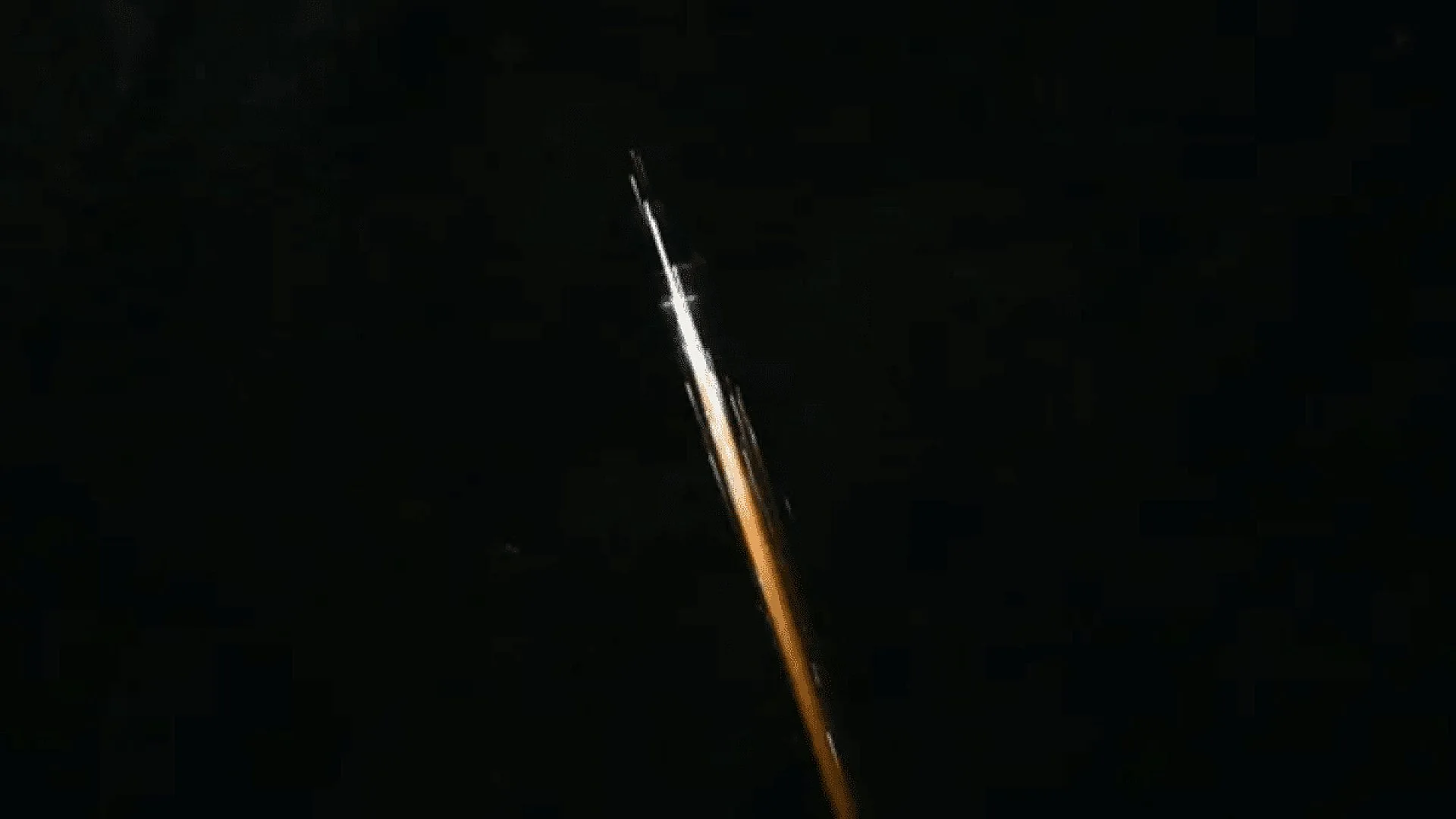
A breathtaking celestial spectacle has been captured by NASA astronaut Chris Williams from the unique vantage point of the International Space Station (ISS), transforming a fleeting atmospheric event into a striking scientific moment. The dramatic fireball, likely tied to the reentry of rocket hardware following a recent mission, was documented by Williams in a series of captivating images and a short video.
Witnessing a Celestial Event from Orbit
From an altitude of approximately 250 miles, astronauts aboard the ISS experience Earth in ways that ground observers cannot match. On this occasion, Chris Williams was not gazing outward into deep space but downward, where a brilliant streak of light cut through the upper atmosphere. The object appeared suddenly, moving at extreme speed, leaving behind a glowing trail that intensified as it descended. The ISS’s Cupola module, with its wide panoramic windows, provided the perfect vantage point for this unexpected spectacle.
The event was not just visually stunning; it also offered a rare observational angle for understanding how high-speed objects behave as they encounter atmospheric resistance. Seen from above, the fireball’s structure and evolution revealed details that are often obscured by perspective when viewed from Earth’s surface. This unique perspective allowed Williams to track changes in brightness, fragmentation, and motion over a longer duration than is possible from the ground.
Chris Williams’ Account Highlights the Event’s Intensity
The firsthand testimony of NASA astronaut Chris Williams provides critical context for interpreting the event. His detailed description captures both the immediacy of the moment and the physical processes at play as the object disintegrated. Williams’ account highlights the event’s intensity and provides a glimpse into the dynamic interactions between human-made objects and Earth’s atmosphere.
“On April 27th at about 10:40 PM GMT, I was in the @Space_Station Cupola and saw something really neat,” Williams said via X on Thursday (April 30). “I was scanning the sky to try to catch a glimpse of the approaching Progress MS-34 vehicle bringing new supplies. Just as we were passing over West Africa, I saw a bright object directly below us, streaking through the upper atmosphere. I saw its tail grow and then split apart into a shower of smaller pieces. I think it must have been some piece of orbital debris or a satellite breaking up as it entered the atmosphere. It was quite a light show!”
On April 27th at about 10:40 PM GMT, I was in the @Space_Station Cupola and saw something really neat. I was scanning the sky to try to catch a glimpse of the approaching Progress MS-34 vehicle bringing new supplies. Just as we were passing over West Africa, I saw a bright… pic.twitter.com/5hgtCnC6XB
— Chris Williams (@Astro_ChrisW) April 30, 2026
A Likely Link to the Progress MS-34 Mission
The timing and location of the event strongly suggest a connection with the Progress MS-34 (Progress 95) cargo mission. Launched aboard a Soyuz rocket, the spacecraft successfully delivered several tons of supplies to the ISS. As part of the launch process, the rocket’s upper stage eventually reenters Earth’s atmosphere after completing its role.
Evidence indicates that this upper stage reentered at the right time and position to produce the fireball observed by Williams. Such reentries are typically planned to occur over remote regions, reducing any risk to populated areas. While these events are common in orbital operations, they are rarely observed so clearly from space. This coincidence turned a routine mission sequence into a remarkable visual event, highlighting the dynamic interactions between human-made objects and Earth’s atmosphere.
Life and Observation Aboard the International Space Station
Williams is currently on his first long-duration mission aboard the ISS, having arrived on November 27 alongside cosmonauts Sergey Kud-Sverchkov and Sergei Mikaev. They share the station with members of SpaceX’s Crew-12 mission, including Jessica Meir, Jack Hathaway, Sophie Adenot, and Andrey Fedyaev. Daily life aboard the ISS blends scientific research, maintenance tasks, and continuous observation of Earth and space.
Moments like the April 27 fireball demonstrate how routine operations can intersect with unexpected phenomena. The station’s orbit allows astronauts to witness events across vast regions of the planet, often providing perspectives that complement ground-based observations. The Cupola remains a key feature for such work, enabling both scientific monitoring and real-time documentation of transient events in Earth’s atmosphere.
This article has been fact checked for accuracy, with information verified against reputable sources. Learn more about us and our editorial process.
Last reviewed on .
Article history
- Latest version
Reference(s)
- “https://twitter.com/Astro_ChrisW/status/2049950775736951244/video/1.” <https://t.co/5hgtCnC6XB>.
Cite this page:
- Posted by Karan Das