New Moon Weekend Solar Storm May Light Up U.S. Skies With Northern Lights
A geomagnetic storm and solar eruption may spark spectacular northern lights across parts of the US this weekend.
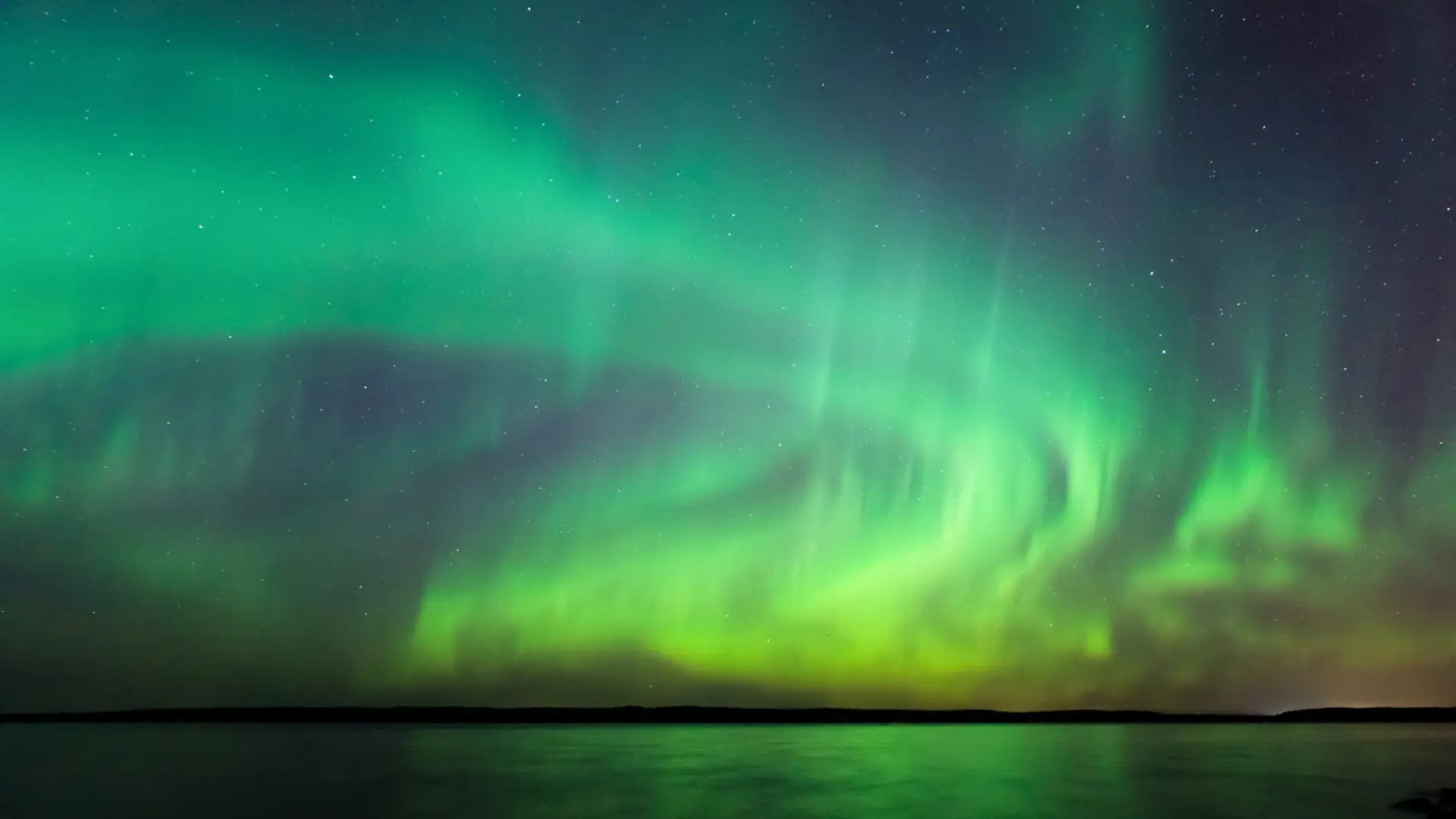
A fresh wave of solar disturbances is set to light up the night sky over large swaths of the United States in the coming days, offering a new chance for millions to see the Northern Lights. NOAA’s Space Weather Prediction Center (SWPC) predicts a G1 geomagnetic storm beginning Friday night and a separate coronal mass ejection (CME) that could boost auroral activity from Sunday into Monday, raising expectations for brighter and more expansive displays.
Midweek Geomagnetic Storm Kicks Off Aurora Possibility
The first window opens as a modest G1 storm rolls through the evening of Friday and into Saturday. Though it sits at the lowest rung of the geomagnetic storm scale, the event can still trigger visible auroras in several northern states when magnetic conditions line up.
Incoming CME May Intensify the Show
Later in the weekend, a massive coronal mass ejection launched from the Sun will sweep toward Earth. As the magnetized plasma cloud collides with our planet’s magnetic field, it is expected to amplify geomagnetic activity and raise the likelihood of more vivid auroral displays.
Predicting the exact impact remains challenging; slight variations in the CME’s speed, magnetic orientation, or arrival time can shift the eventual intensity. Scientists will keep monitoring the solar wind throughout the weekend, and any unexpected strengthening could push the aurora farther south than initially forecast.
NOAA Highlights Top States for Early Viewing
According to the latest SWPC outlook, the states with the greatest chance of spotting the early‑phase aurora include Washington, Idaho, Montana, North Dakota, South Dakota, Minnesota, Wisconsin, and Michigan. Should the CME’s influence grow stronger, additional regions may join the list as conditions evolve.
NOAA updates its aurora forecasts in near‑real time, providing maps, geomagnetic indices, and alerts that help both hobbyists and professional observers track rapid changes in the space‑weather environment.
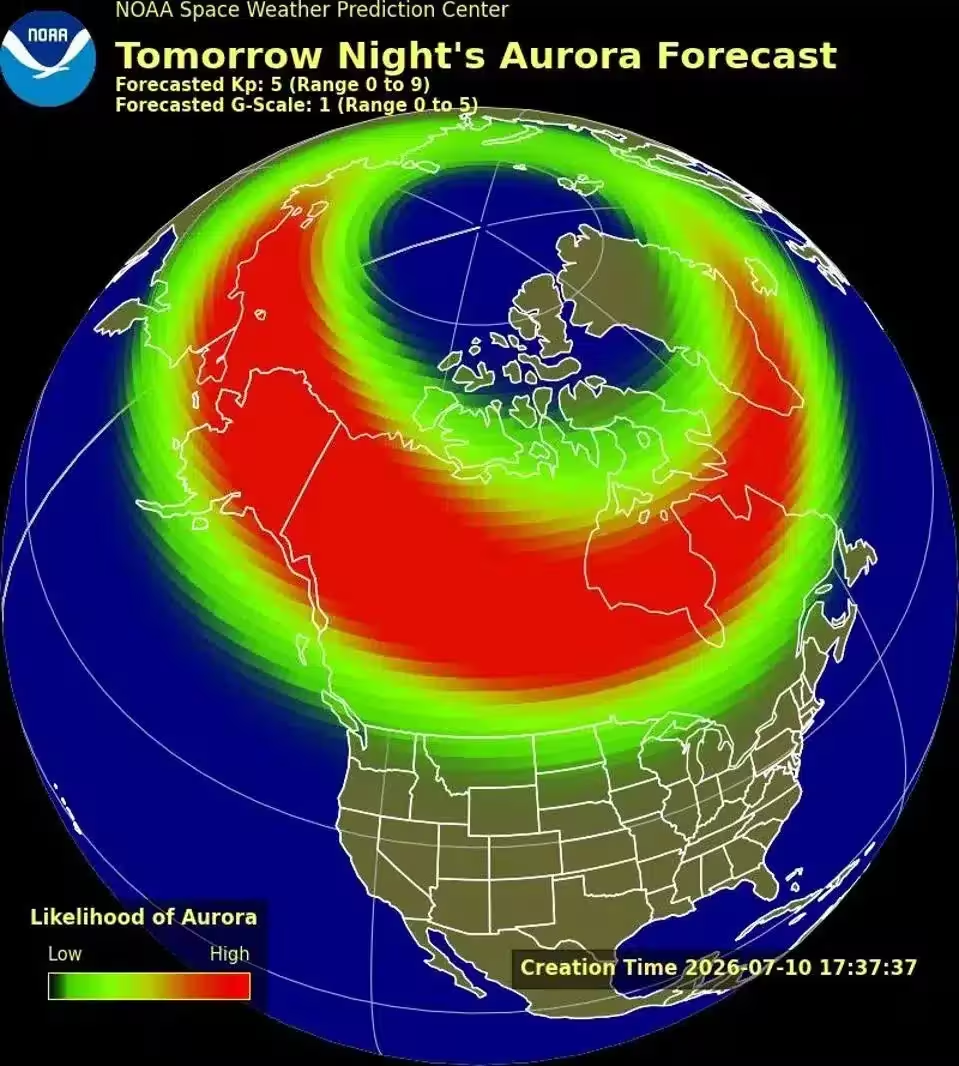
Optimal Viewing Window and Tips
Observers should aim for the period between 10 p.m. and 2 a.m. local time, when geomagnetic disturbances typically generate the brightest arcs and the sky is darkest. Selecting a site away from artificial lighting will maximize contrast, while a clear view toward the northern horizon offers the best chance of catching the lights.
Allowing eyes to adjust for about twenty minutes can reveal subtle hues that are hard to see at first glance. Modern smartphones often capture faint green or purple curtains even when they appear muted to the naked eye, making quick photography a handy complement to the visual experience. Ultimately, local weather—particularly cloud cover—will dictate where the clearest skies appear.
New Moon Provides Extra Darkness
The weekend coincides with a New Moon on July 14, meaning minimal lunar illumination will further darken the night. This natural dimming enhances contrast, helping faint auroras stand out and giving photographers cleaner, more vivid images of the phenomenon.
When the CME’s geomagnetic impact aligns with the dark lunar phase, the combined effect could produce one of the most favorable aurora‑watching opportunities of the season for residents of the northern United States. While no forecast can guarantee a visible display, the convergence of solar activity, seasonal timing, and low moonlight makes the upcoming nights especially promising for sky enthusiasts.
This article has been fact checked for accuracy, with information verified against reputable sources. Learn more about us and our editorial process.
Last reviewed on .
Article history
- Latest version
Reference(s)
- “Forecast Discussion | NOAA / NWS Space Weather Prediction Center.” <https://www.spaceweather.gov/products/forecast-discussion>.
Cite this page:
- Posted by Karan Das