SpaceX Powers All 33 Raptor Engines In Full‑Scale Test Paving Way For Starship Flight 13
SpaceX completes full static fire of Starship Super Heavy booster, a key step before the eagerly awaited Flight 13 launch.
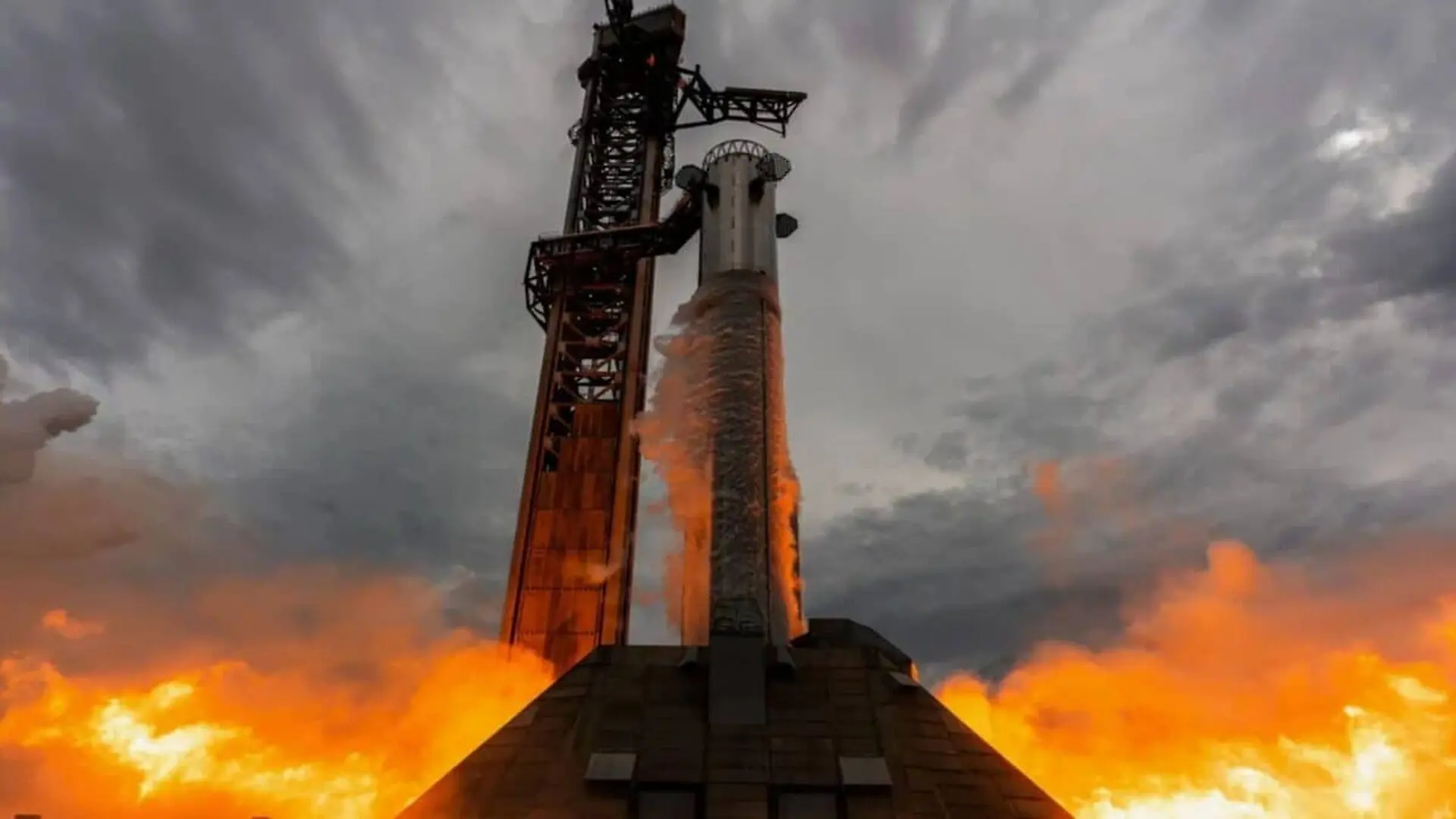
In a decisive step toward the upcoming Starship Flight 13, SpaceX ignited all 33 Raptor engines on its Super Heavy booster during a full‑duration static fire at Starbase, Texas. The demonstration confirmed that the world’s most powerful launch system is progressing on schedule for its next mission.
All‑Engine Static Fire Confirms Integrated Performance
Running every engine at once is more than a visual spectacle. The test, reported by Space.com, allowed engineers to verify that each Raptor ignites, achieves its target thrust, communicates with the vehicle’s control systems, and stays within design limits while the booster remains tethered to the launch pad. The combined thrust places extreme loads on the propulsion plumbing, avionics, software, structural elements, and ground infrastructure, exposing any weaknesses before lift‑off.
Identifying and correcting anomalies on the ground dramatically cuts the risk profile for an actual flight. Because Starship’s architecture is unprecedented, data gathered from live tests provides insights that cannot be fully reproduced in simulations, confirming that the booster, pad, and support equipment operate as a cohesive system rather than isolated components.
Strategic Role of the Test in the Starship Roadmap
The booster’s performance is integral to SpaceX’s broader vision of a fully reusable vehicle capable of ferrying payloads, crew, and supplies to lunar orbit, Mars, and beyond. Successful qualification steps like this static fire underpin missions planned for NASA’s Artemis program, commercial customers, and future interplanetary exploration.
SpaceX’s development model emphasizes rapid iteration: each test yields real‑world data, highlights design shortcomings, and informs hardware upgrades for the next launch attempt. Demonstrating that all 33 engines can operate together without issue marks another incremental advance toward a more dependable and capable launch system.
Next Phases Before the Thirteenth Flight
With the engine test completed, engineers will now sift through the telemetry stream, scrutinizing thousands of measurements to confirm that every parameter met design expectations. Subsequent tasks include final vehicle integration, additional inspections, and coordination with regulatory bodies to secure launch approval.
Assuming the data validates the booster’s performance, the focus will shift to stacking the Starship stack and conducting final countdown rehearsals. Each milestone not only reinforces confidence in the Super Heavy stage but also in the overall Starship architecture that aims to make deep‑space travel routine. The progress achieved in this static fire brings Flight 13 a step closer to lifting off, reflecting the program’s relentless pace of testing and refinement.
This article has been fact checked for accuracy, with information verified against reputable sources. Learn more about us and our editorial process.
Last reviewed on .
Article history
- Latest version
Reference(s)
- Dinner, Josh. “SpaceX ignites all 33 powerful engines on Starship booster ahead of Flight 13 launch (video).”, July 10, 2026 Space <https://www.space.com/space-exploration/launches-spacecraft/spacex-ignites-all-33-powerful-engines-on-starship-booster-test-ahead-of-flight-13-test-launch>.
Cite this page:
- Posted by David Anderson