Apophis 2029: Asteroid Will Pass Within Satellite Orbit, Visible to Skywatchers Worldwide
A massive asteroid will safely glide past Earth in 2029, offering scientists a unique opportunity to closely study a near‑Earth object.
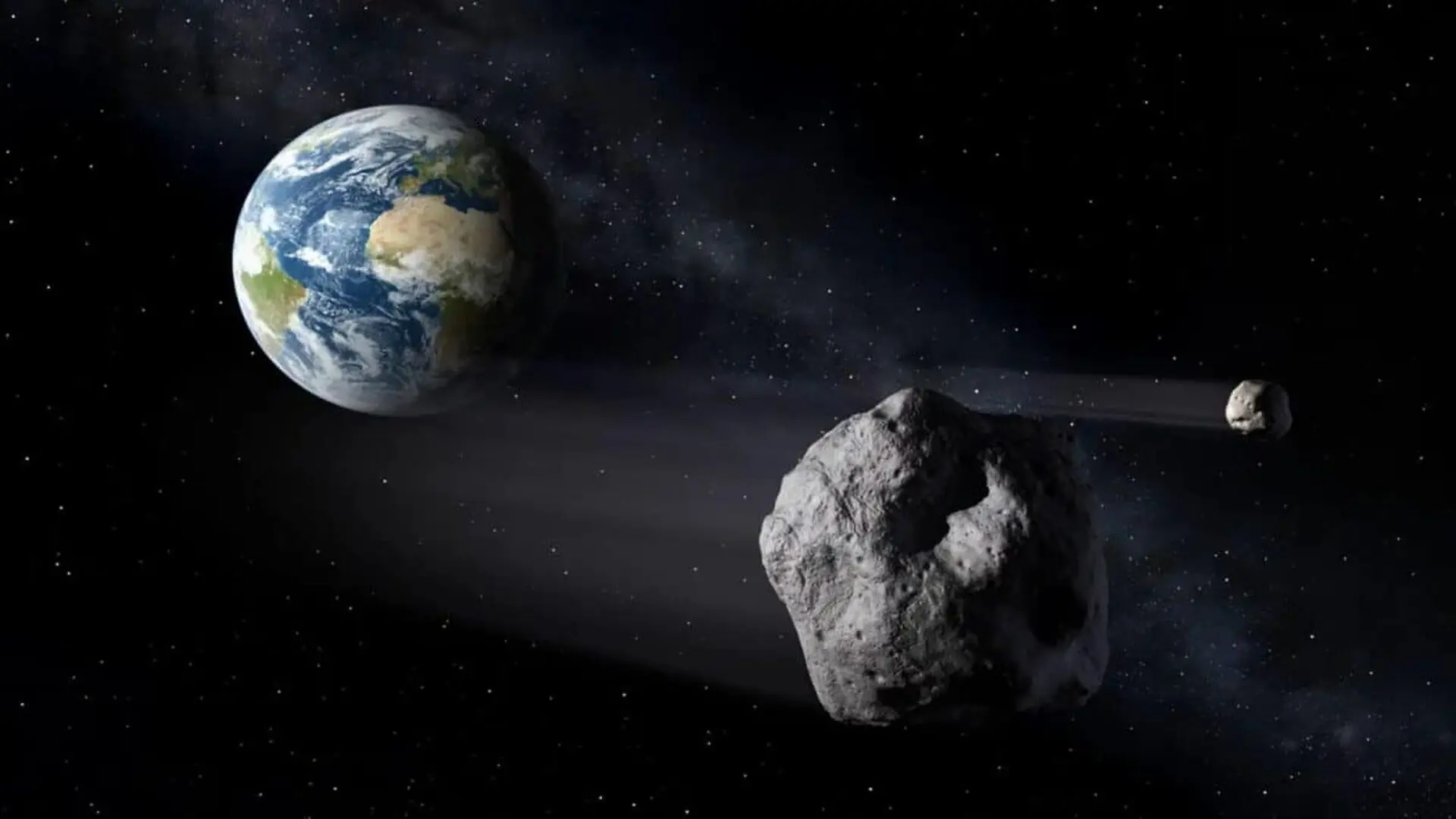
A near‑Earth asteroid dubbed Apophis will glide past our planet in April 2029, offering the first chance for scientists and the public to track a sizeable rock crossing the sky with unprecedented clarity, according to data from NASA and planetary researchers.
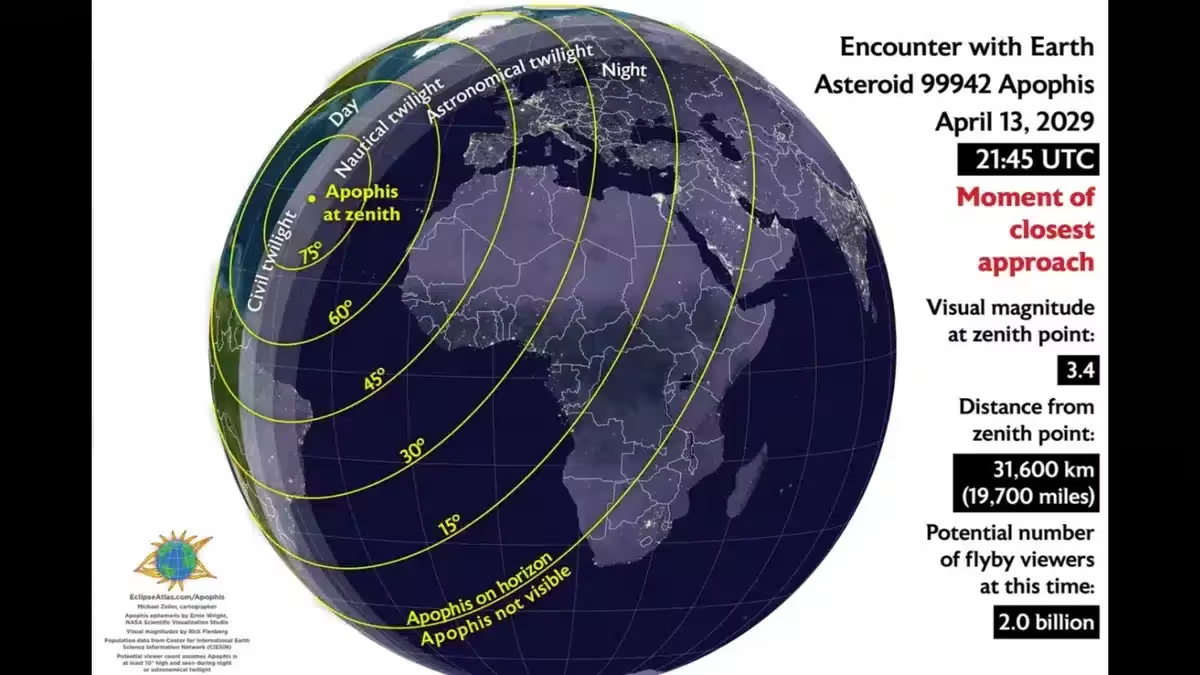
The object, catalogued as 99942 Apophis and roughly 1,100 feet (340 meters) in diameter, is slated to miss Earth by about 20,000 miles (32,000 kilometres) on 13 April 2029—closer than the orbit of many geostationary satellites and well within the view of both professional and amateur sky‑watchers.
Preparing for the 2029 Flyby
Since its discovery in 2004, Apophis has been monitored because early calculations hinted at a remote impact possibility. Subsequent observations have ruled out any collision risk for the 2029 approach and have sharpened scientists’ grasp of the asteroid’s orbit.
NASA has taken a leading role in tracking the rock through its planetary‑defense initiatives, refining trajectory predictions and laying groundwork for future scientific campaigns.
The upcoming close encounter will enable spacecraft, radar arrays, and telescopes to study Apophis in far greater detail than is typical for a distant asteroid, potentially revealing clues about its makeup and how it reacts to Earth’s gravity.
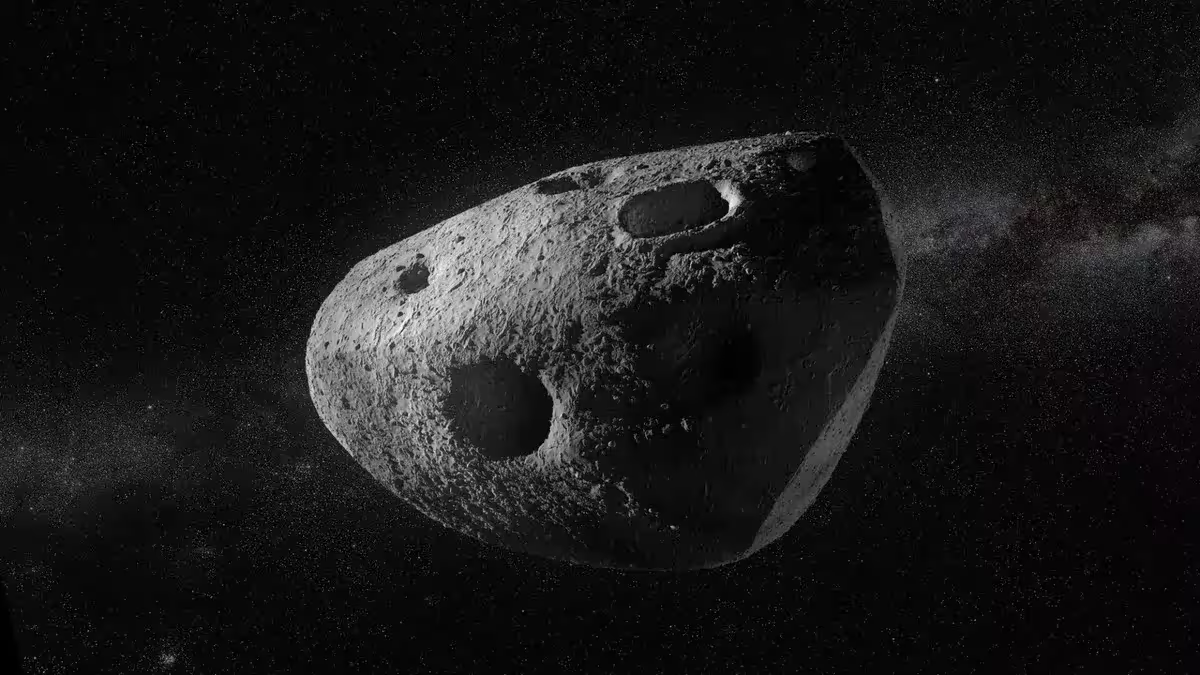
During a recent workshop, planetary scientist Alan Binzel cautioned that a safe passage does not guarantee complete knowledge of the asteroid’s behavior. “We simply don’t know what’s going to happen,” he said. “Apophis may glide by without incident, or we might observe something unexpected.” He added, “That’s why we have to look, we’ll learn a lot either way.”
Global Viewing Possibility
Because Apophis will shine brighter than most near‑Earth objects, it could be seen with the naked eye or modest binoculars from several regions, a rarity for asteroids that usually require powerful telescopes to detect.
Science communicator Kelly Fienberg told Space.com that the rock’s slow trek across the sky will be unmistakable. “It will definitely be noticeable,” she said. “It’s going to move more slowly than a satellite—it will cross the sky in hours, rather than minutes, and it will just be a point.”
Visibility will depend on local weather and darkness, but astronomers expect observatories and hobbyists worldwide to turn their eyes toward the event, providing a unique public outreach moment for planetary science.
Potential Insights into Gravitational Effects
One key research goal is to determine whether Earth’s gravity will modify Apophis’s spin, surface material, or interior structure during the close encounter. A near pass can induce measurable changes, offering a natural experiment for planetary‑defense scientists.
By analyzing pre‑ and post‑flyby data, researchers hope to refine models that predict how other near‑Earth objects might behave when they skim past our planet, strengthening future mitigation strategies.
Binzel reiterated the safety message throughout the workshop, stating three times that “Apophis will safely pass the Earth,” underscoring confidence in current orbital calculations while emphasizing the value of continued observation.
This article has been fact checked for accuracy, with information verified against reputable sources. Learn more about us and our editorial process.
Last reviewed on .
Article history
- Latest version
Reference(s)
- Kuthunur, Sharmila. “'Once-in-a-millennium' asteroid flyby will be visible to much of the world in 2029.”, July 6, 2026 Space <https://www.space.com/astronomy/asteroids/once-in-a-millennium-asteroid-flyby-will-be-visible-to-much-of-the-world-in-2029>.
Cite this page:
- Posted by Karan Das