MeerKAT Uncovers Hidden Radio Pulses From Blue Eye Neutron Star Once Deemed Silent
Astronomers detect an unexpected signal from a supposedly silent neutron star, reviving mystery about its long‑term activity.
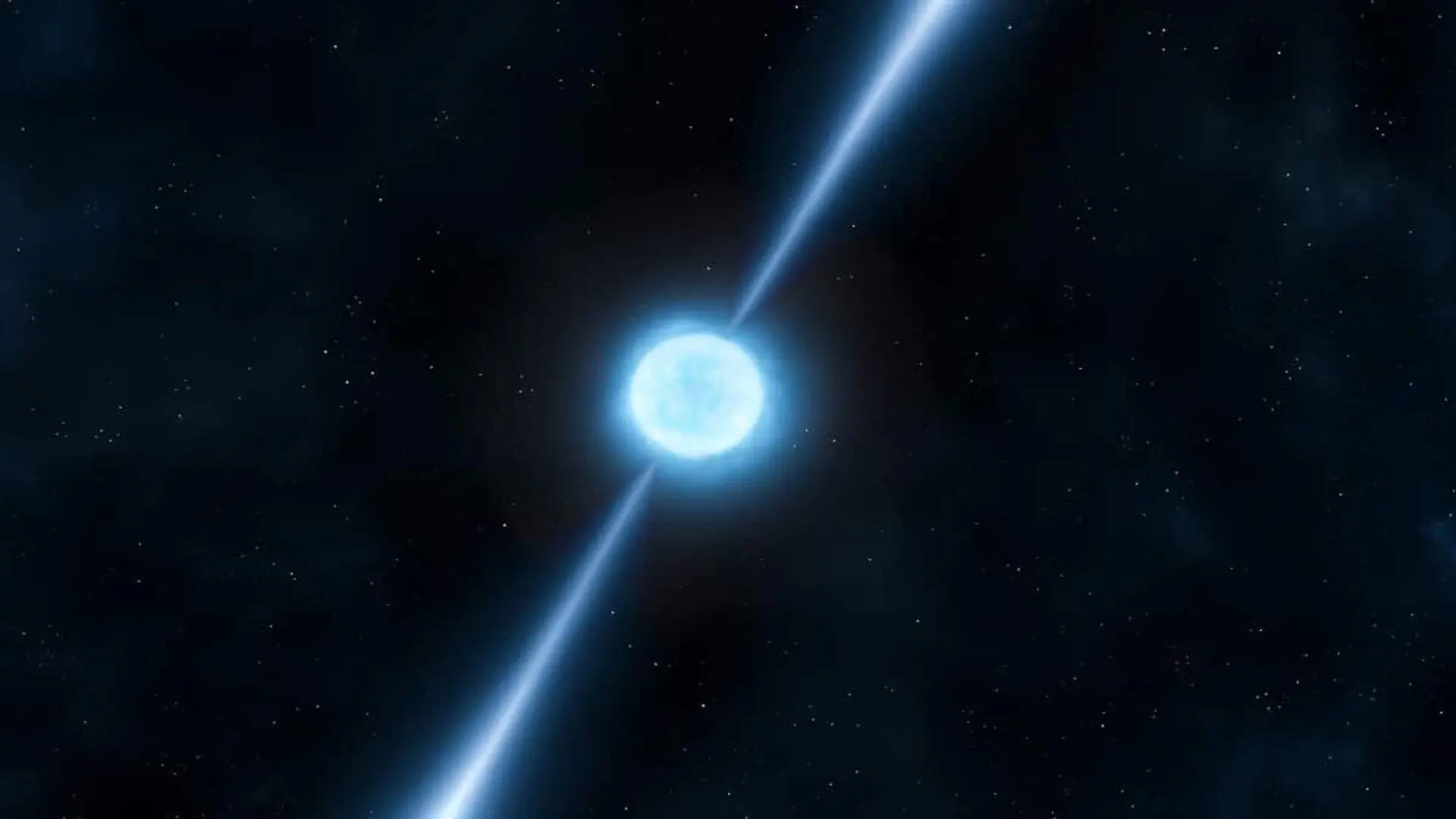
A research team using South Africa’s MeerKAT radio telescope has picked up a weak but regular radio pulse from 1E 1207.4‑5209, a neutron star that belongs to the rare class of central compact objects (CCOs). The discovery, reported in Nature Astronomy on June 25, suggests that at least one CCO has been quietly broadcasting radio waves all along, or has only just begun to do so.
Faint Pulses Uncovered After Years of Silence
MeerKAT detected a series of radio bursts spaced exactly 424 milliseconds apart, which matches the known spin period of 1E 1207.4‑5209. The signal is so faint that previous surveys missed it, explaining why the object was long considered radio silent. The neutron star sits roughly 10,000 light‑years from Earth, embedded in a supernova remnant that dates back more than 4,100 years.
When a massive star explodes as a supernova, its collapsed core can become a neutron star. Most newborn neutron stars spin rapidly and generate intense magnetic fields that produce narrow beams of radio waves. As these beams sweep past Earth, they appear as the periodic flashes that give pulsars their name.
A Spin Glitch May Have Triggered the Radio Emission
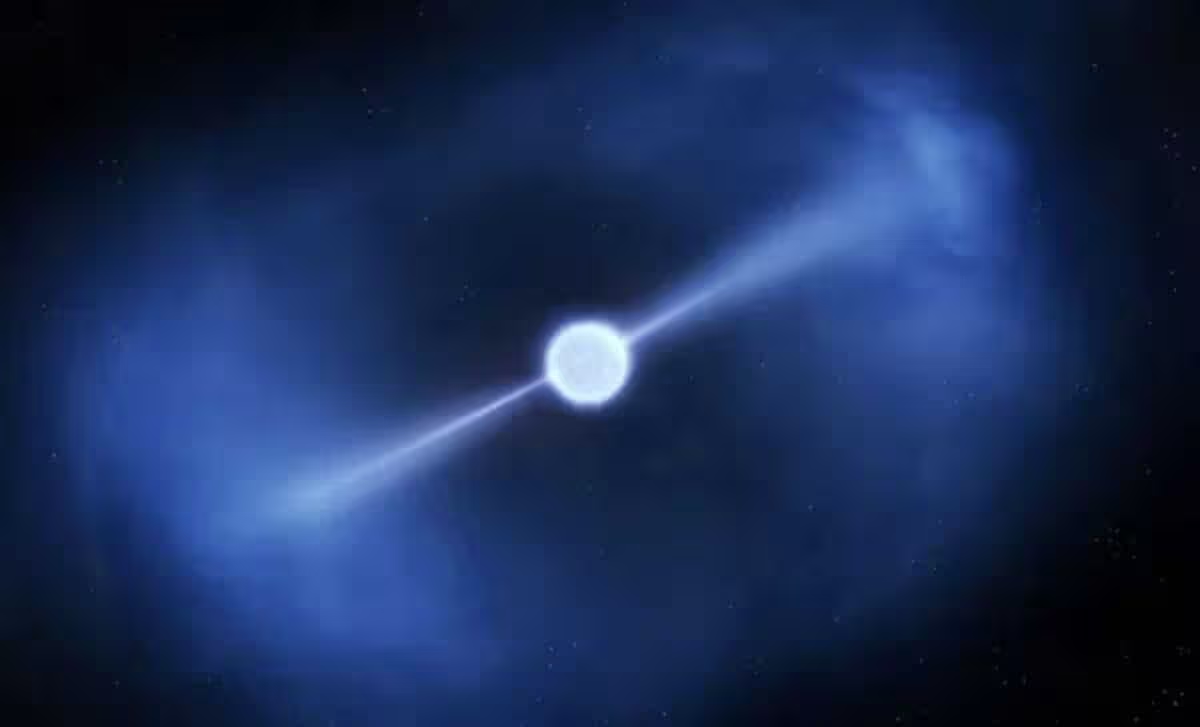
Tsinghua University astronomer Li Di has dubbed the object the “Blue Eye Pulsar” because bright X‑ray images combined with the newly detected radio signal give the impression of a luminous blue eye. In 2015, X‑ray monitoring recorded a sudden spin‑up, known as a glitch, in which the star’s rotation rate briefly increased. Such events are thought to arise from sudden rearrangements of material deep within the ultra‑dense star.
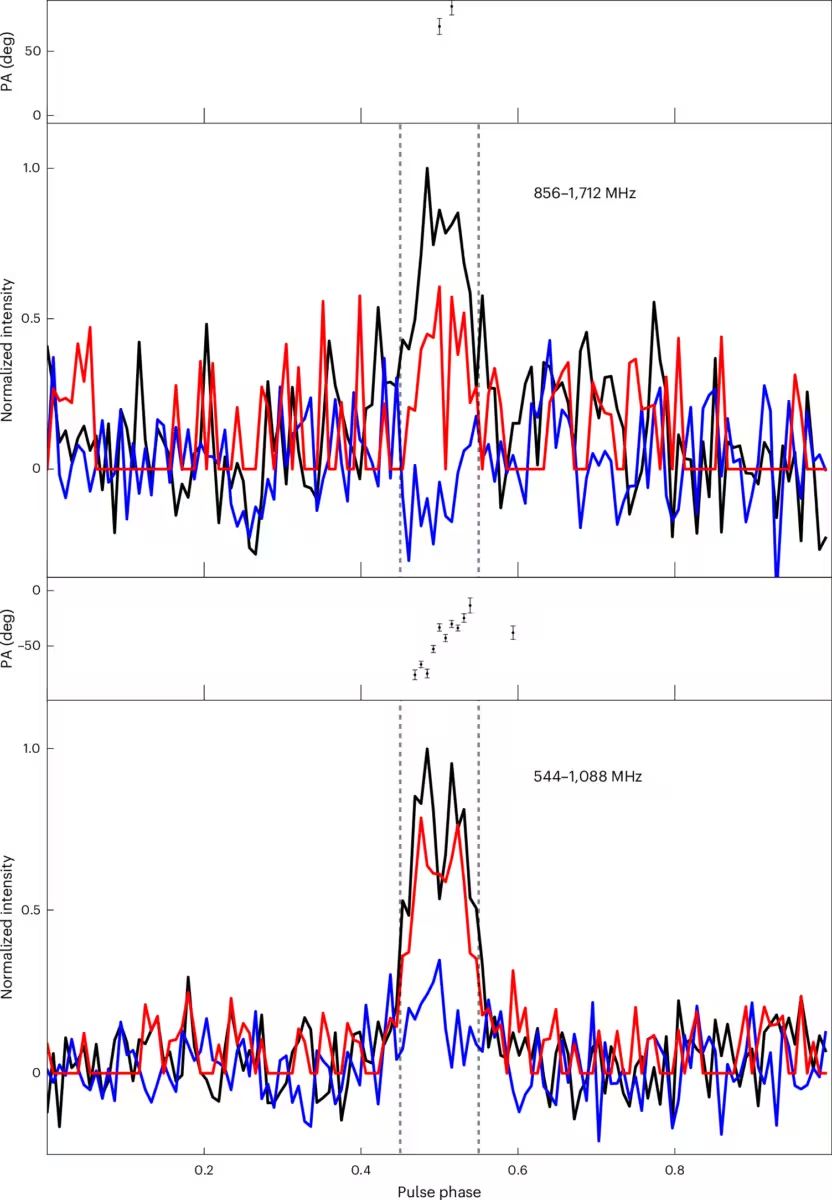
The research team proposes that the 2015 glitch may have amplified the star’s magnetic field, altered its orientation, or both—conditions that could switch on a radio beam or simply make an already weak signal detectable with modern instruments. If the neutron star’s rotation gradually returns to its pre‑glitch rate, the radio emission might fade again, a hypothesis that future observations will test.
Broader Implications for Hidden Pulsars
The detection hints that many more pulsars in the Milky Way could be lurking undetected because their radio output is below the sensitivity of earlier surveys. It also raises the possibility that some objects presently classified as old pulsars might actually be relatively young stars emitting unusually faint radio waves.
Such a scenario could help explain why certain supernova remnants appear to lack a pulsar entirely. For example, Supernova 1987A in the Large Magellanic Cloud shows indirect signs of a neutron star, yet no radio pulsations have been recorded so far.
By proving that a central compact object once thought to be completely silent can emit detectable radio waves, the study opens a new window for astronomers hunting concealed neutron stars throughout our galaxy.
This article has been fact checked for accuracy, with information verified against reputable sources. Learn more about us and our editorial process.
Last reviewed on .
Article history
- Latest version
Reference(s)
- Zhang 张蕾, Lei. “Pulsed radio emission from a central compact object - Nature Astronomy.”, June 25, 2026, pp. 1-8. Nature, doi: 10.1038/s41550-026-02899-2. <https://www.nature.com/articles/s41550-026-02899-2>.
- Vogel, Tracy. “Pulsars - NASA Science.”, March 11, 2026 NASA <https://science.nasa.gov/mission/hubble/science/science-behind-the-discoveries/hubble-pulsars/>.
- Gianopoulos, Andrea. “Supernova 1987A - NASA Science.”, September 13, 1990 NASA <https://science.nasa.gov/asset/hubble/supernova-1987a/>.
Cite this page:
- Posted by Karan Das