James Webb Finds Hydrogen Rich Atmosphere on Scorching Lava Planet 55 Cancri E
New James Webb data upends our view of a nearby lava planet, revealing puzzling activity deep beneath its surface.
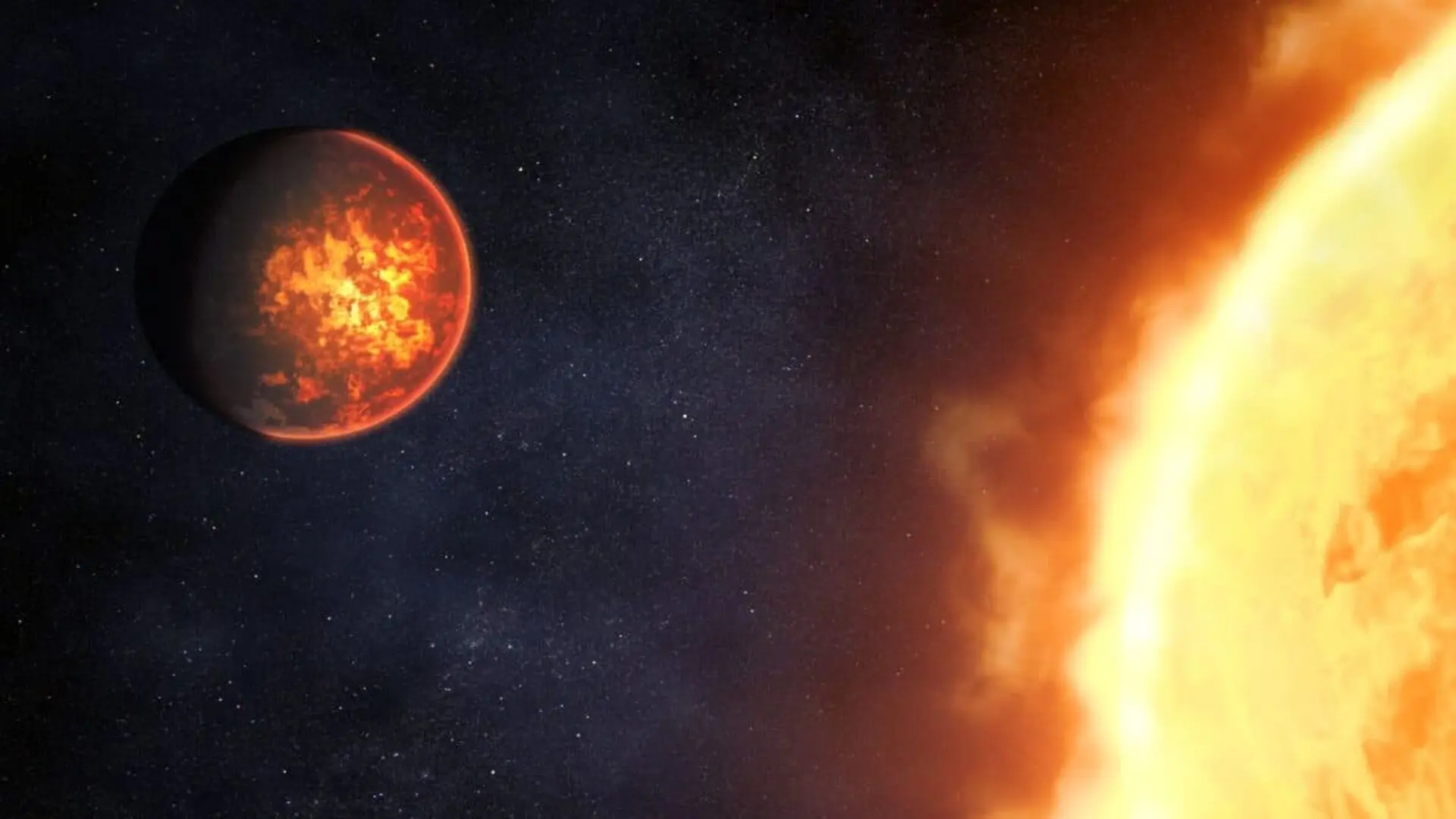
Using the James Webb Space Telescope, astronomers have captured five eclipses of the rocky world 55 Cancri e, located roughly 41 light‑years from Earth. By comparing the eclipse spectra with theoretical models of hot, silicate‑rich planets, the team identified a hydrogen‑laden atmosphere that appears to be fed by gases escaping from a molten interior.
The analysis suggests that the planet’s gaseous envelope is not a static blanket but a dynamic layer constantly reshaped by volcanic outgassing. As the number of identified lava‑type exoplanets grows, researchers are focusing on how such atmospheres reflect the chemistry beneath the surface. The findings have been submitted to Nature Astronomy for peer review.
A Super‑Earth Smoldering in an Ultra‑Short Orbit
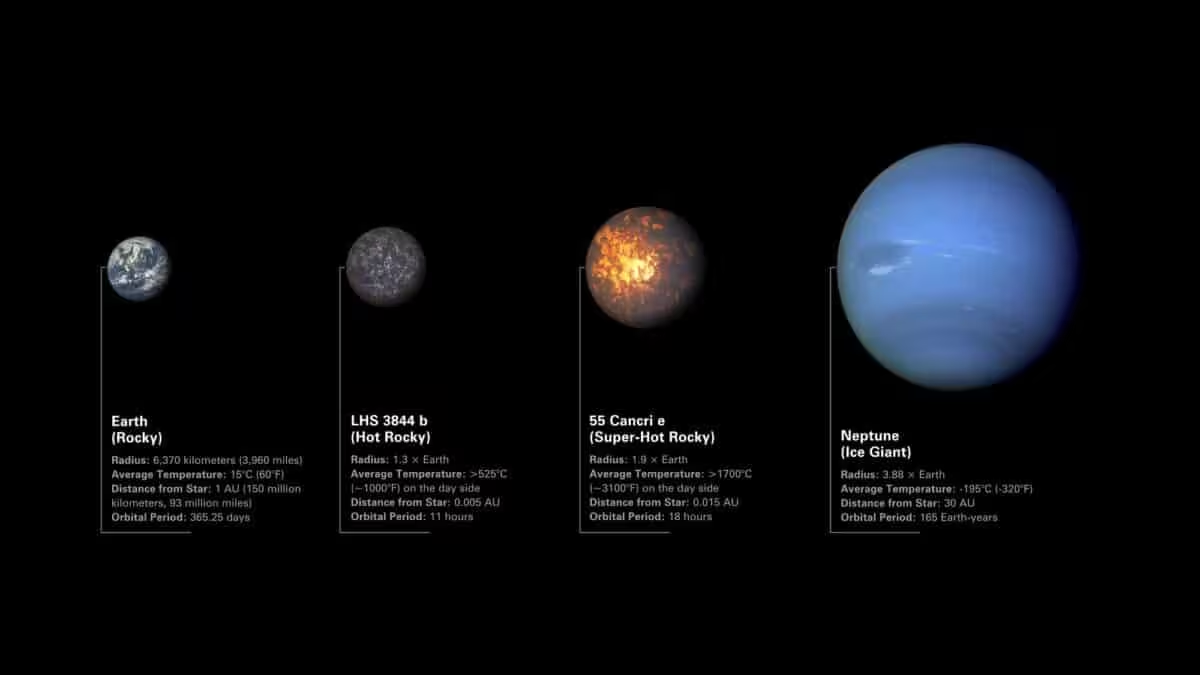
With a radius 1.88 times that of Earth and a mass eight times larger, 55 Cancri e circles a Sun‑like star every 0.7 days. The planet is tidally locked, presenting the same hemisphere toward its star at all times. According to NASA, this proximity likely drives surface temperatures high enough to melt rock on the day side.
To probe the planet’s emission, scientists recorded five secondary eclipses with JWST’s NIRCam and MIRI instruments. They then matched the data against long‑standing models that predict carbon‑rich atmospheres for lava worlds. The pre‑print of the study is available on arXiv.
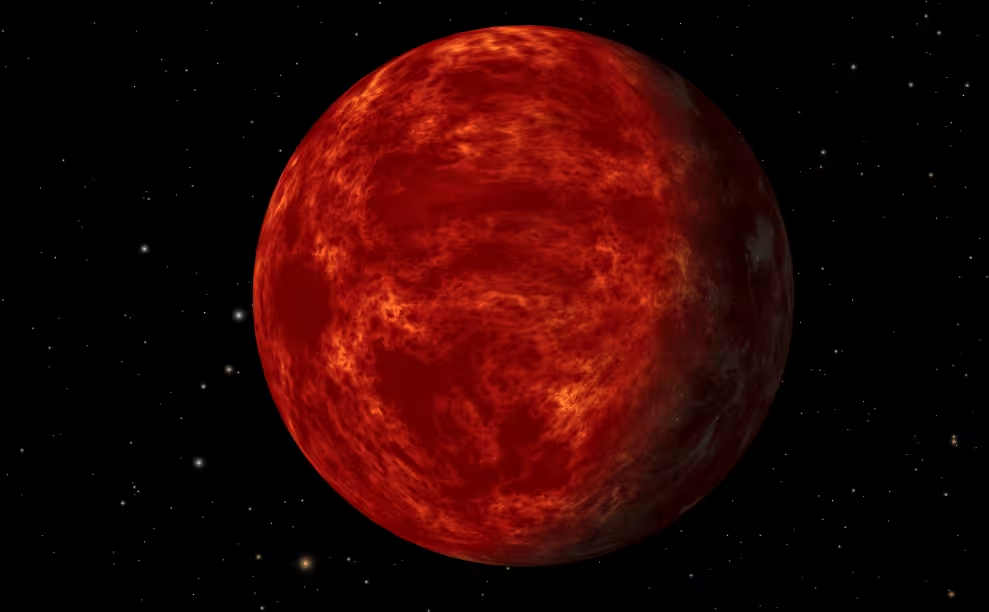
Contrary to expectations of dominant carbon monoxide and carbon dioxide, the JWST spectra reveal an atmosphere primarily composed of carbon monoxide, with measurable carbon dioxide and a surprisingly high hydrogen fraction. Variations observed across the five eclipses may stem from episodic outgassing or transient cloud formation that briefly cools the surface before dissipating.
Insights From the Planet’s Interior
The detected gases provide a window into the chemistry of 55 Cancri e’s molten mantle, linking atmospheric composition directly to interior redox conditions.
“Since secondary atmospheres of rocky planets are set by the composition of the interior and subsequent outgassing, the composition of their atmospheres is directly linked to their interior redox states,” the researchers write.
The authors note that the planet’s interior appears to contain far more hydrogen than oxygen.
“The preference for hydrogen-rich models, together with the steep inversions they produce, therefore suggests an interior with relatively low oxygen fugacity, consistent with outgassing from a reduced magma ocean.”
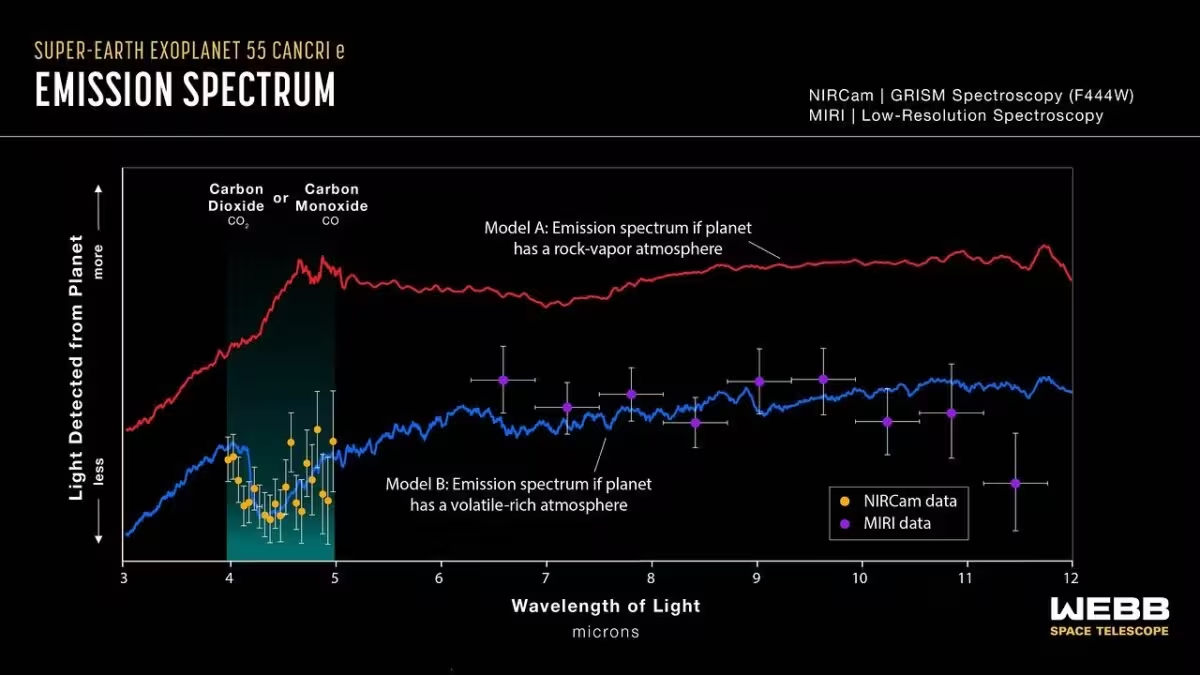
These chemical signatures align with the hydrogen‑rich atmosphere detected by JWST, reinforcing the view that continuous outgassing from a reduced magma ocean shapes the planet’s envelope.
Studying Molten Exoplanets Is Gaining Traction
First identified in 2004, 55 Cancri e now joins a roster of lava‑type worlds that includes K2‑141 b, L 98‑59 d, TOI‑561 b, HD 63433 d and CoRoT‑7 b. All orbit extremely close to their stars, are tidally locked, and endure scorching temperatures that melt surface rock. Their orbital periods span roughly 6.7 hours to 7.5 days.
While 55 Cancri e likely hosts a permanent lava ocean on its star‑facing side, some of its counterparts—such as L 98‑59 d—may be enveloped by a global magma sea. This contrasts with Jupiter’s moon Io, whose volcanic activity is driven by tidal heating, whereas lava exoplanets draw energy directly from stellar irradiation.
This article has been fact checked for accuracy, with information verified against reputable sources. Learn more about us and our editorial process.
Last reviewed on .
Article history
- Latest version
Reference(s)
- Cermak, Alicia. “55 Cancri e - NASA Science.”, April 22, 2019 NASA <https://science.nasa.gov/exoplanet-catalog/55-cancri-e/>.
- Snellen, Ignas. “Strong and variable stratospheric CO emission from lava-planet 55 Cnc e observed with NIRCam/JWST.” arXiv.org <https://arxiv.org/abs/2606.11866>.
Cite this page:
- Posted by Karan Das