Indonesia Starts Building Lithium-Ion Submarines That Can Stay Underwater for 80 Days
Indonesia’s PT PAL begins building stealth submarines with France’s Naval Group, boosting local capacity for advanced conventional subs.
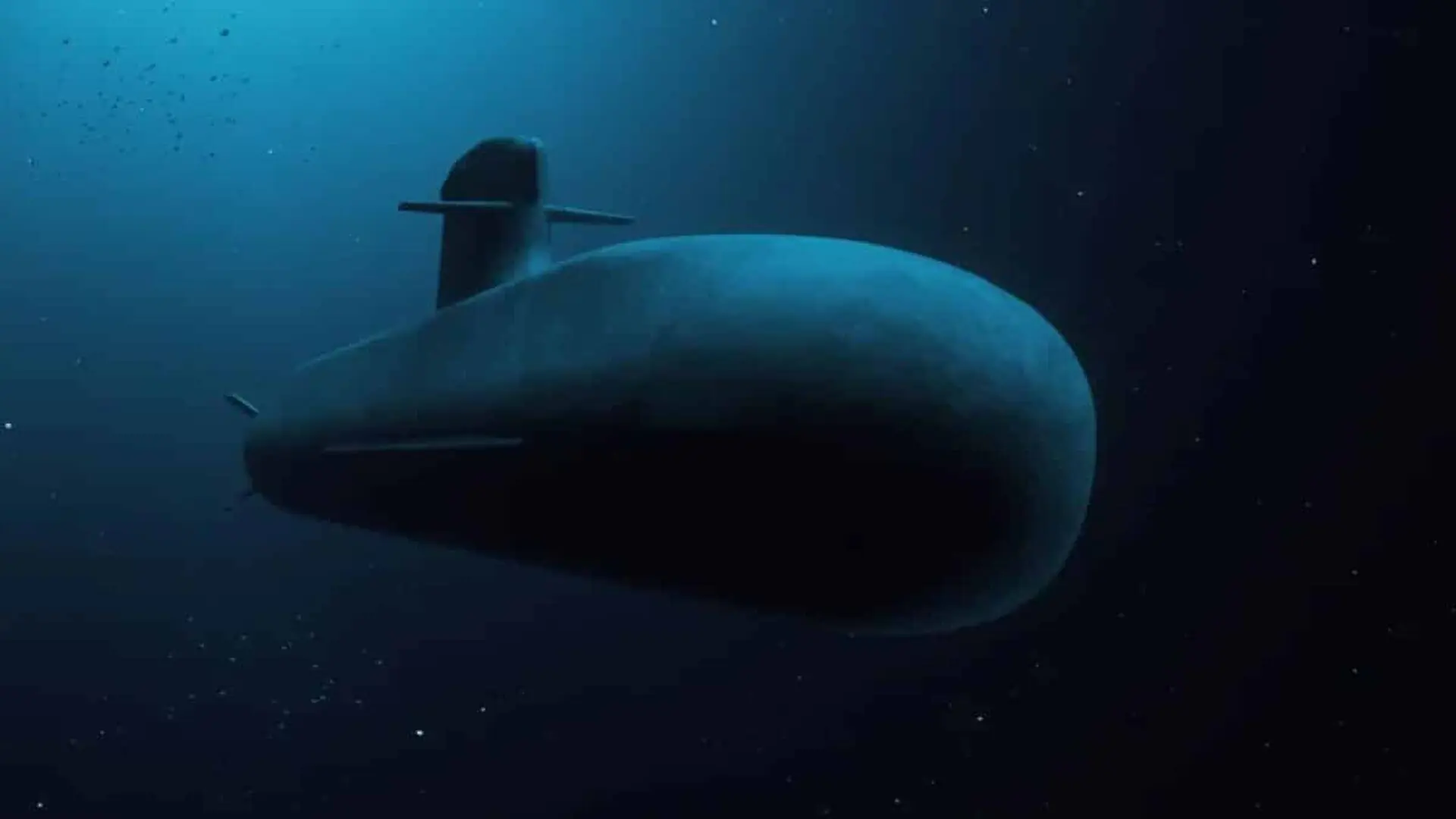
Indonesia has signed a roughly $2 billion deal to produce two Scorpène Evolved submarines, a move designed to boost the nation’s shipbuilding expertise as well as its naval firepower.
Surabaya Facility Showcases Progress Ahead of Build
On 2 July, PT PAL and France’s Naval Group opened their Surabaya complex to reporters, highlighting recent upgrades to the site, staff training milestones and the readiness of the production line. Vincent Vimont, Naval Group’s SRI Programme Director, explained that the first hull‑cutting is slated for this month, with sea‑trial campaigns projected between 2030 and 2032 and an initial delivery anticipated in 2032. The second submarine is expected to follow about a year later, with a target hand‑over in 2033, although officials noted the timetable could accelerate if construction proceeds smoothly.
The vessels will be assembled from the same high‑strength alloy used in French attack submarines, a material that demands rigorous welding protocols and intensive inspection regimes. To meet those standards, twenty PT PAL employees completed a two‑ to three‑month training stint in Cherbourg, France, where they learned advanced welding, pre‑heating and quality‑control methods from French experts. Naval Group’s project team also draws on experience gained from similar localisation efforts in India and Brazil, providing Indonesia with valuable lessons from those programmes.
A key innovation in the Scorpène Evolved design is the replacement of traditional lead‑acid batteries with a full lithium‑ion system, extending the submarine’s submerged endurance to as much as 80 days without surfacing for recharge. The boats will be equipped with the SUBTICS combat suite, an integrated sonar and signal‑processing package, and acoustic‑silencing technology derived from French nuclear ballistic‑missile submarine designs.
Weapon Loadout and Strategic Outlook
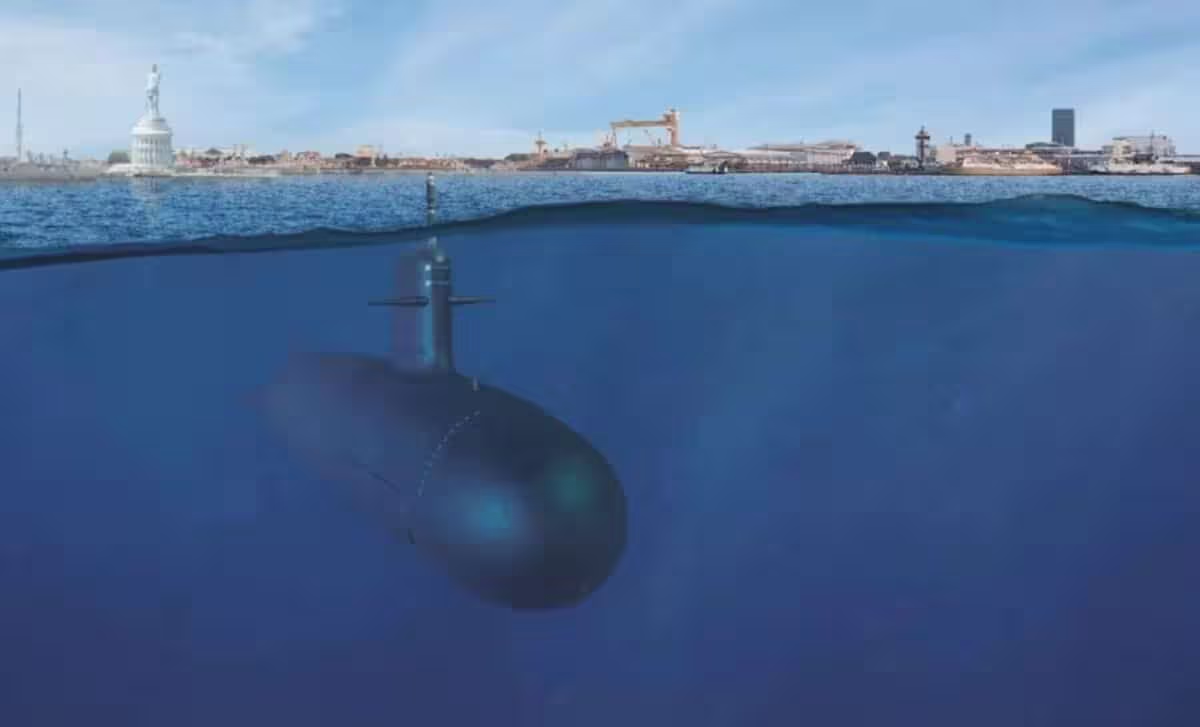
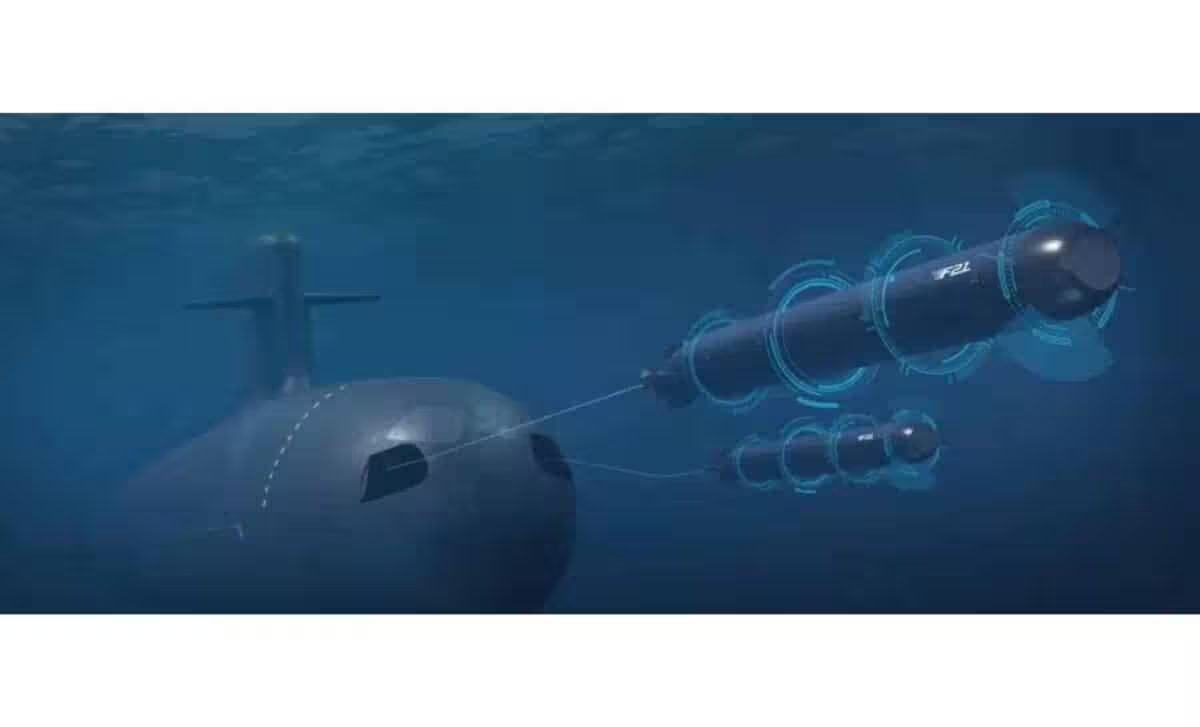
Each submarine can be armed with a combination of up to 18 heavyweight torpedoes and SM39 Exocet anti‑ship missiles. Naval Group also confirmed that the platform will be capable of launching the forthcoming SM40 variant, currently under development by MBDA. Indonesia’s navy joined the exclusive Scorpène Club in 2025, becoming the fifth member alongside Brazil, Chile, India and Malaysia, as reported by Naval News.
Beyond the initial pair, PT PAL and Naval Group have explored the possibility of positioning Indonesia as a regional hub for the construction and upkeep of Scorpène‑type submarines for other navies. However, the current contract does not grant Indonesia the right to market or sell the design, so any such expansion would require a separate agreement. Discussions are also under way regarding a potential follow‑on order for additional Scorpène Evolved units, as indicated in a linked article about future submarine projects.
The undertaking forms part of Indonesia’s National Submarine Technology Mastery Programme, which seeks to give the country the capacity to design, build and eventually export its own submarines, a goal slated for the 2040s after the completion of Phase II with Naval Group. Agus Rifai, head of PT PAL’s Submarine Division, noted that the shipyard’s existing facilities can accommodate the construction or maintenance of up to four Scorpène boats at once, leveraging equipment and know‑how acquired from the earlier Type‑209 program.
Officials estimate that the two‑submarine contract will generate roughly 2 250 jobs across manufacturing, engineering and long‑term support roles, with additional orders expected to create further employment opportunities. A broad network of Indonesian firms is already participating in the supply chain, spreading the industrial benefits beyond a single state‑owned contractor.
This article has been fact checked for accuracy, with information verified against reputable sources. Learn more about us and our editorial process.
Last reviewed on .
Article history
- Latest version
Reference(s)
- Malufti, Fauzan. “First Local Construction of Scorpène Evolved to Begin This Month in Indonesia.”, July 2, 2026 Naval News <https://www.navalnews.com/naval-news/2026/07/first-local-construction-of-scorpene-evolved-to-begin-this-month-in-indonesia/>.
Cite this page:
- Posted by Zara Tariq