Inside A 2,600-Year-Old Etruscan Tomb Near Rome: Untouched Burials And Priceless Artifacts
Opening an ancient sealed tomb reveals startling discoveries as archaeologists encounter unexpected signs inside, reshaping our view of the past.
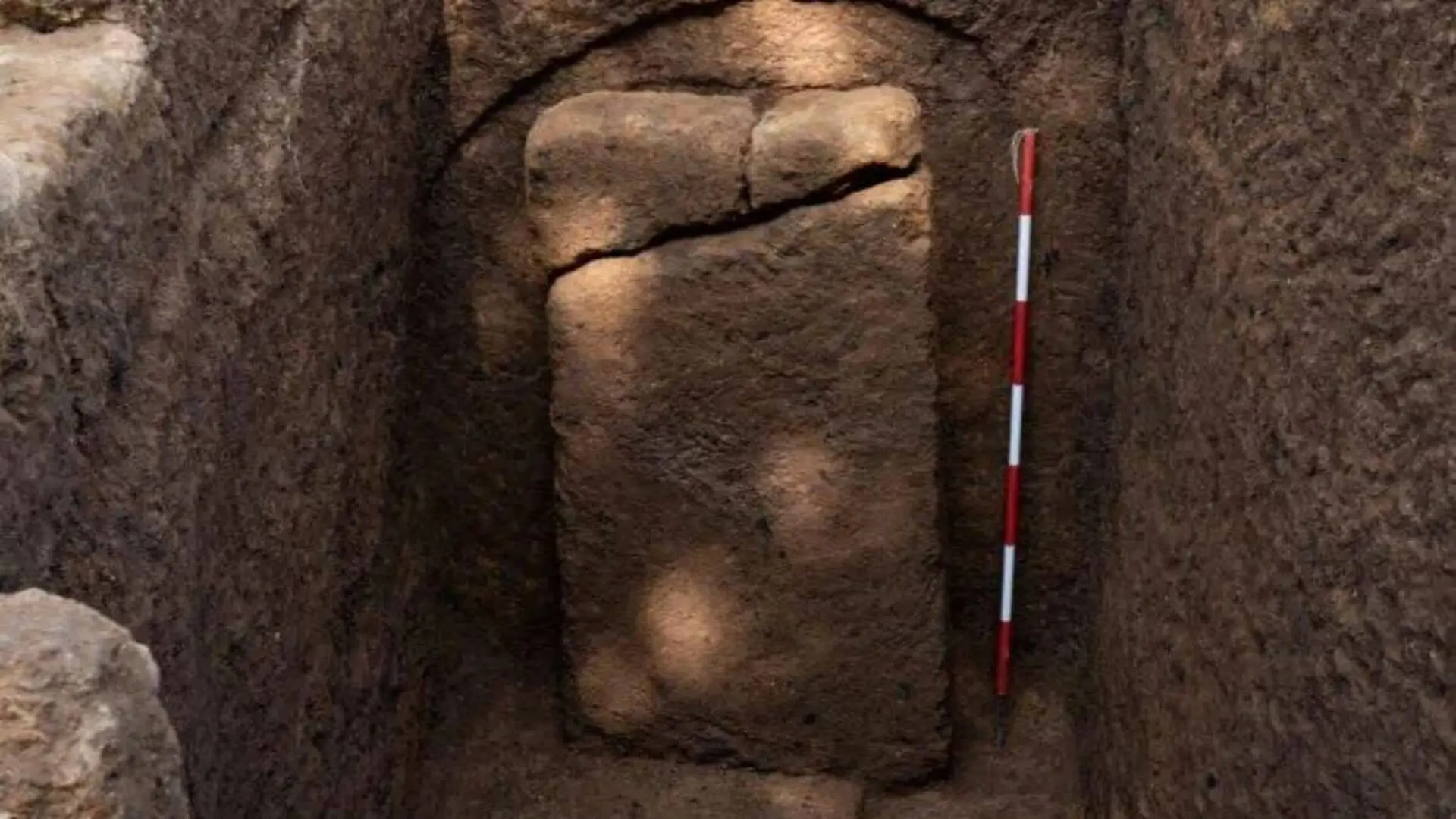
Archaeologists have uncovered an Etruscan burial chamber that remained sealed for roughly 2,600 years on the San Giuliano Plateau, just outside Rome. The tomb contained two human interments and a suite of ritual items still positioned as they were originally placed.
The find was made by the San Giuliano Archaeological Research Project, which has been exploring a necropolis that already includes more than 600 rock‑cut tombs. Remarkably, the stone slab that closed the chamber showed no signs of ancient robbery or later disturbance.
The discovery follows a 2025 excavation by the same team that revealed a fully intact tomb only a few feet away, providing an unusually complete funerary context that is seldom encountered in Etruscan studies.
Newly Opened Chamber Adjacent to 2025 Tomb
The recently accessed chamber lies in close proximity to the 2025 burial. According to the Superintendency for Archaeology, Fine Arts and Landscape of Southern Etruria, the entrance remained blocked by its original stone, indicating that the grave had never been opened since antiquity.
Inside, researchers described the scene as “one of the richest funerary landscapes in southern Etruria,” noting that both skeletons and grave goods were still in situ.
While San Giuliano hosts more than 600 known tombs carved into the rock, most were disturbed after the Roman expansion in the late 3rd century BCE, when looting became widespread throughout the area.
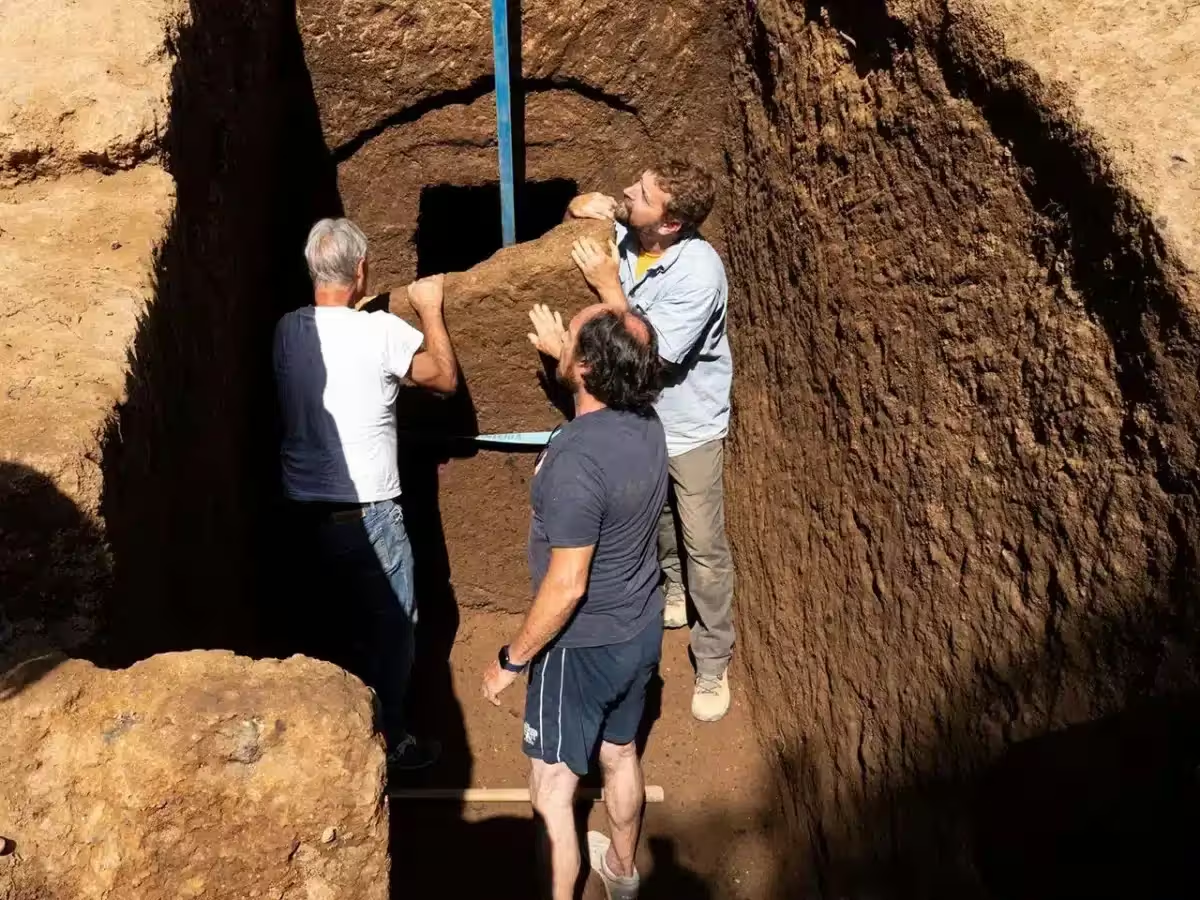
Project leaders from Baylor University emphasized that locating two intact tombs side by side offers a rare opportunity to reconstruct the original layout of the necropolis.
“The San Giuliano necropolis contains more than 500 tombs around the site, most of which were looted by illegal excavators, whether in antiquity or more recently. It is extremely rare to find an intact tomb. Hence the exceptional nature of this discovery,” Dr Barbara Barbaro said in the translated press release.
Undisturbed Human Remains and Grave Goods
The burial chamber housed the skeletal remains of two individuals accompanied by a variety of offerings. Among the most striking objects is a spearhead positioned near one of the skeletons, a detail that may hint at a male occupant pending further analysis.
Ceramic items typical of Etruscan funerary rites were also present, including large storage jars (olle), polished black cups (bucchero), and a small Greek aryballos traditionally used for oils or perfumes. The aryballos points to a personal dimension in the burial ceremony and reflects cultural exchange between Etruscan and Greek societies. Because all the artifacts remain in their original locations, researchers can study the precise arrangement of offerings as they were laid out centuries ago.
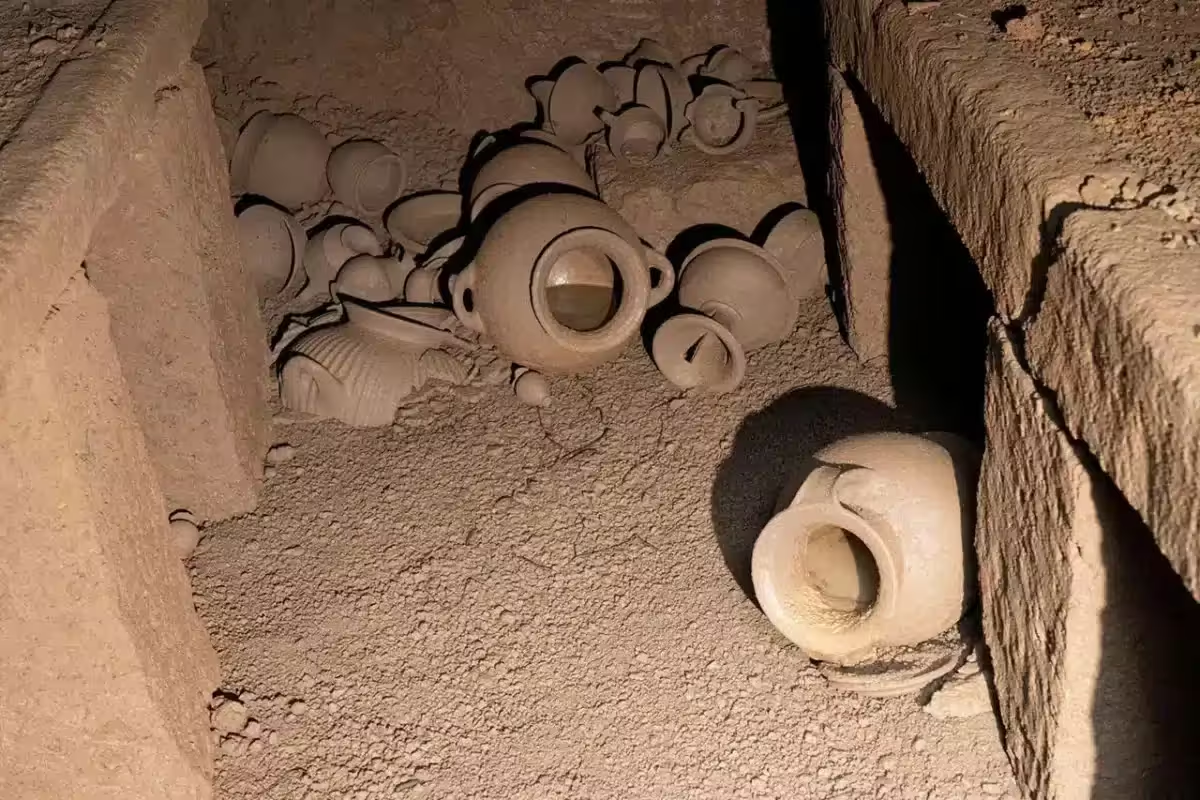
Because the assemblage has not been disturbed, scholars can observe how the community originally arranged the items around the deceased—a circumstance that is exceptionally scarce in Etruscan archaeology.
Implications for the Wider Burial Landscape
Having two untouched tombs in close proximity supplies archaeologists with a comparative dataset that enables the study of burial architecture as part of an integrated funerary environment rather than as isolated examples.
The site supervisor highlighted that the discovery of a second sealed tomb a year after the first demonstrates that the area has remained largely protected, underscoring how uncommon intact Etruscan burials are in this part of the region.
“This is what happens when an untouched tomb is uncovered—it is a collective event. It is like the door to the tomb, once opened, forms a bridge to our past, a gateway to our ancestors. The silence… the awe, the respect for those who stayed waiting behind that great stone. The emotion,” Dr. Barbaro added.
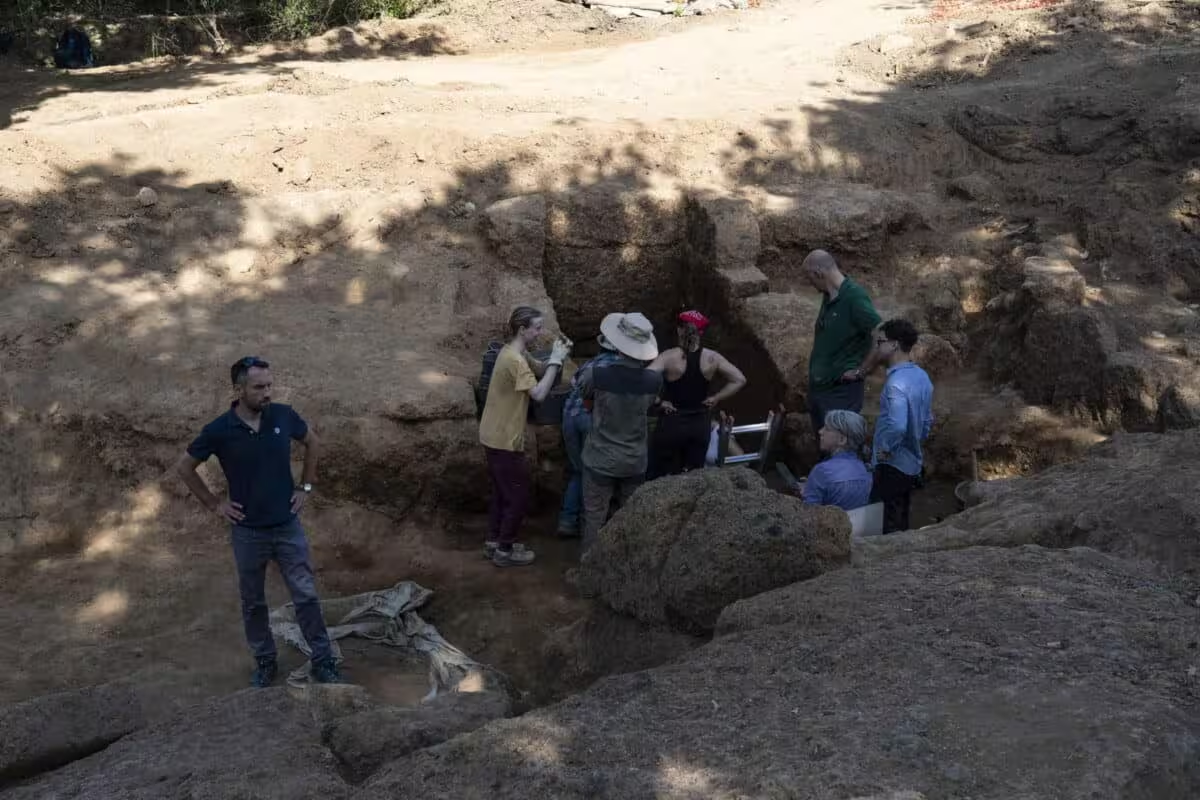
The research team plans to conduct detailed osteological analyses of the skeletal remains to determine age, sex, and health status at death, as well as further examinations of the artifacts and their spatial relationships.
This article has been fact checked for accuracy, with information verified against reputable sources. Learn more about us and our editorial process.
Last reviewed on .
Article history
- Latest version
Reference(s)
- “BARBARANO ROMANO (VT): necropoli di San Giuliano – Scoperta inedita di una tomba inviolata. – Soprintendenza Archeologia Belle Arti e Paesaggio per la provincia di Viterbo e per l'Etruria Meridionale.” <https://sabapviterboetruria.cultura.gov.it/barbarano-romano-vt-necropoli-di-san-giuliano-scoperta-inedita-di-una-tomba-inviolata/>.
- <https://sciprofiles.com/profile/2133120>.
Cite this page:
- Posted by Zara Tariq