Bar-Driven Galaxy Simulation Shows Nuclear Star Clusters And Disks Grow Together
A new computer simulation of a Milky Way‑like galaxy reveals an unexpected phenomenon deep within its core, reshaping our view of galactic centers.
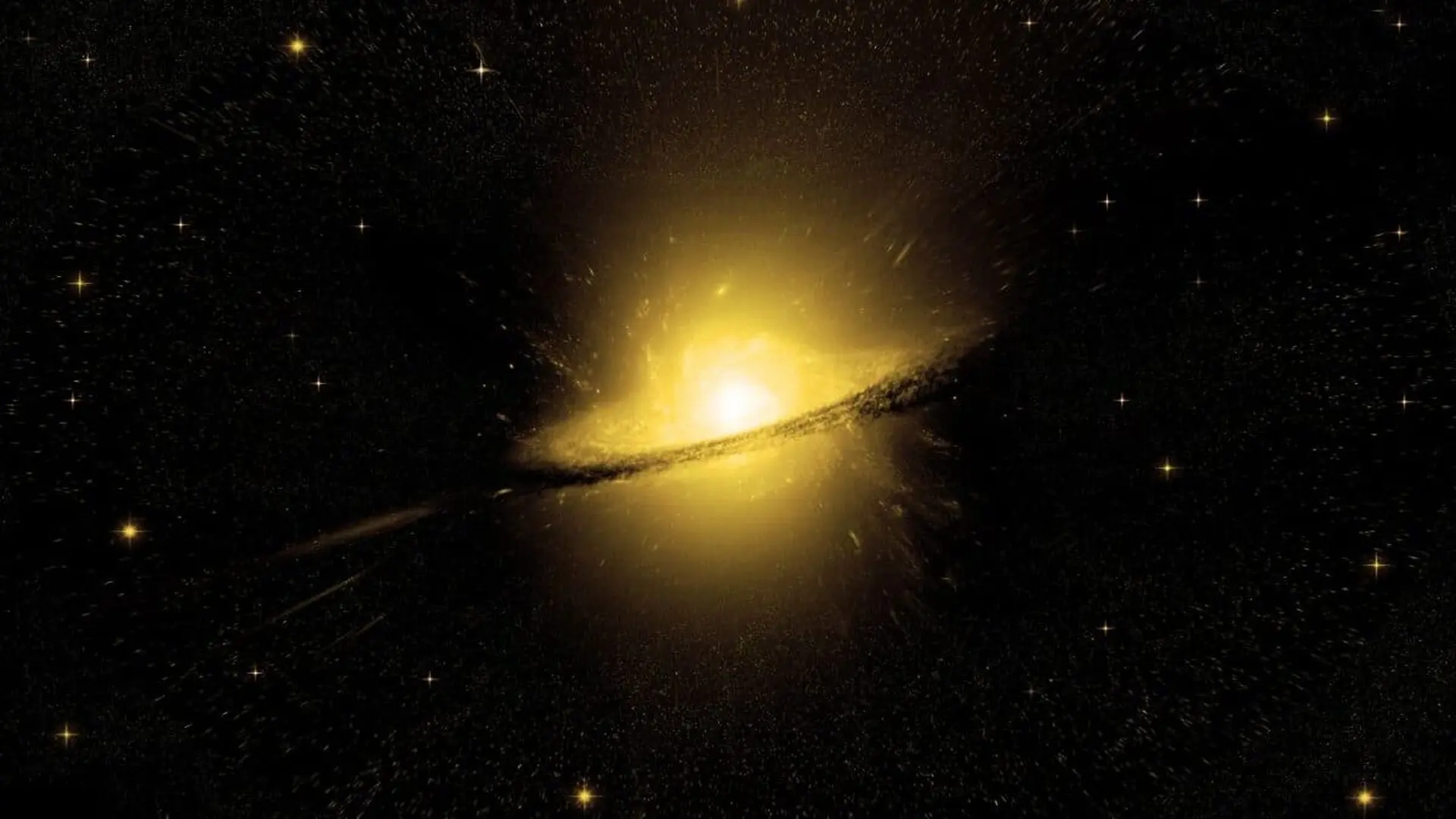
A recent high‑resolution simulation of a Milky Way‑type galaxy demonstrates that the dense nuclear star clusters and the flatter nuclear stellar disks can arise simultaneously from a single inflow of gas toward the galactic centre. These inner zones rank among the most intricate astrophysical environments known.
Both structures—compact star clusters and extended stellar disks—have been identified in our own Milky Way and in numerous external galaxies, yet the processes that assemble them have long been debated.
Earlier theories treated the two components as products of distinct mechanisms. Observational surveys failed to uncover a clear scaling relationship between their masses and dimensions, leaving their evolutionary link ambiguous.
Researchers affiliated with the SMUGGLE‑Ring collaboration, based at the Leibniz Institute for Astrophysics Potsdam (AIP), have now produced a four‑billion‑year hydrodynamical model of a barred spiral reminiscent of the Milky Way. The simulation naturally generated both central features and tracked their growth over cosmic time.
Bar‑Driven Inflow Fuels Central Star Formation
The model pinpoints the galaxy’s rotating stellar bar as the primary engine that shepherds interstellar gas inward, supplying the raw material for both the nuclear star cluster and the surrounding stellar disk.
According to the authors, the bar operates like a “cosmic conveyor belt,” delivering gas to the core where feedback from dying stars creates shock fronts that ignite successive waves of star formation.
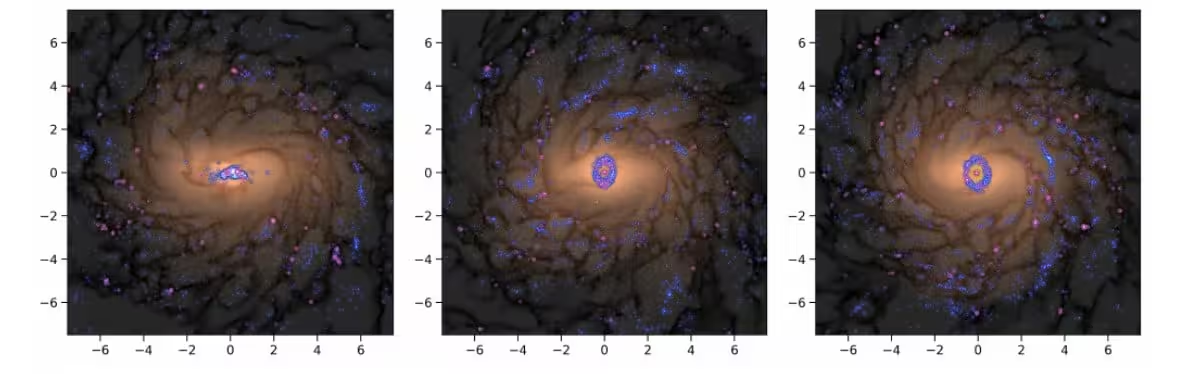
Over the simulated span, the central region accumulated several hundred million solar masses of new stars, illustrating how a galaxy can build its inner components continuously—something static, single‑epoch observations cannot reveal.
By following the birth of the bar, the inward drift of gas, episodic starbursts, and the gradual swelling of the nuclear disk, the researchers demonstrate that the two structures can co‑evolve rather than arise from independent channels.
Evolving Links Explain Past Observational Gaps
The simulation also clarifies why earlier surveys struggled to detect a straightforward connection between nuclear clusters and disks: their apparent differences are often a snapshot of an ongoing evolutionary sequence.
“The apparent disconnection does not mean that the stars themselves differ fundamentally in age, chemical composition, or motion,” notes the study’s co-author Dr. Cristina Chiappini.
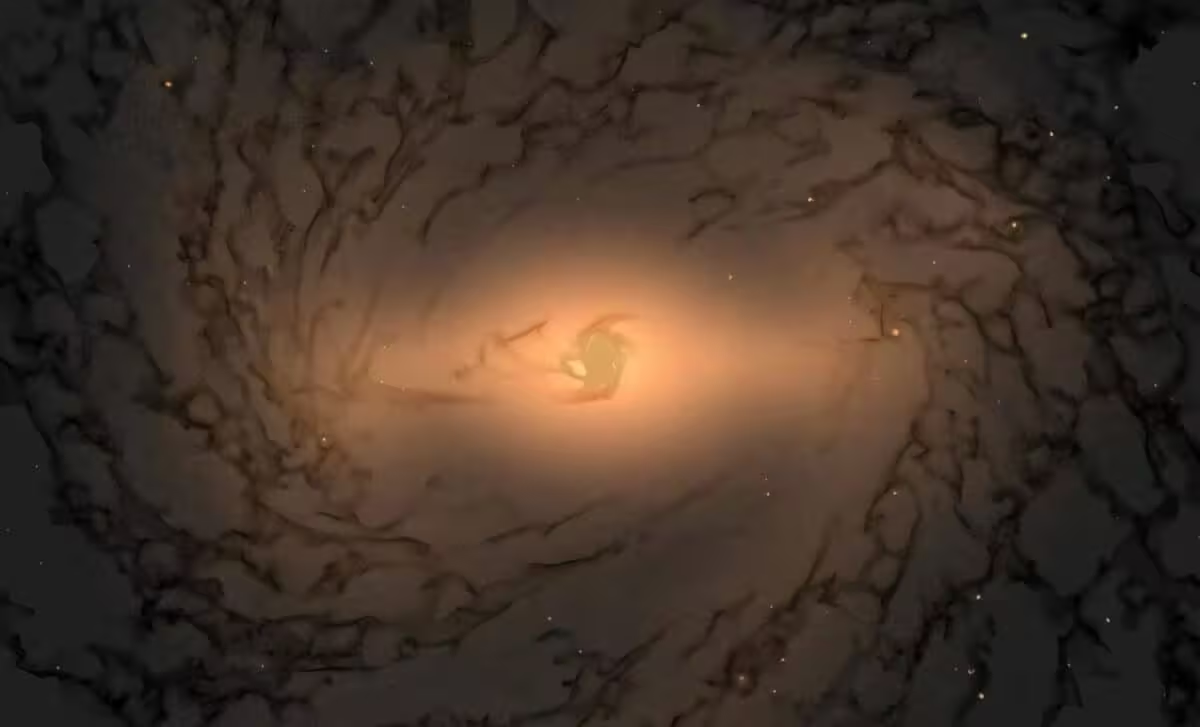
During periods of steady accretion, the relative mass and size of the cluster and the disk drift apart, meaning that galaxies caught at different times can appear to host markedly distinct central structures despite sharing a common origin.
This time‑dependent relationship offers a natural explanation for why previous observational campaigns failed to uncover a simple mass‑size correlation between the two components.
Dynamic Core Incorporates Dark Matter and Infalling Clusters
A key innovation of the SMUGGLE‑Ring run is its live treatment of dark matter, allowing the stellar bar, halo, and gas to influence each other dynamically. The authors highlight this as a major advance over earlier models that imposed static background potentials. The study details how this approach yields a self‑consistent bar that evolves and naturally spawns the nuclear structures.
“Previous studies rely on fixed background potentials for the galactic bar and dark matter halo, but the realistic dynamical treatment of stars and the dark matter halo using live particles in our model allows us to form a realistic bar that evolves over time and then naturally forms nuclear structures.”
The model reproduces the so‑called “dark gap” surrounding the bar, a feature observed in many spirals that arises from resonant interactions between stars and the rotating bar within the dark‑matter halo.
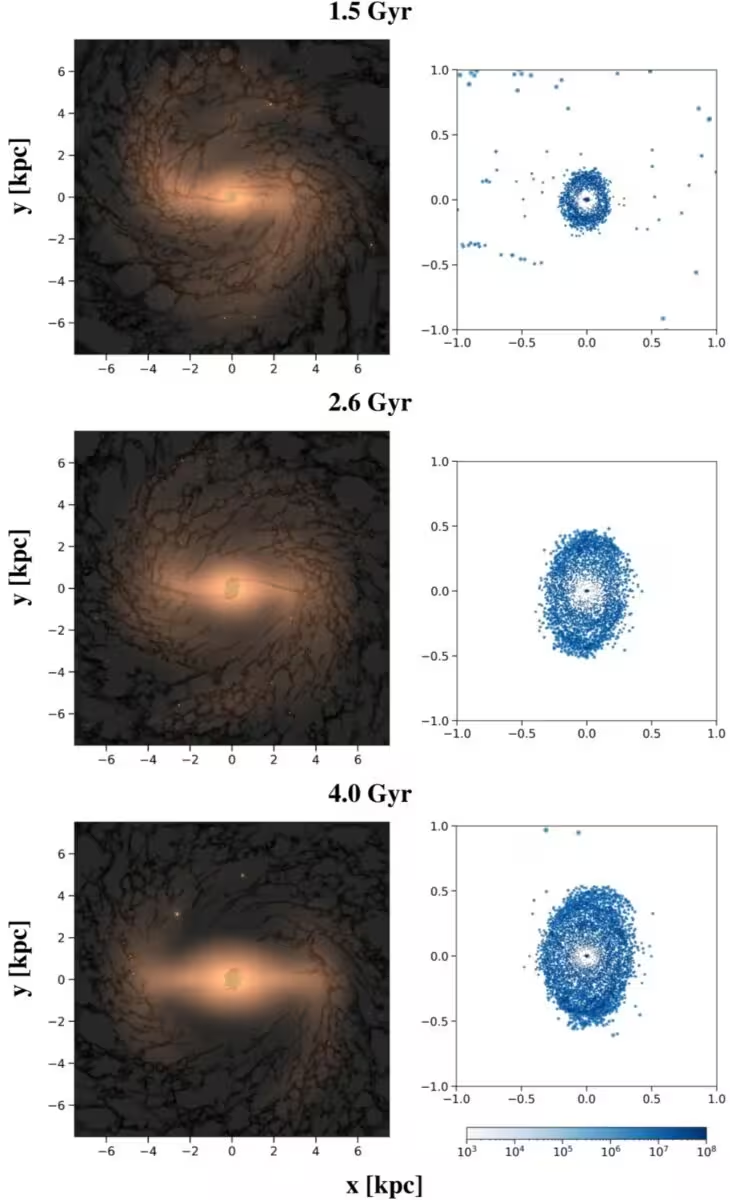
A striking episode captured by the run involves a massive star cluster—about 30 million solar masses—spiraling inward and merging with the pre‑existing nuclear cluster. This behavior mirrors observations of NGC 1365, where similarly large clusters have been identified inside the bar region.
Such inward migrations can rapidly augment the mass and size of nuclear star clusters, illustrating a dynamic channel for their growth beyond steady‑state star formation.
This article has been fact checked for accuracy, with information verified against reputable sources. Learn more about us and our editorial process.
Last reviewed on .
Article history
- Latest version
Reference(s)
- “DR. CRISTINA CHIAPPINI (Leibniz Institute for Astrophysics Potsdam, AIP, Germany).”, April 12, 2023 Instituto de Astrofísica de Canarias • IAC <https://www.iac.es/en/mobility/dr-cristina-chiappini-leibniz-institute-astrophysics-potsdam-aip-germany>.
- Kwak, SungWon. “SMUGGLE-Ring: Evolutionary link between nuclear star cluster and nuclear disk.” arXiv.org <https://arxiv.org/abs/2606.05157>.
- “NGC 1365.” www.esawebb.org <https://esawebb.org/images/weic2403f/>.
Cite this page:
- Posted by Aisha Ahmed